


Growth arrow with business peoples teamwork and unity flat powerpoint design




Try Before you Buy Download Free Sample Product
 Impress Your
 Audience
 100%
100% Editable
 Save Hours
 of Time


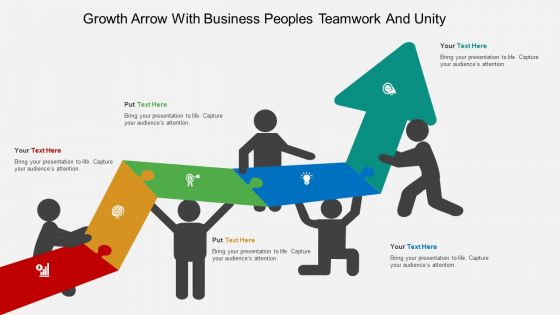
Select growth arrow with business people’s teamwork and unity PowerPoint slide design. Growth is the ultimate goal of every corporate but can only be possible with the support of effective team members. This presentation diagram demonstrates the concept of teamwork in the business development. If every professional working in the commerce can understand as what is required from them and perform their duty brilliantly then it ultimately helps the business. Professionals holding arrow perfectly shows the growth concept that can be shared with the viewers. Our PowerPoint visual has been crafted to give you the best design available in the industry. The pre-designed presentation illustration allows you to stay ahead in this competitive world. You may show it your team members and can motivate them to work towards their own as well as business development. The PPT template is completely adaptable and this allows you to share it as you would like to share it. Download and then use it for your presentation. Also, visit our entire website to check some more design options. Feel charitable with our Growth Arrow With Business Peoples Teamwork And Unity Flat Powerpoint Design. Gift them some of your brilliant ideas.
People who downloaded this PowerPoint presentation also viewed the following :
Growth arrow with business peoples teamwork and unity flat powerpoint design with all 4 slides:
Our Growth Arrow With Business Peoples Teamwork And Unity Flat Powerpoint Design help you build up your data bank. They keep generating fresh discoveries.

FAQs for Growth arrow with business peoples teamwork and unity
Honestly, psychological safety is everything - people won't share different perspectives if they're worried about being judged. When you're dealing with different cultures and languages, you really have to overcommunicate. Listen actively too, because what makes total sense to you might be confusing as hell to someone else. Cultural differences can totally derail teams (learned that the hard way), but here's the thing - diverse teams actually crush it when they get their act together. Set shared goals early and give everyone room to show their strengths. Try asking your team what unique stuff they bring to the table next meeting.
Honestly, forget job titles for a sec and figure out what people are actually good at. Like Sarah might be incredible at catching issues before they blow up, or maybe Tom has this gift for breaking down complicated stuff so anyone gets it. Map that out first. Then give people tasks that play to those strengths instead of just splitting everything equally - which never works anyway. The sweet spot is when everyone's doing what they're naturally good at while covering for each other's weak areas. Next team meeting, just ask people what they genuinely love doing. You'll see their faces change when they talk about their real skills.
Honestly, teams fall apart without solid communication - I've seen it happen so many times! You'll catch issues early instead of dealing with disasters later. Regular check-ins help, but don't underestimate random conversations too. People work way better when they actually talk to each other instead of hiding in their own little bubbles. Trust builds naturally when everyone knows what's going on. My rule? Over-communicate rather than leaving people guessing. Sounds obvious but you'd be surprised how many teams just... don't talk. Mix formal updates with casual chats and you're golden.
Oh man, cultural differences totally mess with team vibes! Some people are brutally direct while others dance around their point for ages. Meeting times? Good luck - I swear some cultures think "3pm" means "3:15ish." Decision-making gets weird too. Half your team wants everyone's input, the other half expects the boss to just decide. My advice? Call it out early and set ground rules together. Let people explain how they like to work, then find something that doesn't drive anyone crazy. It's honestly not that hard once everyone's on the same page.
Ugh, team drama is the worst. Get everyone together ASAP before it gets toxic. Let each person say their piece without getting interrupted - honestly, half the time people just want to vent and feel heard. Don't let it turn into personal attacks though, keep it about the actual problem. Find something everyone agrees on to work from there. If it's really messy, maybe grab someone neutral to help mediate? The main thing is making sure people can speak up without worrying about getting thrown under the bus later. Set some ground rules and circle back in a week or two.
Honestly, trust is what makes or breaks a team. Without it, everyone's just watching their backs instead of actually working together. People share ideas more freely when they trust each other - and they'll actually listen to feedback without getting all defensive about it. Communication flows better too. Problems get solved way faster because nobody's wasting time on office politics or constantly second-guessing motives. The results speak for themselves really. Want to build it? Start small but be consistent. Follow through on what you say you'll do, even the tiny stuff. That's where it begins.
Honestly, it depends what's driving you crazy right now. If it's communication, Slack or Teams are solid for quick messages and sharing files. Project management? Asana and Trello will save your sanity when deadlines start piling up - though I'm personally obsessed with Monday.com's interface. Google Workspace is clutch for document collaboration since everyone can edit at once. Zoom's obvious for meetings, but Miro's whiteboard thing is actually pretty fun for brainstorming. Just pick whatever fixes your biggest headache first, then build from there.
Honestly, how you lead makes a huge difference in how your team actually works together. Micromanage too much and you'll crush any creativity - people hate feeling like they can't make basic decisions. But go completely hands-off? Your team won't know what the hell they're supposed to prioritize. I've found the best approach is switching it up based on what's happening. Crisis mode calls for being more direct and decisive. Brainstorming sessions work better when you step back and let people collaborate freely. Watch how your team reacts to different styles and tweak from there.
Honestly, the SMART goals thing actually works - make them specific, measurable, achievable, relevant, and time-bound. Your whole team has to know what you're aiming for and why. I've watched so many teams crash because they set fuzzy goals like "improve performance" (seriously, what does that even mean?). Chop up the big stuff into smaller pieces you can check monthly. Track numbers AND get feedback from people. Oh, and don't skip those quick team check-ins to see what's actually working. Celebrate the small wins too - keeps everyone motivated.
Dude, the biggest thing is you can't just walk over and ask questions anymore, so everything has to be super intentional. Those random coffee conversations that used to solve problems? Gone. Now you're stuck scheduling meetings for stuff that used to take 30 seconds. Time zones are honestly the worst part - someone's always asleep when you need them. But hey, at least the quiet hours can be productive if you're a night owl like me. Write everything down because people forget what was decided in video calls. And seriously, check in way more than feels normal - everyone's just sitting in their own bubble otherwise.
Don't wait around for massive project completions - celebrate the smaller wins too. Your team will burn out otherwise, trust me on this one. Try mixing things up: team lunches work great, or maybe just do shoutouts during meetings. We actually started a dedicated Slack channel for wins at my last job and people loved it. The trick is staying consistent with recognition so nobody feels left out. Honestly though, just ask your team what they'd actually want - some people hate public praise but love a good lunch. Then work whatever they say into your regular routine.
Honestly, start with one-on-ones to figure out what actually drives each person - that's been a game changer for me. Recognition is huge too, but not just the big stuff. Call out the small wins regularly. Give people real ownership over their work and let them decide the how, not just hand them a rigid what-to-do list. Clear goals are non-negotiable though - I've seen teams fall apart when people don't understand why their work matters. Oh, and try connecting what people are naturally good at to team goals. Makes everyone feel like they're actually using their strengths instead of just grinding through tasks.
Okay so here's what I've figured out about feedback - it's gotta be specific and quick, not just "nice work!" weeks later. Talk about actual behaviors, not someone's personality (learned that one the hard way lol). When you're getting feedback, ask questions instead of getting all defensive. The biggest thing though? People need to feel safe being honest without worrying about getting thrown under the bus. I'd start small - maybe try it in your next team meeting and see how it goes. Oh, and actually follow through on changes you say you'll make. That part's huge.
Dude, emotional intelligence is like a cheat code for teams. When you can actually read what's going on with people - their body language, tone, whatever - you avoid so much unnecessary conflict. I've seen teams fall apart because nobody bothered to notice when someone was clearly frustrated. Being aware of your own stuff helps too. Like, maybe don't send that snarky email when you're having a bad day? Try watching for nonverbal cues in your next meeting. You'll catch things you totally missed before.
Honestly, different perspectives are like having extra brains working on stuff. People from various backgrounds will see problems you'd completely miss - it's wild how someone's random experience can crack open a solution. Short sentences work. But mixing in people who think differently than you prevents that echo chamber thing where everyone just agrees. The clash between viewpoints? That's where the magic happens. I learned this the hard way on a project once. Anyway, don't just hire people who remind you of yourself.
-
The Designed Graphic are very professional and classic.
-
Great product with effective design. Helped a lot in our corporate presentations. Easy to edit and stunning visuals.