


Guide To Personal Branding For Entrepreneurs Branding CD V




Try Before you Buy Download Free Sample Product
 Impress Your
 Audience
 100%
100% Editable
 Save Hours
 of Time


Personal branding lets you connect with customers authentically and identify yourself as a professional in the industry. Grab our insightfully created Guide to personal branding for entrepreneurs template. It will guide people who want to stand out by developing their unique personalities. People can first use the introduction to individual branding to present background information on personal branding, its significance, and the elements five-dimension framework. Our Employee branding PPT incorporates the slides to achieve their objectives by learning about developing a personal brand on social media, tools, habits, techniques, strategies, growth costs, and communication plans. It will help people to track their business performance more effectively with the help of metrics and dashboard slides. Lastly, our Strategic brand management module exhibits an example profile that will help people develop a powerful personal brand. Request a free demo from our research staff right away.
People who downloaded this PowerPoint presentation also viewed the following :
Content of this Powerpoint Presentation
Slide 1: This slide introduces Guide to Personal Branding for Entrepreneurs. Commence by stating Your Company Name.
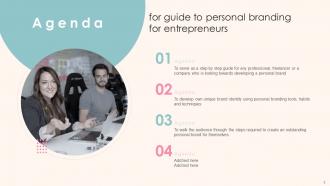
Slide 2: This slide depicts the Agenda of the presentation.
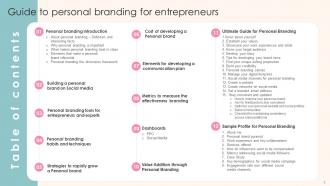
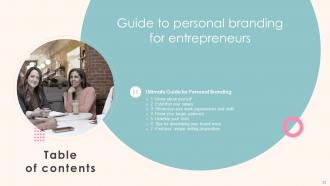
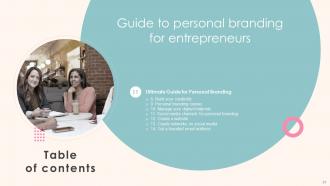
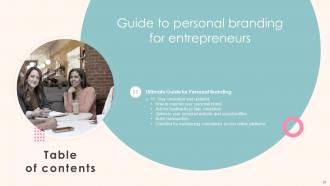
Slide 3: This slide incorporates the Table of contents.
Slide 4: This slide highlights the Title for the Topics to be further discussed.
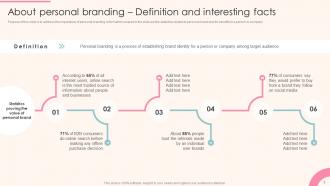
Slide 5: The Purpose of this slide is to address the importance of personal branding.
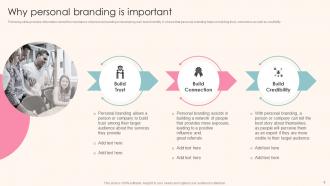
Slide 6: This slide provides information about the importance of personal branding in developing own brand identity.
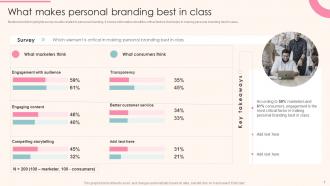
Slide 7: The Mentioned slide highlights survey results related to personal branding.
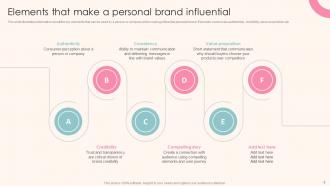
Slide 8: This slide illustrates information about the key elements that can be used by a person or company while making influential personal brand.
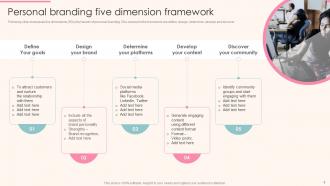
Slide 9: This slide showcases the Personal branding five dimension framework.
Slide 10: This slide indicates the Heading for the Contents to be covered next.
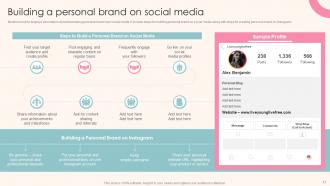
Slide 11: This slide deals with Building a Personal Brand on Instagram.
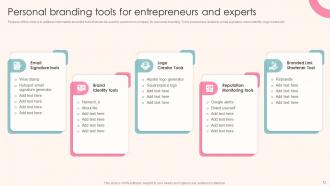
Slide 12: The Purpose of this slide is to address information about the tools that can be used by a person or company for personal branding.
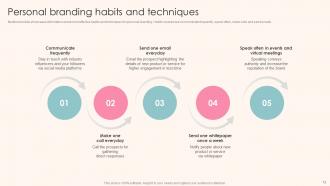
Slide 13: This slide mentions the Personal branding habits and techniques.
Slide 14: This slide elucidates the Title for the Ideas to be discussed in the following template.
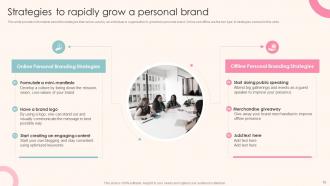
Slide 15: This slide provides information about the strategies that can be used by an individual or organization to grow their personal brand.
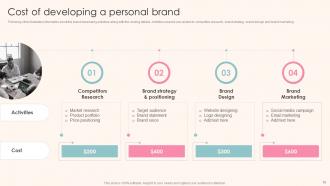
Slide 16: The Following slide illustrates information about the brand developing activities along with the costing details.
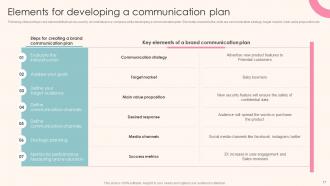
Slide 17: This slide portrays core elements that can be used by an individual or a company while developing a communication plan.
Slide 18: This slide depicts the Heading for the Ideas to be covered further.
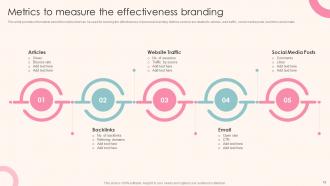
Slide 19: This slide provides information about the metrics that can be used for tracking the effectiveness of personal branding.
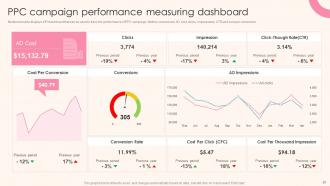
Slide 20: This slide displays the PPC campaign performance measuring dashboard.
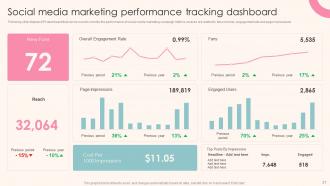
Slide 21: This slide presents the Social media marketing performance tracking dashboard.
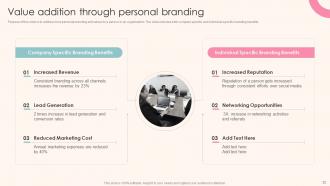
Slide 22: This slide talks about Value addition through personal branding.
Slide 23: This slide elucidates the Title for the Contents to be further discussed.
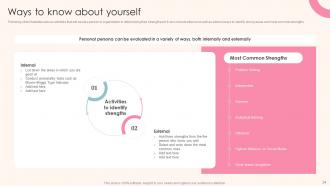
Slide 24: This slide illustrates various activities that will assist a person or organization in determining their strength part.
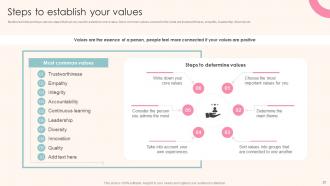
Slide 25: The Mentioned slide portrays various steps that can be used to establish one’s value.
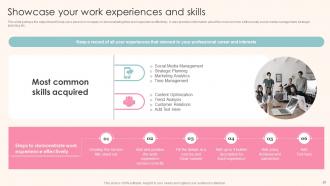
Slide 26: This slide states the steps that will help out a person or company in demonstrating their work experience effectively.
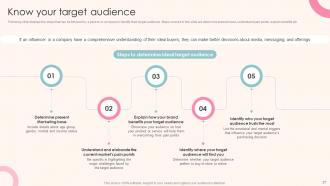
Slide 27: This is the Know your target audience slide.
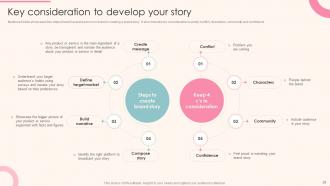
Slide 28: This slide indicates the Key consideration to develop your story.
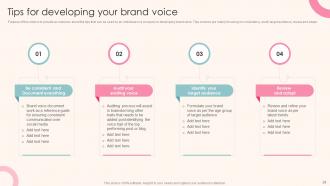
Slide 29: This slide exhibits the Tips for developing your brand voice.
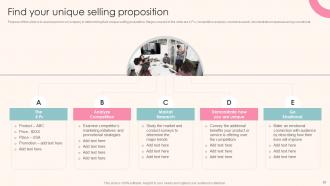
Slide 30: The Purpose of this slide is to assist a person or company in determining their unique selling proposition.
Slide 31: This slide mentions the Heading for the Topics to be covered in the forth-coming template.
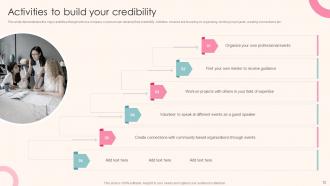
Slide 32: This slide demonstrates the major activities though which a company or person can develop their credibility.
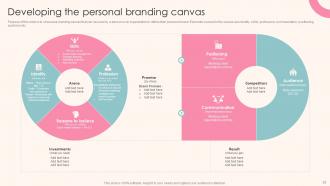
Slide 33: This slide focuses on Developing the personal branding canvas.
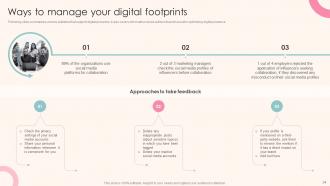
Slide 34: The Following slide summarizes various statistics that support digital presence.
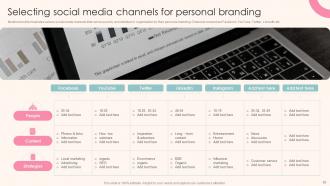
Slide 35: The Mentioned slide illustrates various social media channels that can be used by an individual or organization for their personal branding.
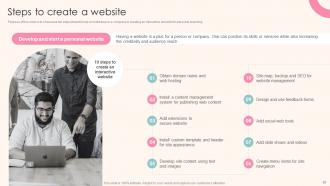
Slide 36: The Purpose of this slide is to showcase ten steps that will help an individual or a company in creating an interactive website for personal branding.
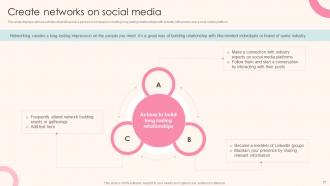
Slide 37: This slide displays various activities that will assist a person or company in creating long lasting relationships with industry influencers over social media platform.
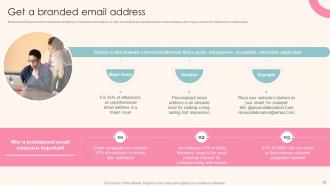
Slide 38: This slide shows the importance of having a branded email address.
Slide 39: This slide depicts the Title for the Topics to be further covered.
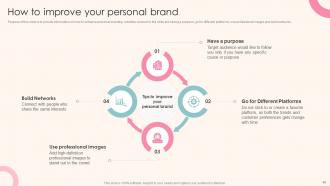
Slide 40: The Purpose of this slide is to provide information on how to enhance personal branding.
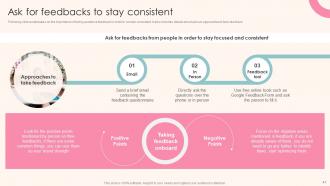
Slide 41: This slide emphasizes on the importance of taking audience feedback in order to remain consistent.
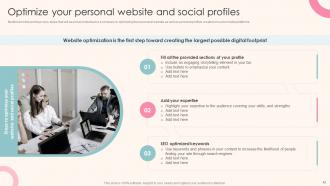
Slide 42: This slide portrays keys steps that will assist an individual or a company in optimizing their personal website as well as personal profiles created on social media platforms.
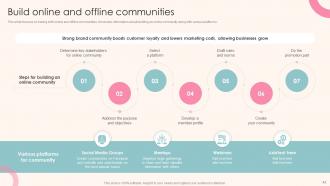
Slide 43: This slide focuses on having both online and offline communities.
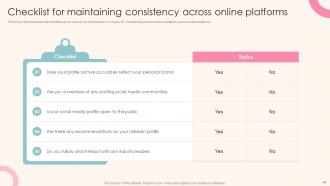
Slide 44: The Following slide illustrates checklist that can be used by an individual or a company for maintaining and ensuring consistency across online platforms.
Slide 45: This slide showcases the Heading for the Components to be discussed further.
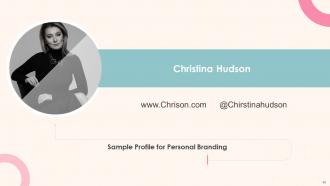
Slide 46: This slide presents the Sample Profile for Personal Branding.
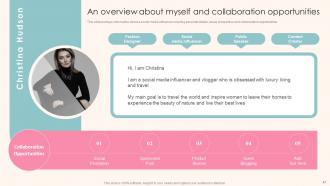
Slide 47: This slide portrays information about a social media influencer covering personal details, areas of expertise and collaboration opportunities.
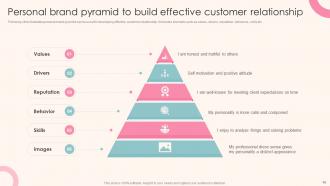
Slide 48: The Following slide illustrates personal brand pyramid can be used for developing effective customer relationship.
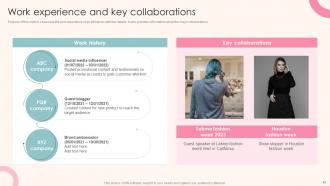
Slide 49: This slide elucidates the Work experience and key collaborations.
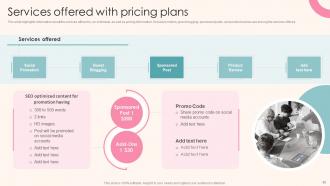
Slide 50: This slide highlights information about the services offered by an individual, as well as pricing information.
Slide 51: This slide shows the Title for the Ideas to be discussed in the upcoming template.
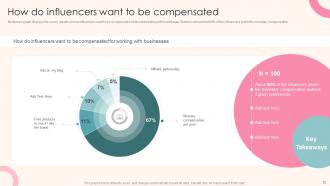
Slide 52: The Mentioned graph displays the survey results on how influencers want to be compensated while collaborating with businesses.
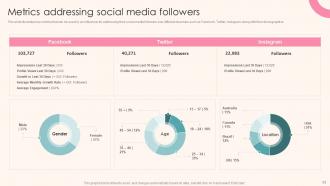
Slide 53: This slide illustrates key metrics that can be used by an influencer for addressing their social media followers over different channels.
Slide 54: The Purpose of this slide is to address the case study highlighting the influencer's work while collaborating with a brand.
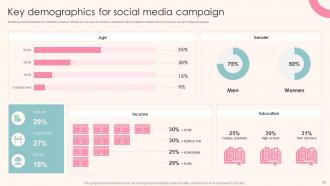
Slide 55: This slide depicts the Key demographics for social media campaign.
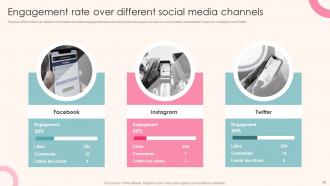
Slide 56: This slide talks about the Engagement rate over different social media channels.
Slide 57: This is the Icons slide containing all the Icons used in the plan.
Slide 58: This slide is used for displaying some Additional information.
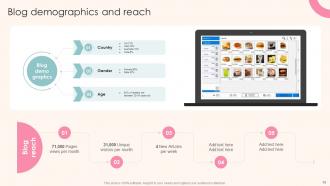
Slide 59: This slide represents the Blog demographics and reach.
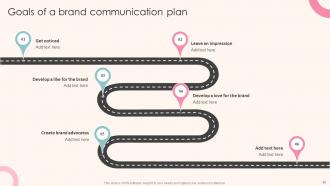
Slide 60: This slide reveals the Goals of a brand communication plan.
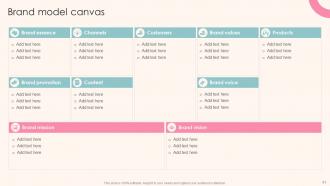
Slide 61: This slide mentions about the Brand model canvas.
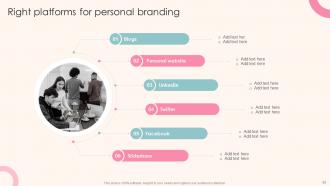
Slide 62: This slide showcases the Right platforms for personal branding.
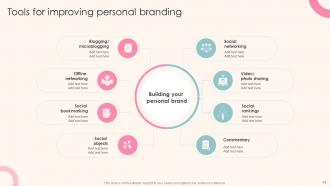
Slide 63: This slide indicates the Tools for improving personal branding.
Slide 64: This slide illustrates the Customer satisfaction KPI dashboard.
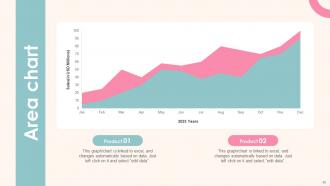
Slide 65: This is the Area chart slide.
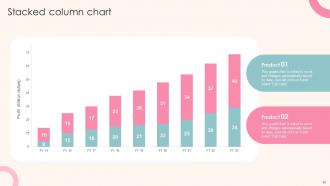
Slide 66: This slide showcases the Stacked column chart.
Slide 67: This is the 30 60 90 Days plan slide for effective planning.
Slide 68: This slide depicts the Company Timeline.
Slide 69: This is the Puzzle sldie with related imagery.
Slide 70: This slide contains the Post it notes for reminders and deadlines.
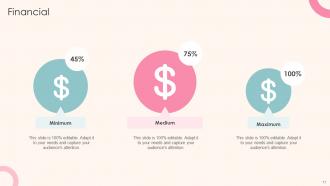
Slide 71: This slide elucidates information related to the Financial topic.
Slide 72: This is Our goal slide. Mention your organizational goals here.
Slide 73: This is the Thank You slide for acknowledgement.
Guide To Personal Branding For Entrepreneurs Branding CD V with all 78 slides:
Use our Guide To Personal Branding For Entrepreneurs Powerpoint Presentation Slides Branding CD to effectively help you save your valuable time. They are readymade to fit into any presentation structure.








FAQs for Guide To Personal Branding For Entrepreneurs
Okay so personal branding basically boils down to three things: be authentic, stay consistent, and actually provide value. Figure out who you are first - like what do you genuinely stand for? Then just stick to that message whether you're posting on LinkedIn or talking in a meeting. God, I can't tell you how cringy it is watching people fake their whole personality online. Share stuff that actually helps people - your insights, experiences, whatever expertise you've got. Oh and define what makes your take on your industry different, then just keep sharing that perspective regularly. That's honestly it.
Look at what compliments you keep getting - that's usually where your strengths are hiding. Think about how you tackle problems differently than everyone else, not just what skills you have. I'd ask former colleagues what they think your "superpower" is because honestly, they see stuff you don't. Find where your expertise meets what you're actually excited about AND what people need. The market part matters more than we want to admit. Once you figure it out, test it - can you explain your value in one sentence that makes someone go "yes, that's exactly what I need"? If it takes three sentences, keep working on it.
So visual identity is like how people spot you before you say anything - your colors, fonts, photo vibe, maybe a logo. You know how you can tell certain influencers apart just from their feed? That's it working. Your visual stuff basically screams your personality without words. Pick 2-3 colors and stick with them everywhere - LinkedIn, website, business cards, all of it. Same with filters or photo style. Otherwise people get confused about what you're about. Honestly, consistency is everything here. Start small though - you don't need to rebrand your whole life overnight.
Honestly, I'd say every 6-12 months or after big career stuff happens. Like getting promoted, switching jobs, picking up new skills - that's when you definitely need to update your bio and stuff. Your resume and portfolio? Maybe give those a look quarterly. And please tell me your LinkedIn photo isn't from like 2019 when you looked totally different lol. I just set calendar reminders twice a year to check everything. See if what you're saying still matches your goals. Don't stress about tiny changes though. Just make sure your materials actually show where you're at now, not where you were two years ago.
Honestly, it depends on what you do. LinkedIn's a no-brainer - everyone professional should be there. Instagram works great if you're in anything visual. TikTok's getting big for business stuff too, which still feels weird to me but whatever, I'm probably just old lol. Twitter's solid for jumping into industry conversations. Don't try to be everywhere though - pick like 2 or 3 max. Quality over quantity and all that. I'd say start with LinkedIn plus whatever matches your field best. You'll burn out trying to post everywhere constantly.
Look, anyone can rattle off their skills on LinkedIn. But when you tell actual stories? That's what people remember weeks later. Instead of saying "I'm a great problem solver," share how you pulled that disaster project back from the brink. People connect with the messy details and real moments - it shows who you really are under pressure. Honestly, it's the difference between being another resume in the pile versus someone they actually want to work with. Start building up 3-4 solid stories that showcase different sides of what you bring to the table.
Honestly, just pick 2-3 platforms where your people actually are. Don't try to be everywhere - you'll burn out fast. Share stuff that shows you know your shit: industry takes, behind-the-scenes content, mistakes you've made. Engagement beats follower count every time. Comment on other people's posts (like, actually meaningful stuff), share their content when it makes sense. Oh, and respond when people comment on yours - seems basic but so many people ignore this. The real trick? Show up consistently instead of posting randomly when you feel like it. Pick a schedule you can stick to.
Honestly, just pick 1-2 platforms where your people actually are. Don't spread yourself thin everywhere - I made that mistake lol. Show your personality alongside your expertise. Nobody wants to follow some corporate robot posting boring industry stuff (trust me, I tried that for months). Be real but still professional. Consistency beats perfection every time. Batch your content creation so you're not scrambling daily. Actually engage with others instead of just posting your own stuff - comment thoughtfully, ask questions, share insights. Oh and pick a schedule you can realistically stick to. There's nothing worse than starting strong then ghosting your audience because you bit off more than you could chew.
Honestly, the worst thing you can do is try appealing to everyone - you'll just confuse people about what you actually stand for. Pick like 2-3 main topics and stick with them. Don't be that person who only posts about their own achievements either (so cringey). Share stuff that's actually useful to others. Oh, and consistency matters way more than people think. If you're all over the place between platforms, nobody knows what to expect from you. I see so many people just copying influencers they admire instead of finding their own voice. Engage with others for real - not just surface-level comments. It takes time but it's worth it.
Honestly, think of networking as your personal brand spreading through actual conversations. Every time you meet someone, they're forming an opinion about you - and trust me, they'll remember the person who was genuinely helpful way more than some random LinkedIn update. The trick? Don't go in trying to sell yourself. Focus on how you can help them first. Ask good questions, share what you know when it's relevant. People love telling stories about that smart person they met who actually listened and had useful insights. Your reputation kind of builds itself that way.
Honestly, building your personal brand can really speed up your career. You become way more visible to recruiters and higher-ups who might miss your work otherwise. Share your wins and expertise consistently - you'll become the person everyone thinks of first in your field. It's wild how much this opens doors to speaking gigs, board spots, and bigger roles because people already know your rep. I mean, my cousin Sarah got headhunted twice last year just from her LinkedIn posts about data analytics. Figure out what makes you different professionally, then tell that story everywhere you network.
Honestly, it's about being your real self but with a filter - like how you'd act meeting your friend's parents vs hanging out alone. Share stuff you actually care about that relates to your work. Skip the personal drama though (nobody needs to hear about your messy breakup on LinkedIn). I'd start by figuring out 2-3 values that matter to you both personally and professionally, then post around those themes. Your personality should come through your expertise, not completely take over. Think business casual energy - still you, just not in your ratty weekend sweats. Be conversational but keep it tied to your field.
Yeah, follower counts look nice but they're kinda meaningless tbh. What matters is engagement - are people actually liking, commenting, sharing your stuff? Check your website traffic from social too. Email signups are huge. The best metric though? People reaching out with real opportunities - speaking gigs, collabs, whatever. Set up Google Alerts for your name to see what people are saying. I do a quick monthly check on all this stuff instead of obsessing daily. Trust me, one quality connection beats a thousand random followers who never engage.
Okay so feedback is like your reality check – it shows you how people *actually* see your brand vs what you think you're putting out there. Maybe you're going for "innovative leader" but everyone's getting "scattered and unfocused." Brutal, but honestly better to know! The disconnect between what you intend and what they're picking up? That's where you find the good stuff. Ask colleagues, mentors, clients – whoever – what words they'd use for your professional vibe. Compare it to your intended message. There's probably gonna be some mismatch, and that tells you exactly what needs tweaking.
You know how you instantly recognize a Coke ad anywhere? That's what you want for your personal brand. People should know it's "you" whether they hit your LinkedIn or Instagram. Here's the thing - when your messaging and visuals don't match across platforms, you just look scattered. Like you don't know what you're about, honestly. But when everything aligns? You seem way more intentional and trustworthy. I'd start simple: pick 3-4 main things you want people to know about you, then make sure those show up everywhere. Consistency isn't sexy, but it works.
-
Great designs, really helpful.
-
Wow, never been this impressed with any online service provider. Really appreciate the customer support all along from the navigation to purchasing the right products.