


Annual Brand Marketing Plan Powerpoint Presentation Slides Branding CD




Try Before you Buy Download Free Sample Product
 Impress Your
 Audience
 100%
100% Editable
 Save Hours
 of Time


An annual brand marketing plan is a roadmap showcasing the implementation of the marketing strategy process. Grab our Annual Brand Marketing Plan template. It is effectively designed to enable marketers to develop brand promotion strategies and grow sales for the business. Our Brand promotion deck incorporates statistics, comparative assessment, and the annual timeline for brand marketing. Additionally, it includes market segmentations, products offered, financial goals, forested brand value, and SWOT analysis for a brand for building marketing scope and objectives. Our Brand positioning PPT represents target audience segmentation, strategy, and brand positioning statement. Further, it depicts the marketing mix, i.e., product, place, price, and promotion strategy to enhance customer engagement, sales techniques, customer retention plans, and marketing campaigns. Lastly, the Customer retention module illustrates the impact of brand marketing post-implementation and dashboards. Download our 100 percent editable and customizable template, also compatible with Google Slides.
People who downloaded this PowerPoint presentation also viewed the following :
Content of this Powerpoint Presentation
Slide 1: This slide introduces Annual Brand Marketing Plan. Commence by stating Your Company Name.
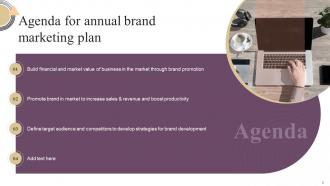
Slide 2: This slide depicts the Agenda of the presentation.
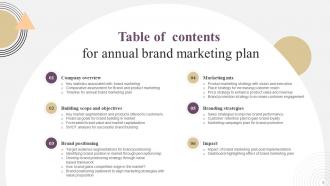
Slide 3: This slide incorporates the Table of contents.
Slide 4: This slide highlights the Title for the Topics to be discussed further.
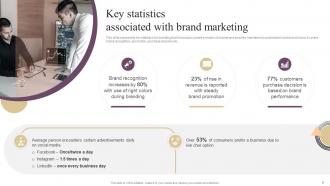
Slide 5: This slide represents key statistics for branding that showcase current scenario of market and enables marketers to understand market and brand.
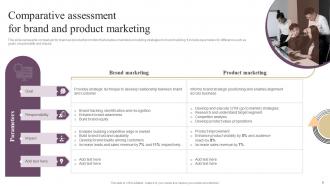
Slide 6: This slide showcases the comparison for brand and product promotion that enables marketers in building strategies for brand building.
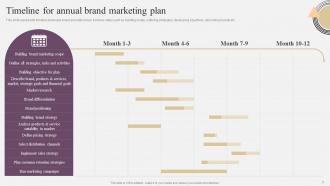
Slide 7: This slide displays the timeline showcase brand promotion plan.
Slide 8: This slide mentions the Heading for the Components to be covered in the following template.
Slide 9: This slide deals with Identifying group of potential audience to offer products.
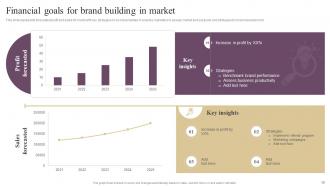
Slide 10: This slide focuses on the Financial goals for brand building in market.
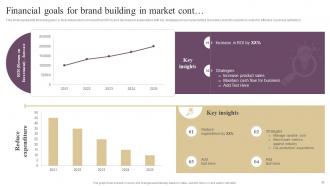
Slide 11: This is yet another slide continuing the Financial goals for brand building.
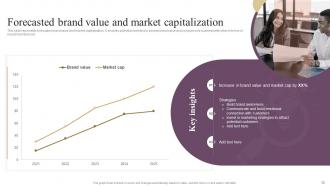
Slide 12: This slide elucidates the forecasted brand value and market capitalization.
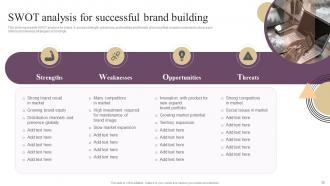
Slide 13: This slide reveals the SWOT analysis for successful brand building.
Slide 14: This slide depicts the Title for the Ideas to be discussed further.
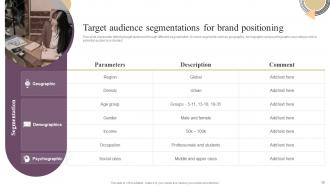
Slide 15: This slide represents defining target audience through different segmentation.
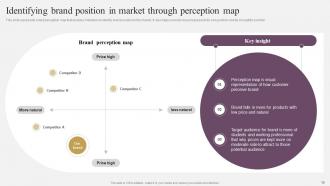
Slide 16: This slide focuses on Identifying brand position in market through perception map.
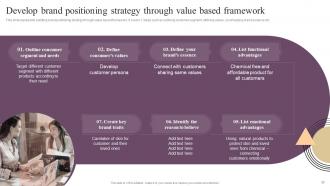
Slide 17: This slide incorporates building brand positioning strategy through value based framework.
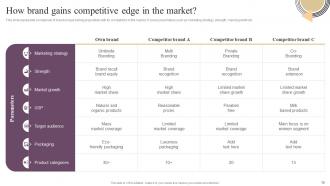
Slide 18: This slide showcases the comparison of brand unique selling proposition with its competitors in the market.
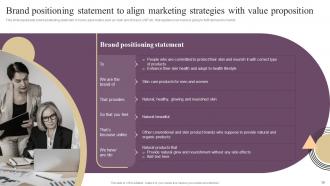
Slide 19: This slide displays the brand positioning statement.
Slide 20: This slide indicates the Title for the Components to be discussed further.
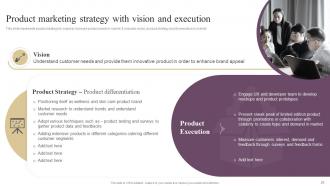
Slide 21: This slide reveals the product strategy for brand to increase product reach in market.
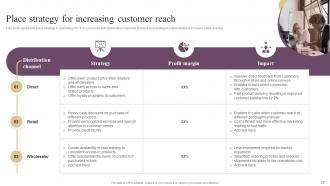
Slide 22: This slide highlights the place strategy in marketing mix.
Slide 23: This slide represents pricing strategy in marketing mix.
Slide 24: This slide talks about the Brand promotion strategy to increase customer engagement.
Slide 25: This slide incorporates the Heading for the Topics to be covered in the forth-coming template.
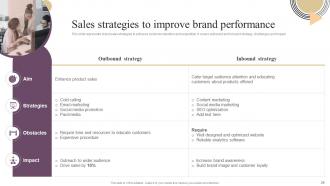
Slide 26: This slide states the brand sales strategies to enhance customer retention and acquisition.
Slide 27: This slide covers the customer retention plan.
Slide 28: This slide represents marketing campaign plan.
Slide 29: This slide mentions the Title for the Topics to be discussed in the next template.
Slide 30: This slide highlights the Impact of brand marketing plan post implementation.
Slide 31: This slide shows the Dashboard highlighting effect of brand marketing plan.
Slide 32: This is the Icons slide containing all the Icons used in the plan.
Slide 33: This slide is used for depicting some Additional information.
Slide 34: This is Our target slide. State your organizational targets here.
Slide 35: This slide reveals the firm's mission, vision, and goal.
Slide 36: This is the 30 60 90 days plan slide for effective planning.
Slide 37: This is the About us slide for stating the information related to the company.
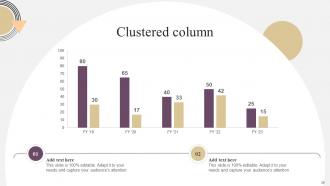
Slide 38: This slide displays the Clustered column.
Slide 39: This is Our team slide. List the information related to your team members here.
Slide 40: This is the Venn diagram slide.
Slide 41: This slide elucidates information related to the Financial topic.
Slide 42: This slide mentions the Location of the firm across the globe.
Slide 43: This is the Idea generation slide for encouraging fresh ideas.
Slide 44: This is the Puzzle slide with related imagery.
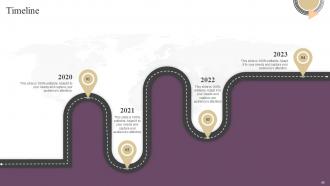
Slide 45: This slide incorporates the Comapny Timeline.
Slide 46: This is Our goal slide. State your firm's goals here.
Slide 47: This slide presents the Company Roadmap.
Slide 48: This is the Thank You slide for acknowledgement.
Annual Brand Marketing Plan Powerpoint Presentation Slides Branding CD with all 53 slides:
Use our Annual Brand Marketing Plan Powerpoint Presentation Slides Branding CD to effectively help you save your valuable time. They are readymade to fit into any presentation structure.


















FAQs for Annual Brand Marketing Plan Powerpoint Presentation
You'll want to nail down who you're targeting first - seriously, this step makes or breaks everything else. Figure out what makes your brand different from competitors, then build your messaging around that. Map out where your audience actually spends time (not where you think they should be) and pick those channels. Set some goals you can actually measure with real deadlines. Oh, and don't forget to split your budget between channels - I learned that one the hard way. Having a system to track what's working is huge too. Honestly, if you get the positioning right upfront, the rest flows way easier.
Honestly, market research is like having a cheat sheet for your whole brand strategy. You'll actually know who your audience is instead of just guessing (which we all do way too much). It shows you what people care about and how they see you compared to competitors. Use those insights to nail your positioning and messaging. Figure out which channels actually work instead of throwing money at random stuff. There's usually some market gap you can jump on too - I've seen brands blow up just from spotting something obvious everyone else missed. Bottom line: let the data guide everything from your brand voice to where you spend.
So you basically need to figure out who actually gives a shit about your brand, then talk to them like real people. A college kid isn't gonna respond to the same stuff as someone's mom, you know? I'd start by looking at your current customers - find maybe 2-3 different types of people buying from you. Demographics help, but honestly their actual behaviors matter more. Once you've got those groups figured out, you can stop doing that whole "spray and pray" thing with your marketing. It's like... why waste money talking to everyone when you could have actual conversations with people who care?
You know how Nike makes you feel like you can conquer the world? That's emotional branding right there. Instead of just selling features, you're making people *feel* something - nostalgia, excitement, like they belong somewhere cool. Apple's genius at this too, making everyone feel innovative just for buying their stuff. Here's the thing though - once customers form that emotional connection, competitors can't just swoop in with better prices. Those feelings stick. Your brand becomes part of their identity, honestly. So figure out what emotion you want people to have when they think of you, then make sure that vibe shows up everywhere. Way more effective than competing on specs alone.
Honestly, you need to track two buckets - brand stuff and actual business impact. For brand awareness, look at recall rates, sentiment, and your share of voice. Social engagement and search volume for your brand are solid indicators too. But here's the thing - none of that matters if it's not driving real results. Track lead quality, conversion rates, and customer lifetime value. Oh, and acquisition costs obviously. I'd set up maybe 3-4 metrics from each bucket on a dashboard. That way you can actually see if people knowing your brand translates to money coming in.
Honestly, just pick 2-3 platforms where your people actually are and stick with those. Trying to be everywhere is a nightmare - learned that the hard way! Post stuff that's genuinely useful, not just "buy our thing" constantly. Behind-the-scenes content works really well. Use hashtags but don't go crazy with them. Maybe team up with some influencers in your space? The whole trick is being helpful first, salesy second. Try posting consistently for like a month and you'll start seeing momentum build. Oh, and actually reply to comments - sounds obvious but so many brands don't.
Okay so honestly, start with what you actually believe in - not some generic mission statement bullshit. People smell fake from miles away. Tell them WHY you started this thing, make it personal. I'd structure it like any good story - there's a problem, you're the solution. Simple as that. But here's the thing everyone messes up: your whole team needs to be able to tell this story casually, not sound like they're reading from a script. Also don't try being everything to everyone. Pick your lane and own it. Consistency across everything you do matters way more than being clever.
So competitor analysis is basically seeing what spots are already taken so you can carve out your own space. Map where your top competitors sit - price, quality, who they're targeting. It's kinda like brand chess honestly. Look for gaps where you won't get demolished going head-to-head. You'll also see what messaging actually works in your space and how to stand out differently. Find a position that's both defensible and actually matters to your customers. Start with your top 5 competitors' positioning - that should give you a solid picture of what's available.
Your logo, colors, and fonts hit people way before they even know what you sell. Apple's that perfect example - their clean look just screams expensive, right? Bright colors make brands feel fun and approachable. But seriously, one terrible font choice can make you look like a total amateur. I've seen it happen so many times. When your visuals stay consistent everywhere, people start recognizing and trusting you more. Mixed-up design just confuses everyone. You should probably check your current stuff - is it actually helping your image or accidentally hurting it?
Honestly, consistency is what makes people trust your brand. When your colors, messaging, and tone match across Instagram, emails, your website - all of it - customers recognize you instantly. I've watched brands totally confuse their audience by sounding corporate on LinkedIn but super casual on TikTok. Not a good look. You'll seem scattered and unprofessional. Make a simple brand guide with your fonts, colors, key messages, and voice. Then stick to it everywhere. Trust me, it's way easier than trying to rebuild confused customers' trust later.
Honestly, budget's probably gonna be your worst enemy. Then you've got marketing saying one thing while sales tells prospects something totally different - drives me nuts how often that happens. Leadership wants results yesterday but brand building takes forever. Good luck explaining that in a board meeting lol. Oh, and trying to keep messaging consistent across every platform? Nightmare fuel. ROI tracking is another headache since brand stuff is hard to measure anyway. My advice? Get everyone on the same page with your core message before you even think about anything else. Skip the flashy campaigns until that's locked down.
So content marketing is basically how you show off your brand personality instead of just talking about it. You're creating stuff that actually helps people - blogs, videos, social posts - while sneakily reinforcing what you stand for. The trick is keeping everything aligned with your brand voice so it doesn't feel all over the place. Honestly, most brands mess this up by being too salesy. Start by looking at what content you've already got and see if it's actually doing anything for your brand goals. It's way more effective than traditional advertising once you get the hang of it.
Think of influencer marketing like digital word-of-mouth - people trust creators they follow way more than regular ads. Find someone whose audience actually matches who you're trying to reach. Don't just go for whoever has the most followers either (though numbers do matter obviously). Micro-influencers are honestly your best bet when starting out. Their engagement rates are usually better and they won't drain your budget. It's basically paying someone else to recommend your stuff to people who already trust them. Oh and make sure it feels natural - nobody likes obvious sponsored content that screams "ad."
Dude, AI is seriously changing the marketing game right now. You can dive deep into customer data, create personalized content for different audiences, and actually predict what'll work before blowing your budget. Plus it handles all the boring stuff - A/B testing subject lines, optimizing ads automatically. Honestly, the speed of change is kinda crazy. My advice? Don't try to do everything at once. Pick one AI tool that fixes something you're already struggling with and start there. Way less overwhelming.
Honestly, just don't be a dick about it lol. Be straight up with people - no fake promises or sneaky pricing tricks. The whole emotional manipulation thing is gross, so skip that. Privacy matters way more now than it used to, so respect people's data. Don't create ads that make certain groups feel left out or stereotyped either. I always think about whether I'd be annoyed if someone marketed to my mom the same way. If the answer's yes, then it's probably crossing a line. Basic rule: treat your customers like actual humans, not wallets.
-
Excellent Designs.
-
Such amazing slides with easy editable options. A perfect time-saver.