


Guide To Build A Personal Brand Powerpoint Presentation Slides





Try Before you Buy Download Free Sample Product
 Impress Your
 Audience
 100%
100% Editable
 Save Hours
 of Time


Personal branding is all about establishing a distinct identity in the eyes of the outside world. Individuals who want to market themselves and increase their visibility on social media must create a solid personal brand. This Guide to Build a Personal Brand PowerPoint presentation will walk you through the steps necessary to create an outstanding personal brand. At first, the presentation begins with a slide that provides an introduction to personal branding and its benefits. The ultimate guide to building a personal brand section will assist individuals in creating an effective image among the target audience by showcasing their values, work experience, skills, and USP. It also includes various tips and tactics to help people manage their digital footprint and stay consistent. Finally, slide naming tools to monitor personal brand discusses the tools that will assist individuals in measuring the performance of their personal brand. Build a powerful template like this for yourself, and book a free demo with our research team now.
People who downloaded this PowerPoint presentation also viewed the following :
Content of this Powerpoint Presentation
Slide 1: This slide introduces Guide to Build a Personal Brand. State Your Company Name and begin.
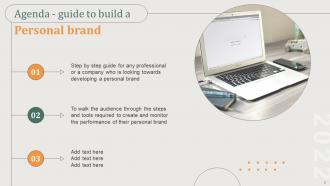
Slide 2: This slide states Agenda of the presentation.
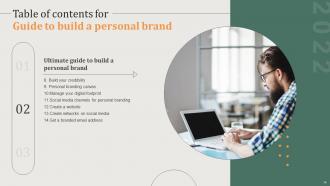
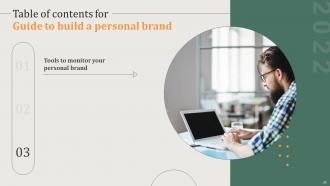
Slide 3: This slide presents Table of Content for the presentation.
Slide 4: This slide highlights title for topics that are to be covered next in the template.
Slide 5: This slide shows Benefits of building a personal brand.
Slide 6: This slide highlights title for topics that are to be covered next in the template.
Slide 7: This slide presents various ways to know about yourself.
Slide 8: This slide displays Major steps to establish your values.
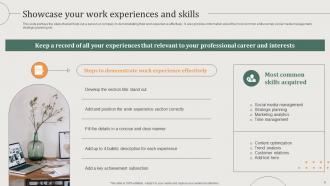
Slide 9: This slide Showcase your work experiences and skills.
Slide 10: This slide represents Steps to identify and understand your target audience.
Slide 11: This slide showcases Key consideration to develop your story.
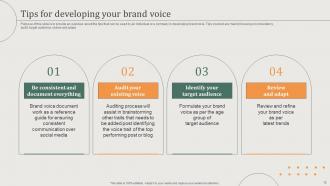
Slide 12: This slide shows Tips for developing your brand voice.
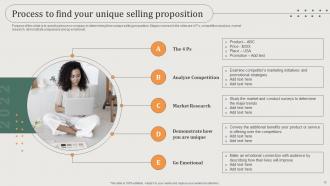
Slide 13: This slide presents Process to find your unique selling proposition.
Slide 14: This slide highlights title for topics that are to be covered next in the template.
Slide 15: This slide displays Key activities to build your credibility.
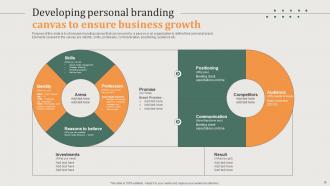
Slide 16: This slide represents branding canvas that can be used by a person or an organization to define their personal brand.
Slide 17: This slide showcases Actions to optimize your digital presence.
Slide 18: This slide shows Selecting social media channels for personal branding.
Slide 19: This slide presents Steps to create an interactive website.
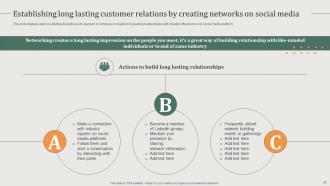
Slide 20: This slide displays various activities that will assist a person or company in creating long lasting relationships.
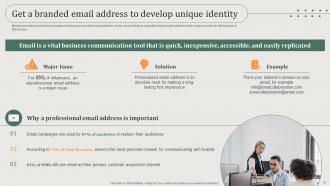
Slide 21: This slide showcases importance of having a branded email address.
Slide 22: This slide highlights title for topics that are to be covered next in the template.
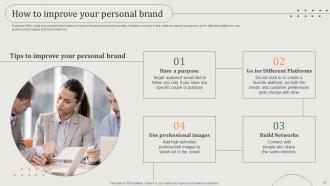
Slide 23: This slide provide information on how to enhance personal branding.
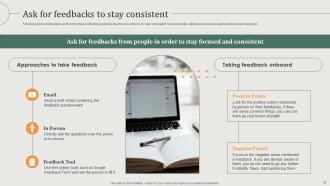
Slide 24: This slide emphasizes on the importance of taking audience feedback in order to remain consistent.
Slide 25: Mentioned slide portrays keys steps that will assist an individual or a company in optimizing their personal website.
Slide 26: This slide helps Ensuring brand presence by building online and offline communities.
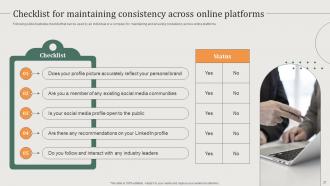
Slide 27: This slide displays Checklist for maintaining consistency across online platforms.
Slide 28: This slide highlights title for topics that are to be covered next in the template.
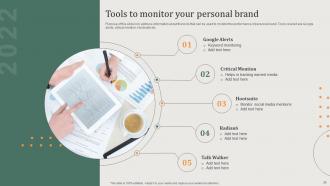
Slide 29: This slide represents Tools to monitor your personal brand.
Slide 30: This slide showcases Icons for guide to build a personal brand.
Slide 31: This slide is titled as Additional Slides for moving forward.
Slide 32: This is About Us slide to show company specifications etc.
Slide 33: This is Our Mission slide with related imagery and text.
Slide 34: This slide shows SWOT describing- Strength, Weakness, Opportunity, and Threat.
Slide 35: This is Our Team slide with names and designation.
Slide 36: This slide provides 30 60 90 Days Plan with text boxes.
Slide 37: This slide shows Circular Diagram with additional textboxes.
Slide 38: This is a Timeline slide. Show data related to time intervals here.
Slide 39: This is a Thank You slide with address, contact numbers and email address.
Guide To Build A Personal Brand Powerpoint Presentation Slides with all 44 slides:
Use our Guide To Build A Personal Brand Powerpoint Presentation Slides to effectively help you save your valuable time. They are readymade to fit into any presentation structure.




















FAQs for Guide To Build A Personal Brand
Honestly, it's just three things that matter: being authentic, staying consistent, and knowing your value. People can spot BS instantly, so don't try to be someone you're not. Your messaging and visuals should match everywhere - LinkedIn, Instagram, whatever you use. But here's the thing that trips everyone up: you gotta be super clear about what makes you different. What problem do you solve better than anyone else? Like, why would someone pick you over the other guy? I'd start by looking at what you're already posting and see if it actually tells that story. Most people's brands are all over the place.
Look, people remember stories way better than random accomplishments on a list. Share the messy stuff - challenges you faced, weird lessons learned, those "oh shit" moments that actually changed how you work. It's basically like hanging out with someone versus just scanning their LinkedIn profile. Stories make you human. Drop them into posts, conversations, whatever. I'd pick maybe 2-3 solid ones that show off what you're good at. Practice them so they don't sound rehearsed when someone asks about your background. Trust me, it works way better than rattling off bullet points.
Honestly, visuals make or break your personal brand these days. People judge you in like 2 seconds based on your photos and overall look online. I'd pick 2-3 colors and use them everywhere - your LinkedIn, website, Instagram, whatever. Consistency is everything here. Get a decent professional headshot too, even if it costs a bit. The iPhone selfie thing just doesn't cut it anymore, sorry. Your colors and fonts should feel like "you" across all platforms. I see so many people with completely different vibes on different sites and it's confusing. Start simple - good headshot, consistent colors, clean fonts.
Honestly? Just pick one or two platforms where your people actually are - don't spread yourself too thin like I did at first. Use the same profile pic and bio everywhere so you're recognizable. Share stuff that actually helps people, but throw in some personality because nobody wants to follow a boring corporate account. I always try to comment on other people's posts in my field, like genuinely engage don't just drop generic "great post!" replies. Oh and audit your current profiles first - delete anything cringey that doesn't match how you want to be seen professionally. Being real beats trying to look perfect every time.
Okay so first thing - get your basics down. Same colors, fonts, and headshot everywhere. I made this mistake where LinkedIn said "marketing expert" but Twitter was all about my pottery side hustle lol. Pick 2-3 main themes for your expertise and stick with them. Your bio should hit the same points whether it's LinkedIn, Instagram, whatever. Honestly? Make yourself a little brand doc with your colors and key messages. Sounds dorky but it saves you from staring at a blank post going "what am I even about again?" Trust me on this one.
Okay so first, write down everything you're actually good at. Then think about what problems you solve differently than everyone else. The weird quirks in how you work? Those are honestly your secret weapon - they make you stick out. Pay attention to what people always bug you for help with. What do you hear over and over in feedback? There's your pattern right there. Test if this combo actually matters to anyone in your field though. Your value thing has to feel like YOU, not some polished version you think employers want. Being authentic beats trying to be perfect every time.
Honestly, the worst thing you can do is be inconsistent - like posting professional stuff on LinkedIn then going full chaos mode on Twitter. Don't try pleasing everyone either, it just makes you bland. I see so many people copying what "successful" accounts do instead of being themselves. Also? Think before you post because one stupid rant can torpedo everything (I've watched it happen). Being constantly salesy is annoying too. People want to connect with actual humans, not some corporate robot. Just ask yourself "would I hire this person?" before hitting send.
Check your follower growth and engagement rates, but honestly? The behind-the-scenes stuff tells you more. Better opportunities coming your way? Speaking invites? Those matter way more than vanity metrics. Set up Google alerts for your name - you'd be surprised what pops up. Website traffic's useful too, especially if you're tracking where people find you. The real test though: are the *right* people reaching out for the *right* reasons? Quality beats quantity every time. Oh, and pay attention to your conversations getting deeper or more interesting lately.
Think of networking like having a bunch of people spreading the word about how awesome you are. Way better than trying to promote yourself solo, honestly. Each person you connect with becomes another voice talking up your skills and reputation. Trust me, when someone gets a recommendation from a friend, they actually listen - unlike those random LinkedIn messages we all ignore. Your network basically becomes your personal hype squad. Don't just work on your brand alone and hope people notice. Get out there, make real connections, and let them do half the work for you.
Don't completely reinvent yourself for different audiences - that's exhausting and feels fake. Instead, figure out your 3-4 core strengths and values, then just emphasize different ones depending on who you're talking to. Like, if you're naturally analytical AND creative, lean harder into the data stuff when you're talking to tech people. But highlight your creative projects when you're in artsy circles. Same person, different spotlight. LinkedIn vs Instagram is the perfect example of this - you wouldn't post the same way on both, right? Your personality stays consistent, but the vibe shifts. Way more sustainable than trying to be someone completely different everywhere you go.
Check out the big names in your space - they're usually known for ONE thing, not scattered all over the place. Honestly, the best ones just share what they actually know instead of posting generic inspiration porn. Pick whatever platform your people use most and just be helpful there first. Don't try to sound perfect either - the accounts that feel too polished are boring. You want to come across like a real person who happens to know their stuff. Watch what gets people actually talking, not just liking. Most successful personal brands? They're consistent but they don't take themselves too seriously.
So first thing - go through everything you've got online right now. LinkedIn, resume, social media, the works. Figure out what's actually representing you vs. where you want to be. Update your bio and headline to match your new direction. Oh, and get a new headshot if yours is ancient - seriously makes a difference. The tricky part is staying consistent everywhere. You don't want people finding some random old profile that makes you sound completely different. It's like having multiple personalities online, which just confuses everyone about what you actually do now.
Honestly, just pick 1-2 platforms where your people actually are. LinkedIn's great for professional stuff and thought leadership posts. I swear by Canva for graphics - saves me so much time even though I can barely draw stick figures. Buffer's clutch for scheduling everything so you're not posting at 2am. WordPress or Squarespace both work fine for websites, though I'm partial to WordPress. Oh, and definitely set up Google Analytics early - you'll want to see what content actually hits. Don't spread yourself too thin at first. Master a couple platforms, then branch out once you've got a rhythm going.
Look, posting regularly is basically like building reputation compound interest. People start seeing you as the expert when you consistently drop helpful content. Way better than letting your LinkedIn just sit there doing nothing, honestly. Don't stress about being perfect though - just pick one platform and commit to weekly posts. Focus on actually helping people solve real problems. Your personality will shine through naturally, and that's what really matters. I started doing this last year and the difference is wild. Opportunities literally started coming to me instead of the other way around.
Google yourself every few weeks - seriously, you'll be shocked what random stuff shows up. Set up alerts for your name too so you don't miss anything new. Go through your old social media posts (we've all posted cringe stuff) and tighten up those privacy settings. LinkedIn is actually useful for once - post about work stuff to build good content. If there's negative stuff online, try addressing it directly or just flood search results with better content. The whole thing works better if you stay on top of it monthly instead of scrambling later.
-
World-class PowerPoint designs that are fully customizable!
-
Appreciate the research and its presentable format.