


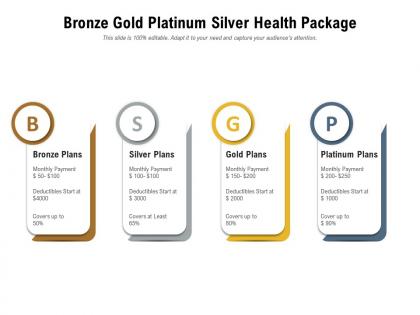
Bronze gold platinum silver health package




Try Before you Buy Download Free Sample Product
 Impress Your
 Audience
 100%
100% Editable
 Save Hours
 of Time


Our Bronze Gold Platinum Silver Health Package are topically designed to provide an attractive backdrop to any subject. Use them to look like a presentation pro.
People who downloaded this PowerPoint presentation also viewed the following :
Bronze gold platinum silver health package with all 2 slides:
Use our Bronze Gold Platinum Silver Health Package to effectively help you save your valuable time. They are readymade to fit into any presentation structure.
FAQs for Bronze gold platinum
Look for the basics first - preventive stuff like blood work, cancer screenings, vaccinations. Mental health coverage and emergency care are non-negotiable. Don't forget prescription coverage either. Here's what people always skip: dental and vision. I learned this the hard way when my friend had a tooth infection that turned into something way worse. Specialist access is good to have too. Really though, match it to YOUR situation. Write down your health concerns and family history first. Then compare packages based on that instead of just picking whatever's cheapest. Trust me on this one.
You basically figure out what different groups actually worry about health-wise. Seniors need tons of preventive screenings and chronic disease stuff - they're dealing with way more ongoing issues. Young families? Pediatric care and maternity benefits are huge, plus good emergency coverage because honestly, kids are walking disasters waiting to happen. A 25-year-old doesn't need cardiac monitoring like a 65-year-old does, so why pay for it? You can mess with deductibles and copays too based on how much people typically use their insurance. Survey people about their biggest health fears first - that'll tell you exactly what to focus on.
Look, bundling services is such a smart move. Your patients get everything done in one shot instead of running around to different appointments - way less hassle. Plus they save money on the package deal. The best part? People actually follow through on their screenings when it's all grouped together. I swear, convenience is everything these days. Your admin costs drop too since you're dealing with fewer separate bills and scheduling headaches. Both sides can budget better with predictable pricing. Just figure out what services your patients usually need at the same time and group those together first.
So here's the deal with preventive care - it's literally how they build these health packages. Annual checkups, screenings, vaccines get baked right into the coverage because catching stuff early is way cheaper than treating cancer or whatever later. Smart business move, honestly. When you're shopping around, look for what preventive stuff comes free - no copays or deductibles. That tells you if they actually want to keep you healthy or just make money when you're already screwed. My sister learned this the hard way with her old plan. Free mammograms and colonoscopies are goldmines.
Tech makes health package delivery way smoother - better tracking, coordination, all that good stuff. Electronic records let you see how patients are doing across different services. Telemedicine is huge for rural areas where people can't easily get to doctors. Mobile apps keep patients on track with meds and appointments, which honestly saves everyone headaches. AI can spot which patients might need help before things go sideways. The cool part? Everything connects automatically - lab work, specialist visits, preventive care all talk to each other. I'd start by figuring out where your current system gets bogged down.
Don't make telehealth some weird side thing - build it right into what you're already doing. Works great for routine check-ups, mental health stuff, and those quick follow-ups after regular appointments. Your biggest headache will be if your scheduling, billing, and records don't talk to each other (learned that one the hard way). Train your team to walk patients through the tech setup because honestly, that's where most people get stuck. Oh, and start small - pick one service, test it out, see what breaks, then roll it out wider once you've got the kinks worked out.
Oh man, you've gotta include mental health coverage - it's honestly a game changer. Depression and anxiety are everywhere in workplaces these days, and when people don't get help, you end up with way more sick days and people just burning out. The thing is, mental and physical health are totally connected anyway. Getting someone into counseling early is so much cheaper than waiting until they're in crisis mode. I learned this the hard way at my last job when half our team was stressed out of their minds. Look for packages with both preventive stuff and actual treatment options.
So basically, health packages work really well because they bundle everything together - preventive stuff plus actual treatment. Patients love not having to run around to different doctors all the time (honestly, who has time for that?). Care feels way more connected when it's all under one roof. You catch problems earlier since there's better follow-up, and people actually stick to their appointments more. The coordination piece is huge - that's where you'll see the biggest difference in outcomes and how happy patients are. If you're looking at packages, definitely pick ones with solid care coordination built in.
Honestly, pricing health packages is such a balancing act. You don't want to price people out, but you also can't lose money on every patient - that's just bad business. Look at what your community can actually afford and what competitors are charging. Sliding scale fees help a ton if you can swing it. Insurance coverage makes or breaks most decisions, so figure out what's typically covered first. I'd start with basic packages at lower prices, then add premium stuff later. The worst thing is cutting essential services just to hit a price point - people notice. Maybe run some quick surveys to see what folks in your area actually value? Sometimes what we think matters isn't what patients care about.
Oh, they're actually pretty clever tbh - health packages work like built-in accountability buddies. You pay upfront so you feel guilty wasting the money (classic sunk cost thing). The cool part is how they bundle everything together - checkups, screenings, maybe some wellness coaching. Creates this whole routine that's harder to skip. Regular check-ins with your doctor mean you get real-time feedback instead of just winging it solo. Look for ones with goal tracking though - that's where the magic happens for actually changing habits. I mean, who doesn't love checking boxes off a list?
Look at four main things to see if your health package is actually working. Health outcomes first - are people getting better with whatever you're targeting? Also check if employees are even using the benefits (waste of money if they're not, right?). Cost-effectiveness matters too - compare what you're spending to actual improvements and fewer sick days. Don't forget employee satisfaction surveys and feedback sessions. The whole point is whether your team feels healthier and supported. Oh, and definitely get baseline measurements before you change anything so you can track real progress later.
Oh man, these health packages are actually perfect for chronic stuff! You get all your regular screenings, labs, and specialist visits bundled together - no more playing phone tag to book everything separately (seriously the worst). Your doc can track how your blood work changes over time and catch problems before they get scary. Plus most come with wellness coaching or whatever. Honestly, I'd hunt for packages that specifically mention your condition since they'll have the right tests already built in. Makes life so much easier when everything's coordinated.
Dude, the regulatory stuff is genuinely messy. Each state has different rules about what counts as a health package vs actual insurance - and trust me, those lines blur really fast. You don't want your packages accidentally becoming insurance products because that triggers a whole different nightmare of regulations. HIPAA's another thing if you're touching any health data. Oh, and state licensing requirements vary everywhere too. Honestly? Get a healthcare lawyer involved from day one. The penalties for screwing this up are no joke, and figuring it out after the fact is way more expensive.
Health packages are like having everyone use the same playbook - your primary care doc, specialists, hospitals, all of them. Instead of patients getting lost in the shuffle (which happens way too often), you get smooth handoffs and actual communication between teams. The patient journey becomes seamless rather than this messy patchwork of disconnected services. Honestly, when it works well it's pretty impressive. Better coordination, clearer referrals, nobody dropping the ball. I'd start by mapping where your biggest gaps are right now - that'll show you what needs fixing first.
Honestly, everything's moving toward personalized stuff now - nobody wants those generic health plans anymore. Mental health coverage is finally becoming normal (about time). Most employers are pushing preventive care over just treating you when you're already sick, which makes sense. Digital integration is huge too - telemedicine, health apps, all that bundled together. Transparent pricing is becoming a thing, thank god, and you can actually customize benefits now. I'd check what your current provider has for preventive screenings and digital tools first. That's where the real value is these days, plus it might save you from switching plans entirely.
-
The content is very helpful from business point of view.