


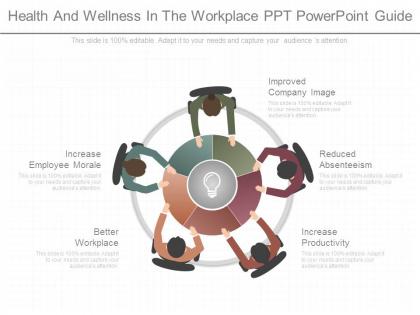
Health and wellness in the workplace ppt powerpoint guide




Try Before you Buy Download Free Sample Product
 Impress Your
 Audience
 100%
100% Editable
 Save Hours
 of Time


Our Health And Wellness In The Workplace Ppt Powerpoint Guide team act with due diligence. They are careful about being absolutely accurate.
People who downloaded this PowerPoint presentation also viewed the following :
Health and wellness in the workplace ppt powerpoint guide with all 7 slides:
Happiness becomes a habit with our Health And Wellness In The Workplace Ppt Powerpoint Guide. They don't allow difficulties to come close.
FAQs for Health and wellness in the workplace
Honestly, you'll want to focus on the basics first - health screenings, fitness stuff, mental health resources, and nutrition programs. Participation rates will suck without incentives though, so throw in gift cards or extra vacation days. Leadership has to actually care or nobody else will bother. Oh, and definitely track your numbers - participation rates, health outcomes, that kind of thing - so you can prove it's worth the money later. My advice? Don't try to launch everything at once. Pick like two components max and build from there. Way less headache that way.
Honestly, mix hard numbers with what your people actually tell you. Sick days going down, healthcare costs dropping, productivity up - that stuff matters. But employee surveys are where you'll really see if programs work or if everyone's just going through the motions. Don't get caught up obsessing over participation rates like some companies do. The real wins? Better retention, fewer workers' comp claims, less stress-related time off. Pick maybe 3-4 metrics that match what you're trying to achieve, then just track them consistently. Oh and retention numbers don't lie - they're usually your best indicator.
Dude, mental health at work is seriously underrated. Your brain just can't function when you're stressed or anxious - I've literally sat at my desk for hours getting nothing done. Focus goes out the window, you make terrible decisions, and honestly? You end up calling out more often. It's not just you either - whole teams suffer when people are struggling. Higher turnover, everyone's miserable. Smart companies are finally catching on though. They're seeing actual results when they support employees' mental health - less sick time, people actually stick around. Definitely worth asking HR about resources if your place doesn't have any yet.
Honestly, just make moving around feel normal instead of like some corporate wellness thing. Walking meetings are great. Standing desks help too. I've seen places do gym membership discounts but the small daily stuff matters way more - like actually taking stairs or stretching breaks. Leadership has to walk the walk though, literally. If your boss sits all day, everyone else will copy that. Oh and people need to use their lunch breaks to go outside! Remove the barriers instead of making it feel like another task on their list. Simple changes stick better anyway.
Honestly, you don't need to spend a fortune on this stuff. Start by asking your team what they actually want - might surprise you what they say. Flexible hours are huge if you can swing it, and creating a culture where people don't feel guilty about taking actual breaks makes a massive difference. Try walking meetings or set up a quiet corner somewhere. Partner with local gyms for group rates, or bring in someone to talk about stress management. The remote work thing is gold too if your business allows it. Pick one or two things that won't kill your budget and go from there.
Your body will literally hate you if you don't get your desk setup right. Monitor should be eye level, feet flat, keyboard close enough that you're not reaching. Trust me on this - I messed up my shoulder pretty bad ignoring all that stuff. The pain doesn't just stay at work either, it follows you home and makes everything miserable. Repetitive stress injuries are no joke. Honestly, just fix your chair height first and see how much better you feel. Takes like two minutes but saves you months of physical therapy later.
Honestly, just ask your team what they actually want first - might save you from stocking weird health food nobody will touch. Mix it up with easy stuff like fruit and nuts, but don't forget healthier versions of things people actually crave. Good fridge setup is crucial, and label everything (especially allergens). Local vendors are great for rotating the menu so it doesn't get boring. The real trick though? Make the healthy stuff just as convenient as the junk. Nobody's walking past three vending machines to grab an apple, you know? Start with like one or two changes and see how it goes.
Honestly, just give people real control over their schedules and workload instead of throwing pizza parties while they're still pulling 60-hour weeks. Flexible hours and remote options are huge. Set deadlines that don't need constant overtime - crazy concept, right? The stuff that actually works? No emails after hours, mandatory time off, and managers who don't guilt trip people for having boundaries. Survey your team first to see what they want, then test out a couple changes. Your people will actually want to work when they're not completely fried.
Honestly, stress management training works way better than people think. Your team will focus better and make smarter decisions - plus they'll actually show up to work more often. I know it sounds like corporate BS at first. But here's the thing: when people learn basic stuff like mindfulness or how to manage their time, they handle pressure way better. The numbers back it up too. If you're thinking about it, maybe try it with just a few people first? Track how fast they finish projects before and after. You might be surprised.
Honestly, your workspace affects your mental health way more than you'd think. I learned this the hard way when I was stuck in this awful corner cubicle for months. Natural light is everything - seriously, try to get near a window if you can. Clutter makes me anxious, so I keep my desk pretty clean. Air quality matters too, which sounds boring but it's true. Maybe grab a small plant or something to make it feel less corporate? Even little changes help. Oh, and decent lighting saves your eyes from strain headaches.
Honestly? Start by sharing something vulnerable yourself first - maybe how you've been struggling with burnout or whatever. People won't open up if leadership feels fake. Set ground rules about confidentiality upfront so it's not just gossip central later. Ask real questions, not the "how's everyone doing" nonsense. Anonymous surveys work great for surfacing awkward topics beforehand. But here's the thing - you HAVE to follow through with actual changes afterward. Otherwise people see right through it and it becomes that corporate theater we all hate. Also skip the yes/no questions entirely.
Honestly, people tune out generic HR emails about "wellness opportunities" - you've gotta get specific. Tell them they'll save $200 on insurance or whatever the actual number is. Hit multiple channels too - emails, team meetings, those lunch-and-learn things. But here's what really works: get employees who've actually used the programs to share their stories. Nobody trusts corporate messaging, but they'll listen to Sarah from accounting talking about how the mental health benefit helped her kid. Oh, and timing is huge - promote right before enrollment or when everyone's stressed about deadlines. Keep it simple, repeat often, and always lead with what's in it for them personally.
Oh man, so many good options! Fitness trackers and apps are the obvious choice - people love competing over step counts. Mental health stuff like Headspace for Work is getting really popular too (probably because we're all stressed lol). There are ergonomic apps that help remote workers fix their terrible desk setups. Scheduling tools can block break time or remind people to actually get up and move. Even basic hydration reminders work surprisingly well. Honestly, I'd pick one thing first and see how your team responds before going crazy with it.
So here's the thing about workplace wellness - you can't just throw some generic yoga classes at everyone and expect it to work. Different people have completely different needs. Think about it: someone might have dietary restrictions, another person feels weird about therapy stuff, or maybe they're juggling kids and can't make those 6pm sessions. Honestly, most companies totally miss this. What you really need to do is actually ask your employees what wellness means to them first. Then build stuff that works for everyone, not just the obvious demographic.
Money works - HSA contributions, cheaper insurance, gift cards, cash for hitting goals. But honestly? Sometimes the non-money stuff hits better. Extra PTO days, work from home perks, gym class subsidies. We started doing step challenges at my last job and people got weirdly competitive about it, which was hilarious but effective. Different people want different things though. Survey your team first - don't just guess what'll motivate them. Mix it up with both types of rewards. Short challenges keep momentum going better than year-long programs that people forget about.
-
Editable templates with innovative design and color combination.
-
Amazing product with appealing content and design.