

Hellofresh investor funding elevator pitch deck ppt template




Try Before you Buy Download Free Sample Product
 Impress Your
 Audience
 100%
100% Editable
 Save Hours
 of Time


HelloFresh is the worlds leading meal kit provider that works with food subscriptions, offering pre-portioned ingredients at clients doorsteps. Check out our professionally designed pitch deck on HelloFresh Investor Funding, which effectively attracts investors by distilling the company in a condensed and marketable message for potential investors. The template covers slides about firm overview, impressive highlights of meal kit provider platform across globe, growth flywheel of the platform, showcasing menu expansion over the years, core competencies of the platform in terms of experience, technology, data, and relationships. The deck captures investors attention with slides about multiple offerings to clients, ensuring convenience through a reduction in cooking time, the integrated supply chain for capturing primary profit pool across the value chain, improved revenue retention by cohort, food order behavior across the platform, competitive positioning of the platform, the market opportunity of the platform, platforms market assessment, opportunity associated to consumers food budget, profitable business model, the superiority of eCommerce membership model of the platform and critical people associated to HelloFresh. Download the 100 percent editable pitch deck now.
People who downloaded this PowerPoint presentation also viewed the following :
Content of this Powerpoint Presentation
Slide 1: This slide introduces Investor Funding Elevator Pitch Deck. State Your Company Name and begin.
Slide 2: This slide shows Table of Content for the presentation.
Slide 3: This slide presents details about HelloFresh as emerging meal kit provider along with its overview, mission statement, impressive highlights, etc.
Slide 4: This slide caters details about impressive highlights of HelloFresh as most popular meal kit across globe.
Slide 5: This slide displays details about growth flywheel of HelloFresh platform in terms of enhanced product and selection, optimized customer experience, etc.
Slide 6: This slide represents details about consistent menu expansion over years in terms of wide variety of menu options, category options.
Slide 7: This slide caters details about enforcing core competencies in terms of experience, technology, data and relationships.
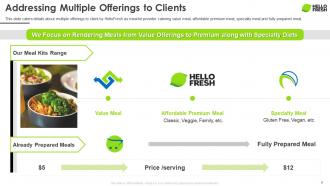
Slide 8: This slide presents details about multiple offerings to client by HelloFresh as meal kit provider catering value meal, affordable premium meal, specialty meal and fully prepared meal.
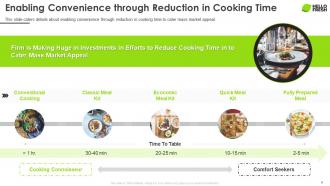
Slide 9: This slide caters details about enabling convenience through reduction in cooking time to cater mass market appeal.
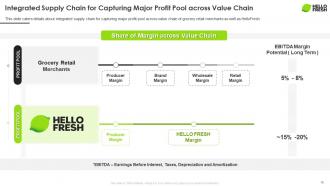
Slide 10: This slide displays details about integrated supply chain for capturing major profit pool across value chain of grocery retail merchants.
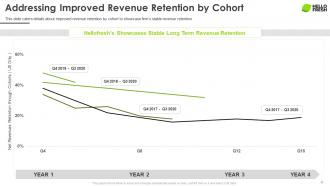
Slide 11: This slide represents details about improved revenue retention by cohort to showcase firm’s stable revenue retention.
Slide 12: This slide caters details about food order behavior of HelloFresh platform as compared to competitors in terms of number of transactions.
Slide 13: This slide presents details about competitive positioning map of HelloFresh along with major players existing by assessing them on convenience and affordability.
Slide 14: This slide caters details about market opportunity for HelloFresh across total food market.
Slide 15: This slide displays details about global meal kit delivery services market assessment in terms of market share through offerings, CAGR, market share of meal service kit providers.
Slide 16: This slide represents details about opportunity associated to consumer’s food budget.
Slide 17: This slide caters details about profitable business model of HelloFresh in terms of key partners, key activities, value propositions, etc.
Slide 18: This slide presents details about HelloFresh ecommerce membership model superiority as compared to standard ecommerce models
Slide 19: This slide caters details about clients associated to HelloFresh platform in terms of major clients and client testimonials
Slide 20: This slide displays details about key people associated to HelloFresh platform executive team and are responsible in making key strategic decisions.
Slide 21: This slide represents details about future initiatives by HelloFresh platform that will focus on leveraging connections across potential stakeholders.
Slide 22: This slide shows Contact Us for HelloFresh.
Slide 23: This slide presents HelloFresh Investor Funding Elevator Pitch Deck Icons.
Slide 24: This slide is titled as Additional Slides for moving forward.
Slide 25: This slide displays Line Chart with two products comparison.
Slide 26: This slide represents Bar Chart with two products comparison.
Slide 27: This is Our Mission slide with related imagery and text.
Slide 28: This slide presents Roadmap with additional textboxes.
Slide 29: This slide shows Post It Notes. Post your important notes here.
Slide 30: This slide displays Venn diagram with text boxes.
Slide 31: This is a Timeline slide. Show data related to time intervals here.
Slide 32: This slide shows 30 60 90 Days Plan with text boxes.
Slide 33: This slide presents Puzzle with related icons and text.
Hellofresh investor funding elevator pitch deck ppt template with all 33 slides:
Use our Hellofresh Investor Funding Elevator Pitch Deck Ppt Template to effectively help you save your valuable time. They are readymade to fit into any presentation structure.
-
HelloFresh Investor Funding Elevator Pitch Deck
-
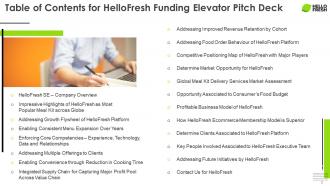
Table of Contents for HelloFresh Funding Elevator Pitch Deck
-
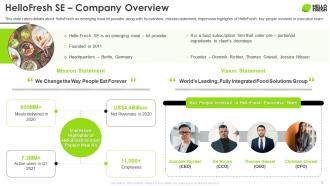
HelloFresh SE Company Overview
-
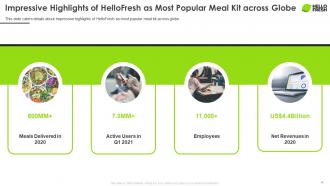
Impressive Highlights of HelloFresh as Most Popular Meal Kit across Globe
-
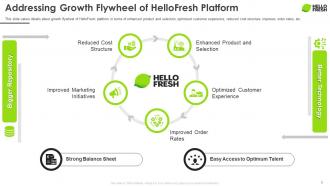
Addressing Growth Flywheel of HelloFresh Platform
-
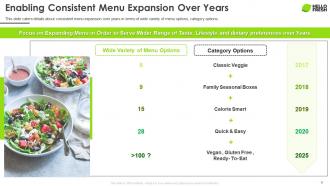
Enabling Consistent Menu Expansion Over Years
-
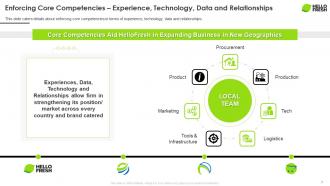
Enforcing Core Competencies Experience Technology Data and Relationships
-
Addressing Multiple Offerings to Clients
-
Enabling Convenience through Reduction in Cooking Time
-
Integrated Supply Chain for Capturing Major Profit Pool across Value Chain
-
Addressing Improved Revenue Retention by Cohort
-
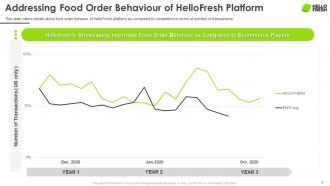
Addressing Food Order Behaviour of HelloFresh Platform
-
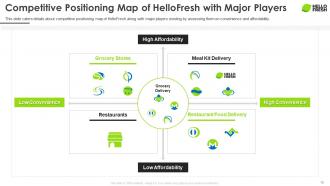
Competitive Positioning Map of HelloFresh with Major Players
-
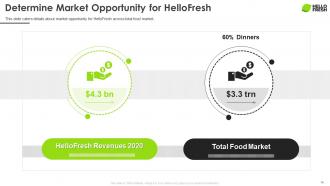
Determine Market Opportunity for HelloFresh
-
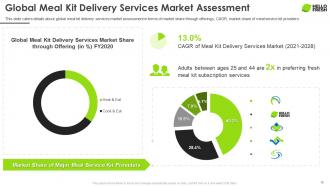
Global Meal Kit Delivery Services Market Assessment
-
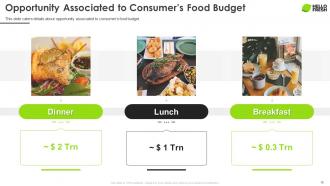
Opportunity Associated to Consumer s Food Budget
-
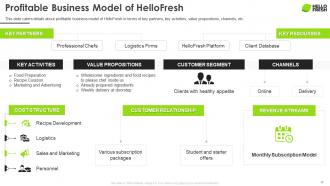
Profitable Business Model of HelloFresh
-
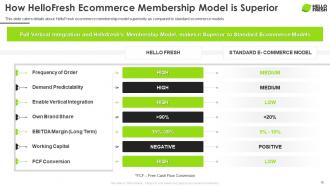
How HelloFresh Ecommerce Membership Model is Superior
-
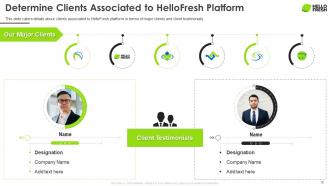
Determine Clients Associated to HelloFresh Platform
-
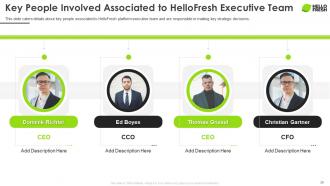
Key People Involved Associated to HelloFresh Executive Team
-
Addressing Future Initiatives by HelloFresh
-
Contact Us for HelloFresh
-
HelloFresh Investor Funding Elevator Pitch Deck Icon Slide
-

Additional slide
-
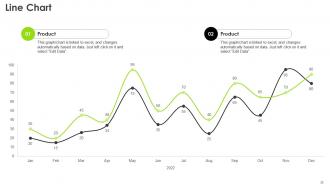
Line Chart
-
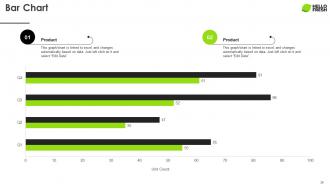
Bar Chart
-
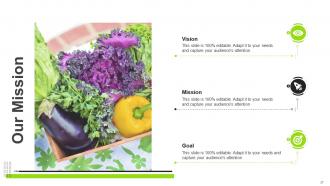
Our Mission
-
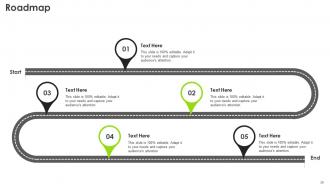
Roadmap
-
Post it Notes
-
Venn Diagram
-
Timeline
-
Hellofresh Investor Funding Elevator Pitch
-
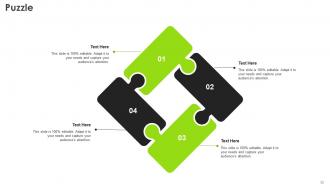
Puzzle
FAQs for Hellofresh investor funding elevator pitch
So HelloFresh basically went all-in on showing investors their customer numbers were legit. Monthly active users, average order value, lifetime value - all that stuff to prove people weren't just doing one order and dipping. Their repeat rates were honestly pretty impressive, which matters tons for subscription businesses. Geographic expansion was another big talking point - how fast they were growing in new markets. But yeah, retention was probably their ace in the hole since it showed this wasn't just some fad that'd die out.
So HelloFresh basically said "yeah we know there's competition, but look at all the reasons we're crushing it." They played up their head start in the market and how their size gets them better deals with suppliers - stuff that's genuinely hard for new companies to match overnight. Smart strategy tbh, because investors are always paranoid about competition killing their investment. Brand recognition was another big thing they pushed, plus their customer retention numbers. I mean, makes sense - why pretend the competition doesn't exist when you can just show why you'll beat them? Bottom line: don't run from those tough questions, own your advantages instead.
HelloFresh killed it by showing investors their subscription model meant steady, predictable cash flow every month. The grocery space was still pretty old-school back then, so they had this huge opportunity to grab market share. Their unit economics actually made sense too - way better than most food delivery companies that were just burning money. They weren't chasing some weird food trend either, just solving that daily "what's for dinner?" problem we all have. Plus they could prove customers stuck around, which investors love seeing. Honestly, their timing was perfect as the category creator. If you're pitching, definitely highlight that recurring revenue angle.
So HelloFresh basically nailed this by breaking down their CAC vs LTV with actual visuals - way easier to follow than just throwing numbers at you. They spent like €40-60 to get each customer but those people were worth €150-200+ over time. What's cool is they didn't just lump everything together. Different marketing channels had totally different performance - some cost more upfront but paid off way better later. Their retention kept getting better too, which obviously helped the math. Main thing though? Don't just look at overall averages or you'll miss the real story hiding in your segments.
HelloFresh nailed their pitch deck visuals tbh. They used clean infographics for their supply chain, plus customer journey maps that actually made sense. The before/after meal photos were solid too. What really worked was how they visualized market data - showed growth without drowning investors in spreadsheets. Those lifestyle shots of families cooking together? Way better than boring SaaS screenshots. Process flows were genius for explaining their business model - made everything click instantly. Keep visuals simple but punchy. Honestly, their approach should be your template for breaking down complex stuff.
So HelloFresh basically had three big moves planned: hitting new countries, keeping customers around longer (plus getting them to buy more stuff), and branching out beyond just meal kits. They wanted to go from their starting markets to like 10+ countries - which honestly seemed pretty ballsy at the time. The whole thing hinged on tech upgrades and making their operations way more efficient to handle that kind of scale. What's cool is how they didn't just throw out crazy growth numbers. They actually mapped realistic timelines for breaking into each market, which you should totally steal for your projections.
Yeah so HelloFresh was pretty bold with their numbers - going from like $3M to over $1B in 5-6 years. Wild projections honestly. They wanted to jump from 3 markets to 10+ and grow customers exponentially. Unit economics looked optimistic but they actually had decent cohort data showing people stuck around and ordered more frequently. Total hockey stick stuff, but at least there was some substance behind it. Oh and they planned to improve margins by scaling ops and cutting acquisition costs. For your deck though, definitely focus on showing how your unit economics get better over time. That's what VCs really care about beyond the flashy growth charts.
So HelloFresh was pretty clever about this - they tackled three annoying things at once: meal planning takes forever, grocery shopping sucks, and people want to cook but don't know what to make. Their whole thing was "we'll deliver pre-measured ingredients plus easy recipes straight to your door." Smart move because busy people still wanted that satisfaction of actually cooking something themselves, you know? It hit that sweet spot of convenience without feeling like cheating. When you're doing your own pitch, try solving a bunch of related headaches with one simple fix.
Dude, HelloFresh was super smart about this. Customer testimonials basically made their whole pitch work because food delivery was still sketchy territory back then. They didn't just throw around numbers - they showed actual quotes from people raving about the convenience and time savings. Plus retention data proved customers weren't just one-and-done. Honestly, that's way more convincing than a bunch of spreadsheets. When you're putting together your pitch, definitely grab some real user feedback. Nothing beats hearing actual humans explain why your thing matters to them.
HelloFresh nailed this part of their deck. They showed the grocery market is massive - $3.4 trillion globally - but meal kit penetration was still under 1% in most places. Huge opportunity, right? Plus they had consumer data proving people are more time-crunched than ever and want convenient quality meals. Smart placement too - they put all this research right before their solution slides to build that "we need to act now" feeling. Oh, and nothing felt random or forced. When you're working on your pitch, definitely steal this approach. Use market research to prove your problem exists first, then show how you'll solve it.
Oh man, HelloFresh nailed it with three key things. Their asset-light approach was brilliant - no physical stores, just warehouses. Geographic expansion came next, basically copy-pasting their model everywhere. Then automation and data stuff for efficiency - meal planning, routes, all that. Honestly? They're more of a tech company doing food than actual food biz, which is kinda genius if you think about it. The unit economics they showed were probably what sealed the deal for investors. You should totally check those numbers out if you're pitching something similar - that's where the real magic happens.
Oh yeah, HelloFresh was super clever about this. They basically showed investors exactly how their operational stuff translates to better margins. Like automating warehouses, smarter delivery routes, better supplier deals - all of it was driving down cost per meal. Smart move honestly because investors eat that up. The whole thing was presented as this cycle where more scale = better efficiency = fatter margins = more money for growth. I think I saw it in their Series C deck? Anyway, the main thing is they didn't just talk operations in isolation - they connected every dot to profitability.
HelloFresh went big on partnerships in their deck. They teamed up with grocery stores and food brands to get beyond just meal kits. Smart move honestly. Local farms and suppliers were huge for them too - gotta nail that supply chain when you're shipping perishables everywhere. Celebrity chef collabs helped them stand out from the competition. What's cool is how they used partnerships for two things: fixing supply issues AND getting new customers. If you're analyzing their growth strategy, that dual approach is pretty clever.
So HelloFresh was pretty clever about this - they made sustainability a huge selling point, not just some afterthought. They showed investors how their model actually cuts food waste (you get exact portions), uses less packaging than grocery stores, and sources stuff more efficiently. The smart part? They didn't just talk about being green - they had actual numbers on waste reduction and carbon footprint stuff. Honestly, investors eat that ESG stuff up right now. For your pitch, skip the sustainability buzzwords and show real data on how your business naturally helps the environment.
Look, HelloFresh never really shared the nitty-gritty details of their investor meetings - that stuff stays private. But knowing how these pitches go, they probably got hammered on customer acquisition costs and unit economics. Investors love asking how you'll beat Amazon and Instacart, which honestly makes sense. Retention rates were likely a big topic too. Different markets, scalability concerns - the whole nine yards. If you're pitching something similar, nail down your path to profitability first. That's what they really care about, plus showing you've got some kind of moat that competitors can't easily copy.
-
Professional and unique presentations.
-
Great product with effective design. Helped a lot in our corporate presentations. Easy to edit and stunning visuals.