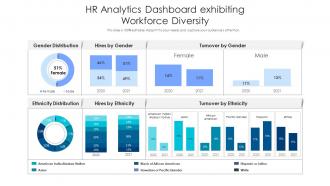
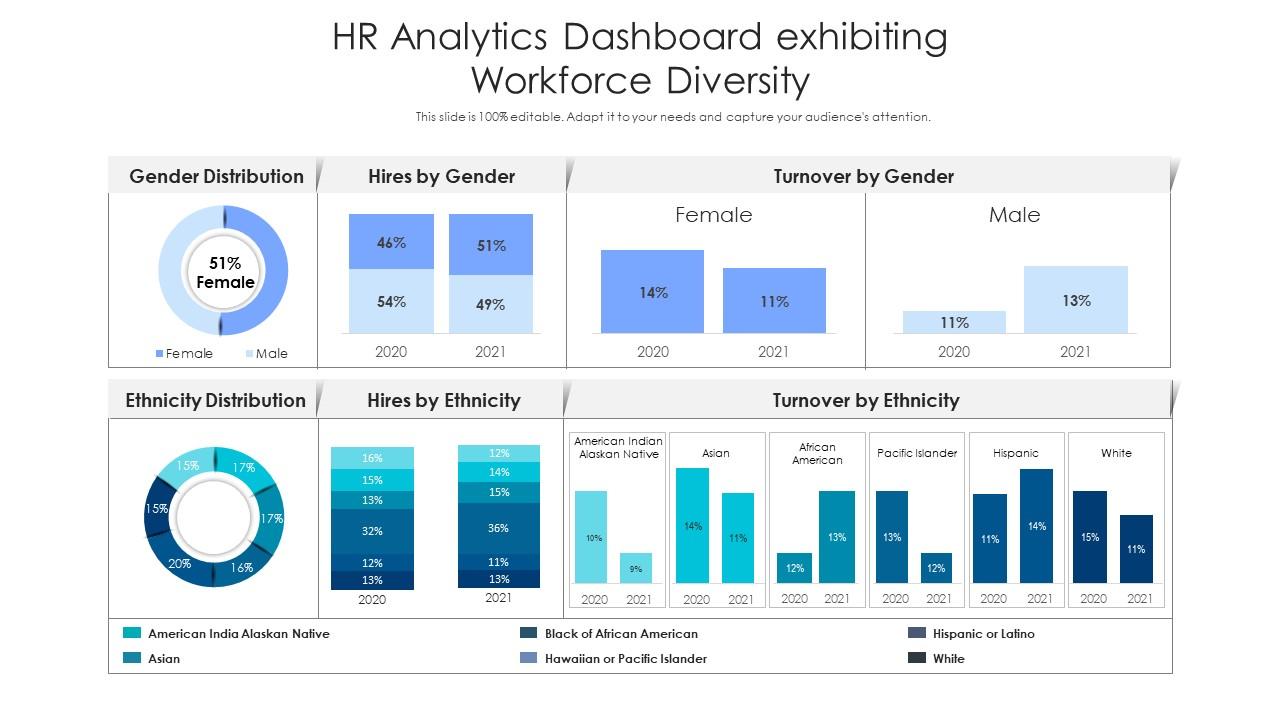
Hr analytics dashboard exhibiting workforce diversity
Try Before you Buy Download Free Sample Product
Audience
Editable
of Time
Our HR Analytics Dashboard Exhibiting Workforce Diversity are topically designed to provide an attractive backdrop to any subject. Use them to look like a presentation pro.
People who downloaded this PowerPoint presentation also viewed the following :
Hr analytics dashboard exhibiting workforce diversity with all 2 slides:
Use our HR Analytics Dashboard Exhibiting Workforce Diversity to effectively help you save your valuable time. They are readymade to fit into any presentation structure.
FAQs for Hr analytics dashboard
Honestly, start simple with like 3-4 metrics that actually matter for your team. Productivity stuff is obvious - output per hour, sales numbers, how fast projects get done. Quality scores are solid too, like error rates and customer satisfaction if you can tie it back to specific people. Absenteeism and turnover tell you a lot about engagement. Goal achievement percentage is probably the most telling one though - are people actually hitting their targets? 360 reviews can be useful but they're kinda all over the place sometimes. Oh, and track how quickly new hires get up to speed. Don't try measuring everything at once or you'll go crazy.
So I'd build predictive models using stuff like performance reviews, engagement surveys, promotion history - basically any data that shows patterns before people bail. The algorithms get weirdly good at spotting who's about to quit, which honestly feels a bit Big Brother-ish but whatever. Once you identify your flight risks, jump on targeted retention fast. Maybe it's career development, pay bumps, or just getting them away from a terrible manager. Run monthly reports on your highest-risk people and actually do something about it instead of just watching them walk out the door.
Honestly, charts and graphs are a game-changer for HR stuff. Nobody wants to dig through endless spreadsheets - I mean, who has time for that? A heat map showing which teams are losing people hits way harder than just listing percentages. You'll catch things like hiring spikes or pay gaps that would take forever to spot otherwise. When you're pitching ideas to your boss, visuals sell the story better than raw numbers ever will. Start simple with bar charts, then maybe try some interactive dashboards once you get the hang of it.
So first thing - lock down who can access what data. Only give people the minimum they actually need to see. Anonymize employee info in your dashboards so you can't tie results back to specific people. Encrypt everything, obviously (I mean, it's 2024). You should probably audit your current setup first though - most companies are shocked at how messy their data privacy actually is. Be upfront with employees about what you're collecting and why. Oh, and don't forget about GDPR and whatever local privacy laws apply to you. Regular compliance checks will save you major headaches down the road.
Oh man, data silos are the worst - your HRIS and performance systems never talk to each other properly. Legacy stuff breaks everything too. Then there's all the privacy compliance headaches you can't ignore anymore. Leadership's usually skeptical about ROI, which I totally get but it's still frustrating. Honestly? Pick one small project first. Show them it actually works instead of promising the moon. Once you've got some wins under your belt, expanding gets way easier. Trust me on this one.
So basically, pull your engagement survey results and match them up with turnover data - that's where you'll find the real issues. Track scores by team, location, even how long people have been there. Honestly, the patterns jump out once you see everything together. Look for early warning signs too, like people collaborating less or calling out more often. That stuff happens way before they actually quit. Oh, and don't just focus on the obvious metrics - sometimes it's the weird correlations that tell you what's really going on. Performance data helps complete the picture.
Honestly, Excel skills are a must - there's just no way around it. Learn to read charts and spot trends first, then dive into SQL if you can. Trust me, most HR people don't bother with SQL so you'll stand out big time. Tableau or Power BI are great for making your data look actually interesting instead of just spreadsheet hell. But here's the thing - technical stuff only gets you so far. You need to think critically about what the numbers actually mean for the business. My advice? Pick one metric you already track and really dig into what's driving it. That's how you start connecting dots between people data and real business impact.
Honestly, HR analytics is a game changer for hiring. Instead of just winging it, you'll actually know which job boards bring decent candidates and what traits your best people share. Track stuff like time-to-hire first - that's easy data to grab. Then dig into where bottlenecks happen in your process. The cool part? You can start predicting who'll actually stick around versus those disasters who bail after three months. I mean, we've all hired someone who seemed perfect on paper but turned out to be... not great. Start small with basic metrics, then expand once you get the hang of it.
Start with response rates and who actually filled it out - low participation will totally mess up your data. The real gold is usually in those open-ended comments tbh, way more telling than percentages. Compare your numbers to past surveys or industry benchmarks instead of just reporting raw stats. Break things down by department, how long people have worked there, different roles - that's where the patterns show up. Oh and watch for survey fatigue... you can tell when people are just clicking random answers. Also smart to cross-check your results with actual turnover numbers and performance stuff to see if it all lines up.
Look, sentiment analysis is basically taking the temperature of your team without having to awkwardly corner people by the coffee machine. You'll catch turnover red flags early and see which departments are actually miserable. Plus you can tell if that new policy everyone's complaining about is genuinely terrible or just the usual resistance to change. Short bursts of feedback work better than those awful annual surveys nobody takes seriously. The whole point is fixing stuff before it explodes - whether that's a toxic manager, crappy benefits, or whatever keeps popping up in the complaints.
Dude, HR analytics is a game changer. No more guessing who's about to quit or who actually deserves that promotion - the data tells you everything. You can spot which employees might bail, find real skill gaps, and plan your hiring way ahead of time. My old boss was obsessed with this stuff, honestly worked pretty well though. Short sentences work. Start with just one metric your leadership actually cares about, then expand once they see it's not just fancy spreadsheets. You'll be predicting talent needs and fixing compensation issues before they blow up. Way better than the old "hire fast, regret later" approach most companies do.
Honestly, benchmarking is what makes your HR data actually useful instead of just random numbers. Without it, you can't tell if your 15% turnover rate is amazing or terrible, you know? Compare your engagement scores and hiring timelines against industry standards - suddenly you'll know where you stand. I'd pick maybe 2-3 metrics you care about most and hunt down some industry reports. HR communities are goldmines for this stuff too since people love sharing data. It's basically giving yourself a ruler to measure against, and trust me, it makes setting realistic goals way easier when you see what's actually possible in your industry.
Tableau and Power BI are honestly your best bet for visualization - they make data actually look good. Workday's got decent built-in analytics if you're already using their HRIS stuff. BambooHR too. Python and R are clutch for bigger datasets but yeah, they're kind of a pain to learn at first. Excel still works great for basic analysis though - I know it sounds boring but it gets the job done. Oh, and definitely pick whatever plays nice with your current setup first. You can always add more tools later once you figure out what you actually need.
Honestly, just compare what you're spending on the analytics program to what you're getting back. Start with easy stuff - like how much you save from people not quitting as much, or filling jobs faster. I've seen companies overthink this with crazy formulas but whatever. Track your baseline metrics first (time-to-fill, turnover rates, that kind of thing), then see how they improve after. The productivity gains are usually pretty obvious once you start measuring. Pick one simple use case where you can actually show dollar amounts, then build from there. Don't try to boil the ocean right away.
So here's the thing - HR analytics basically gives you cold hard data instead of guessing about D&I stuff. Track your hiring patterns by demographics, spot where bias sneaks into recruiting, measure those pay gaps everyone pretends don't exist. Retention numbers tell the real story though. If certain groups are bailing at higher rates, the data shows you exactly why. Same with promotions - you'll see who's actually getting ahead and who's stuck. Numbers are honestly your best friend when you need to convince leadership to actually fund this stuff instead of just talking about it.
-
Informative design.
-
Content of slide is easy to understand and edit.
-
Awesome presentation, really professional and easy to edit.
-
Qualitative and comprehensive slides.
-
Great designs, really helpful.
-
Unique research projects to present in meeting.
-
The content is very helpful from business point of view.
-
Design layout is very impressive.
-
Great product with highly impressive and engaging designs.