


Personalfunktion durch SWOT-Analyse stärken




Try Before you Buy Download Free Sample Product
 Impress Your
 Audience
 100%
100% Editable
 Save Hours
 of Time


Die Furchen werden beseitigt. Ihre dunkelsten Ängste werden beginnen zu verschwinden.
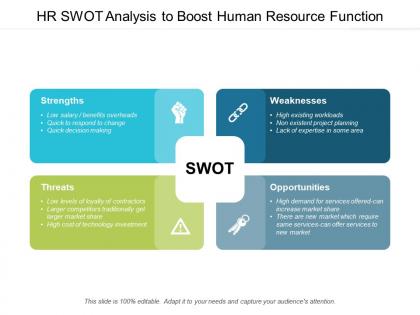
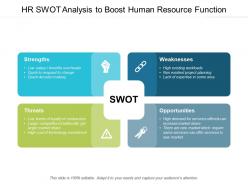
HR-SWOT-Analyse zur Stärkung der Personalabteilung
Vierstufiger Prozess
- HR-SWOT-Analyse
- SWOT-Analyse der Personalabteilung
- Personalmanagement
People who downloaded this PowerPoint presentation also viewed the following :
Stärken-Schwächen-Analyse (SWOT) zur Stärkung der Personalabteilung 1. Stärken: - Erfahrenes und engagiertes Personalteam - Effiziente Einstellungsprozesse - Wettbewerbsfähige Vergütung und Leistungen - Starke Unternehmenskultur und Mitarbeiterbindung 2. Schwächen: - Mangelnde Digitalisierung der Personalprozesse - Begrenzte Weiterbildungsmöglichkeiten - Hohe Fluktuation in bestimmten Abteilungen - Unzureichende Nachfolgeplanung 3. Chancen: - Einführung moderner HR-Technologien - Ausbau der Mitarbeiterweiterbildung - Verbesserung der Work-Life-Balance - Stärkere Einbindung der Mitarbeiter 4. Risiken: - Wettbewerbsdruck um qualifizierte Fachkräfte - Steigende Anforderungen an HR-Kompetenzen - Gesetzliche Änderungen im Arbeitsrecht - Budgetkürzungen im Personalbereich 5. Strategische Empfehlungen: - Digitalisierung der Personalprozesse vorantreiben - Weiterbildungsangebote ausbauen und fördern - Maßnahmen zur Mitarbeiterbindung intensivieren - Nachfolgeplanung und Talentmanagement stärken
Unsere HR-SWOT-Analyse zur Stärkung der Personalabteilung stellt sicher, dass Ihr Kapital wächst. Die Häufigkeit der Einzahlungen wird zunehmen.



FAQs for Hr swot analysis to boost
Oh nice question! Start with what your team's actually good at - talent acquisition, development, compliance stuff. Your systems matter too - decent HRIS, smooth onboarding processes, performance management that doesn't suck. Trust is massive though. If leadership respects HR and employees actually come to you with problems, you're golden. Data analytics is weirdly becoming a thing now too (didn't used to matter as much). Honestly, just audit what's working before you stress about fixing everything broken. Makes the whole process way less overwhelming.
Honestly, your company culture is everything when it comes to HR stuff working or not. Good culture with transparency? People actually participate in performance reviews and training because they trust it. Toxic workplace though - and we both know those exist - your best programs will crash and burn no matter how well-designed they are. Culture determines if employees believe leadership during changes, how they take feedback, whether they even show up mentally. I've seen amazing initiatives die because the culture just wasn't there. So when you're doing that SWOT analysis, really look at whether your culture is working for you or against you.
Honestly, most HR departments are stuck in the stone age with their recruiting. Manual processes everywhere, zero data to actually track why people quit or spot your future stars early. Manager training? What's that, right? Half these companies don't even train their managers on basic people skills. Communication between HR and department heads is usually terrible too - everyone's working in silos. Oh, and good luck getting insights from spreadsheets when you should be using actual analytics tools. I'd start by figuring out where your talent pipeline is completely broken. What's taking forever and what tech could actually speed things up?
Honestly, start with automating the boring stuff - payroll, benefits, onboarding. Frees up so much mental space. HRIS systems are clutch because you'll have all employee data in one place instead of digging through random spreadsheets (which is honestly the worst). AI can handle resume screening pretty well now, and chatbots deal with those same five questions everyone always asks. Analytics help you catch turnover patterns early, which is huge. Oh, and don't just buy whatever's trendy - pick something that actually fixes your specific headaches. Trust me on that one.
Hey! So for external opportunities, think about new recruiting tech that makes hiring way easier. Remote work has opened up crazy talent pools you couldn't access before. Labor laws are shifting toward flexible arrangements too - that's huge for HR. Economic downturns? Honestly, they're not all bad - you can sometimes snag great people when competitors are cutting staff. The whole DEI and mental health focus is massive right now, and HR departments that get this right become genuinely strategic players. I'd map out maybe 3-4 opportunities that actually fit your industry and company size, then figure out which ones you can realistically tackle first.
Labor markets are basically forcing everyone to rethink their whole HR game. High-demand skills mean you're throwing money at comp packages and getting weird with perks just to compete. Remote work flipped talent acquisition upside down - suddenly geography doesn't matter as much. It's honestly exhausting keeping up. You gotta stay on top of industry reports and watch what competitors are doing. Actually talk to your team too, they'll tell you what's really happening out there. Use all that info to fix retention issues before people start jumping ship. Way easier than scrambling to replace everyone later.
Ugh, employment law changes are such a pain. Your current policies can become illegal overnight when new minimum wage or overtime rules drop. Anti-discrimination stuff evolves constantly too - honestly, it's exhausting trying to keep up. Remote work laws have been a total mess lately. You'll end up spending tons updating everything, retraining people, maybe even restructuring pay. The administrative costs add up fast. Oh, and set up Google alerts for your state's employment law changes - trust me, getting blindsided by new regulations is the worst.
Honestly, employee feedback is like having a reality check for your HR strategies. Surveys, exit interviews, regular check-ins - they show you what's actually broken versus what you think is fine. Leadership always assumes they know what's up, but employees see things totally differently. That gap is huge sometimes. Feedback tells you exactly where to spend your training budget - maybe it's leadership development, maybe technical skills, could be basic communication stuff. Why guess when people will literally tell you what they need? I've seen companies waste so much money on random workshops nobody wanted. Just ask first.
Yeah, definitely build D&I into your SWOT from the start. Check your current diversity numbers and employee groups for strengths. Weaknesses? Be real about where representation sucks or inclusion feels fake. New talent pools you haven't tapped could be huge opportunities - honestly, some companies are missing out on amazing people. Threats might be competitors beating you on inclusion or new regulations coming down the pipeline. Don't make it a separate thing you check off later. Use it as your lens when you're looking at everything else in your people strategy.
Honestly, you've gotta dig deeper than just reading their mission statement on the website. Figure out what leadership actually cares about this quarter - like are they scrambling to hire or trying to cut costs? Then make your HR stuff directly support that. Most HR teams I know just do their own thing without checking in. Don't be those people! Set up regular coffee chats with the C-suite. Track metrics that show how your work impacts their bottom line. When budget season hits, you'll have real numbers instead of just talking about "employee satisfaction" or whatever.
Data analytics is probably the biggest one - HR's gotten so tech-heavy lately it's crazy. You'll definitely need digital literacy and change management skills too. People analytics, AI recruitment tools, all that stuff is everywhere now. Oh and strategic thinking is huge since they expect HR to actually drive business results instead of just doing paperwork. Honestly, the shift happened so fast. I'd probably start with a basic data course, then maybe get certified on whatever HR tech your company uses. It's not the same job it was even 3 years ago.
Honestly, we use a combo of hard data and just asking people how they feel. Turnover rates, how long it takes to fill jobs, training completion - the usual stuff. But engagement metrics? That's where it gets messy because surveys only tell you so much. Exit interviews are gold though, plus we track who actually gets promoted internally to see if our development programs aren't just fluff. Set maybe 3-5 benchmarks per program max - otherwise you'll lose your mind in spreadsheets. Oh, and review everything quarterly or you'll forget what you were even measuring.
Honestly, start with pulse surveys to figure out what's actually bugging people - then fix the top 2-3 things instead of trying to solve everything at once. Career development is huge though. People need to see where they're headed or they'll bounce. Flexible work helps too, obviously. Oh, and do "stay interviews" with your best people before they get fed up and leave. I know it sounds weird but it works. Recognition doesn't have to be fancy either - sometimes just calling someone out in a meeting does more than you'd think. The whole trick is being ahead of problems instead of scrambling after people quit.
Honestly, you've gotta blow up your whole approach to flexibility and start over. First thing - get your remote/hybrid policies actually written down so people know what's expected. Invest in collaboration tools that don't suck (forget whatever IT's pushing). Your performance reviews need to focus on results, not who's sitting at their desk looking busy. Create some intentional ways for people to connect since nobody's bumping into each other anymore. Oh, and survey your team regularly about what's working - then actually do something with those responses or you'll lose good people.
So basically you're spying on what other companies offer their employees - salaries, benefits, remote work stuff, all that jazz. Check out their job postings and Glassdoor reviews to see what's working for them. You might not be able to match Netflix's unlimited PTO (honestly, who even uses that properly?), but maybe you can crush them on flexible hours or training budgets. Pick like 3-5 competitors and just dig into their career pages. It's pretty eye-opening once you see what candidates are actually choosing between. You'll know exactly where to focus your efforts.
No Reviews