

Human Resource SWOT Analysis For Recruitment Of Training Head





Try Before you Buy Download Free Sample Product
 Impress Your
 Audience
 100%
100% Editable
 Save Hours
 of Time


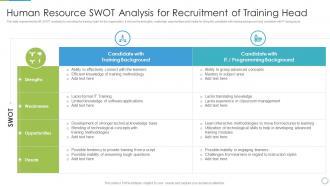
This slide represents the HR SWOT analysis for recruiting the training head for the organization. It shows the strengths, weakness, opportunities and threats for hiring the candidate with training background and candidate with IT background.
People who downloaded this PowerPoint presentation also viewed the following :
Human Resource SWOT Analysis For Recruitment Of Training Head with all 6 slides:
Use our Human Resource SWOT Analysis For Recruitment Of Training Head to effectively help you save your valuable time. They are readymade to fit into any presentation structure.





FAQs for Human Resource SWOT Analysis For Recruitment
Honestly, your HR team's probably strongest at knowing everyone's history and drama - like, they actually get the office dynamics. Compliance stuff too, which sounds boring but trust me, you don't want those lawsuits. They're usually decent culture keepers and translate whatever management decides into something that won't cause a revolt. But here's the thing - are they actually being strategic or just shuffling paperwork around? I'd figure out where they're making real impact beyond the basic admin stuff. That's where you'll see if they're actually moving the needle on performance or just... existing.
Look, when your HR stuff is a mess, people just check out mentally. Bad onboarding leaves new hires confused. Inconsistent reviews make everyone feel like feedback is random. And don't get me started on unclear promotion processes - that's where real resentment builds up. Employees start thinking the company doesn't actually give a damn about them. Can you blame them? I've seen this play out so many times. Communication breaks down, people feel undervalued, then they're updating their LinkedIn profiles. But honestly, it's fixable. Just audit what you're doing now and actually ask your team what's frustrating them most. They'll tell you exactly where the problems are.
Honestly, AI recruitment tools are a game changer if you pick the right ones. Chatbots can screen people around the clock, which is pretty sweet. Video interview platforms save me so much back-and-forth on scheduling - I can't believe I used to do that manually. LinkedIn's targeting has gotten insanely good lately too. The real money move though? Track your data to see what's actually bringing in quality hires. Most ATS systems now connect with skills testing and social media, so you get a fuller picture. My advice: don't try to overhaul everything at once. Just grab one tool that fixes your biggest headache first.
Honestly, the talent shortage is brutal right now - tech roles especially. You're also gonna get hit with more regulatory headaches around pay equity and remote work stuff. Budget cuts are coming if the economy tanks, and HR programs are always first on the chopping block unfortunately. AI's reshaping jobs faster than anyone can keep up with retraining. Plus everyone wants flexibility now, which makes keeping good people way harder. I'd start planning for different scenarios instead of just hoping for the best - trust me on this one.
Honestly, culture is everything when it comes to HR stuff working or not. Like, if your team's super collaborative but you roll out some rigid performance system, people are gonna hate it. Square peg, round hole situation. Employees filter everything through the culture lens - how they react, whether they buy in, all of it. I learned this the hard way at my last job actually. You've got two choices: either match your HR strategies to what you've already got going, or slowly start shifting the culture first. Otherwise you're just wasting time.
Honestly, after looking at that SWOT analysis, your team's struggling with two main things. First is digital analytics - you guys are great at the traditional HR stuff, but interpreting data from the new HRIS? That's where it gets messy. The predictive analytics tools aren't helping much either when nobody knows how to read them properly. Change management is the other big issue. With all this organizational chaos lately, your team needs way better communication skills for helping employees through transitions. Oh, and compliance knowledge is getting stale too - especially remote work regulations. I'd definitely start with HR analytics training for a few people, then move on to some change management workshops.
Honestly? Get on the AI recruiting bandwagon now before everyone else does. Same with flexible work and hiring based on actual skills instead of just degrees. LinkedIn's still solid for finding people, but TikTok's where the younger crowd is - which sounds weird but trust me on this one. Don't wait around for competitors to figure it out first. Check what you're doing now vs what candidates actually want (spoiler: it's probably different than you think). Then fix the biggest gaps that'll help you snag better talent. Being ahead of the curve here makes a huge difference.
Honestly, just pick the stuff that's actually hurting you most and can realistically be fixed. Break it down into bite-sized pieces - like if your onboarding sucks, don't reinvent the wheel. Map out a solid 30-60-90 day plan with actual milestones people can hit. I'd totally steal ideas from companies doing it better (we all do it anyway, right?). Make sure someone owns each piece or it'll just sit there forever. Oh, and check in regularly to see if it's working. Way better than trying to fix everything at once and burning out your team.
Start with flexible schedules and mental health resources - that stuff makes a huge difference. Gym memberships and stress workshops are solid too. You'll want to push back on crazy deadlines with leadership when workloads get nuts. Employee resource groups work really well, honestly people bond over shared struggles more than you'd think. Regular check-ins beat those generic surveys everyone ignores. Don't just guess what people need - actually ask them. Oh, and tackle the biggest complaints first rather than trying to fix everything at once. Way more effective that way.
Look at your job postings first - bet they're full of weird coded language that turns people off. Post openings in different places too, not just the same old sites. Your interview panels need diverse voices, obviously. Once people are hired, employee resource groups actually work really well for making folks feel like they belong. Benefits are huge - make sure they fit different types of families and lifestyles. I'd honestly just ask your current underrepresented employees what sucks and what doesn't. They'll give you the real tea about what needs fixing.
Your employees are honestly the best source for this stuff - they're in the trenches seeing what actually works and what doesn't. Run some surveys or focus groups and you'll start noticing patterns. Maybe training gaps keep coming up, or communication is a mess between departments. People usually have pretty solid ideas for fixing things too. The trick is making them feel safe to be brutally honest (which is harder than it sounds). I'd track common themes across teams to figure out what to tackle first. It's way better than guessing from the top down.
Honestly, most HR people mess this up because they work in their own bubble. First thing - grab the strategic plan and actually show up to leadership meetings if you can. Map every single thing you do back to what the business wants. Company wants 20% revenue growth? Focus your hiring on sales roles and training programs that'll move the needle. I make this dead simple chart showing how each HR project ties to actual business numbers. Trust me, when budget season rolls around, you won't look like dead weight anymore. You'll be the person who gets stuff done.
Oh man, labor law changes are such a headache for HR! Minimum wage hikes, new overtime rules, expanded family leave - it never stops. Then you've got workplace safety updates, healthcare mandate tweaks, and now all these remote work regulations too. Don't even get me started on data privacy stuff for employee records. What kills me is how they spring these changes on you with crazy short deadlines, but the fines for screwing up are massive. I'd definitely keep a legal calendar going and maybe set aside some extra budget each year for compliance stuff. Trust me, you'll need it!
Honestly, start tracking stuff like turnover rates and engagement scores - that's where the magic happens. Your gut instincts are probably right half the time, but data shows you patterns you'd never catch otherwise. I'd pick one thing first, maybe retention issues? Dive deep there. Predictive analytics can flag people who might quit before they even update their LinkedIn (which is pretty wild). Plus analyzing your best performers helps you spot similar traits in candidates. Way better than the whole "good vibes" hiring approach we've all done. Just don't try to track everything at once - you'll go crazy.
Honestly, you gotta get way more creative than just posting on Indeed. Employee referrals work great if you actually make the incentives worth it. Universities are gold mines for finding fresh talent early. Social media recruiting is huge too - find where your people actually spend time online. Some of my best hires came from the weirdest places, no joke. Host virtual coffee chats or meetups to build relationships before you're even hiring. Your company brand matters more than you think - candidates stalk companies just like we stalk them. First though, figure out which channels are bringing you quality people. Then go all-in there.
-
Great designs, really helpful.
-
I took a chance with SlideTeam. I never looked back. Great products and great service.