

Human Resource Transformation Toolkit To Retire Process With Workforce Development




Try Before you Buy Download Free Sample Product
 Impress Your
 Audience
 100%
100% Editable
 Save Hours
 of Time


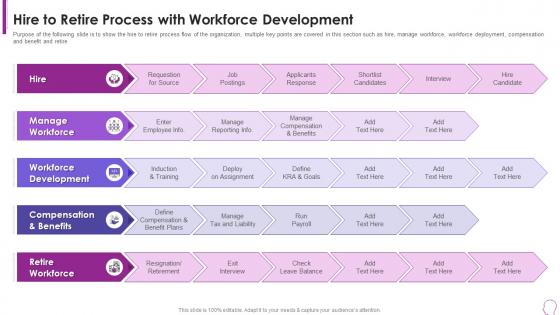
Purpose of the following slide is to show the hire to retire process flow of the organization, multiple key points are covered in this section such as hire, manage workforce, workforce deployment, compensation and benefit and retire
People who downloaded this PowerPoint presentation also viewed the following :
Human Resource Transformation Toolkit To Retire Process With Workforce Development with all 6 slides:
Use our Human Resource Transformation Toolkit To Retire Process With Workforce Development to effectively help you save your valuable time. They are readymade to fit into any presentation structure.





FAQs for Human Resource Transformation Toolkit To Retire Process
Honestly, it's mostly about not falling behind and keeping your team from jumping ship. Digital stuff is huge - everyone expects their work tech to actually work well, like their phone apps do. Companies are drowning in data now, which is great for making hiring decisions if you know what you're doing. Remote work obviously flipped everything upside down (though some places are still pretending it's 2019). The skills shortage is brutal too. People need constant training just to stay relevant. If any of this sounds familiar at your company, might be worth figuring out what changes you actually need to make.
Honestly, tech is what'll save your sanity in HR. Start by figuring out where you're wasting the most time - probably answering the same employee questions over and over. Self-service portals are clutch for that. AI can handle initial candidate screening (though don't rely on it 100%). Analytics platforms help with workforce planning, but only invest in tools that fix your actual problems. I learned this the hard way - shiny doesn't always mean useful. Cloud HRIS systems are worth it for integration alone. Map your current mess first, find the biggest pain points, then shop for solutions.
So data analytics is basically what makes HR actually useful instead of just guessing all the time. You can figure out which job sites get you the best candidates, or spot who's probably about to quit before they do. Pretty wild how much the numbers reveal about people's work habits - makes you wonder what your own data says about you, lol. But seriously, it beats the old "trust your instincts" approach when you're trying to understand why everyone keeps leaving or which training programs are worth the money. I'd start with just one thing you're curious about though.
Talk to your people constantly - can't stress this enough. Before the rumor mill starts churning, tell them what's changing and why. I've watched so many transformations crash because leadership disappeared for months. Get them actually involved, ask for feedback and use it. Nobody wants to feel like they're just being "consulted" for show, you know? Be real about timelines too. Change sucks, so paint them a clear picture of what their day-to-day will look like after everything's done. Oh, and create actual feedback loops - people need to feel heard.
Honestly, the worst part is dealing with people who just refuse to adapt - they'll fight you on every little change. Data migration from old systems? Total nightmare, way messier than anyone tells you upfront. Budget stuff gets weird too, especially when everything takes longer than planned (which it always does). Getting different department heads to actually agree on anything feels impossible sometimes. Here's what worked for me though - figure out your change management approach first. Tell people WHY you're doing this stuff, not just what's changing. Do it early, do it a lot. Seriously saves so much drama later.
Dude, don't even bother starting without real leadership support - like, actually vocal champions, not just people nodding in meetings. I've watched so many HR transformations crash and burn because executives gave half-hearted "yeah sure" responses then disappeared when budget time came around. You need leaders who'll fight for resources and actually live the changes themselves. Otherwise you'll spend months banging your head against walls trying to get basic stuff approved. The "why" has to come from the top too - teams can smell fake support from a mile away. Honestly? Wait until you have genuine buy-in or you're just setting yourself up to fail.
First thing - get your boss/leadership on board or you're screwed when stuff inevitably goes sideways. Map what you're actually doing now before changing anything (I know, seems obvious but teams always skip this). Quick wins are your friend. Show some immediate results while you tackle the bigger mess in chunks. Don't try fixing everything at once - pick one area to test first. Your team needs to know what's happening and why, so communicate like crazy. Oh, and involve them in the actual process instead of just announcing changes. Data helps you see if you're on track or need to pivot. Trust me on this one.
So here's the thing - HR transformation actually helps you bake equity right into your processes from the start. Recruiting gets way better when you redesign it to tap into diverse talent pools. Performance reviews? Those need a total overhaul to cut out bias. The data aspect is honestly game-changing because you'll finally see where the real gaps are instead of making assumptions. New HR tech automates fair practices too, which removes a ton of human bias from decisions. Oh, and don't forget to audit what you've got now - that's where you'll spot bias sneaking in. Career pathways should work for everyone, not just certain groups.
Dude, remote work totally flips HR on its head. You're rebuilding everything around digital stuff now. Talent hunting goes worldwide, which is cool but chaotic. Performance reviews? Forget tracking who's at their desk - it's all about results now. The tricky part is keeping people engaged when they're all over the place. Your old office culture tricks are useless. You'll be spending serious money on digital HR platforms and figuring out new ways to keep everyone connected virtually. Honestly, start by looking at what you actually need people in-person for. Spoiler: probably not much.
Track both the hard numbers and the softer stuff if you want real insight. Time-to-hire, retention rates, engagement scores - that kind of thing. Honestly, engagement is probably the most telling metric. If your people are miserable, the whole thing's a bust. Also check how much time your team wastes on admin work versus actually strategic projects. Set up a simple dashboard with maybe 5-7 key metrics and check it monthly. Oh, and measure your baseline right now if you haven't - seriously, you'll kick yourself later when you can't prove any impact.
Honestly, start with data analytics - you can't just wing HR decisions anymore, you need actual numbers. Get comfortable with HR tech platforms too because everything's digital now. The big thing is shifting from admin work to strategic thinking. Companies want HR to be real business partners, not just the people who handle paperwork. Design thinking is everywhere right now for solving employee issues creatively. Oh, and change management is clutch since you'll basically be dealing with constant chaos. I'd grab a data analysis course first, then maybe shadow someone in strategy for a few weeks. Seeing how they tackle business problems is eye-opening.
Honestly, most HR teams jump straight into tactics without figuring out what the business actually needs. Sit with leadership first and map out their big priorities for the next few years. Then work backwards - what skills and culture changes do your people need to hit those goals? Every HR project should tie directly to a business outcome, otherwise you're just... doing stuff. I always make a one-page doc showing how each initiative connects to specific results. Keeps everyone honest and focused on what matters.
Look, culture will make or break your HR transformation - I've seen it happen too many times. When people resist change or don't trust leadership, they'll just ignore new tools and stick with old ways. Super frustrating. But if your team actually embraces change? Everything flows so much better. My advice: figure out what kind of culture you're dealing with first. Then build your change strategy around that reality instead of fighting it. No point pushing digital transformation on people who aren't ready - you'll just waste time and energy.
So HR transformation is basically about using data and tech to totally overhaul how you handle talent stuff. Analytics help you figure out what actually attracts good candidates, AI can screen resumes faster, and you can even predict who's about to quit before they do. The employee experience side is where it gets really interesting though - better onboarding, personalized career development, all that. Instead of those useless annual surveys everyone ignores, you get real-time feedback on what's working. Honestly, just start by looking at your current tech setup and see what's driving everyone crazy.
Honestly, the biggest shifts I'm seeing are AI talent analytics and skills-based hiring - companies finally ditching the degree obsession. Employee experience platforms are everywhere now too. Instead of those terrible annual reviews, there's continuous feedback (thank god). Internal mobility tools are getting better at helping people find new roles without leaving. Oh, and wellbeing tech that's actually useful, not just basic stuff. The whole decentralized HR thing where managers get more control is pretty interesting. My advice? Don't try to do everything at once. Pick whatever's driving you most crazy right now and test it small first.
-
I discovered this website through a google search, the services matched my needs perfectly and the pricing was very reasonable. I was thrilled with the product and the customer service. I will definitely use their slides again for my presentations and recommend them to other colleagues.
-
Enough space for editing and adding your own content.