


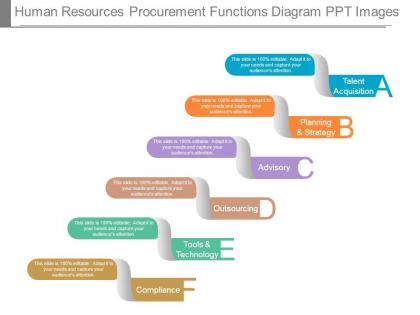
Human resources procurement functions diagram ppt images




Try Before you Buy Download Free Sample Product
 Impress Your
 Audience
 100%
100% Editable
 Save Hours
 of Time


Boundaries blur with our Human Resources Procurement Functions Diagram Ppt Images. Created borders will not deter you.
People who downloaded this PowerPoint presentation also viewed the following :
Human resources procurement functions diagram ppt images with all 7 slides:
Benefit the folks with our Human Resources Procurement Functions Diagram Ppt Images. Make good deeds a habit with you.



FAQs for Human resources procurement functions
Human resources procurement plays vital roles including talent acquisition, strategic workforce planning, vendor management for HR services, cost optimization, and compliance oversight. These functions streamline organizational efficiency by ensuring quality talent sourcing, reducing recruitment costs, and maintaining regulatory compliance, with many companies finding that strategic HR procurement ultimately delivers competitive advantage through improved employee experiences and faster hiring processes.
HR procurement contributes to strategic workforce planning by analyzing talent market trends, identifying skill gaps, and developing targeted sourcing strategies that align with long-term business objectives. Through data-driven insights and vendor partnerships, organizations streamline recruitment processes, reduce time-to-hire, and secure specialized talent more efficiently, ultimately delivering competitive advantage in increasingly dynamic markets.
**INPUT**: What are the most effective methods for sourcing and attracting top talent? **OUTPUT**: Effective talent sourcing methods include strategic social media recruiting, employee referral programs, targeted industry networking, partnerships with specialized recruitment agencies, and leveraging professional platforms like LinkedIn. These approaches streamline candidate identification by expanding reach, enhancing employer branding, and accessing passive candidates, with many organizations finding that combining multiple channels ultimately delivers higher-quality hires and competitive recruitment advantage. [Word count: 60]
Technology enhances HR procurement by automating vendor evaluations, streamlining contract negotiations, and enabling real-time spend tracking across multiple categories. Through AI-powered analytics and digital procurement platforms, organizations accelerate supplier onboarding, reduce administrative costs, and improve compliance monitoring, ultimately delivering faster hiring processes and better resource allocation.
Best practices for managing vendor relationships in HR procurement include establishing clear performance metrics, conducting regular review meetings, maintaining transparent communication channels, implementing strategic partnership frameworks, and creating mutual accountability structures. These approaches streamline collaboration by fostering trust, ensuring service quality, and optimizing cost efficiency, with many organizations finding that strong vendor partnerships ultimately deliver enhanced HR services and competitive operational advantages.
Data analytics improves HR procurement decision-making by providing predictive insights, identifying cost-saving opportunities, and streamlining vendor evaluation processes through comprehensive performance metrics. Through advanced analytics platforms, organizations can forecast talent demands, optimize recruitment budgets, and enhance supplier relationships, with many companies finding that data-driven approaches reduce hiring costs while accelerating placement timelines.
Ethical HR procurement considerations include fair vendor selection, transparent bidding processes, data privacy protection, avoiding conflicts of interest, and ensuring equitable supplier diversity. These practices enhance organizational integrity by preventing discrimination, safeguarding employee information, and promoting competitive fairness, with many companies finding that ethical procurement ultimately delivers stronger vendor relationships and reduced compliance risks.
HR procurement aligns with overall business objectives by strategically sourcing talent, technologies, and services that directly support organizational goals, enhance operational efficiency, and drive competitive advantage. Through data-driven vendor selection, cost optimization strategies, and performance-based partnerships, companies streamline their workforce investments while ensuring procurement decisions enhance productivity, reduce administrative burden, and ultimately deliver measurable business outcomes.
Key metrics include cost-per-hire, time-to-fill positions, supplier performance scores, contract compliance rates, and quality-of-hire assessments. These measurements enable organizations to streamline recruitment processes, optimize vendor relationships, and enhance talent acquisition outcomes, with many companies finding that strategic HR procurement tracking ultimately delivers improved operational efficiency and competitive workforce advantages.
Global HR procurement challenges include cultural differences, varying labor laws, currency fluctuations, time zone coordination, and inconsistent talent quality standards across regions. These obstacles can be overcome by establishing standardized processes, partnering with local recruitment experts, implementing unified technology platforms, and creating comprehensive compliance frameworks, with many multinational organizations finding that strategic regional partnerships ultimately deliver consistent talent acquisition while reducing costs and improving cultural alignment.
Industries approach HR procurement through sector-specific strategies, with healthcare prioritizing compliance and specialized certifications, financial services emphasizing security clearances and regulatory expertise, and manufacturing focusing on technical skills and safety training. These tailored approaches enable organizations to streamline talent acquisition, enhance operational efficiency, and maintain competitive advantage while addressing unique regulatory requirements and specialized workforce needs.
HR procurement significantly impacts employee engagement and retention through strategic vendor selection for benefits programs, learning platforms, workplace technologies, and employee experience tools. By partnering with quality service providers, organizations enhance compensation packages, career development opportunities, and workplace satisfaction, with many companies finding that strategic procurement decisions directly correlate with reduced turnover and improved employee loyalty.
Diversity and inclusion in HR procurement ensures equitable supplier selection, promotes diverse vendor partnerships, and enhances organizational representation through inclusive hiring practices. These approaches streamline talent acquisition by expanding candidate pools, reducing unconscious bias, and creating strategic supplier relationships, with many organizations finding that diverse procurement processes ultimately deliver better business outcomes and competitive advantage.
Organizations can effectively manage this transition by establishing cross-functional teams, investing in staff training on procurement methodologies, implementing phased technology rollouts, and creating clear performance metrics that align HR outcomes with business objectives. Through strategic change management, companies in sectors like manufacturing and healthcare streamline vendor relationships, reduce recruitment costs, and enhance talent acquisition efficiency, ultimately delivering faster hiring processes and improved workforce quality while maintaining employee satisfaction.
Essential training for HR procurement professionals includes contract law, vendor management, strategic sourcing, compliance regulations, and negotiation skills. These competencies enable professionals to streamline procurement processes, ensure regulatory adherence, and optimize vendor relationships, with many organizations finding that well-trained teams deliver significant cost reductions and enhanced operational efficiency.
-
Great quality product.
-
Best way of representation of the topic.