


Human resource policies sample of ppt presentation




Try Before you Buy Download Free Sample Product
 Impress Your
 Audience
 100%
100% Editable
 Save Hours
 of Time


Our professionally designed human resource management PowerPoint template is for professional presenters to illustrate process of employing people, training them compensating them, developing policies relating them, and figuring out strategies to retain them. Similar to the management field, human resource management also has undergone many changes over the last twenty-five years and now it has an important role to play related to business development and growth. The HR policies and procedures PPT template is specially designed for users who want to give presentations on management concepts. Being a part of the human resource process template, such as staffing, recruitment, selection, talent management, and other relevant topic has immense influence to enhance the organization's growth along with making people suitable for the working atmosphere of the organization. The key human resource management policies & procedures presentation slide for HR presentation is an inevitable tool for the managers they are finding ways to enhance the capacities of the working people through training as well as coaching. A presenter can use the objectives of HR policies slide describes major works in HRM is enlistment or staffing i.e. entire hiring process from posting a job to negotiating a salary package. Assure good equity with our Human Resource Policies Sample Of Ppt Presentation. You will earn greater dividends.
People who downloaded this PowerPoint presentation also viewed the following :
Content of this Powerpoint Presentation
Wondering how to hire the best people for your organization and retain them for longer? This Human Resources Policies presentation will help you not only with hiring the best talent but will aid in their training, coaching, compensation, and informing them about policies governing your workforce. It lays down the framework for all the strategies you could employ to align the employees’ goals with that of the organization.
With this professionally designed template, outline the roles and responsibilities of your employees and facilitate their growth within the organization. You can also map their performance and easily perform SWOT analysis. This PPT Preset will further help the HRD in charting out their employees career growth plan and fill their skills’ gaps through company training.
Employee well being is another crucial aspect catered to with this PPT Layout as it is also crucial to meet the expectations of the employees while ensuring they do not harbor any resentment. Safeguarding their interests with critical policies relating to confidentiality, non-discrimination, anti-harassment and the likes is one sure-shot way of doing it and this awareness is also raised in this PPT Setup.
With a ready framework as presented in this PPT Template, HRD can be guided to prepare the best guidelines and policies for the organization's overall success. Arm your Human Resource Department with this presentation template today!
Template 1: Human Resource Policies Sample of PPT Presentation
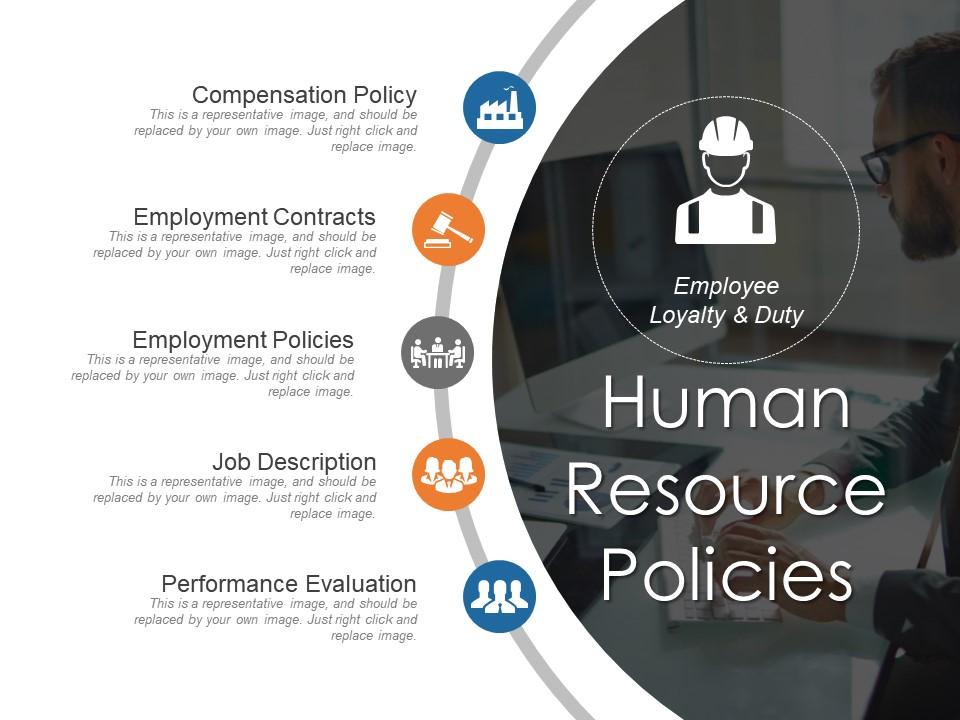
Explore our Human Resource Policies PPT Template which comes equipped with pictorial depiction of data, infographics and graphs illustrating employment policies, contracts, job descriptions, performance evaluation and a lot more. You can incorporate your own thoughts and plans for future growth into this customizable PPT layout in order to address the specific needs of your organization. Additionally, it is beneficial to have well-defined policies in place to address all the aspects of work relating to employees whether it is communication, compensation, ethics or anything else that might interfere with a person’s well-being and efficiency at work.
Conclusion:
If you are a manager in the Human Resource department in your organization and seeking a cohesive plan to budget, monitor spends, assess the ROI and develop strategies to maximize growth, you have come to the right place. Our editable template will allow you to do just that with the freedom to include your own inputs. Diagrams, graphs and pictorial representation of the content makes our slides stand out and keep the audience hooked. Use this powerful tool to present your ideas with more impact.
Human resource policies sample of ppt presentation with all 5 slides:
Guard against disappointments with our Human Resource Policies Sample Of Ppt Presentation. They ensure you continue to achieve.


FAQs for Human resource policies sample
Honestly, start with whatever's driving you crazy right now - don't try to build the perfect handbook from scratch. You'll need the basics though: behavior expectations, how discipline works, compensation stuff that's actually transparent. Anti-discrimination policies are non-negotiable obviously. Also cover leave, safety protocols, all that day-to-day interaction stuff. But here's the thing - write it down somewhere people can actually find it! Nothing kills team morale faster than playing favorites with rules. Just be consistent with enforcement and you're already ahead of most companies.
Honestly, skip the fancy mission statement fluff and figure out what your company's actually trying to do. Work backwards from those real goals to build HR policies that make sense. Say you want more innovation - then your hiring and reviews better reward people who think outside the box, not the ones who just follow rules. I learned this the hard way, but you've got to loop in business leaders when creating policies. Otherwise you're just making stuff up in isolation. Check in every few months to see if your policies are actually moving the needle or if they need fixing.
Honestly, employee feedback is like having a reality check for your HR stuff. You think your policies are great, but then someone mentions in the break room how annoying the vacation request process is. Surveys and exit interviews give you the real scoop on what's actually broken. Even casual conversations work - sometimes the best insights come from random complaints. Multiple ways to get input is key, but you've gotta actually do something with it or people stop caring. Maybe try a quick survey next month about whatever policy everyone's been griping about lately?
Honestly, once a year is the absolute minimum but that's kinda cutting it close. Laws change all the time and your company's probably shifting too - new positions, different benefits, whatever. I'd do a quick check every quarter on the big stuff like leave policies and safety rules. Oh and definitely update things right away if there's some major legal change or you're restructuring. What works for me is setting a calendar reminder for the yearly deep dive. Throughout the year I just keep a list of stuff that needs fixing - way easier than trying to remember everything at once.
Dude, you've gotta cover all the basics - discrimination laws, wage stuff, leave policies, safety requirements. Laws change all the time though, so it's honestly pretty annoying to keep up with. Make your policies crystal clear about employee rights and what happens if someone screws up. Just don't write anything that accidentally creates contracts you didn't mean to. Oh, and don't mess with at-will employment if that's how you operate. Seriously though, get a lawyer to look at everything first. I know it costs money upfront but trust me, it's way cheaper than getting sued later.
Honestly, just automate the whole thing. HR systems can handle employee enrollment, send those annoying reminders, and track who's actually read stuff. Digital policy libraries are a game-changer - everything's searchable instead of buried in some random folder. Workflow automation handles approvals too. Those massive policy binders? Total waste of paper at this point. Start with whatever policies you're constantly updating - that's where you'll save the most time. Oh, and AI chatbots can field basic questions so you're not answering the same stuff all day.
Honestly, email is pretty much useless for this stuff - people just delete without reading. Mix it up instead. Intranet posts work better, plus do quick team huddles to cover the big changes. For anything complicated, maybe shoot a short video? Keep the language super simple and throw in real examples so people actually get how it affects their job. Oh, and make sure there's an easy way for folks to ask questions without feeling weird about it. The real game-changer though? Having managers bring it up during their regular check-ins. People trust their boss way more than some random HR email.
Honestly, I'd start by auditing what you've got now - probably lots of gaps there. Make your job descriptions actually inclusive (no "rockstar" nonsense), get diverse interview panels, and set real recruiting targets. Promotion criteria need to be transparent too. The day-to-day stuff matters just as much though - flexible work policies, communication guidelines that don't suck, regular bias training. Oh, and make it all measurable somehow or it'll just be corporate fluff. Pick maybe 2-3 concrete changes you can actually pull off this quarter. Don't try to boil the ocean.
Dude, flexible work is seriously worth trying. People get way more done when they're not dragging themselves through rush hour traffic every morning. You can start small - maybe one remote day a week? Your team will actually work during their good hours instead of fighting that 2pm energy crash. Plus everyone's handling personal stuff without the guilt trip. I swear it helps with hiring too since everyone expects flexibility now. Remote work, flexible hours, compressed schedules - whatever works. Just watch how much happier people get when they have some control over their schedule.
You'll definitely want to mix hard data with the softer stuff. Track your turnover rates, how long positions stay open, engagement scores, and absenteeism - those are your basics. Training completion rates and internal promotions are huge too, they show if people are actually growing. Exit interviews and manager feedback reveal what the numbers can't tell you (honestly, exit interviews are goldmines). I always think 5-7 metrics is the sweet spot - any more and you're drowning in data. Just pick ones that match what you're trying to achieve and track them consistently. The trends over time are what really matter.
Here's the thing - start with flexibility baked right in. Obviously keep the legal stuff and safety requirements rock solid, but everything else? Make it bendable. I learned this the hard way watching companies get completely screwed by policies that couldn't adapt fast enough. Use "may" instead of "must" wherever you legally can, and always have clear escalation paths for weird situations that don't fit the mold. Oh, and set up quarterly reviews with your legal team - sounds boring but you'll thank me when you need to pivot quickly. The conditional language approach has saved my butt more times than I can count.
Your company's culture should totally drive your HR policies - otherwise nothing makes sense. Like if you're all about teamwork but do individual-only reviews? That's backwards. Check your hiring process, how you pay people, even discipline stuff against what you actually value. I'd honestly start by comparing your current policies to what your company claims to stand for. You'll probably find some weird disconnects you didn't notice before. Cross-functional opportunities work great when collaboration is actually prioritized. Makes the whole thing feel more authentic instead of just corporate BS on the wall.
Look, good HR policies can actually save your workplace sanity. Make sure you've got flexible schedules, mental health days, and counseling access that people can actually use. The stigma thing is still pretty rough out there, so your policies need to straight-up say "getting help is normal." Train managers on supporting their teams without being weird about it. Oh, and don't bury this stuff in some manual no one opens - put it where people will see it. I'd start by figuring out what gaps your employees are dealing with right now. Workload management is huge too.
Oh man, you're gonna deal with department managers who swear their team needs "special treatment" constantly. Then different supervisors interpret the same policy totally differently - it's maddening. Timing's brutal too since one department will be drowning while another's just sitting around. Some managers flat out hate being managed, period. Remote locations make everything 10x messier. Department cultures clash with your standardized stuff all the time. Get department heads on board early though - that actually helps. Also set up clear escalation paths or you'll be putting out fires nonstop.
Honestly, good HR policies can totally save your talent retention game. Set up mentorship programs and tuition reimbursement - shows people you actually care about their future. Performance reviews should focus on development instead of just judging people (even though they're still awkward as hell). Internal mobility is huge too. Cross-training and stretch assignments give people room to grow. But here's the thing - your managers have to actually follow through on this stuff. I've seen so many companies with beautiful policies that just collect dust because nobody enforces them. Career conversations need to happen regularly, not just once a year.
-
Excellent Designs.
-
Presentation Design is very nice, good work with the content as well.