

Hyundai motor company group structure 2018





Try Before you Buy Download Free Sample Product
 Impress Your
Audience
 100%
Editable
 Save Hours
of Time


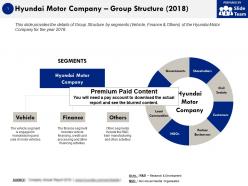
This slide provides the details of Group Structure by segments Vehicle, Finance and Others of the Hyundai Motor Company for the year 2018.
People who downloaded this PowerPoint presentation also viewed the following :
Hyundai motor company group structure 2018 with all 2 slides:
Encourage folks to express actual feelings with our Hyundai Motor Company Group Structure 2018. It generates an air of informality.

FAQs for Hyundai motor company
So the big ones are Hyundai Motor Company (that's the actual car maker), Kia Motors, and Hyundai Mobis. Those three basically run the show. Then you've got Hyundai Steel, Hyundai Wia for car parts, and Hyundai Kefico doing electronics stuff. It gets messy fast with all the cross-ownership between them - honestly kind of a headache to track sometimes. But for 2018, just focus on the main trio since they pulled in most of the cash. Their annual report should have the exact ownership breakdown if you need those numbers.
Hyundai's still pretty much run by the Chung family, so decisions happen fast but they're made at the top. Seoul headquarters calls the shots on everything - R&D, which markets to enter, you name it. Western automakers are way more decentralized by comparison. If you're dealing with them, approval chains can drag on forever, but once they decide something they move quickly. Their supplier relationships work the same way - everything funnels back to headquarters. It's honestly kind of old school but it works for them.
Mobis is Hyundai's massive parts supplier - they make chassis, cockpit modules, safety systems, all that stuff for Hyundai and Kia cars. They're actually one of the world's biggest auto parts companies, which honestly I didn't realize until recently. The company also runs after-sales service and distributes parts through dealer networks. It's pretty smart vertical integration if you ask me. Instead of relying on outside suppliers for everything, Hyundai basically controls their own supply chain through Mobis. Makes the whole operation way more efficient and they don't have to worry about getting screwed over by external vendors.
So basically they split everything up smart - Hyundai Motor does the main car stuff, then you've got subsidiaries like Steel and Mobis handling supply chain pieces. Makes them super nimble compared to having one massive centralized operation. Regional subs can pivot fast for local markets but still use the parent company's tech and manufacturing know-how. Having separate entities for financing and parts? That's actually genius because they can jump into new markets without starting over completely. Their expansion strategy is pretty much: localize production, keep quality consistent. Other automakers should honestly take notes - this setup just works.
So back in 2018, Hyundai basically saw the writing on the wall with EVs and decided to go all-in. They threw real money at building dedicated EV platforms instead of just slapping batteries into existing cars - which honestly was pretty brilliant. Both Hyundai Motor and Kia got resources to develop this stuff properly. The whole thing wasn't just about making electric cars though. They were literally restructuring to survive Tesla eating everyone's lunch. Smart because they didn't kill their gas business overnight while pivoting. You should definitely look at where they ended up now - it'll show you if the strategy actually worked.
So Hyundai's setup is actually pretty smart - they've got clear authority at each level which makes things move faster. The Chairman's at the top, obviously, but division heads can make calls without running everything up the chain. Way more efficient than those messy matrix structures some companies love. Regional offices get decent autonomy too, so they're not waiting on Seoul for every tiny decision (which would be a nightmare). If you're dealing with them, decisions usually flow down quick once the division level signs off. Oh, and partnership talks tend to move at a decent pace - not like some places where everything dies in committee hell.
Look, Hyundai's cross-ownership thing is weird - it helps them move money around between companies and coordinate strategy better. But their financials become this tangled mess that's super hard to read. When one part of the business tanks, it hits everything else too. Minority shareholders basically have zero say since the founding family controls it all. Honestly kind of frustrating to analyze. My advice? Just look at their consolidated numbers instead of trying to figure out each subsidiary. Way less of a headache.
Basically, Hyundai's whole group thing works because they've got all these different companies - the main car brand, Kia, parts makers, even steel companies - and they just share tech between them constantly. So when one team creates something cool, it spreads to the other brands super fast. They can also combine their R&D money for bigger projects that would be too expensive for just one company. It's actually pretty clever if you think about it. The key thing is they don't operate separately - there's tons of cross-collaboration happening. Way more efficient than traditional automakers, honestly.
Hyundai's big on joint ventures - it's basically how they get into tricky markets. Take China, where foreign companies can't just waltz in and set up shop. Their Beijing Hyundai deal lets them build cars locally instead of dealing with crazy import taxes. Pretty clever if you ask me. JVs also help them split R&D costs, which honestly makes sense when you're trying to develop new tech without going broke. It's not like these partnerships are some side thing either - they're core to how Hyundai expands worldwide while dodging regulatory headaches.
So basically, Hyundai's got their hands in everything - cars, steel, construction, shipping, you name it. When car sales tank, their other businesses can pick up the slack. Smart move, honestly. They're not stuck betting everything on one industry like most automakers. Plus they save money by using their own steel in their cars and handling their own logistics. It's like... why pay someone else when you can do it yourself? That's probably why they bounce back from recessions faster than companies like Ford or GM who are just focused on cars.
So Hyundai's got this interesting setup where they use one big corporate umbrella but let each brand do its own thing. Genesis goes after luxury customers, Kia's all about value and cool design. Pretty clever honestly - they don't really compete with each other that way. They share the expensive stuff like R&D behind the scenes, which makes total sense from a business perspective. But each brand still has completely different messaging and targets different people. Oh and if you're dealing with them, each subsidiary has separate brand rules even though they're technically the same company family.
Honestly, Hyundai's ownership structure is a total mess. All these subsidiaries own chunks of each other, so making any big decisions takes forever since everyone has to agree. Minority shareholders hate it because you can't tell where the money's actually being made or lost. Korea's government keeps breathing down their necks about these chaebol setups too - which, fair enough I guess. Your best bet? Just analyze the individual companies instead of trying to figure out who owns what. Trust me, you'll save yourself a headache.
So Hyundai actually baked CSR right into their main business model instead of treating it like some checkbox exercise. Their "Progress for Humanity" thing drives everything - eco cars, community programs, the works. What's cool is they tied CSR metrics to exec bonuses back in 2018, which honestly shows they weren't just talking. The whole framework covers environmental stuff, social impact, and growth initiatives that actually help their bottom line. Smart move really - makes way more sense than having CSR as this random side department that nobody takes seriously.
So basically, Hyundai Steel supplies all the steel materials directly to Hyundai and Kia's plants. Smart move, honestly. They control their own costs instead of relying on outside suppliers, plus they get consistent quality. When production needs change or they want different material specs, boom - faster response times since it's all in-house. Most other automakers don't have this setup, which gives Hyundai a real cost advantage. Oh and obviously better supply chain control too. It's like having your own pizza kitchen instead of ordering delivery every night, you know?
So Hyundai basically splits everything up by region - North America, Europe, China, you name it. Each area has its own subsidiaries and joint ventures handling manufacturing and sales. Makes sense though, since what sells in Seoul definitely won't fly in Detroit. The cool part? Regional divisions can pivot fast without waiting for headquarters approval every time. They adapt to local regulations, customer preferences, all that stuff. Oh, and heads up - always figure out which regional entity you're actually dealing with first, since they're all separate companies basically.
No Reviews