

Important Benefits Of Active Listening In The Workplace Training Ppt




Try Before you Buy Download Free Sample Product
 Impress Your
 Audience
 100%
100% Editable
 Save Hours
 of Time


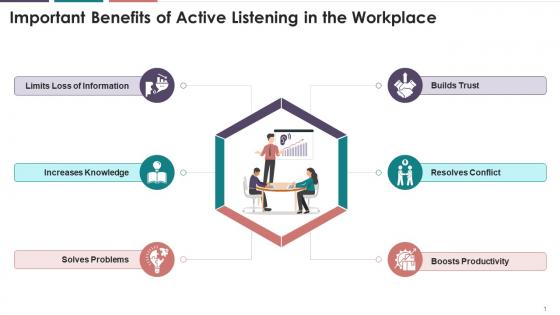
The slide showcases the significant advantages offered by active listening in business organizations. The key benefits of active listening are building trust, resolving conflict, boosting productivity, solving problems, increasing knowledge, and limiting the loss of information.
People who downloaded this PowerPoint presentation also viewed the following :
Important Benefits Of Active Listening In The Workplace Training Ppt with all 17 slides:
Use our Important Benefits Of Active Listening In The Workplace Training Ppt to effectively help you save your valuable time. They are readymade to fit into any presentation structure.






FAQs for Important Benefits Of Active Listening In The
Okay so active listening totally changes team dynamics. When you actually focus on understanding people instead of just waiting to jump in, you catch way more details and avoid those annoying miscommunications. Plus people trust you more when they feel heard - sounds obvious but it really works. Projects flow better. Less confusing email chains back and forth. I've noticed meetings get less tense too, which is honestly such a relief. Next time you're in a team discussion, try really listening first before you respond. You'll probably be surprised how much smoother things go.
Dude, active listening is a total game changer with clients. Like, when you actually reflect back what they're saying and ask real questions instead of just waiting to talk, they feel genuinely heard. I swear people can tell when you're mentally writing your grocery list while they're talking lol. You'll pick up on stuff you'd totally miss otherwise, which means better solutions and way fewer "wait, that's not what I meant" moments. Clients stick around longer too when they feel understood. Try this next time - summarize what they said before jumping into your pitch.
Honestly, start with the obvious stuff - put your phone away and actually look at people when they're talking. I used to be terrible at this! Try repeating back what you heard like "so you're saying..." It feels super awkward at first but people really respond to it. Ask questions that aren't just you waiting to jump in with your own story. Here's the hard part though - don't immediately try to fix everything they tell you. Sometimes they just want someone to listen, you know? Pick one conversation this week and really focus on just that person. You'll be surprised how different it feels.
Honestly, active listening is a game-changer for conflicts. People just want to feel heard, you know? Once they realize you're actually trying to understand their side (not just waiting for your turn to talk), their whole attitude shifts. The defensiveness drops and suddenly you're working together instead of butting heads. I've seen some pretty heated arguments completely flip when someone starts paraphrasing back what they heard. It's wild how effective it is. Try it next time - like actually repeat their main points before jumping into yours. You'll probably find solutions neither of you saw coming.
Dude, you'd be shocked how few managers actually listen to their people. When employees feel heard, they get way more engaged - like night and day difference. Put your phone away during meetings and ask real follow-up questions. Shows you're not just waiting to talk. People start sharing ideas more, bringing up problems before they explode, that whole thing. It builds this safety net where teams actually trust each other. Honestly the ripple effect is crazy - one person feeling valued makes everyone else notice. Start with your next one-on-one and see what happens.
Honestly, active listening is a game-changer for everyone involved. When you really focus on understanding instead of just waiting to jump in, you'll actually feel less stressed and more connected to people. The person talking gets that amazing feeling of being truly heard - which barely happens anymore, let's be real. Your empathy skills get better too, and you retain so much more from conversations. They feel validated, less anxious, better about themselves. It's wild how different a conversation feels when you're genuinely trying to understand rather than planning your response. Try it next time - you'll see what I mean.
Oh absolutely, it's a game changer. You stop being the boss who just tells people what to do and actually start working *with* them. People open up way more when they know you're really paying attention - not just waiting for your turn to talk, you know? I've watched managers completely flip their whole style once they figured out how much good stuff they were missing. Ask those follow-up questions, repeat back what someone said before you jump into fix-it mode. Honestly, the decisions you make end up being so much smarter because you're catching details and concerns that would've flown right past you otherwise.
Look, when you really listen to your team - like actually listen, not just wait for your turn to speak - it creates this safe space where people will be honest with you. Your employees start sharing real concerns and ideas because they feel heard. And here's the thing: it goes both directions. Once they see you genuinely care about their perspective, they'll be way more open to your feedback too. I've seen it happen so many times. Both sides get comfortable being a bit vulnerable, which is where the good stuff happens. Try starting your next one-on-one with an open question, then just focus on understanding what they're saying before diving into your own agenda.
Honestly, virtual meetings make active listening way harder, but you can work around it. Camera on is huge - nodding and facial expressions actually matter more since everything else gets lost. Chat's your friend for quick clarifications without cutting people off. Here's the weird part though - you gotta verbalize way more than normal. Like "So you're saying..." or "Got it, so the issue is..." It feels awkward at first but people need that confirmation they're being heard. Maybe just focus on one thing per meeting? Don't try to be perfect right away.
So there's a few ways to do this. 360-degree feedback is solid - you get input from multiple coworkers about how well someone actually listens. Role-playing with observers works great too since you're watching the skills happen in real time. Self-assessments are useful but obviously people aren't always honest about their own flaws, lol. Video recording actual conversations gives you amazing data if everyone's cool with being filmed (some people get weird about it). Honestly I'd mix 2-3 methods together. Start with self-assessment for baseline awareness, then layer on observational stuff.
Oh man, this is so important! Different cultures handle eye contact and personal space totally differently - I've definitely made things awkward in meetings before. Some people see direct eye contact as respectful attention, others find it aggressive or rude. Same with paraphrasing what someone said back to them. Works great in some cultures, feels super intrusive in others where people communicate more indirectly. Honestly, just ask your teammates upfront how they prefer to communicate. Watch their body language too since it'll probably be different from what you're used to.
Ugh, the worst part is your brain just freaks out under pressure - like full fight-or-flight mode. Makes it impossible to actually hear what people are saying. I'm always planning my comeback while they're still talking, which is so dumb. Or I'm just sitting there waiting for my turn to speak. When everyone wants answers RIGHT NOW, who has time to listen properly? And don't even get me started on how defensive I get when the stakes are high - suddenly everything sounds like an attack. Honestly though, just pausing for two seconds before you respond helps. Ask yourself "wait, what did they actually say?" Works better than you'd think.
Honestly, just start by actually listening to them yourself - like really listening, not just waiting for your turn to talk. Repeat what they say back, ask follow-ups. Kids notice when you're genuinely paying attention. Then teach them the same stuff through partner work where they have to paraphrase before jumping in with their own thoughts. I make my students acknowledge what the previous person said before adding anything new. Sounds annoying but it works! Also try those listening circles once a week - someone shares, everyone else just listens. No interrupting allowed. The engagement difference is wild.
Okay so here's the thing - when you actually listen to people (like really listen, not just wait for your turn to talk), they start seeing you as someone they can trust. It's wild how much this changes things. People open up more because they feel heard. At work, you'll find people coming to you for advice way more often. Conflicts get sorted out faster too since you're picking up on what's actually bothering someone, not just surface stuff. Honestly, most people are terrible at this so you'll stand out. Just try it in one conversation today - focus completely on understanding what they're saying instead of planning your response.
Honestly, active listening is like a cheat code for getting better with people. When you actually focus on what someone's saying - and I mean *really* focus, not just waiting for your turn to talk - you start picking up on their emotions way easier. You'll notice their tone shifts, body language, those awkward pauses when they're upset about something. It builds your emotional intelligence without you even realizing it. Plus you get better at controlling your own reactions too. Next time you're chatting with someone, try this: listen to understand them first, then think about what to say back. Game changer.
-
A library of engaging, customizable and content-ready templates.
-
Graphics are very appealing to eyes.