

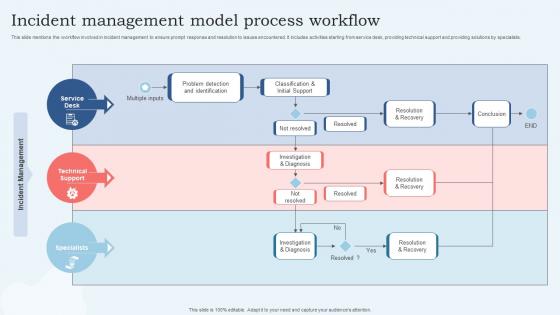
Incident Management Model Process Workflow




Try Before you Buy Download Free Sample Product
 Impress Your
 Audience
 100%
100% Editable
 Save Hours
 of Time


This slide mentions the workflow involved in incident management to ensure prompt response and resolution to issues encountered. It includes activities starting from service desk, providing technical support and providing solutions by specialists.
People who downloaded this PowerPoint presentation also viewed the following :
Incident Management Model Process Workflow with all 6 slides:
Use our Incident Management Model Process Workflow to effectively help you save your valuable time. They are readymade to fit into any presentation structure.





FAQs for Incident Management
You'll want four main things: escalation procedures, clear roles, communication channels, and good documentation. Honestly, the escalation part is critical - I've watched incidents blow up just because people didn't know who to contact. Communication should cover internal teams plus customers when necessary. Templates for common issues are a lifesaver so you're not writing updates while everything's on fire. Oh, and post-incident reviews are super valuable for avoiding the same mess twice. I'd start by figuring out your biggest gaps first, then work from there.
So basically, IT incidents hit fast and wide - like when servers crash and suddenly nobody can work. You've gotta move quick with clear escalation. Non-IT stuff though? Think workplace injuries or data breaches. Way more people get involved - HR, legal, facilities teams. Honestly, IT problems are easier to predict most of the time. Non-IT incidents need way more paperwork and compliance hoops. IT's all about getting systems back up ASAP. The other stuff focuses more on investigating what went wrong and preventing it again. I'd start by listing out what types of incidents you actually deal with, then build your response plans around how urgent each one really is.
Think of communication protocols as your game plan for who needs to know what when shit hits the fan. You'll want escalation paths mapped out, plus update schedules for different groups. Trust me, accidentally flooding the C-suite with every tiny detail is... not fun. Different stakeholder groups need different channels too. Without this stuff planned ahead, incidents become total chaos - everyone's running around asking "what's going on?" instead of actually fixing the problem. Oh, and set this up BEFORE you need it, obviously.
Honestly, automation is your best friend here - set up alerts that actually go to the right people instead of waking up half the company. Create runbooks for common problems so you're not googling "how to restart Redis" at 2am (been there). Map out who owns what system and have clear escalation paths ready. Practice with drills too, because figuring out your process during an actual outage is basically nightmare fuel. The biggest wins usually come from fixing whatever bottleneck slows you down most - could be anything from slow deployments to people not knowing who to call.
Track MTTD, MTTR, incident volume, and how long customers actually felt the pain. Escalation rates matter too - if you're constantly bumping things up the chain, something's broken in your process. Same with repeat incidents, which honestly drives me crazy because it means nobody's digging into the real problem. Don't just look at monthly snapshots though. Trends over time tell the real story, especially since some stuff's seasonal or tied to when you push code. Start simple with these basics, then worry about fancier metrics like time-to-acknowledge later.
Dude, you gotta stop slapping quick fixes on everything and actually figure out what's breaking. Try the "5 Whys" thing - just keep asking why until you hit the real problem. Fishbone diagrams work too, though they look kinda weird at first. But honestly? Most people just panic and patch stuff without thinking. Don't be that person. When you document these patterns, you'll start seeing the same issues pop up and can get ahead of them. Your future self will literally love you for it. Start small - next time something breaks, just ask "why" like five times in a row.
Dude, communication breakdowns are the worst - nobody knows who's supposed to be doing what when stuff breaks. Plus you get these crazy bottlenecks because incidents don't get prioritized right. Knowledge silos kill me too, like when Dave's the only one who can fix the payment system and he's on vacation. Most teams just make it up as they go without proper runbooks. Oh, and skipping post-mortems? That's how you keep making the same mistakes. I'd say nail down clear roles first and actually review what went wrong afterward.
Dude, automation is honestly where it's at for incident response. Set up auto-ticket creation and escalation workflows first - saves so much time on the boring stuff. Your team gets alerts way faster, stakeholders get updates without you having to babysit them, and basic issues can fix themselves with scripts. Short version: your people can tackle the actually hard problems instead of doing robot work. Oh, and automated notifications are super easy to start with if you're not sure where to begin. Once you see how much time it saves, you'll wonder why you waited so long.
Honestly, tabletop exercises are your best bet - simulate real outages and focus on communication plus decision-making when things get stressful. I'd rotate roles so everyone gets different responsibilities. Teams waste too much time on theory, but muscle memory is what'll actually save you during those brutal 2 AM incidents. Monthly drills work well to start with, then adjust based on how comfortable your team gets. Oh, and always do post-incident reviews after real problems hit - that's where you'll capture the good lessons. The combo of practice scenarios plus learning from actual fires has worked way better than classroom stuff in my experience.
So risk assessment basically determines how you handle incidents - like which ones get the red alert treatment vs the "eh, we'll deal with it later" approach. Map out your most critical business stuff first, then figure out what incidents would totally wreck those processes. That becomes your priority list. High-risk scenarios? You'll want faster response times, senior people involved, proper documentation - the whole nine yards. Lower-risk things can follow simpler workflows. I mean, you don't want to sound the alarm for every minor glitch, right? It's really about building your escalation framework around what actually matters to the business.
You'll definitely need a good ticketing system - ServiceNow or Jira Service Management work well. For monitoring, PagerDuty and Splunk are solid choices to catch issues early. Slack or Teams help keep everyone on the same page when stuff hits the fan. Integration is clutch though - nobody wants to juggle a million different tools during an outage. I'd also look into runbook automation like Ansible, but honestly? Start simple with ticketing and monitoring first. You can always add the fancy automation stuff later once your team gets the hang of things.
Honestly, you gotta bake this compliance stuff right into your incident playbooks from the start. Figure out what regs hit your industry - HIPAA, SOX, PCI-DSS, whatever applies. Then build your incident procedures so they automatically grab all the evidence and docs those frameworks want. Trust me, trying to bolt this on later is a nightmare I wouldn't wish on anyone. Create templates that hit all the regulatory boxes, nail down your breach notification timelines, and make sure everyone knows who the compliance people are. I'd start by checking your current process against your specific requirements this week.
Honestly, post-incident reviews are a game changer - they basically let you learn from all the chaos instead of repeating it. Think of it like figuring out why your car broke down so it doesn't happen again on your next road trip. The trick is looking at what processes failed, not pointing fingers at people. Document everything while it's fresh in everyone's head because memory gets fuzzy fast. Here's the thing though - you've gotta actually follow through on the action items. Otherwise you're just sitting in meetings talking about problems you'll never fix.
Think of incident management like your immediate fire drill - it jumps into action right when stuff breaks. Your BCP is more the "what if our building burns down" backup plan. Here's what works: map out which incidents should trigger your full disaster recovery mode. Most places I've seen totally miss this connection, which is honestly pretty dumb. You don't want your team scrambling to figure out if a server crash means "fix it quick" or "time to activate the whole continuity plan." Set those escalation rules now so everyone knows when to hit the panic button.
Dude, stakeholder engagement literally makes or breaks incident response. When everything's falling apart, you need the right people who actually know what's broken and can approve quick fixes. Otherwise you're just guessing in the dark while users are screaming. Figure out your key players beforehand - product folks, support team, maybe leadership depending on how big the fire is. Set up those notification lists and escalation paths now, not when you're panicking at 2am. Trust me on this one. Customer support especially will save your butt because they're hearing directly from angry users and can tell you exactly what's not working.
-
Their templates are super easy to edit and use even for the one like me who is not familiar with PowerPoint. Great customer support.
-
You guys are life-saver when it comes to presentations. Honestly I cannot do much without your services. Thank you!!!