


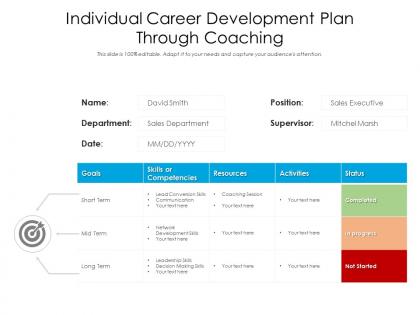
Individual career development plan through coaching




Try Before you Buy Download Free Sample Product
 Impress Your
 Audience
 100%
100% Editable
 Save Hours
 of Time


Our Individual Career Development Plan Through Coaching are topically designed to provide an attractive backdrop to any subject. Use them to look like a presentation pro.
People who downloaded this PowerPoint presentation also viewed the following :
Individual career development plan through coaching with all 2 slides:
Use our Individual Career Development Plan Through Coaching to effectively help you save your valuable time. They are readymade to fit into any presentation structure.
FAQs for Individual career development
So basically, coaching is about asking you questions until you figure stuff out yourself - like having someone help you think through problems. Mentoring is more direct. They've actually done what you're trying to do and will straight up tell you "here's what worked for me." Both are great honestly, just depends what you need. If someone's stuck and needs to discover their own path, go with coaching. But if they could really use some real-world guidance from someone who's been in their shoes? That's where mentoring shines. I've found most people actually benefit from a mix of both.
Okay so you'll want to track the obvious stuff - milestones, behavior changes, how they rate themselves. But honestly? The small mindset shifts matter way more than people think. I do this thing where I ask clients to rate their confidence 1-10 each session - sounds basic but it's crazy how much it reveals. Regular check-ins against your original goals are key. Document everything because clients literally can't see their own progress half the time. Oh and always start with "what's different since last week?" - you'd be surprised what comes up.
Honestly, emotional intelligence makes or breaks coaches. I've watched people with perfect techniques completely bomb because they missed when someone shut down or got defensive. You gotta read the room - pick up on tone, body language, all that stuff. Managing your own reactions matters too (harder than it sounds). The best coaches I know can sense what's happening under the surface and pivot their whole approach. It's like having a sixth sense or something. Try focusing more on nonverbals in your next session. You'll catch things you never noticed before.
Honestly, the scheduling apps alone will save your sanity - no more back-and-forth emails! Video calls make remote sessions super easy, and there are apps now that track your clients' progress between meetings. I've been using digital worksheets too since they're way easier to share and update than printing everything. The data side is pretty cool - you can actually see patterns in how people communicate or hit their goals. Your clients love getting real-time feedback through their phones. Oh, and some AI tools analyze communication patterns, though I'm still figuring those out. Just start with scheduling software and add tools gradually.
Listen really carefully first - like actually hear them instead of planning what to say next. Ask questions that can't be answered with yes/no, and repeat back what they're telling you so they know you get it. Being genuinely curious about how they see things is honestly game-changing (most coaches skip this part). Share something real about yourself when it fits, but don't overshare. Do what you promise, always. Here's what I'd do differently though - let them be the expert on their own life while you bring the coaching tools. Next session, just ask them what winning looks like.
Honestly, listening is huge - ask open questions to get what makes each client tick culturally and personally. Some want you to be super direct, others need way more cheerleading (learned that one the hard way lol). Watch their body language too, especially if they're from cultures where being blunt comes off rude. I switch up my examples and pace based on what clicks with them. The game changer though? Just ask: "Is this working for you or should we pivot?" Staying flexible beats having a perfect system every time.
Honestly, the hardest part is that whole chicken-and-egg thing - clients want experienced coaches, but you need clients to get experience, you know? Pricing is tricky too when you're new. Don't even get me started on imposter syndrome. Oh, and nobody tells you about all the business crap you'll be doing - taxes, marketing, endless admin stuff. It's like half coaching, half running a small business. My suggestion? Do some free sessions first to get testimonials and actual results you can point to. Then slowly bump up your rates as you get more confident. Works way better than jumping in at full price.
Start by asking them what story they're telling themselves about why something won't work. Most limiting beliefs are just assumptions we've never actually questioned - like, where's the real evidence? I always flip "I can't do this" to "what would I need to learn to make this happen?" Share stories of people who've been in similar spots and pushed through. Oh, and create small wins that prove their old narrative wrong. The questioning part is honestly the most powerful tool you've got. Have them write down three beliefs that might be sabotaging them first.
Start with GROW - Goals, Reality, Options, Wrap-up. It's straightforward and keeps things on track without being overwhelming. CLEAR is another solid option if you want more structure, but honestly? Most coaches overthink the framework choice when what really matters is just being consistent. Your clients need to know what to expect each session. I'd say try GROW for a few weeks first. See how it flows. You can always switch things up later once you get the hang of it - actually, my mentor used to mix frameworks all the time and it worked great for her.
Honestly, group coaching just naturally gets people working together. Everyone's bouncing ideas around and tackling problems as a team instead of going it alone. What I've noticed is participants start forming their own accountability partnerships and sharing resources - sometimes they'll even keep chatting after sessions end. The whole vibe shifts from "ugh, my problems" to more like "okay, we're all trying to figure this stuff out." I'd suggest setting up activities where people actually help each other brainstorm rather than just doing the usual round-robin updates. Way more engaging.
Honestly, just bake it into everything instead of treating it like some separate thing. Train your senior people to be coaches first - way cheaper than hiring outside help for everyone. Build those skills right into your regular management training so people actually learn to coach their teams. What really works is pairing high-potential folks with executives for formal coaching relationships. But here's the thing - don't just do a one-off workshop and call it done. Keep it alive with coaching circles or peer groups afterward. Otherwise people forget everything within like two months and you're back to square one.
Okay so the main things - confidentiality is huge, plus keeping proper boundaries. Get consent before sharing anything about clients, that stuff can blow up in your face. Don't get too buddy-buddy with people you're coaching. Also, know your limits! The trickiest part is honestly figuring out when someone needs actual therapy instead of just coaching. I'd set up some kind of intake form that covers the basics upfront. Oh and be super clear about what you can/can't do from the start - people assume coaches can fix everything sometimes. You'll thank yourself later.
Definitely mix some formal learning with staying connected to other coaches. Harvard Business Review and ICF resources are solid starting points. LinkedIn's great for following industry leaders too. Conferences are totally worth it - ICF events or even virtual webinars. The networking alone makes it worthwhile. But honestly? Some of my best insights have come from random chats with other coaches at meetups or in Facebook groups. People share what's actually working in real situations. I'd carve out like 30 minutes weekly to browse articles or throw on coaching podcasts during drives. Oh, and local meetups are underrated if you can find them!
Honestly, I've found it works better when you focus on what they actually did, not their personality. Like instead of "you're disorganized," say "the report was missing three key sections." Start with something positive first - makes them way more receptive. Then ask stuff like "how do you think that meeting went?" Gets them thinking instead of getting defensive. Oh, and timing is huge - don't wait weeks to bring something up, but also don't corner them when they're already stressed. Always end with concrete next steps and let them know you're there to help. That part's crucial.
Honestly, culture affects everything in coaching - way more than I initially realized. Direct feedback works great for some people, but others need you to be way more subtle about it. Authority dynamics are huge too. I've had clients where being too casual totally backfired because they expected more formality. Ask your coachee upfront how they like to communicate. What feels comfortable? Their background shapes their goals and decision-making style too. Some cultures are all about group input while others focus on individual choices. You'll need to adjust your whole approach based on what clicks for them.
-
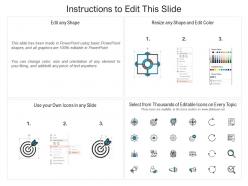
Designs have enough space to add content.