

Inspection Of Building Construction Process Flow Chart




Try Before you Buy Download Free Sample Product
 Impress Your
 Audience
 100%
100% Editable
 Save Hours
 of Time


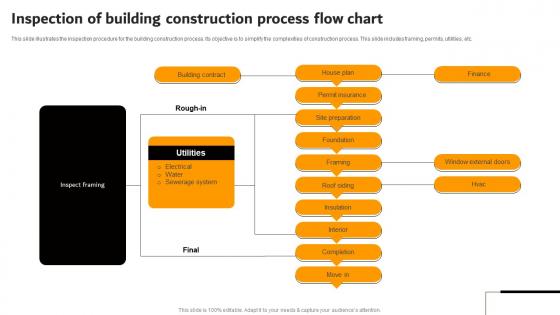
This slide illustrates the inspection procedure for the building construction process. Its objective is to simplify the complexities of construction process. This slide includes framing, permits, utilities, etc.
People who downloaded this PowerPoint presentation also viewed the following :
Inspection Of Building Construction Process Flow Chart with all 9 slides:
Use our Inspection Of Building Construction Process Flow Chart to effectively help you save your valuable time. They are readymade to fit into any presentation structure.








FAQs for Inspection Of Building Construction
Safety stuff first - PPE, scaffolding checks, hazard spots. Quality control comes next: materials meeting specs, decent workmanship, code compliance. Document everything (seriously, future you will be grateful when problems pop up). Cover structural elements, electrical and plumbing rough-ins, environmental issues. Track progress against your timeline and budget too. Oh, and tailor it to your specific project type - residential jobs need different focus than commercial builds. Some inspectors are pickier about certain things, so know your local quirks.
Basically you're both looking at the same project but totally different angles. Construction inspectors focus on compliance and quality - making sure everything meets codes and safety standards. Project managers deal with schedules, budgets, coordinating teams, keeping clients from losing their minds (good luck with that one lol). You'll work together constantly though. PMs need your inspection reports to know if they're on track. You need their schedule updates so you're not showing up to empty sites. Quick way to think about it: PM gets it done, inspector gets it done right. Definitely establish good communication with your PM early on.
Safety stuff is always the worst - missing hard hats, sketchy scaffolding, equipment just sitting around unsecured. Electrical work that doesn't meet code is a nightmare too. Material issues drive me crazy - bad concrete pours, wrong rebar specs, stuff that doesn't match what was ordered. Poor workmanship honestly pisses me off the most because someone just didn't care enough to do it right. Oh, and documentation problems where permits are missing or inspections got skipped. Make yourself a checklist and hit these areas first - saves so much time later.
Dude, get yourself an inspection app first - you'll save so much time right away. No more paperwork back at the office since you can fill everything out on-site. Drones are incredible for roofs, trust me on this one. Way better than hauling a ladder around everywhere. Your photos automatically get GPS tagged too, which is clutch for records. I keep all my blueprints and codes on a tablet now instead of carrying around a million papers. Everything syncs to the cloud so your office sees updates instantly. Honestly, once you go digital you can't go back to the old way.
Look for ICC certifications that match your project - residential, commercial, whatever you're doing. Most states need those plus a state license. But honestly? Real construction experience matters way more than just having the paperwork. Find someone who worked in the field for 5+ years before switching to inspection. That hands-on knowledge is gold. Some places accept equivalent experience instead of formal certs too. Oh, and definitely check their certifications online yourself - I've heard horror stories about fake credentials. You don't want that headache halfway through your project.
Your local building codes are basically your bible for this whole thing. They spell out exactly what needs inspecting and when - foundation, framing, electrical rough-in, all that stuff. Timing is everything here because missing an inspection window can really screw you over with delays. Some places are crazy strict about energy efficiency too, which honestly can be a pain but adds more checkpoints. I'd grab a copy of your codes right away and map out every required inspection before you start digging. Trust me, you don't want surprises halfway through construction.
Document everything as you go - photos, measurements, clear descriptions. Trust me, don't wait because you'll totally forget the specifics later. Take way more photos than seems necessary since they're your best backup if things get messy. Date and timestamp everything, and reference the actual plan sections when you spot issues. Keep your terminology consistent throughout. Your handwriting needs to be readable enough that if someone else has to pick this up, they won't be lost trying to decode your notes. Oh, and always note the exact location plus any safety red flags you see.
Dude, good communication totally changes the game with inspectors. Instead of them being the "gotcha" police, they become actual teammates. Walk them through WHY you need to fix something - like the real safety reasons, not just "code says so." Trust me, crews get it way better that way. Schedule quick walkthrough chats at major milestones rather than waiting for formal inspections. I've watched projects where this happens and honestly? Night and day difference. You'll catch issues early before anyone has to rip out finished work. Nobody wants that headache.
Dude, you HAVE to do pre-construction inspections. I can't stress this enough - they catch problems before you start digging and save you a fortune later. Check your soil stability, verify where utilities actually run (spoiler: they're never where the old maps say), and make sure you won't hit any regulatory snags. Honestly, construction always throws curveballs at you anyway, so why not minimize them? These inspections help nail down real costs too, not just estimates based on what things look like from the street. Document everything now or you'll be kicking yourself when change orders start piling up.
Honestly, forget about strict timelines and focus on the big moments instead. Foundation, framing, electrical/plumbing rough-in, insulation, final walkthrough - that's your main lineup. Most jobs need 5-7 formal inspections, but it really depends on how complex things get and what your local building department wants. I'd probably swing by weekly or every other week too for quick check-ins. Way easier to fix problems when they're small, you know? Oh, and definitely call your building department first - they'll tell you exactly what hoops you need to jump through. Each area's got their own quirks.
Dude, the legal stuff can get really messy if you mess up an inspection. Property owners will sue you. Contractors might come after you too. Someone gets hurt because you missed a code violation? That's when things get genuinely terrifying - we're talking potential criminal charges. Your license is on the line, plus local authorities love handing out fines. Oh, and insurance companies are basically vultures - they'll deny claims the second they smell inadequate inspection work. I learned this the hard way watching my buddy deal with it. Document every single thing, even when clients are breathing down your neck to hurry up.
Hey! So honestly, you can't just sit back and wait for stuff to go wrong. Walk the whole site every morning and write down anything sketchy you see. Then bug the contractors about it right away. Being visible really does work - I swear people behave better when they know you're watching. Check everyone's got their hard hats and safety gear, make sure scaffolding looks solid, that kind of thing. The biggest thing though? Actually getting along with the crew so they don't just ignore you when you point out problems. Document everything and don't be afraid to shut things down if it's dangerous.
Environmental stuff is massive in construction inspections. You're constantly checking stormwater management, erosion controls, air quality, waste disposal - the whole nine yards. Contractors get tripped up here all the time if they're not careful. Permits need to be current, violations get flagged during different construction phases, and mitigation measures actually have to work (shocking, I know). The EPA doesn't play games with this stuff either. Document everything like crazy because environmental issues can shut down a project fast and cost serious money.
Check materials before they arrive and do random spot-checks during delivery. Manufacturer certs and test reports need to match your specs - boring paperwork but you'll hate yourself later if you skip it. Do concrete cylinders, rebar tensile tests, visual checks for damage or wrong grades. Storage matters too since good materials can get ruined sitting in water or dirt. Document everything because someone's always asking questions months later. Oh and set up handling protocols early - saves headaches down the road.
Drones are everywhere now for site surveys - honestly game-changing for spotting stuff you'd never see otherwise. Mobile apps sync everything in real-time, so no more clipboard nonsense. AI photo analysis is getting scary good at flagging problems before you even finish walking around. IoT sensors can monitor concrete curing and structural stress 24/7 now, which is wild if you think about it. Digital checklists have basically taken over. Start with a decent mobile inspection app if you haven't - seriously, it'll cut your paperwork time in half. The drone thing might seem overkill but it's worth trying.
-
I am so thankful for all of the templates I've found on your site. They have saved me hours every week and helped make my presentations come alive. Keep up with these amazing product releases!
-
If you have visited their site and failed to find the products, try reaching the customer service because it will be the case that you didn't use the search bar well.