


Inventory Inspection Process Flow Chart




Try Before you Buy Download Free Sample Product
 Impress Your
 Audience
 100%
100% Editable
 Save Hours
 of Time


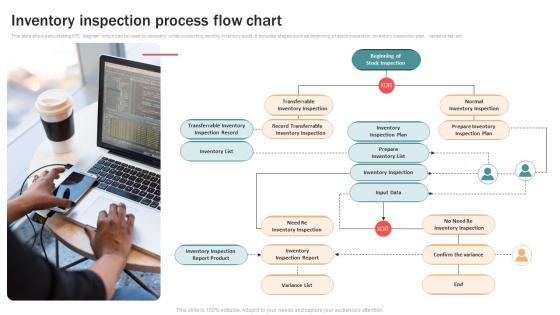
This slide shows stocktaking EPC diagram which can be used by company while conducting monthly inventory audit. It includes stages such as beginning of stock inspection, inventory inspection plan,, variance list, etc.
People who downloaded this PowerPoint presentation also viewed the following :
Inventory Inspection Process Flow Chart with all 6 slides:
Use our Inventory Inspection Process Flow Chart to effectively help you save your valuable time. They are readymade to fit into any presentation structure.





FAQs for Inventory Inspection
**INPUT**: What are the key objectives of the inventory inspection process? **OUTPUT**: The key objectives of the inventory inspection process include ensuring accurate stock counts, identifying damaged or obsolete items, maintaining optimal inventory levels, verifying proper storage conditions, and ensuring compliance with regulatory standards. These systematic evaluations streamline operations by reducing carrying costs, preventing stockouts, and enhancing supply chain efficiency, with many organizations finding that regular inspections ultimately deliver improved cash flow and better customer service levels. **Word count: 60 words**
Inventory inspection frequency depends on inventory value, turnover rates, regulatory requirements, and business criticality, with high-value items requiring monthly reviews while standard stock needs quarterly assessments. Many organizations implement cycle counting systems that continuously audit different inventory segments throughout the year, ultimately delivering improved accuracy, reduced stockouts, and enhanced operational efficiency while minimizing business disruption.
The most common inventory inspection methods include cycle counting, ABC analysis, perpetual inventory systems, random sampling, and physical audits. These approaches streamline accuracy by rotating through high-value items regularly, automating real-time tracking, and minimizing disruptions, with many warehouses and retail operations finding that strategic combinations deliver improved stock control and reduced carrying costs.
Technology enhances inventory inspection through automated tracking systems, RFID tags, barcode scanners, IoT sensors, and AI-powered analytics that streamline data collection and accuracy verification. These solutions enable real-time visibility, reduce human error, and accelerate audit cycles, with manufacturing and retail organizations finding that automated inspections deliver faster compliance reporting and significantly improved inventory accuracy.
Employee training plays a crucial role in effective inventory inspections by ensuring accurate data collection, proper handling procedures, consistent quality standards, and compliance with regulatory requirements. Well-trained staff can identify discrepancies faster, reduce inspection errors, and streamline warehouse operations, with many organizations finding that comprehensive training programs ultimately deliver improved accuracy and operational efficiency.
Best practices for conducting a physical inventory count include establishing clear counting procedures, organizing inventory by zones, using trained counting teams, implementing cycle counting schedules, and employing barcode or RFID technology for accuracy. These methods streamline operations by minimizing disruptions, reducing counting errors, and ensuring data integrity, with many retailers and manufacturers finding that systematic approaches ultimately deliver improved inventory accuracy and enhanced operational efficiency.
Discrepancies can be effectively addressed through immediate investigation protocols, systematic root cause analysis, real-time system updates, staff retraining programs, and enhanced verification procedures. These approaches streamline resolution by identifying underlying issues, correcting data inconsistencies, and implementing preventive measures, with many organizations finding that proactive discrepancy management ultimately reduces future errors and improves operational efficiency.
Essential documentation includes inventory logs, product specifications, quality control checklists, supplier certificates, maintenance records, and audit trails. These documents streamline verification processes by ensuring compliance, tracking product history, and maintaining regulatory standards, with many organizations finding that comprehensive documentation reduces inspection time while enhancing accuracy and accountability.
Retail inventory inspection focuses on product quality, expiration dates, customer-ready presentation, and stock rotation, while manufacturing emphasizes raw material specifications, work-in-progress tracking, and production compliance standards. Retail operations typically conduct more frequent, customer-facing inspections for immediate sales readiness, whereas manufacturing performs detailed quality control assessments throughout production cycles, ultimately ensuring both sectors maintain operational efficiency and meet their distinct customer requirements.
Key metrics for evaluating inventory inspection effectiveness include accuracy rates, cycle count variance, inspection completion times, cost per inspection, and defect detection rates. These measurements enable organizations to streamline warehouse operations, reduce discrepancies, and enhance supply chain reliability, with many retail and manufacturing companies finding that consistent tracking ultimately delivers improved inventory turnover and operational efficiency.
Businesses can prepare for inventory audits by implementing accurate record-keeping systems, conducting regular cycle counts, organizing physical storage areas, and establishing clear documentation procedures for all inventory movements. These preparation strategies streamline the audit process by ensuring data accuracy, reducing discrepancies, and demonstrating operational control, with many organizations finding that proactive inventory management significantly reduces audit duration and enhances compliance outcomes.
Poor inventory inspection creates significant supply chain disruptions through inaccurate stock levels, quality control failures, increased carrying costs, and delayed order fulfillment. These issues cascade throughout operations, leading to stockouts, customer dissatisfaction, and strained supplier relationships, while many organizations find that inadequate inspection processes ultimately compromise competitive advantage and operational efficiency.
Inventory inspection processes can be streamlined through automated scanning systems, real-time data integration, mobile inspection apps, standardized checklists, and predictive analytics for risk-based sampling. These technologies enhance accuracy by reducing manual errors, accelerating cycle times, and enabling instant inventory updates, with many warehouses and retail operations finding that strategic automation delivers faster turnover and improved operational efficiency.
Seasonal fluctuations significantly impact inventory inspection protocols by requiring increased frequency during peak periods, adjusted storage assessments for temperature-sensitive items, and modified rotation schedules. Retail and manufacturing organizations typically enhance monitoring procedures before high-demand seasons, streamline inspection workflows to accommodate volume surges, and implement strategic stockpiling verification, ultimately ensuring product quality while maintaining operational efficiency.
Industry regulations significantly influence inventory inspection processes by mandating specific documentation standards, compliance protocols, safety requirements, and audit frequencies across different sectors. Pharmaceutical companies must follow FDA guidelines for drug storage verification, while food retailers adhere to HACCP standards for temperature monitoring, with manufacturing facilities implementing ISO protocols, ultimately ensuring product quality, consumer safety, and regulatory compliance while minimizing legal risks.
-
SlideTeam makes creating presentations easy. Unlimited products, premium quality designs and affordable.
-
My team has been relying on SlideTeam’s professional PPT designs for a while now. It has greatly sped up quality work at my organization. So thanks!