

Yearly Inventory Performance Trends Dashboard





Try Before you Buy Download Free Sample Product
 Impress Your
Audience
 100%
Editable
 Save Hours
of Time


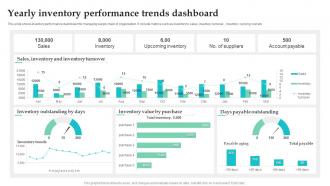
This slide shows inventory performance dashboard for managing supply chain of organization. It include metrics such as inventory to sales, inventory turnover, inventory carrying cost etc.
People who downloaded this PowerPoint presentation also viewed the following :
Yearly Inventory Performance Trends Dashboard with all 7 slides:
Use our Yearly Inventory Performance Trends Dashboard to effectively help you save your valuable time. They are readymade to fit into any presentation structure.






FAQs for Yearly Inventory
So basically, supply chains are still messed up from COVID and everyone's buying habits shifted. Companies got burned hard in 2021-2022 when they over-ordered everything - like, who needs 50,000 fidget spinners sitting in a warehouse? Now interest rates are higher so storing extra stuff costs way more. E-commerce makes it worse since trends flip so fast these days. Consumer demand keeps changing too, which makes retailers super cautious about what they actually stock. Honestly, your best move is investing in better forecasting tools and keeping suppliers flexible instead of just hoarding inventory.
Honestly, the whole inventory game is changing fast. AI can now predict what you'll need weeks out, which is pretty crazy. IoT sensors automatically track everything in real-time, and blockchain keeps your supply chain transparent. Even basic warehouses are getting smart shelving and automated picking - though I still think some of that tech is overkill for smaller businesses. The real win? You can see exactly what's moving where at any moment. I'd say figure out what's actually broken in your current setup first, then see which tech actually fixes those specific problems.
Dude, analytics is like having a crystal ball for your inventory. You'll spot which products actually move vs what you *think* will sell - honestly saved my butt so many times. Seasonal patterns become super obvious, and you can predict stockouts before they happen. The algorithms are getting crazy good these days too. Instead of guessing reorder points, you base them on real sales data. No more overstock nightmares or running out of your best sellers. It's basically the difference between flying blind and actually knowing what's coming next.
Dude, these supply chain messes are forcing everyone to ditch that whole "just-in-time" thing. Companies are stockpiling way more inventory now - expensive but what else can you do? They're also spreading their suppliers around instead of relying on just one or two. Tons of money going into forecasting software too. Oh, and moving manufacturing closer to home, which honestly makes sense after all this chaos. For your business, I'd map out who your critical suppliers are first. Figure out where you're most screwed if something goes wrong, then start building backup options. Don't wait for the next disaster.
Companies are finally learning from all that supply chain madness we saw. They're still doing lean inventory but adding small safety buffers for the stuff that really matters. Predictive analytics help spot demand spikes early - which honestly saves so much headache. Real-time supplier tracking is pretty much standard now, and diversifying suppliers instead of putting all eggs in one basket. Oh, and hybrid approaches are everywhere. My take? Map out where you're most vulnerable first, then build flexibility there. Don't try to fix everything at once.
Look, you gotta figure out which products actually drive your business using demand forecasting and ABC analysis. Don't waste equal energy on everything - that's just dumb. Your high-value stuff deserves way more attention than random low-sellers. Set up just-in-time ordering for predictable items, but keep buffer stock for the crazy volatile ones or anything mission-critical. Honestly, most people mess this up by treating their entire inventory the same way. Analyze your stockout costs vs. carrying costs for each category first. Then adjust those reorder points based on what actually matters to your bottom line.
Look, you gotta mix historical data with what's happening right now in the market. Pull at least 12-18 months of sales history, but don't stop there—seasonality and promos will mess with your numbers if you're not careful. I've watched teams completely whiff because they ignored stuff like economic shifts or what competitors were doing. Honestly, relying on just one forecasting method is asking for trouble. Segment your SKUs first by how fast they move and how much they fluctuate. Then apply different approaches to each group. Oh, and product lifecycle stage matters way more than most people think.
So sustainability is totally changing how companies handle inventory. Most are doing better demand forecasting now - no more ordering huge batches that just sit there collecting dust. Green suppliers and eco packaging have become huge selling points too, honestly it's wild how much customers care about this stuff now. Oh and instead of trashing returned items, smart companies are refurbishing them. My advice? Start measuring your waste numbers and find suppliers who'll do smaller orders with sustainable packaging. It'll pay off way more than you think.
Dude, automation is a total game changer for inventory stuff. Manual processes are such a pain - you're stuck with like 70-80% accuracy and constantly dealing with spreadsheet nightmares. But automated systems? You'll hit 95%+ accuracy easy. Real-time data means you actually know what's happening instead of guessing. It handles reorders based on actual demand patterns, not just whatever feels right. Honestly, the whole stockout/overstock mess basically disappears. My advice though - don't go crazy right away. Pick something simple like reorder points first, then build from there once you see how much time it saves you.
Start with getting real-time inventory tracking across everything - online, in-store, your app, all of it. The tech setup is honestly such a pain but you gotta do it. Once that's working, create rules so you're not selling out of popular stuff online while it's just sitting in stores. Buy-online-pickup-in-store is huge for this. Ship-from-store too. I'd audit what systems you have now first - see what actually talks to each other and what's completely disconnected. Trust me, unified visibility makes everything else way easier.
Legacy systems are such a nightmare to integrate - that's probably your biggest headache right there. People get weird about changing from static forecasting too, like they think you're personally attacking their Excel sheets or something. Data quality goes to hell initially since you're tracking tons more variables in real-time. Training costs pile up fast because the analytical skills are totally different. Oh, and honestly? Don't try to do everything at once. Pick one product line or maybe just one location first. Work out all the bugs there before you scale it up company-wide. Way less painful that way.
Yeah, people are totally changing what they want right now. Sustainable stuff is huge - like eco-friendly packaging and all that. Smart home gadgets are flying off shelves too, plus anything for working from home or staying healthy. Oh, and the local brand thing is real - they're seriously cutting into big companies' sales. Honestly, I think people care more about experiences now than just buying random stuff. Traditional retail items just sit there forever. You should probably look at what you're stocking and switch maybe 15-20% toward these trending categories. Home fitness gear especially - that market's still going strong.
So I'd go with NetSuite or SAP as your main ERP - that's your backbone right there. Then grab something like Fishbowl for inventory tracking. Barcode scanners are a game changer, trust me on this one. We tried doing manual counts for way too long and it was a nightmare. Tableau's great for spotting patterns in your data, though honestly Excel with Power BI works fine if you're not ready to splurge yet. Zapier can tie everything together pretty smoothly. Just start with one solid system first - don't try to implement everything at once or you'll go crazy.
So RFID tags go on your products, and readers automatically track everything as it moves around - no more scanning each item individually (seriously, such a time saver). Real-time visibility beats barcodes by miles. Data goes straight to your inventory system, so stock levels update instantly. You'll actually know where things are instead of hunting around forever. Fewer stockouts, less overordering - honestly, it just makes sense. Oh, and start with expensive stuff first to see how it works before going crazy with it.
So basically, when you pile up too much inventory, you're just parking cash in stuff that's collecting dust. That kills your working capital fast. Plus you've got all those storage costs eating into profits, not to mention things going obsolete - honestly, it's such a pain. But swing too far the other way and you'll run out of stock, losing sales. You want inventory moving quickly enough to keep cash flowing while still having what customers need. Track your turnover ratio each month and set up alerts when things get wonky. It's all about finding that sweet spot where everything's humming along nicely.
-
Nothing beats the well-formatted and professionally designed templates offered. Kudos to SlideTeam for their amazing collection of PPT slides.
-
It makes easy work of my work presentations. I’ve never had to be nervous about my presentations for meetings.