

Inventory Stock Out and Lost Sales Analysis Dashboard




Try Before you Buy Download Free Sample Product
 Impress Your
 Audience
 100%
100% Editable
 Save Hours
 of Time


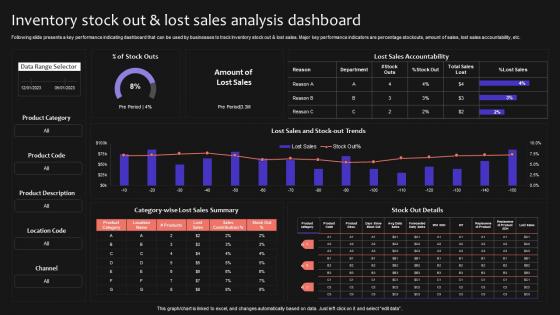
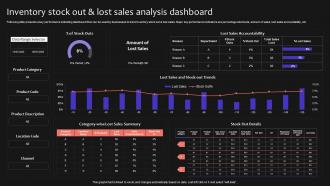
Following slide presents a key performance indicating dashboard that can be used by businesses to track Inventory stock out and lost sales. Major key performance indicators are percentage stockouts, amount of sales, lost sales accountability, etc.
People who downloaded this PowerPoint presentation also viewed the following :
Inventory Stock Out and Lost Sales Analysis Dashboard with all 7 slides:
Use our Inventory Stock Out and Lost Sales Analysis Dashboard to effectively help you save your valuable time. They are readymade to fit into any presentation structure.





FAQs for Inventory Stock Out and Lost
Okay so you need three main things: good demand forecasting, real-time tracking, and decent supplier relationships. Forecasting helps predict what you'll actually need. Real-time tracking shows what's coming and going - this is where everyone screws up because they're still using ancient Excel sheets (guilty as charged). Building solid relationships with suppliers affects your lead times big time. Oh, and get proper inventory software that connects to your sales system. It'll handle most of the annoying stuff automatically. Trust me, don't try doing this manually if you can avoid it.
Honestly, get inventory management software that tracks everything in real-time - it'll save you so much headache. The alerts when you're running low are clutch. Barcode scanners speed things up like crazy compared to manual counting (I swear some people still do spreadsheets which is wild). Cloud systems are great because your team can check stock from anywhere. Most decent software connects to your sales channels too, so when someone buys something, it automatically updates your inventory. Just make sure whatever you pick works with your current setup - the last thing you need is more tech problems.
Ugh, demand forecasting is seriously the worst - you're constantly guessing wrong and either drowning in extra inventory or scrambling because you're out of stock. Plus you can't see what's happening across your whole supply chain, which makes everything harder. Start by looking at your past sales data and what's trending in your market for better forecasts. Set up safety stock levels so you don't run out of popular items. Reorder points based on lead times help too. Get some decent inventory software for real-time tracking - honestly, automating your reorders alone will save you so much headache and cut down on mistakes.
So basically, faster inventory turnover = more cash in your pocket. When stuff moves quickly, you're not tying up money in products just sitting there collecting dust. Plus storage costs add up fast - I learned that the hard way. Slow turnover is brutal because you're stuck with dead inventory that might go out of style or expire. Nobody wants to be stuck with last year's whatever. The trick is hitting that balance where you're moving products without running out of stock. I'd check your numbers monthly by category and tweak your buying based on what's actually selling.
So demand forecasting is huge for inventory management - basically tells you what you'll need and when. Look at your sales data from the past year or two and spot the patterns. Seasonal stuff, trending products, all that. I'd update these forecasts pretty regularly as new info comes in. Otherwise you're either stuck with dead inventory eating up cash or scrambling because you ran out of something popular. Honestly, it's mostly just analyzing spreadsheets but it beats guessing. The whole point is avoiding those "oh crap" moments when demand spikes.
Honestly, start by getting really tight with suppliers who can do smaller, frequent drops instead of those massive bulk orders. Your suppliers basically become part of your team - weird at first but it works. You'll want decent forecasting and tracking systems so you're not guessing when to reorder. I'd test it on just one product line first, don't go crazy. The timing takes practice but most places cut their storage costs by like 20-30% once they get the hang of it. Worth the headache IMO.
So FIFO means selling your oldest stock first, LIFO is newest first. FIFO's great for stuff that goes bad - you don't want moldy bread in the back, right? Your balance sheet looks current too. Downside is higher profits during inflation equals more taxes, ugh. LIFO flips this - lower profits so less tax hit, but your inventory values get super outdated on paper. Oh and internationally they don't even allow LIFO which is kinda weird. Honestly though, just ask your accountant what works better for your tax situation.
So the formula's pretty straightforward: (daily usage × lead time) + safety stock. Like if you're burning through 50 units a day with a 10-day lead time, plus you want 100 units for safety stock, you'd reorder at 600 units. Safety stock is honestly where most people mess up though - depends on your supplier flaking out and how crazy your demand swings get. Start high until you figure out the rhythm. I'd track real usage for at least 3 months to get decent averages, then tweak from there. Way better than guessing and running out of stuff.
Track your inventory turnover ratio first - that's how fast stuff actually moves. Days sales outstanding shows how long things sit around, and stockout frequency tells you when you're pissing off customers by running out. Carrying costs as a percentage of inventory value matters too, plus your fill rate. Dead stock percentage is probably the most depressing metric honestly - all that money just sitting there doing nothing. I'd set up some kind of monthly dashboard to catch problems before they get worse. Oh, and don't obsess over perfect numbers at first.
Ditch those nightmare annual audits and do cycle counts instead - way less painful. Each week or month, pick a different section and count everything there, then check it against your system. Track why stuff doesn't match up - could be theft, damaged products, or someone fat-fingered the data entry (happens more than you'd think). Focus on your expensive or fast-moving inventory first since those mess-ups actually cost you money. The trick is staying consistent with it and not just ignoring problems when you find them.
Oh man, seasonal stuff is brutal for inventory. You'll be ordering winter coats in July when it's 90 degrees outside - feels so weird but you gotta do it. I'd dig into your past sales data first, month by month. Look for those patterns. Peak seasons need way more stock obviously, but the slow periods? Scale way back or you'll be drowning in leftover merchandise (trust me on this one). Also factor in longer shipping times when everyone else is ordering too. Buffer time is your friend. The forecasting part honestly makes or breaks you here.
Honestly, just grab Google Sheets or some basic inventory app to start. Those free tools will cover like 80% of what you actually need. Set up reorder points for your bestsellers - sounds fancy but it's just "buy more when you hit X amount." Do regular counts even though it's mind-numbing. Your phone can scan barcodes with free apps too. Focus on tracking the stuff that makes you money first, not every random supply. Don't overthink the paperclips, you know? Pick something and stick with it for a month before you even think about upgrading.
Dude, bad inventory management will absolutely wreck your customer relationships. When you're always out of stock, people get pissed and bounce to competitors. Overstock is just as bad though - ties up all your cash so you can't pivot when demand shifts. Honestly, it's such a mess because one frustrated customer leaves nasty reviews, tells their friends, and suddenly you're spending way more to find new customers. I learned this the hard way at my last job. You've gotta nail your demand forecasting and keep decent safety stock levels, or you'll be constantly firefighting instead of growing.
Honestly, both are total lifesavers for inventory tracking. Barcodes let you scan stuff one by one - super easy for tracking stock levels and where everything's sitting in your warehouse. RFID though? That's where it gets interesting. You can scan multiple items at once without even pointing directly at them, which makes those dreaded cycle counts so much faster. Real-time updates, fewer screwups, way easier audits. Oh and prevents those "oh crap we're out of stock" moments. I'd say start with barcodes if money's tight - they work great. But if you're moving serious volume, RFID's worth the investment.
Okay so basically e-commerce is way easier - you can centralize everything in like 2-3 warehouses instead of spreading stuff everywhere. Online customers don't mind waiting a few days anyway, so just-in-time ordering and dropshipping actually work. Physical stores are honestly such a pain though. You're always trying to keep shelves stocked without having tons of cash just sitting in inventory. Super annoying balance. If you're doing both, definitely get real-time tracking that syncs between your online and physical locations. Predictive analytics help too - demand patterns are totally different for each format, so you'll need separate forecasting approaches.
-
World-class PowerPoint designs that are fully customizable!
-
“As you have innovative ideas and they are all customizable, this saves a huge chunk of your time to prepare well-read presentations.”