Architecture review board flowchart with project team

Rating:
90%
Architecture review board flowchart with project team
Slide 1 of 2
Favourites Favourites

Try Before you Buy Download Free Sample Product

Audience Impress Your
Audience
Editable 100%
Editable
Time Save Hours
of Time
The Biggest Sale is ending soon in
0
0
:
0
0
:
0
0
AI-Ready
Upload this template to AI and ask it to make any changes to content or color
100% editable Powerpoint Template for AI-assisted presentations. Finish your work in less time. ​
Works with
Microsoft PowerPoint
Microsoft 365
Claude for PowerPoint
ChatGPT
Google Slides
Microsoft Copilot
Rating:
90%
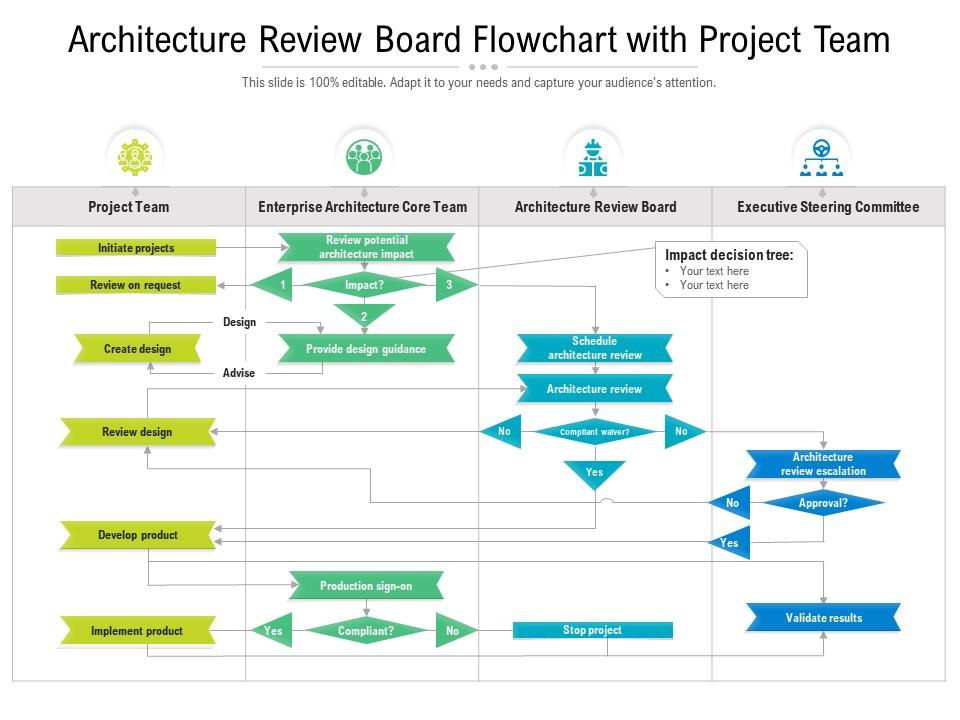
Presenting this set of slides with name Architecture Review Board Flowchart With Project Team. This is a one stage process. The stages in this process are Enterprise Architecture Core Team, Project Team, Initiate projects, Create design, Review design. This is a completely editable PowerPoint presentation and is available for immediate download. Download now and impress your audience.

FAQs for Architecture review board flowchart

So the Architecture Review Board is basically your company's tech police - they review big system decisions, architecture proposals, and technology choices. Pretty much they stop teams from building stuff that doesn't play nice together or falls apart later. They'll catch security issues, scalability problems, that sort of thing before you're knee-deep in code. Honestly, some people find them annoying but they save you from way bigger headaches down the road. Just bring them into the conversation early instead of surprising them with a finished product - trust me on that one.

So the ARB is basically your reality check squad - they make sure every big tech decision actually connects to what the business wants to accomplish. Before you get approval, they'll review your proposals against budget, timelines, and strategic goals. Pretty much prevents you from building something super clever that solves zero actual problems (happens more than you'd think). They're big on their governance frameworks, obviously. The whole point is making sure your architecture helps the company hit its targets instead of just being technically impressive. Business context drives every review.

Honestly, I'd look at five key things when evaluating designs. Does it actually fix the business problem? Can your team realistically build and maintain it without going insane? Security's obviously huge - especially if you're in a regulated space (trust me on this one). Performance and scalability matter too, plus how well it plays with your current systems. The thing that gets overlooked though? Operational complexity. Those super "elegant" solutions usually come back to haunt you later. I always make a quick scoring sheet for each criteria - keeps things fair when you're comparing different approaches. Way easier than trying to remember everything in your head.

Honestly, monthly works best for most teams I've dealt with. Bi-weekly can work too if you're moving fast. Weekly? Total overkill unless you're some crazy startup scaling like mad. Quarterly is way too slow - you'll have decisions piling up and people getting blocked. The trick is just being consistent about it. Teams need to know when they can actually get architectural help, you know? I'd start monthly and see how much stuff backs up. If you're constantly swamped, maybe bump it to every two weeks. But don't overthink it initially.

Honestly, ARBs turn into massive bottlenecks - every team's waiting around for approval and it kills momentum. Standards get messy too since what works for your e-commerce folks probably won't fit the data team's needs. Communication's a nightmare because you're explaining technical stuff to both devs and executives who think completely differently. The worst part? Teams start avoiding the process entirely, which defeats the whole point. Focus on streamlining reviews and being super clear about what actually needs approval. Most decisions don't need a committee - let teams move fast on the small stuff.

So the ARB basically sets up these structured meetings where everyone can air their grievances - business people, security, devs, the whole crew. Honestly, I've seen these get pretty messy when priorities clash. What they do is document everyone's concerns, then try to find middle ground that hits the biggest issues for each team. Sometimes they'll use decision matrices or fall back on architectural principles when people just can't agree. Oh, and definitely come with solid reasons for your stance, not just "because I said so" - that never works. These sessions can actually be pretty effective if you're prepared.

Start with ADRs - Architecture Decision Records from TOGAF. They're simple but totally change how you document decisions and trade-offs. Decision trees and scoring matrices help too, way better than just winging it (though your gut instincts still count for something). Miro's great for real-time diagramming when you're all reviewing stuff together. Risk templates and tech debt tracking keep everyone realistic about what you're actually dealing with. Oh, and Lucidchart works well too if your team's already using it. Honestly, ADRs alone will make a huge difference in how your board operates.

So Architecture Review Boards are basically your tech safety net. They look at big system designs before you build anything and catch problems when they're still cheap to fix. Pretty much keeps all your teams from going rogue with weird solutions (trust me, developers love getting creative). Gets you consistency across projects too. Plus they'll make sure you're not breaking security rules or creating a maintenance nightmare down the road. My advice? Loop them in super early - way better than having to rebuild everything later because someone missed something obvious.

Look at both the quick wins and long-term stuff. Review cycle times, implementation rates, whether projects actually hit their architectural targets after launch. Documentation compliance is boring but tells you if teams are buying into your guidance. Survey the devs regularly - are your reviews helpful or just another hoop to jump through? That's honestly the most important metric. Track how much architectural debt you're cutting down and fire drills you're preventing. When teams start coming to you *before* the formal review process, you know you've made it. That's when you're adding real value instead of just being another gate they have to get through.

Start with a solid submission template - problem statement, your solution, other options you looked at, and what the impact will be. Set up review stages with actual timelines or people will drag their feet forever. Get security, ops, and business folks on the review board (seriously, skip any of these and you'll regret it). Document decisions so when stuff gets rejected, architects know what to fix instead of guessing. Oh, and don't try to perfect it upfront. Run a pilot first, see what breaks, then adjust based on reality.

Dude, you can't just announce ARB decisions once and call it done - that never works. Fire off quick summaries right after meetings via email or whatever your team actually uses. But also set up a simple wiki so people can dig up old decisions later when they inevitably forget. The real trick? Have ARB folks show up to standups and actually explain the *why* behind decisions. People hate being told what to do without context, honestly. Oh and skip the technical jargon - nobody reads that stuff anyway. Start with whatever communication tool your org is already obsessed with, then layer on from there.

Oh man, documentation is huge for ARBs. Without it you'll be sitting there six months from now going "wait, why did we choose this approach again?" Been there, not fun. You want to track the proposals, review criteria, any pushback that came up, and the final calls with reasoning behind them. New board members can catch up faster this way too. Plus your architectural standards actually stick when teams can reference the decisions later. Just start simple though - basic templates for proposals and decision records. Don't go overboard right away.

Honestly, the best ARBs I've seen ditch the heavy-handed approval processes. They embed architects right into dev teams instead of making everyone come to them hat-in-hand. Automated governance tools help a ton too - way better than manual reviews for everything. Smart ones rotate membership so you don't get the same three people making all the decisions forever (architecture politics are real). Focus on guardrails, not roadblocks. Self-service patterns work great. Oh, and actually ask your teams what they need - might be totally different from what you're providing. Measure real outcomes, not just whether people filled out forms correctly.

Dude, you absolutely need those stakeholders involved from the start. They're the ones dealing with your decisions every day, so if you don't get their input, you're just guessing at what might work. Business people know all the weird edge cases and politics that us architects totally miss. Short sentences work better sometimes. I've watched so many "brilliant" technical solutions completely bomb because nobody bothered asking users what they actually do day-to-day. Don't just dump your final design on them either - keep checking in throughout the whole process or you'll end up rebuilding everything.

Honestly, working with other governance teams saves you so much headache. Your ARB should sync regularly with security, data, and compliance folks - monthly meetings work great. That way you're not blindsided by some random policy that kills your design (ugh, hate when that happens). Set up shared docs so everyone sees what's coming. You'll get faster approvals since people aren't scrambling to figure out if your architecture breaks their rules. Super simple fix that prevents those annoying back-and-forth delays.

Ratings and Reviews

90% of 100
Review Form
Write a review
Most Relevant Reviews
  1. 100%

    by Diego Gardner

    Helpful product design for delivering presentation.
  2. 80%

    by Dana Owens

    Very unique and reliable designs.

2 Item(s)

per page: