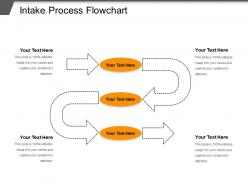
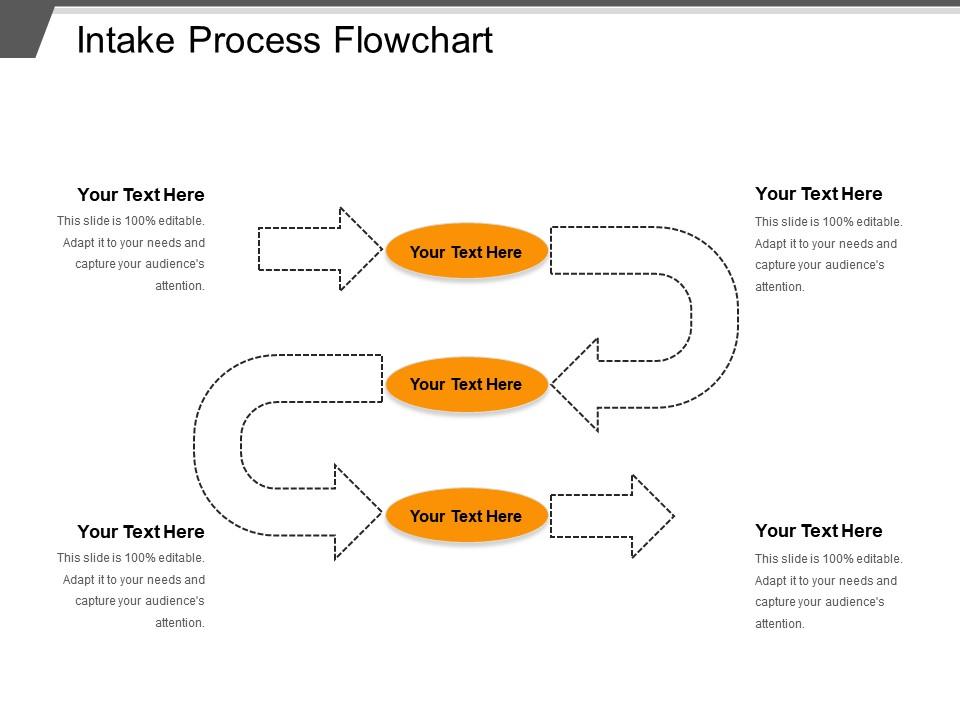
Intake process flowchart
Try Before you Buy Download Free Sample Product
Audience
Editable
of Time
Avoid feeling eclipsed with our Intake Process Flowchart. Your chances will always be bright.
People who downloaded this PowerPoint presentation also viewed the following :
Intake process flowchart with all 5 slides:
Display hard facts with our Intake Process Flowchart. Put actual deeds in correct focus.
FAQs for
You need solid intake forms first - like, really specific ones that spell out what actually qualifies. Get someone who knows their stuff to handle triage (seriously, don't just dump this on whoever's available). Set up a tracking system so nothing disappears into the void. Regular check-ins are clutch for keeping stakeholders happy. Oh, and document everything upfront - saves you from those annoying back-and-forth email chains later. I'd start by looking at your current setup and figuring out where stuff usually gets stuck. Trust me, there's always that one bottleneck everyone pretends doesn't exist.
Honestly, presentation templates are a game changer for client intake. Send prospects a simple template instead of playing email ping-pong trying to figure out their budget and timeline. Way better than those intimidating intake forms nobody wants to fill out. You'll already know the basics before hopping on discovery calls, which saves you a ridiculous amount of time. Plus it forces them to actually think through what they need - half the time they haven't even considered scope properly. Just start with a basic template covering your usual project questions and tweak from there.
Honestly, just start with basic online intake forms - clients fill them out ahead of time and it saves you from retyping everything later. I'd probably go crazy doing all that data entry twice. Digital signatures are a game changer too, plus automated scheduling so people can book themselves. Once you get comfortable with forms, you can connect everything - your calendar, billing, case management stuff. It all talks to each other which is pretty sweet. The whole point is getting rid of those mind-numbing tasks that kill your day.
First thing - go through your current forms and spot the bias issues. I'd add language options, gender-inclusive pronouns, and ditch those weird "nuclear family only" assumptions. Think about literacy too. Nobody's filling out a 10-page monster form, trust me. Include cultural stuff that actually matters for service delivery - religious practices, how people prefer to communicate. But honestly? The real key is testing these with actual community members you serve. Their feedback will catch things you totally missed. Keep tweaking based on what they tell you.
Ugh, the worst part is definitely incomplete paperwork and people showing up with zero prep. System crashes when everyone arrives together? Total nightmare. Send those intake forms digitally first - saves you so much headache later. Also make a simple checklist of what they need to bring, because apparently nobody reads emails anymore lol. I'd set up buffer time between appointments and maybe a dedicated intake spot so people aren't lost. Oh, and review your week ahead of time to catch any red flags early. Trust me, being ahead of problems beats scrambling to fix them.
Seriously, your clients will tell you exactly what's broken in your intake process - you just have to ask them! I always send quick surveys after sessions because we get so blind to our own systems. Like, maybe everyone's complaining the forms are endless or your scheduling tool sucks. Their feedback shows you stuff you'd never notice otherwise. Plus when people see you actually fix things based on what they said, they trust you way more right off the bat. It's honestly the easiest way to spot patterns in what's not working.
Honestly, flowcharts and step-by-step diagrams are game changers for training staff on intake procedures. Break down those messy workflows with arrows showing the path from first contact to case assignment. Icons work great too - way better than drowning people in text. I've watched teams completely lost with those dense training manuals nobody actually reads. Visual templates let staff see how everything connects. Map out your current process first, then work those visuals into your training slides. Trust me, it'll click so much faster when people can actually see the flow instead of trying to memorize paragraphs of instructions.
Definitely get yourself a private room for those intake calls - can't have people overhearing sensitive stuff. I learned this the hard way when someone did an intake right next to me at their desk... awkward for everyone. Lock up all your paperwork immediately, whether that's password-protected files or an actual filing cabinet. Your computer screen shouldn't be visible to random people walking by either. Oh, and tell clients upfront about confidentiality limits so they're not blindsided later. If you're doing virtual intakes, double-check you're using encrypted platforms. Trust me on this one.
Track your time-to-resolution first - that's the big one. Also watch client satisfaction scores and how many people actually complete onboarding after first contact. Oh, and definitely count requests that just... disappear into the void? Those are usually your biggest problem spots. Monthly check-ins work well for comparing against your starting numbers. Get feedback from your team too, not just clients - they'll tell you where things get weird. Honestly, the cool part is catching trends before they blow up. Like response times slowly getting worse or certain request types always causing drama. Start with maybe 3-4 metrics you can actually do something about.
Start with digitizing your intake forms and setting up online scheduling - that's your base. Video calls work great for initial assessments, but seriously test the tech first because nothing ruins rapport like frozen screens. Get secure document sharing sorted for remote paperwork. I'd budget extra time since half your clients will need tech support (trust me on this). Oh, and figure out a solid way for them to contact you between sessions - they can't just pop by your office anymore, so text or secure messaging becomes way more important.
Oh man, this stuff is trickier than you'd think! Eye contact means totally different things across cultures - some clients will avoid it out of respect, others expect it. Family involvement varies wildly too. I've seen intake processes go sideways because staff assumed direct questions were fine, but some cultures find that super intrusive. Train your team on cultural basics (I'm still figuring this out myself honestly). Get interpreters when needed. Allow extra time for relationship-building before diving into paperwork. Let family members join if that's their norm. Just ask clients what works for them instead of using the same cookie-cutter approach.
Honestly, get your consent and privacy stuff locked down first - that's where most people mess up. HIPAA compliance isn't optional, so your intake forms better be solid. One thing that trips people up is figuring out if someone can actually consent to services in the first place. Capacity issues are weird like that. Document everything because I swear those intake records always come back to haunt you if legal problems come up later. Way easier to build this into your process upfront than scrambling to fix it when you're already knee-deep in cases.
Your intake data is seriously underused by most places - it's like sitting on a treasure chest. Track what issues keep coming up and where clients hit roadblocks in your system. Which referral sources actually work? Most orgs never even look at this stuff, which is wild to me. When you dig into trends around demographics and service requests, you'll spot obvious gaps in programming or staffing. I'd say review everything quarterly and watch for patterns that won't quit showing up. That's where your next moves become pretty clear.
Dude, communication literally saves your ass during intake. Tell clients exactly what docs they need and when to expect stuff - don't assume they'll figure it out. I learned this the hard way lol. Send updates even if nothing's happening, like "still working on your file, hang tight." Sounds dumb but people get paranoid when they hear nothing. Also? Clients who feel kept in the loop are SO much easier to work with. They won't blow up your phone every day asking for status updates. Trust me, a little extra communication upfront prevents major disasters later. Worth the effort.
Pull your last six months of intake data and see which sources actually convert to successful participants. Honestly, I've watched so many teams get caught up in impressive application numbers that mean nothing. Focus on conversion rates by source instead - way more useful. Map your data against real outcomes. Maybe certain application questions are secretly predictive, or specific demographics crush it in your programs. Then tweak your screening and outreach based on what you find. Don't forget to track time-to-decision too, since that often reveals quality patterns you'll miss otherwise.
-
Much better than the original! Thanks for the quick turnaround.
-
Great designs, Easily Editable.