


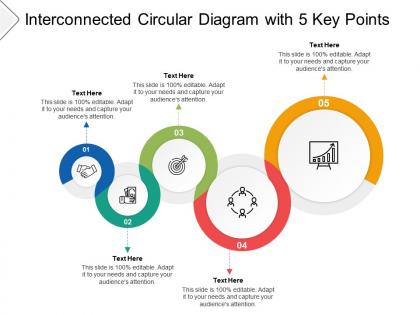
Interconnected Circular Diagram With 5 Key Points




Try Before you Buy Download Free Sample Product
 Impress Your
 Audience
 100%
100% Editable
 Save Hours
 of Time


At the end of the day it's profits that count. Create bigger assets with our Interconnected Circular Diagram With 5 Key Points.
People who downloaded this PowerPoint presentation also viewed the following :
Interconnected Circular Diagram With 5 Key Points with all 5 slides:
Breakthrough the clutter with our Interconnected Circular Diagram With 5 Key Points. Clear the channels with your thoughts.

FAQs for Interconnected Circular Diagram With
Look, every business today is tangled up with everyone else - suppliers, customers, partners, you name it. Remember when that ship got stuck in the Suez Canal? Total chaos everywhere. Your success depends on these relationships way more than people realize. Map out who you're connected to and what happens if those links break. Smart companies have backup plans ready. One hiccup in someone's supply chain can wreck your whole operation if you're not prepared. It's wild how dependent we all are on each other now.
Social media basically proves that "six degrees of separation" thing is real - you can connect with anyone globally in seconds. All those invisible community threads that were always there? Now they're totally visible. Post about some local drama and boom, people from other cities start sharing their similar stories. Creates these weird spontaneous networks of people supporting each other. Your digital stuff shows how what you do influences bigger conversations and movements. Honestly, most people don't realize how much their online presence actually shapes community connections. So yeah, be intentional about it - your posts genuinely impact collective experiences.
So here's the thing - when one country gets its environmental act together, it creates this domino effect everywhere else. Like when the EU rolled out carbon pricing, other places had to follow or their companies would get left behind. Supply chains are huge for this too (honestly everything's so connected now it's wild). A big manufacturer starts demanding green practices from suppliers? That pressure just spreads globally. Ocean pollution and climate change don't care about borders anyway. Look for partnerships between countries when you're thinking strategy - that's where the real action happens.
Oh man, being connected to people is honestly such a game-changer for your mental health! Your self-esteem gets a boost and you'll feel way less anxious or depressed. Plus you naturally become more empathetic - it's wild how your brain actually rewires itself to be more cooperative. The downside? You might absorb everyone else's stress more easily (I definitely do this). Active listening helps a ton, and doing stuff together really strengthens those bonds. Worth it though!
Honestly, collaborative projects work really well - especially when you mix kids from different backgrounds. I love using global issues like climate change because they get it pretty fast that everyone's dealing with the same stuff. Oh, and definitely throw in diverse stories and voices throughout your lessons, not just during "culture week" or whatever. Service learning is probably my favorite though - there's something about actually helping people that makes the connections click. Just don't assume they'll figure out the bigger picture themselves. You've gotta point it out sometimes.
Honestly, global health stuff works so much better when countries actually work together. Diseases don't care about borders - we saw that with COVID when variants kept popping up everywhere. But the cool thing is you can share data instantly now and coordinate responses across multiple countries. The vaccine development happened crazy fast because of international collaboration. Here's the thing though - your local outbreak can spiral into everyone's nightmare pretty quickly. My advice? Start building those relationships with other countries way before you need them. Always think bigger than just your own region when you're planning health programs.
Honestly, diplomats today are dealing with way more than just government-to-government stuff. Public opinion across borders matters now. Diaspora communities have real influence. Cultural exchanges actually shape policy decisions - it's pretty crazy when you think about it. Look at K-pop boosting South Korea's global reputation (who saw that coming?). Every foreign policy move gets filtered through different cultural perspectives. You've got transnational movements, potential backlash from various societies, and media narratives spinning everything. Bottom line: cultural ripple effects aren't optional anymore when you're making international decisions.
Honestly, video calls are great but don't sleep on the other stuff. Slack channels for random office banter hit different when you're working from home - keeps things loose. Virtual whiteboards during brainstorming? Game changer, I swear. Way better than I thought they'd be. Project management tools help too since everyone can see what's happening without anyone breathing down your neck. Oh and mixing real-time calls with async stuff works best. People can jump in when their timezone actually makes sense instead of someone always getting stuck with the 6am meeting.
So basically when people from different teams can actually talk to each other, wild stuff happens. You get this collision of ideas that never would've existed otherwise. My best breakthroughs honestly came from bumping into someone by the coffee machine - sounds cheesy but it's true. The trick is you can't just cross your fingers and hope it happens naturally. Short, regular check-ins between teams help. Or maybe set up some shared workspace where people can mess around with each other's projects. Creative friction is real when you've got different perspectives bouncing around together.
Honestly, the scariest part is how one hack can domino through everything. Like when that pipeline got hit and suddenly gas stations everywhere went down? That's your whole connected life in a nutshell. Companies are also constantly scraping your data to sell stuff - it's wild how much they know about you. Then there's the echo chamber problem where algorithms just feed you more of what you already think. I'd say check what devices you actually need connected (do you really need a smart toaster?) and spread your accounts across different platforms so one breach doesn't wreck everything.
So here's the thing - social problems are all tangled up together, right? Like when you fix education access, it automatically helps with jobs, health, even neighborhood wealth. Pretty wild how that works. Instead of everyone working separately, you gotta get different groups talking to each other. Find those spots where multiple inequalities overlap - that's your sweet spot. Hit those intersection points and you'll see way bigger changes than tackling stuff one by one. Coalition building is honestly where the magic happens.
So basically when one supplier screws up, it hits your whole operation like dominoes falling. A factory shuts down somewhere and boom - three weeks later your deliveries are totally messed up. That's just how connected everything is these days. Though honestly, when things work well you do get some nice cost savings from all those shared efficiencies. I'd say map out all your connections first - sounds boring but you'll actually see where you're vulnerable. Then build backup plans before everything goes sideways on you.
Honestly, the best stuff happens when you pull from totally random places. I saw this musician once who based a whole song on how waves crash - sounds weird but it was incredible. Start asking yourself "what does this remind me of?" then actually follow those random thoughts. Your experiences connect to bigger human stuff in ways you don't expect. Nature's full of patterns you can steal from. Collaborate with people outside your field - they'll see things you miss completely. The connections are already there, you just gotta stay curious enough to notice them.
Having people in your corner seriously helps with mental health stuff. You get that sense of belonging, which cuts down on feeling isolated - and honestly, isolation is what feeds anxiety and depression. Solid relationships act like a shield when life gets messy. They give you emotional support and different ways to look at problems too. Even connecting with nature helps, weirdly enough. The whole thing makes you bounce back faster from stress. I swear, having someone to text when you're spiraling makes such a difference. Maybe shoot someone a quick message today?
Look around any thriving neighborhood and you'll spot the same pattern. Detroit's urban farming thing is a perfect example - people started swapping seeds and tools, now whole areas have gone from food deserts to actual local food networks. Crazy how fast that spreads. Maker spaces work the same way. Someone teaches welding, another person shares 3D printing skills, suddenly you've got this innovation hub that pulls in businesses. Even boring stuff like community gardens ends up creating friend networks that turn into neighborhood watch groups and farmers markets. Honestly, most communities already have the talent - they just need somewhere to actually connect and share it.
No Reviews