


Internal And External Stakeholders Engagement Matrix




Try Before you Buy Download Free Sample Product
 Impress Your
 Audience
 100%
100% Editable
 Save Hours
 of Time


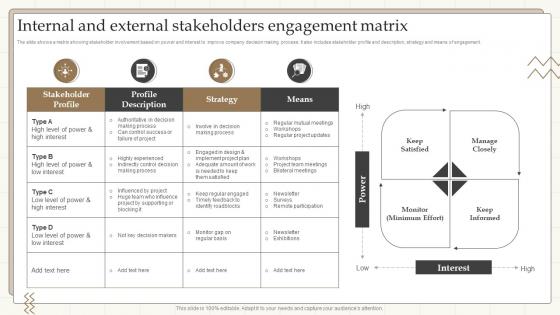
The slide shows a matrix showing stakeholder involvement based on power and interest to improve company decision making process. It also includes stakeholder profile and description, strategy and means of engagement.
People who downloaded this PowerPoint presentation also viewed the following :
Internal And External Stakeholders Engagement Matrix with all 6 slides:
Use our Internal And External Stakeholders Engagement Matrix to effectively help you save your valuable time. They are readymade to fit into any presentation structure.





FAQs for Internal And External
Honestly, start by figuring out who actually matters - and I mean everyone, not just the big names. Map out what they care about and how much pull they have. The key is real two-way conversation. Listen to their feedback and show how it's changing your decisions. Timing's huge too; get them involved while they can still influence things, not after you've made up your mind. I've sat through way too many "stakeholder sessions" that were basically fancy announcements. Be upfront about what you're asking from them and actually follow through. Oh, and do a quick check - who are you missing right now?
Honestly, just think about everyone your work touches - customers, employees, suppliers, investors, regulators, the community. Plot them on a simple grid: how much influence they have vs. how much your decisions affect them. Your high-influence, high-impact people? Those are your VIPs who need constant attention. Medium folks get regular updates. Low priority gets occasional check-ins. Don't get fooled by the loudest voices though - they're not always the most powerful. Oh, and revisit this mapping every few months because priorities shift as your business grows.
Honestly, communication is everything when it comes to stakeholders. Without it, you're basically flying blind and hoping for the best - which never ends well, trust me. Listen more than you talk, and be upfront about problems when they come up. Different people want different things too. Your CEO might want bullet points while your project manager needs all the details. I'd start by figuring out who needs what kind of updates and how often. Also, don't just stick to one style - you'll need to adapt depending on who you're talking to. It's really about building that trust early on.
Look, surveys are probably your easiest bet - people know how they work and you can reach tons of folks quickly. Focus groups give you way more depth but they're a pain to organize. If you really want rich stuff, do one-on-ones, though that obviously doesn't scale. Digital tools are clutch too - polls, feedback platforms, even stalking social media for mentions. Workshops work if you want collaborative vibes. Honestly though? The method doesn't matter as much as asking the right questions to the right people. Just pick whatever matches your timeline and what your stakeholders actually prefer.
So measuring stakeholder engagement is kinda tricky because you need both hard data and the softer stuff. Track your participation rates and response times - those numbers matter. But honestly? The real gold is in whether people actually feel heard and if their feedback changes anything you do. I'd say pick maybe 3-4 specific metrics that match what you're trying to achieve. Sentiment shifts are huge too. Are relationships getting better over time? Do stakeholders trust you more now than six months ago? Set clear goals upfront so you're not just throwing darts in the dark later.
Ugh, the worst part? Everyone wants completely different things. Investors are obsessed with profit margins while environmental groups couldn't care less about your bottom line. You end up making nobody happy, which is honestly exhausting. Also, they all expect you to communicate differently - employees want constant updates and transparency, but your board only wants those formal quarterly reports. Managing all these relationships eats up way more time and money than people think it will. Oh, and here's something that actually helps: map out who your key players are and what they really care about before you start reaching out. Trust me on this one.
Honestly, going digital with stakeholder stuff is a game changer. Online platforms let you reach people who'd never make it to those boring in-person meetings. Real-time polls during presentations? Super engaging. I'd set up a 24/7 feedback portal too - people love giving input on their own time. Social media and apps help you find voices you'd totally miss otherwise. Video calls obviously break down distance barriers, and you can actually track what's working with basic analytics. My advice? Pick one tool that fixes your biggest headache first, then build from there.
Honestly, most people mess this up by only calling when they want something - super obvious and annoying. Touch base regularly instead. Share cool industry stuff you find, actually do what you say you'll do, and check in quarterly just to see how their world's changing. Oh and definitely celebrate their wins publicly when you can... who doesn't love some recognition? I'd start small though - pick your top 3 people and just schedule something this week. The whole "stakeholder management" thing sounds corporate-y but it's really just about being a decent human who stays in touch.
Honestly, it's all about finding that middle ground where nobody's thrilled but nobody's completely screwed either. First thing - figure out what people actually need vs what they're demanding. Sometimes there's a huge difference there. Be upfront about the trade-offs you're making. People hate surprises way more than they hate compromise. Some conflicts just won't get solved perfectly, and that's life. But if everyone feels like you actually listened to them and can explain your reasoning, you're golden. Oh, and definitely check in regularly - things change and so do priorities.
Dude, getting stakeholders involved isn't just nice-to-have fluff - it actually cuts your project failure risk by 40%. You'll catch problems way earlier when people are engaged from the start. Nobody wants surprises three weeks before launch, right? Also, approvals happen faster and you dodge those nightmare scope changes that wreck everything. Here's the thing though - people genuinely want to help when they don't feel ignored. Who knew? Map out who matters most and figure out how they like to communicate. Some prefer emails, others want face-time. Just don't make it feel like going through the motions.
Start by figuring out what each group actually wants. Investors are all about the numbers and ROI stuff. Community groups? They care about social impact and being transparent with them. Employees just want to know if their daily routine's gonna change - honestly they're pretty straightforward compared to the others. Some people need updates every week, others are fine with quarterly check-ins. Map out how each group likes to communicate and what makes them tick. I'd survey your top 5 stakeholder groups first to see what they prefer.
Look, transparency and consent are huge here - get proper permission before grabbing anyone's personal info. GDPR will absolutely wreck you if you mess this up, so be super clear about data use. Don't write leading questions that push people toward certain answers (honestly, it's tempting but terrible). Equal access matters too - make sure everyone can actually participate. Oh, and document everything! Create a participation agreement upfront covering rights and data handling. You'll also want to disclose any conflicts of interest. Most importantly though? Actually listen to what people tell you and act on it.
Honestly, most projects fail because people just assume stakeholders understand what's happening - spoiler alert: they don't. First thing you gotta do is map out who needs what info and when. Then build a solid communication plan with regular check-ins and be real about both the good stuff and the problems. Don't just rely on email either - mix it up with dashboards, meetings, whatever works for each person. Oh, and when things inevitably go off track (because they will), tell people right away. Don't be that person who stays quiet hoping it'll magically fix itself.
Oh man, cultural stuff can totally make or break stakeholder relationships. Some cultures are super direct while others dance around topics forever. Hierarchy matters way more in certain places too. I bombed so hard on a Japan project because I was being my usual blunt American self - totally wrong move! Research their communication style first. Do they want formal meetings or casual chats? Group decisions or individual calls? Timing expectations are wild too - some cultures need like three relationship-building dinners before talking business. Ask your local teammates what actually works there instead of guessing.
You'll catch problems you'd totally miss on your own when you get different people involved. Fresh eyes = creative solutions you never thought of. Plus they understand how decisions actually play out in practice, which is huge. People get way more invested when they help build something instead of just being told what to do - honestly, it's such basic psychology but companies mess this up all the time. Just don't fake it though. If you ask for input but ignore everything they say, you're worse off than before.
-
Fantastic collection of visually appealing PowerPoint templates. They certainly uplift the look of the presentation.
-
Very unique, user-friendly presentation interface.