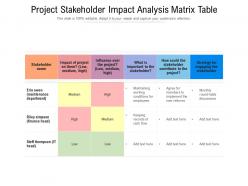
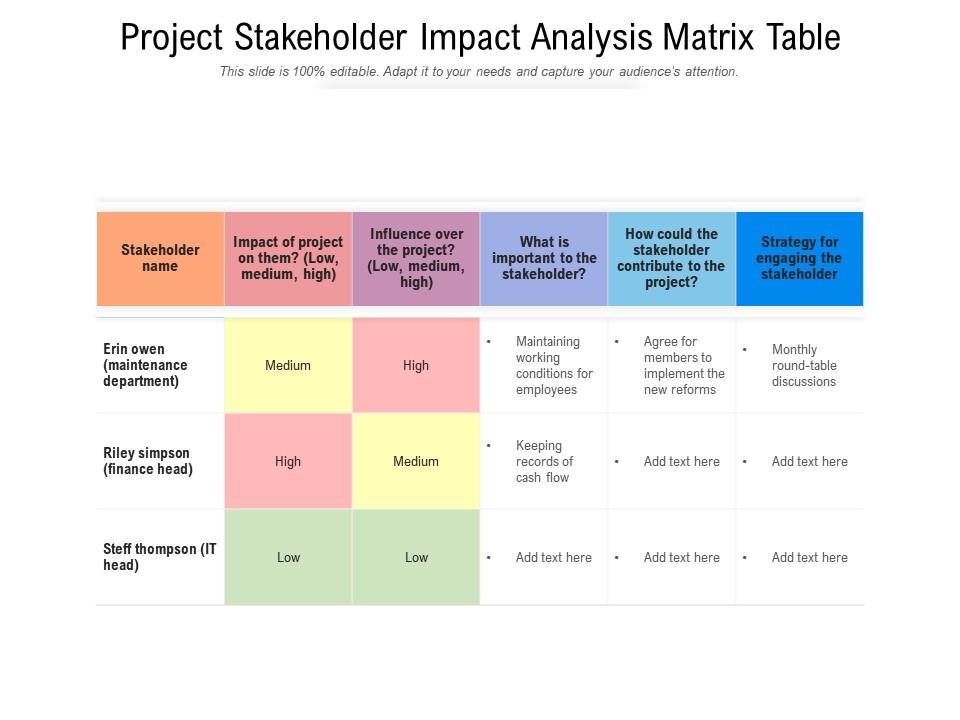
Project stakeholder impact analysis matrix table
Try Before you Buy Download Free Sample Product
Audience
Editable
of Time
Our Project Stakeholder Impact Analysis Matrix Table are topically designed to provide an attractive backdrop to any subject. Use them to look like a presentation pro.
People who downloaded this PowerPoint presentation also viewed the following :
Project stakeholder impact analysis matrix table with all 2 slides:
Use our Project Stakeholder Impact Analysis Matrix Table to effectively help you save your valuable time. They are readymade to fit into any presentation structure.
FAQs for Project stakeholder impact
Okay so basically you want to figure out who actually cares about your project first - like anyone who gets impacted or has a say in things. Plot them on a simple grid: high/low influence vs high/low interest. Honestly, the analysis part takes forever but it's worth it - you're basically figuring out what each group actually wants and what might piss them off. Then you build different approaches for each bucket of people. Oh and definitely revisit this stuff regularly because stakeholders can flip on you out of nowhere. I learned that the hard way last year.
Okay so first make a list of literally everyone involved - execs, your team, customers, plus that annoying person from legal who somehow weighs in on everything. Plot them on a simple grid based on how much power they have vs. how interested they actually are. Your VIPs are the high power/high interest people - they need lots of attention. The high power but low interest ones? Just keep them happy without drowning them in updates. Oh and definitely ask your teammates who they think matters - they'll catch people you totally missed. Update this thing regularly because power dynamics are always shifting around.
Honestly, stakeholder mapping doesn't have to be complicated. A simple influence vs interest matrix is probably your best starting point - plots everyone clearly and you'll actually use it. RACI charts are clutch for role clarity (saves so much headache down the road). Network diagrams show connections between people, which can be eye-opening. Power-interest grids help prioritize your time. For messier projects, affinity mapping groups similar folks together. My advice? Just pick one and start. You can always tweak it later, and something imperfect beats nothing at all.
So basically, figure out who has the power to mess up your project - that's your stakeholder map. Look at their motivations and how much influence they actually have. This helps you catch problems early, like when Karen from accounting always fights budget stuff or your client contact disappears right when you need approvals (seriously, why do they always do that?). Once you know who matters most, you can plan around their quirks. Build backup plans for the tricky ones. Different people need different approaches - some want emails, others prefer quick chats. Your risk strategy should match your people.
Look, stakeholders basically control your fate - they approve budgets, sign off on decisions, and can either open doors or slam them shut. Ignore them and they'll tank your project fast. But get them on your side? They become your secret weapon, fighting for resources and clearing roadblocks. Middle managers are usually the worst offenders here - they hate being left out of the loop. My advice: figure out what each person cares about before you actually need their help. Don't be that person scrambling to build relationships when everything's already on fire.
Okay so grab a piece of paper and make a 2x2 grid - put influence on one side, interest on the other. Your high influence + high interest people? Those are basically your VIPs who can tank everything if they're unhappy. Keep the high influence/low interest crowd happy enough that they don't randomly decide to care and mess with you. The high interest/low influence folks just want updates since they're invested but can't really do much damage. Honestly the people who don't care and have no power... just check in occasionally I guess? List everyone out first though - trust me, figuring this out upfront beats scrambling later when someone unexpected gets mad.
Honestly, communication is everything when it comes to stakeholder engagement. You've gotta figure out how each person wants to receive info - some executives just want the bullet points while your tech teams need all the nitty-gritty details. I learned this the hard way on a project last year. Map out everyone's preferred communication style first, then build your plan around that. Regular updates keep people engaged and build trust over time. Short bursts work better than novel-length emails too. Otherwise you'll have this amazing stakeholder analysis that nobody actually uses because you didn't communicate it right.
Oh man, this is so true from what I've seen. You might think you know who the key players are, but cultural stuff totally flips the script. Like in some places, extended family has way more say in business decisions than you'd expect. Or there's some government person who's not on any official chart but actually calls the shots. The communication thing is huge too - some cultures want you to be super direct, others think that's rude and you need to go through someone else first. I've literally watched projects blow up because teams ignored local power dynamics. My advice? Get your local team members involved in mapping out stakeholders from day one. They'll catch stuff you'd never think of.
Honestly, the trickiest part is figuring out who actually has power vs who just has a fancy title. I've totally whiffed on this before - missed key people or overestimated someone's influence. Cast a wide net at first, then dig deeper with quick conversations to see who really matters. Your stakeholder map isn't set in stone either. Priorities change all the time (ugh), so check in regularly or you'll get blindsided. Oh, and start simple with a basic power/interest grid. You can always make it fancier later.
Check your stakeholder analysis at every big milestone - kickoff, mid-phase reviews, before major deliverables. People change roles constantly! New folks join teams, priorities flip, and suddenly that random person becomes your biggest supporter or roadblock. On longer projects, I'd do formal reviews quarterly but honestly? Stay alert for changes as they happen. Oh and set a calendar reminder right now or you'll totally forget. Stakeholders are way more fluid than most people think - don't treat this like some static document you write once.
Honestly, I'd just do quick surveys and track Net Promoter Scores - ask them straight up how happy they are with your communication. Meeting attendance tells you a lot too. Are they showing up? Responding to emails? Do they reach out with questions on their own? Rating scales work great because people will actually fill out a 1-5 thing vs some long survey. Oh, and watch if they're backing your project internally or constantly pushing back on deadlines - that's huge. Pick like 2-3 things max though. I've seen too many people create these elaborate tracking systems they never touch.
Honestly, you've gotta bake feedback into your timeline right from day one. Don't wait until the end when everything's locked in - that's project suicide. Set up check-ins at major milestones with your key people. Use surveys, quick workshops, whatever works. Document everything you hear and be upfront about what you can actually change vs. what's set in stone. I learned this the hard way on a project last year. The trick is closing the loop - always tell people what happened with their input. Otherwise they'll think you ignored them.
Honestly, start by mapping who actually matters in your project - then figure out what keeps each person up at night. Some stakeholders want those detailed weekly reports, others just need a quick Slack update. The quiet ones are usually goldmines if you can get them talking (which takes forever but worth it). Be real about what's going wrong, not just the wins. I'd set up regular check-ins but make them different for each person. Oh, and follow through on literally everything you promise, even tiny stuff. Maybe grab coffee with your top three people this week? Trust builds faster face-to-face.
Dude, forget those messy spreadsheets - tech makes stakeholder analysis so much smoother. CRM systems keep all your interactions organized in one spot. Mapping tools help you actually see who has influence and how everyone connects. Social media monitoring is honestly a game-changer; you'll discover what people really think about your project (sometimes brutal but helpful). Survey platforms make reaching remote groups way easier too. Oh, and don't go crazy trying to digitize everything at once. Pick one tool that fixes your biggest headache first, then build from there. Way less overwhelming that way.
Look at the London Olympics - they mapped out everyone from locals to international media way before construction started. Smart move because it helped them deal with community complaints and actually finish on time. Apple does this incredibly well too, especially balancing supplier drama while keeping customers totally hooked. When Tesla expands somewhere new, they figure out who matters first - regulators, environmental groups, local communities. Honestly, the pattern is pretty clear. Start mapping your stakeholders before you make big decisions, not when things blow up. Figure out who has influence, then build your strategy around what they need.
No Reviews