Change Influence And Impact Assessment Matrix

Rating:
90%
Change Influence And Impact Assessment Matrix
Slide 1 of 6
Favourites Favourites

Try Before you Buy Download Free Sample Product

Audience Impress Your
Audience
Editable 100%
Editable
Time Save Hours
of Time
The Biggest Sale is ending soon in
0
0
:
0
0
:
0
0
Rating:
90%
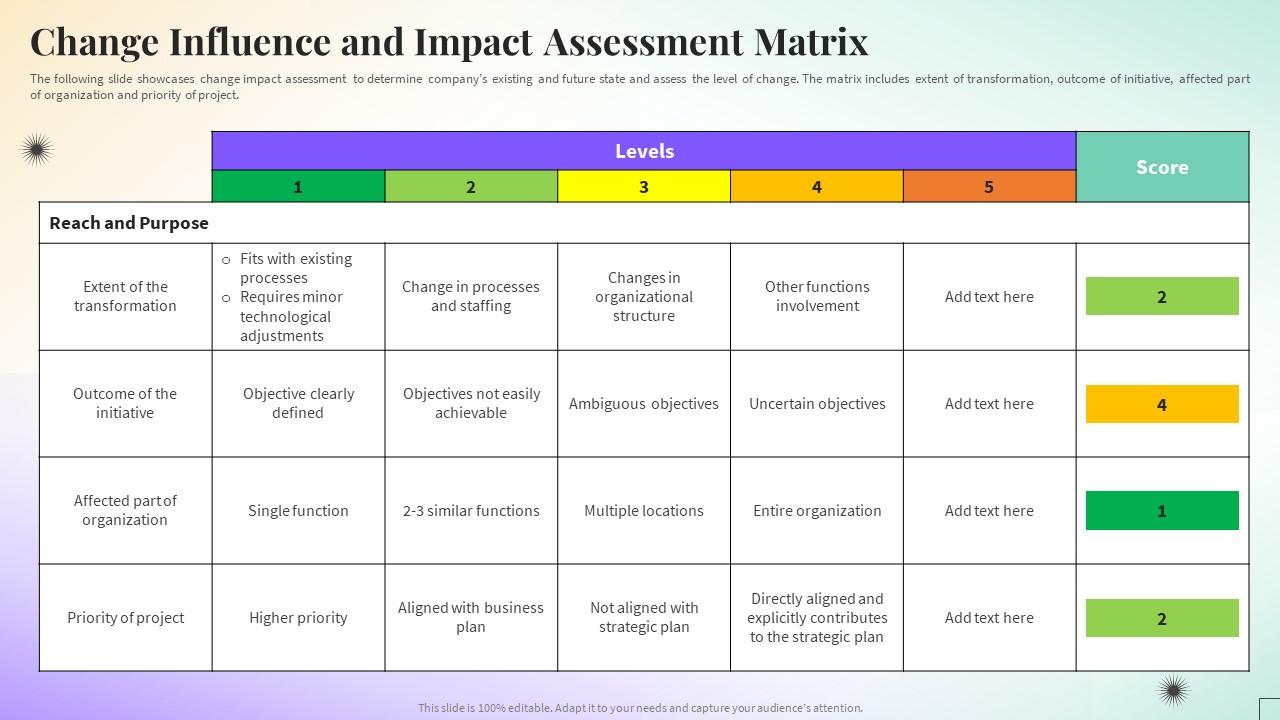
The following slide showcases change impact assessment to determine companys existing and future state and assess the level of change. The matrix includes extent of transformation, outcome of initiative, affected part of organization and priority of project. Introducing our Change Influence And Impact Assessment Matrix set of slides. The topics discussed in these slides are Priority Of Project, Changes In Organizational Structure, Multiple Locations. This is an immediately available PowerPoint presentation that can be conveniently customized. Download it and convince your audience.

FAQs for Change Influence And

Look, people come first - always. Get leadership actually invested, not just giving lip service to whatever change you're pushing. Don't just bark orders from the top either. I swear, half the failed projects I've seen died because some exec thought they could just send an email and call it done. Start with small wins to build momentum. Find your change champions early - they're worth their weight in gold. Proper training matters too, obviously. Be ready to pivot based on feedback. Oh, and celebrate the wins along the way! People need that validation.

Honestly, you've gotta bring people along for the ride instead of just dropping news on them. Explain WHY you're making changes - what's broken and how fixing it helps everyone, not just the higher-ups. I swear, half the pushback happens because leaders forget this basic step. Give people time to process and ask questions. Don't brush off their concerns either, that's the worst. Oh, and find those team members who actually get excited about new stuff - they'll do half your work convincing everyone else it's not the end of the world.

Dude, culture is honestly everything when it comes to change at work. Some places are super flexible and people actually get excited about new stuff. Others? Total nightmare - everyone's stuck in their old ways and will fight you on everything. I've watched brilliant plans completely crash because nobody thought about the culture first. You gotta figure out what kind of workplace you're dealing with before you do anything else. Find the people who are already on board with change - they're gonna be your best allies. Oh, and don't underestimate how stubborn people can be when they feel threatened.

Honestly, data analytics is a game changer for managing change - way better than just winging it. Track how people actually feel through surveys and watch adoption rates as they happen. You'll spot the departments that are struggling before things get messy. I'd focus on the basics first though - training completion, productivity dips, maybe feedback scores. Don't go crazy measuring everything right away or you'll drown in numbers. Oh, and dashboards are clutch for catching resistance early. Start with one or two metrics that actually matter to your situation.

Ugh, the worst thing you can do is spring changes on people without warning. Like, nobody wants to walk into work and suddenly everything's different, you know? Communication is huge - tell them WHY things are changing, not just what's changing. Get your key people involved in planning from the start. Don't rush the timeline either, people need way more training time than you'd think. Oh, and map out how you're gonna communicate everything before you announce anything big. Support them through the whole mess, because change sucks even when it's good change.

Honestly, you need your employees on board or you're screwed. People hate when changes get dumped on them without warning - I've seen it backfire so many times. Get them involved early. Ask what they think, bring them into planning meetings, let them actually shape the process. Your frontline workers know stuff you don't about what'll actually work day-to-day. When people feel like they have a voice, they'll fight for the change instead of against it. Give them real ownership and watch how differently they respond.

You need both the hard numbers and the squishy people stuff, honestly. Track your main KPIs first - productivity, error rates, adoption rates, whatever matters for your specific change. But here's the thing: data won't tell you if people secretly hate it. Do pulse surveys and chat with teams regularly. Are they actually using the new process or just pretending when management's around? I'd also watch for people sliding back to old habits - that's usually a dead giveaway. Oh, and measure everything before you start so you have something to compare to later.

Look, both models work well but it really depends on what you're dealing with. For individual stuff like new software rollouts, ADKAR's your friend - it walks people through awareness, desire, knowledge, ability, and reinforcement step by step. Kotter's 8-step approach is better for big organizational changes since it handles the systemic issues first. You know, building coalitions, creating urgency, all that foundational work. I've actually seen teams cherry-pick from both depending on their situation, which honestly makes sense. Figure out if you're fighting individual resistance or organizational roadblocks first, then pick your weapon.

Honestly, communication is everything - you've gotta explain the "why" behind changes and actually listen when people push back. Emotional intelligence matters tons since half your team will probably hate change anyway. Project management keeps things moving, but stay flexible because nothing ever goes to plan. Oh, and stakeholder management is basically herding cats (which is... exhausting). Trust me on this - building credibility across the org will make or break you. My advice? Start with active listening in whatever role you're in now. Everything else builds from there.

Here's the thing - you can't just launch it and walk away. People will absolutely slide back into old habits (I've seen it happen so many times). Set up check-ins at 30, 60, and 90 days to catch drift early. Your change champions? Keep them close after launch since they'll spot problems first. The real trick is weaving it into how stuff actually gets done day-to-day. Update your performance reviews and rewards to match the new way of working. Otherwise you're basically telling people to change while still rewarding the old behavior, which makes zero sense.

Honestly, the right tech makes all the difference for remote change management. Slack or Teams are lifesavers for quick check-ins during transitions. Video calls work way better than email when you're announcing big stuff - people need to see your face, you know? Project dashboards help everyone track what's happening so they're not spiraling about the unknown. Quick surveys let you feel out how people are actually doing. Oh, and don't go overboard with tools - I've seen teams drown in apps that were supposed to help. Pick things that actually connect your people instead of adding more chaos.

People hate change, period. They'll deny it, fight it, get anxious about it - that's just how we're wired. Your brain focuses way more on what you're losing than gaining, even when the change is obviously good (honestly makes no sense but whatever). Don't rush them through the emotional stuff. Let people complain and ask questions. Tell them exactly why you're doing this. Oh, and celebrate those tiny victories! Logic won't work if you ignore how they actually feel about it.

Don't wait until the end to ask how things are going - build feedback into every step. Pulse surveys during planning help you catch problems early. Weekly check-ins work, but honestly? Sometimes the best insights come from random hallway conversations. Anonymous suggestion boxes are clutch too. Leaders love thinking everything's fine when it's actually a disaster behind the scenes. Make people feel safe to speak up, then actually do something with what they tell you. Track the big themes and circle back to show you're listening. Oh, and informal coffee chats beat formal meetings every time.

Honestly, you gotta make change feel normal instead of this huge scary thing. Communicate way more than you think you need to - people freak out when they're left guessing. Quick wins are your friend here, don't wait around for some massive transformation. Your teams need to be able to roll with stuff without having breakdowns. Give them clear priorities and let them make decisions instead of bottlenecking everything through you. Oh, and definitely pilot test changes first - learned that one the hard way. Way cheaper than discovering your brilliant idea tanks company-wide.

Cross-functional teams are total game-changers for managing change. Breaking down silos is huge - you get buy-in from different departments right away instead of fighting resistance later. Each person becomes like an advocate who can translate the changes into language their team actually understands. What I've seen work best is giving them real decision-making power, not just making them sit through endless status meetings (ugh). Pick people who actually have influence in their areas. They'll catch problems early that you'd never spot working alone. Honestly, it's one of those things that seems obvious but most companies still mess it up by not empowering the team properly.

Ratings and Reviews

90% of 100
Review Form
Write a review
Most Relevant Reviews
  1. 80%

    by Dusty Hoffman

    Out of the box and creative design.
  2. 100%

    by Drew Alvarado

    Great product, helpful indeed!

2 Item(s)

per page: