


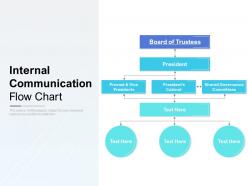
Internal communication flow chart





Try Before you Buy Download Free Sample Product
 Impress Your
 Audience
 100%
100% Editable
 Save Hours
 of Time


Our Internal Communication Flow Chart create the correct frame of mind. Your thoughts will flow with complete ease.
People who downloaded this PowerPoint presentation also viewed the following :
Internal communication flow chart with all 5 slides:
A correct frame of mind is highly desirable. Our Internal Communication Flow Chart create a covivial atmosphere.

FAQs for Internal
Look, it's mostly about being super clear and not leaving people guessing. Skip the corporate jargon - just say what you mean. Mix up your channels too - email works for official stuff, Slack's good for quick hits, but anything sensitive? Do it face-to-face. I've learned it's way better to over-communicate than leave people in the dark. Also, never drop big news on Friday afternoon (learned that one the hard way). Create actual spaces where people can push back or ask questions without feeling weird about it. Two-way communication beats those top-down announcements every time. Start by figuring out where your current gaps are.
Honestly, communication is everything when it comes to keeping your team engaged. People hate being left in the dark about company decisions - like, nobody wants to find out about layoffs through office gossip, you know? When you're upfront about goals and changes, your team actually feels trusted and part of something bigger. Poor communication just breeds rumors and kills motivation fast. Celebrating wins together and explaining the reasoning behind decisions makes people way more invested. I'd start by figuring out where you're currently dropping the ball with updates - probably more gaps than you think.
Honestly? We've burned through like 10 different platforms trying to figure this out lol. For daily stuff, Slack or Teams work great. Video calls - just go with Zoom or Meet, whatever your team already uses. Documentation is trickier but Notion's pretty solid if you don't mind the learning curve. Here's what I learned the hard way: pick maybe 3 tools tops and actually stick with them. Otherwise you'll have people messaging on Slack, emailing random stuff, and dropping files everywhere. Give each tool a clear job - like Slack for quick questions, email for the formal garbage, video for anything complicated.
Don't wait for disasters to start communicating - that's when everyone panics. Weekly all-hands or monthly updates work great, even just a simple newsletter. Share the good stuff AND the messy parts honestly. People respect transparency way more than silence, trust me. Also create ways for people to actually talk back - Q&As, anonymous polls, whatever works. I used to think being vulnerable about setbacks looked weak, but it's the opposite. Just make it regular, not something you only do when everything's on fire.
Honestly, feedback is like a mirror for your communication. You might think your emails are super clear, but if people keep asking "wait, what?" then something's not clicking. I pull feedback from everywhere - quick surveys, random hallway chats, even watching faces during meetings (way harder on Zoom though). Look for patterns. Are people always confused about deadlines? Do they feel out of the loop on decisions? Once you spot the trend, tweak your approach and ask again. It's not a one-and-done thing - more like constant fine-tuning until you get it right.
So your company's culture totally shapes how everyone talks to each other. Hierarchical places? People stay quiet and wait for orders from above - honestly kind of suffocating. But collaborative cultures get everyone chatting across teams (sometimes too much lol). Remote companies live on Slack and Zoom calls, while old-school offices still do the meeting room thing. You gotta figure out which vibe your workplace has. Then just roll with it instead of trying to force your style. Way easier to get stuff done when you're not swimming upstream, you know?
Honestly, remote work makes communication like 10x harder than it should be. You'll want regular check-ins that aren't just work stuff - actually ask how people are doing. Video calls save your life for anything complicated because text messages are terrible at conveying tone (trust me on this one). Set up different channels so people aren't getting pinged about random stuff all day. Document the important conversations since you can't just walk over to someone's desk anymore. Better to over-communicate than have everyone confused about what's happening. Maybe start by figuring out where your team's currently dropping the ball communication-wise?
Honestly, templates are a game changer for presentations. People actually know where to look for the important stuff instead of skimming through random formatting. You'll save so much time not building everything from zero each time. I mean, we've all seen those painful email walls of text that nobody bothers reading anyway. Templates fix that with proper visual hierarchy - suddenly the key points actually pop out. Your team looks way more professional too when everything matches. Start with maybe 2-3 basic templates for your regular updates. Trust me, you'll feel the difference right away.
Honestly, start with employee engagement surveys - that's your best bet for real feedback. Check email open rates too, but let's be real, most people barely skim company emails anyway. Meeting participation tells you a lot. Are people actually showing up and engaging? Response times matter when you send something urgent. My favorite trick is just asking "how informed do you feel?" in a quick monthly survey. Super simple but it gives you a solid baseline. Oh, and track whether people actually understand your key messages - sometimes what you think you're communicating isn't what they're hearing.
Forget the whole age thing - that's mostly BS anyway. What you really need to figure out is how different people actually like getting info. Survey your teams first. Some want those long detailed emails, others just want a quick video or visual stuff they can scan fast. I'd try doing key messages in multiple formats. Like send your quarterly update as both written AND video - let people pick what works. My old manager used to do this thing where she'd... anyway, point is don't force everyone into your communication style. Give options and you'll actually reach people.
Honestly, the worst thing you can do is spam people with messages everywhere - like seriously, pick your battles. Don't just talk AT your team without listening back, that's so annoying. Friday afternoon announcements? Hard no, everyone's already mentally gone. I learned this the hard way lol. Also drop the corporate speak - talk like a normal human. Oh and make sure departments actually talk to each other instead of staying in their little bubbles. Start by asking your team what's actually bothering them about communication right now. They'll tell you exactly what sucks.
Dude, skip the boring bullet points and tell actual stories instead. Your brain just absorbs narratives better - that's basic psychology. So instead of "Q3 sales up 15%," go with something like "Remember that impossible Johnson account? Here's how we finally cracked it..." Way more engaging, right? Stories give people the context and emotions behind your updates. Plus they make complicated stuff actually stick in people's heads. Honestly, I think most internal comms are just painfully dry. Try working one story into your next team meeting and watch how differently people respond to it.
Honestly, good internal communication during a crisis is everything. When your team can actually talk to each other quickly, you'll coordinate better and avoid sending mixed messages to everyone else. Bad communication though? Total disaster - people don't know what they're supposed to do, information gets stuck somewhere, and suddenly you're dealing with way more problems than you started with. You really want clear channels so people know their roles and can flag issues right away. Oh, and map out those communication workflows ahead of time - trust me, you don't want to figure that out when everything's already on fire.
So at small places, you're basically yelling across the room or dumping everything in Slack where the whole team sees it. Fast but messy since there's no real structure. Big companies? Total opposite - formal meetings, email chains, project management tools up the wazoo. Way more organized but everything takes forever. Honestly, the worst part about corporate life is waiting three weeks for someone to respond to a simple question. Small teams do most stuff face-to-face or group chats. Bigger ones love their departmental silos and bureaucracy. Just figure out what vibe your company has and roll with it.
Honestly, communication can make or break your whole change initiative. People need to know what's happening and why - especially how it impacts them personally. I've watched so many projects completely fall apart because leadership went radio silent. Rumors spread way faster than facts, trust me. Be upfront about the messy parts too, not just the positives. Even if you don't have everything figured out yet, just tell people that. They'd rather hear "we're still working through X" than nothing at all. Start talking early and keep it going.
No Reviews