

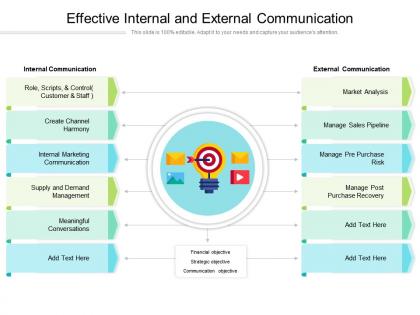
Effective internal and external communication




Try Before you Buy Download Free Sample Product
 Impress Your
 Audience
 100%
100% Editable
 Save Hours
 of Time


Our Effective Internal And External Communication are explicit and effective. They combine clarity and concise expression.
People who downloaded this PowerPoint presentation also viewed the following :
Effective internal and external communication with all 2 slides:
Give your audience a fulfilling experience. They will find our Effective Internal And External Communication elevating.
FAQs for Effective internal
Honestly, just focus on being clear about what you want and actually listening when people talk - not just waiting for your turn. Timing matters a lot too. Don't bring up heavy stuff when someone's stressed or rushing out the door. Your body language does way more work than you'd think, so pay attention to that. I learned this the hard way with work emails - always double-check that your tone comes across right since context gets weird in text. Oh, and if you say you'll do something during a conversation, actually follow through. Pick one thing to work on first though, don't try fixing everything at once.
Honestly, your body language is doing like half the communicating for you whether you realize it or not. When everything lines up - your words, tone, gestures - people actually believe what you're saying. But mix signals? That's when it gets awkward. Picture someone with their arms crossed saying "I'm totally open to feedback" - yeah right. Your posture, eye contact, even how you're standing either backs up your message or completely undermines it. I learned this the hard way in job interviews. Just something to think about next time you're trying to get a point across.
Dude, active listening is a total game changer. Like, instead of just waiting for your turn to talk, you're actually absorbing what they're saying - the emotions, the stuff they're not directly saying, all of it. People can sense when you're really tuned in vs. just pretending to care. Honestly? It's probably the biggest trust-builder out there. Next time you're chatting with someone, try focusing completely on understanding them before you even think about your response. I swear it'll change how your conversations go. Way more meaningful stuff comes out when people feel heard.
Oh man, this is so real! I've totally bombed meetings because of this. What seems super clear to you might sound rude or confusing to someone else. Like, some people expect you to be direct - just say what you mean. But others? They're reading between the lines for everything. Personal space is weird too - I once backed away from someone during a presentation and probably seemed standoffish. Even stuff like how long you pause before answering changes meaning across cultures. My advice? When something feels awkward, just ask what they prefer. Way better than guessing wrong again.
Honestly, you gotta just dive in and try different approaches. Set up regular check-ins where people can actually speak up without feeling judged. Mix it up too - some folks hate video calls but they're all over Slack, others need that face-to-face vibe. I always ask "so what did you hear me say?" because it catches those weird miscommunications before they blow up. Oh, and pay attention to generational stuff on your team - like, my older colleagues prefer email while the younger ones live in chat apps. Create that safe space first, then just experiment until something sticks. Trial and error is your friend here.
Honestly, emotional intelligence makes such a huge difference when you're talking to people. Like, being able to read someone's mood or energy completely changes how you approach the conversation. You start picking up on body language and know when to dial back your tone if they seem off. Managing your own feelings helps too - saves you from those moments where you say something dumb when you're annoyed. I learned this the hard way lol. But seriously, just try pausing before you respond and think about how the other person's actually feeling. It's weird how much smoother things go when you do that.
Do your homework first - figure out who's gonna be there and what they actually know. Mixed crowd? Skip the technical jargon or you'll watch eyes glaze over real quick. I always prep backup slides for the complex stuff, honestly saves me every time. Watch people's faces while you're talking - if they look lost, switch gears immediately. Oh, and start with what matters to THEM, not what you think is cool about your topic. Have a few different ways to explain the same concept ready. Trust me, you'll need them. The whole thing comes down to reading the room and adapting on the fly.
Honestly, digital tools are kind of a mixed bag for teams. Slack's awesome because introverts can actually think before responding, and nobody's stuck waiting for the one person who's always late to meetings. But then you get stuck in these endless message threads when you could've just called. Video meetings help with the whole human connection thing - though I'm pretty over staring at tiny Brady Bunch squares all day. My take? Match the tool to what you need. Quick updates go in chat. Brainstorming works better face-to-face, even if it's virtual. And please, don't have the same conversation in Slack AND email AND Teams.
Ugh, the worst thing you can do is ramble without getting to the point. I've gotten emails that are basically novels and I'm like... what do you actually want from me? Start with your main message upfront. Be specific instead of vague - nobody can read your mind about context. Also, tone is tricky in writing since there's no facial expressions or whatever, so stuff sounds way meaner than you meant. I always read my emails out loud before sending (sounds weird but trust me). Oh and don't assume people know the background - spell it out.
Look, feedback mechanisms stop communication from turning into a total mess where nobody knows what's happening. I'd start with quick check-ins or just asking "does this make sense?" after meetings - catches problems early. People feel way more invested when they know you actually want their input, which honestly makes a huge difference. Weekly pulse checks work better than those awful annual surveys nobody cares about. Don't overcomplicate it though. Even simple end-of-meeting clarifications can totally change how your team communicates. Just pick something consistent and see what sticks.
Honestly, stories just work better than boring slide after boring slide of data. Your brain is wired for narratives—we've been telling stories since we lived in caves, right? When you turn your presentation into a story, people actually *feel* something instead of zoning out on their phones. Plus it's way easier to follow a clear beginning-middle-end than random bullet points. Try building your next deck around a customer's journey or a problem-solution thing. Even a simple before-and-after works. Trust me, your audience will actually stay awake.
Lead with your main point - don't make people hunt for it. Short sentences work better than long ones, and ditch the corporate speak (nobody actually talks like that). Use bullet points when you've got multiple things to cover. Trim the fat - why use 20 words when 10 will do? Here's the thing though: always tell people what you want them to do next. A clear call to action saves everyone time. Before you send anything, give it a quick read and ask yourself if you'd get it while scrolling through emails at 9 AM.
Honestly, the biggest game-changer is actually listening instead of just waiting for your turn to talk. I've learned to use "I" statements - like "I got confused when this happened" instead of "you always mess this up." Way less defensive that way. Ask questions that can't be answered with yes/no so you actually get what they're thinking. And dude, if it's getting heated? Just take a break. I used to think that was giving up, but it's not. Find something you both agree on first, even if it's tiny. Half the time we're not even fighting about the real issue anyway.
Honestly, visuals can totally save your presentation or completely tank it. Good ones help explain tricky stuff and keep people paying attention - plus they'll actually remember what you said later. But messy slides with tiny text? Way worse than just talking without any slides at all. I learned this the hard way once, trust me. Clean and simple works best, and only use stuff that actually backs up your points. Oh, and definitely do a quick run-through beforehand to catch any weird formatting issues. Less really is more with this stuff.
Start with what they actually care about, then work from there. I like using analogies - data encryption is just putting a letter in a locked box, you know? Break stuff down into smaller pieces and check if they're following along. Honestly, I used to overthink this and just made things worse lol. Simple language works best, but don't talk down to them. Always circle back to why it matters to THEM specifically. Visuals are clutch too. Try explaining it to someone random first - if they get it, you're golden.
No Reviews