

IT Service Delivery Model Powerpoint Presentation Slides





Try Before you Buy Download Free Sample Product
 Impress Your
 Audience
 100%
100% Editable
 Save Hours
 of Time


Collaboration of IT and business drive efficiencies, stabilize the business, and help in cost containment. Grab our efficiently designed IT Service Delivery Model template that illustrates how advanced Machine Learning ML and Artificial Intelligence AI analytic models can maximize service delivery performance, service health, and proactive problem resolution. Also, this presentation acquaints viewers with a list of machine learning skills that organizations must use to handle service abnormalities, etc. In addition to that, our professionally curated PPT presents details on the application of new customer engagement models by aligning HR, finance, legal, customer support, and sales and marketing team. Further, this PPT provides rich information on shifting from transactional services to transforming the entire stack, building a new IT culture, etc. Our ready-to-use PowerPoint presentation will help you conduct your employees AI and Machine Learning Training Program. It will also be helpful in the transformation from reactive service to proactive service, creating values for business stakeholders and devising a communication plan along with service delivery KPI dashboards. Customize this 100 percent editable template now.
People who downloaded this PowerPoint presentation also viewed the following :
Content of this Powerpoint Presentation
Slide 1: This slide introduces IT Service Delivery Model. State your company name and begin.
Slide 2: This slide states Agenda of the presentation.
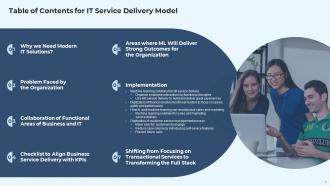
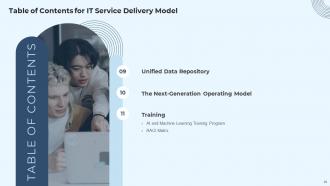
Slide 3: This slide presents Table of Content for the presentation.
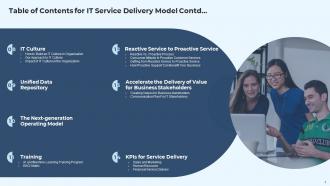
Slide 4: This is another slide continuing Table of Content for the presentation.
Slide 5: This slide highlights title for topics that are to be covered next in the template.
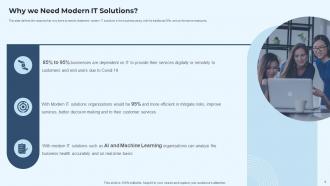
Slide 6: This slide defines the reasons that why there is need to implement modern IT solutions.
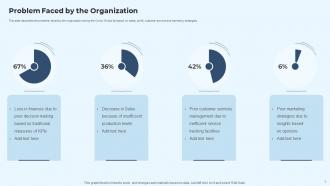
Slide 7: This slide describes the problems faced by the organization during the Covid-19 and its impact on sales.
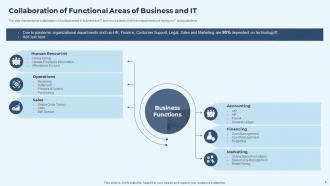
Slide 8: This slide displays Collaboration of Functional Areas of Business and IT.
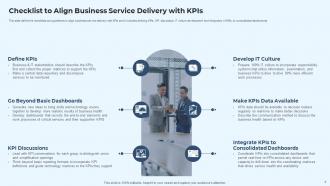
Slide 9: This slide represents Checklist to Align Business Service Delivery with KPIs.
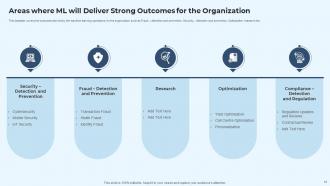
Slide 10: This slide showcases Areas where ML will Deliver Strong Outcomes for the Organization.
Slide 11: This slide highlights title for topics that are to be covered next in the template.
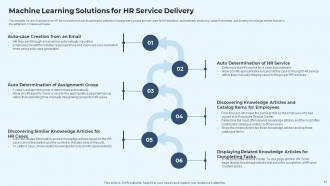
Slide 12: This slide shows Machine Learning Solutions for HR Service Delivery.
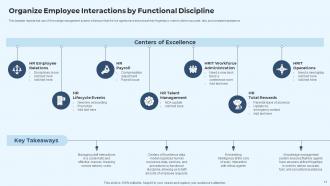
Slide 13: This slide presents Organize Employee Interactions by Functional Discipline.
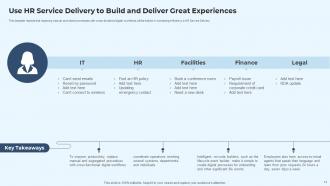
Slide 14: This slide displays Use HR Service Delivery to Build and Deliver Great Experiences.
Slide 15: This slide highlights title for topics that are to be covered next in the template.
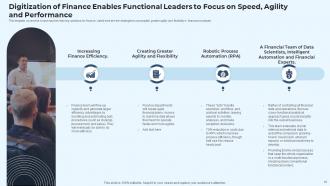
Slide 16: This template covers the AI and machine learning solutions for finance.
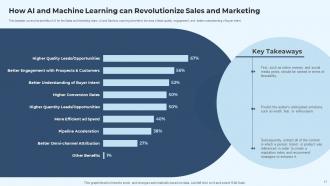
Slide 17: This slide represents How AI and Machine Learning can Revolutionize Sales and Marketing.
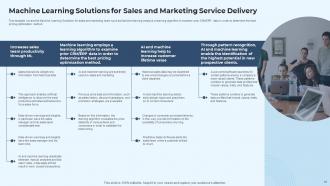
Slide 18: This slide showcases Machine Learning Solutions for Sales and Marketing Service Delivery.
Slide 19: This slide highlights title for topics that are to be covered next in the template.
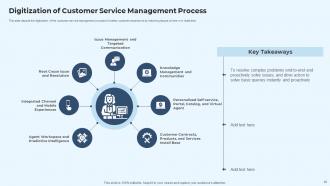
Slide 20: This slide shows Digitization of Customer Service Management Process.
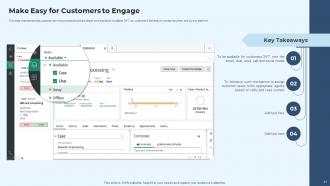
Slide 21: This slide represents that customer service process should be simple.
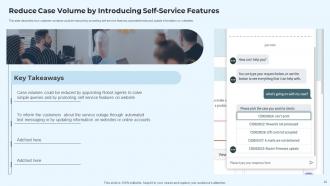
Slide 22: This slide showcases Reduce Case Volume by Introducing Self-Service Features.
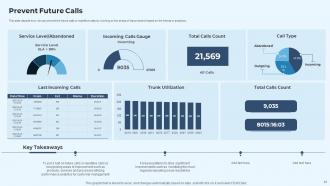
Slide 23: This slide depicts how we can prevent the future calls or repetitive calls by working on the areas of improvement.
Slide 24: This slide highlights title for topics that are to be covered next in the template.
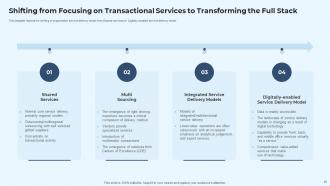
Slide 25: This slide shows Shifting from Focusing on Transactional Services to Transforming the Full Stack.
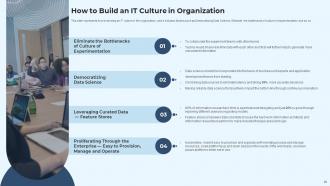
Slide 26: This slide represents how to develop an IT culture in the organization.
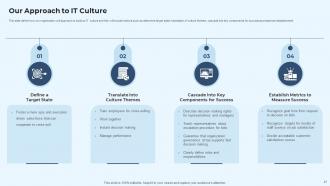
Slide 27: This slide define how our organization will approach to build an IT culture.
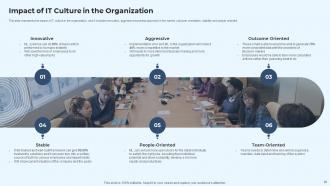
Slide 28: This slide represents the impact of IT culture in the organization.
Slide 29: This slide highlights title for topics that are to be covered next in the template.
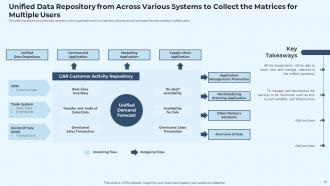
Slide 30: This slide showcases Unified Data Repository from Across Various Systems to Collect the Matrices for Multiple Users.
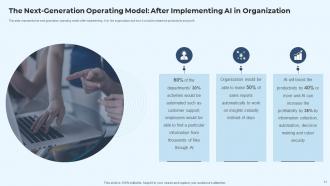
Slide 31: This slide represents the next generation operating model after implementing AI in the organization.
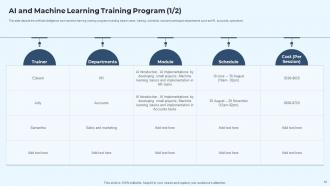
Slide 32: This slide showcases AI and Machine Learning Training Program.
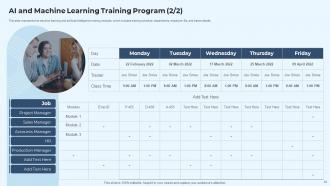
Slide 33: This slide shows AI and Machine Learning Training Program.
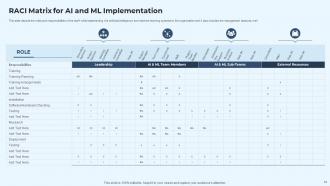
Slide 34: This slide presents RACI Matrix for AI and ML Implementation.
Slide 35: This slide highlights title for topics that are to be covered next in the template.
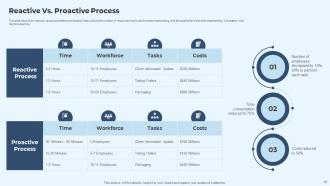
Slide 36: This slide depicts the manual versus automated processes.
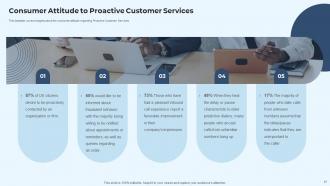
Slide 37: This slide represents Consumer Attitude to Proactive Customer Services.
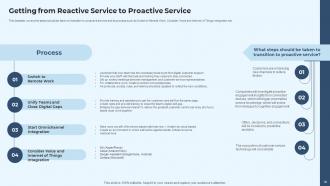
Slide 38: This slide showcases Getting from Reactive Service to Proactive Service.
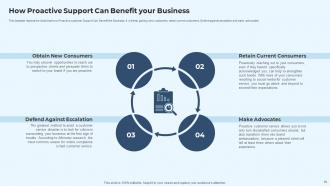
Slide 39: This slide shows How Proactive Support Can Benefit your Business.
Slide 40: This slide highlights title for topics that are to be covered next in the template.
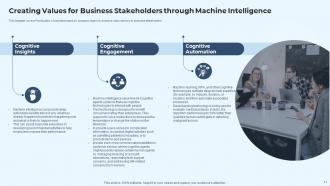
Slide 41: This slide presents Creating Values for Business Stakeholders through Machine Intelligence.
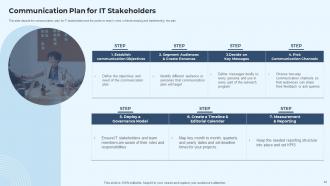
Slide 42: This slide depicts the communication plan for IT stakeholders.
Slide 43: This slide highlights title for topics that are to be covered next in the template.
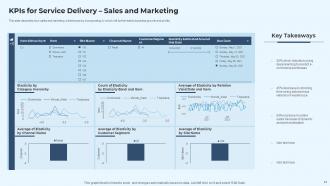
Slide 44: This slide describes how sales and marketing will be boost by incorporating AI.
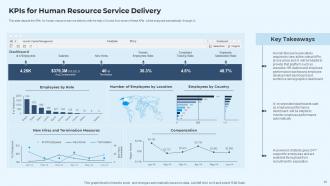
Slide 45: This slide depicts the KPIs for human resource service delivery with the help of AI.
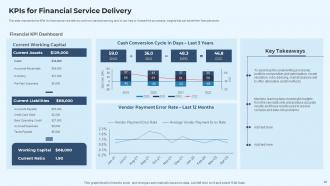
Slide 46: This slide represents the KPIs for financial service delivery.
Slide 47: This slide contains all the icons used in this presentation.
Slide 48: This slide is titled as Additional Slides for moving forward.
Slide 49: This is Our Mission slide with related imagery and text.
Slide 50: This is About Us slide to show company specifications etc.
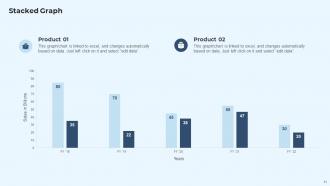
Slide 51: This slide represents Stacked Bar chart with two products comparison.
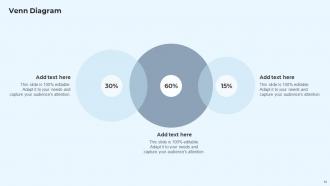
Slide 52: This slide depicts Venn diagram with text boxes.
Slide 53: This is a Timeline slide. Show data related to time intervals here.
Slide 54: This slide contains Puzzle with related icons and text.
Slide 55: This is a Timeline slide. Show data related to time intervals here.
Slide 56: This slide presents Roadmap with additional textboxes.
Slide 57: This is a Thank You slide with address, contact numbers and email address.
IT Service Delivery Model Powerpoint Presentation Slides with all 62 slides:
Use our IT Service Delivery Model Powerpoint Presentation Slides to effectively help you save your valuable time. They are readymade to fit into any presentation structure.






FAQs for IT Service Delivery Model
You'll need service catalog management, incident/problem stuff, change management, and SLAs obviously. Monitoring and reporting are key for tracking how things actually perform. But honestly? People and processes beat fancy tools every time - I've watched teams crush it with super basic setups. Your service desk is make-or-break since users hit that first. Oh and definitely map out what services you have now before going crazy trying to build everything. Clear roles help tons too, otherwise everyone's stepping on each other. Start small, find the gaps, then expand from there.
So your IT service delivery model is basically what determines if your team gets help fast or if they're stuck waiting forever for tickets to get resolved. Good model means people can actually do their jobs without constant tech drama. Bad model? Everyone's frustrated and nothing gets done efficiently - which honestly, I've seen tank entire projects. Quick response times keep systems running smooth and your customers happy. Oh, and productivity doesn't tank when people aren't dealing with IT nightmares all day. You should probably sit down with your stakeholders every so often to figure out where things are getting stuck.
So ITIL and COBIT are basically your roadmap for organizing service delivery - not just theory stuff, but actual processes and workflows you'd use daily. ITIL's super common, especially for incident management and change control. These frameworks standardize how your team tackles everything from user requests to major outages. No more making it up as you go, which honestly saves so much headache. Just don't go crazy trying to implement everything at once - I've seen teams burn out that way. Pick what actually makes sense for your org first.
Track the usual stuff first - uptime, response times, ticket volumes. Those basics matter. But don't stop there because honestly, executives don't care if your servers are humming if users are still complaining. Throw in user satisfaction surveys and SLA tracking too. The real win? Show how IT actually moves the needle on business goals - revenue support, cost cuts, whatever matters to your company. I'd set up a dashboard mixing both operational and business metrics. Makes it way easier to catch issues early and actually prove your team's value when budget season rolls around.
Honestly, people hate change - that's gonna be your biggest headache. Your team will push back even if the current system sucks. Plus you're looking at major workflow disruption while switching over, and most folks won't have the right skills for whatever new system you pick. Budget's another nightmare since you'll be running both systems at once for months. Service interruptions are basically guaranteed too. Oh, and definitely test it with just one department first - learned that the hard way at my last job. Work out all the bugs before going company-wide or you'll regret it.
So cloud services totally change how IT works - you're not running everything yourself anymore, you're basically buying services from other companies. Most IT teams I know have struggled with this shift, honestly. You go from being the person who fixes servers to someone who manages vendors and makes sure security is tight across different platforms. The whole thing becomes about relationships with cloud providers and keeping users happy. Oh and governance - that's huge now too. If I were you, I'd start getting good at vendor management ASAP because that's where everything's heading.
Start with clear SLAs and track everything - response times, how fast you're fixing stuff, customer satisfaction. Proactive monitoring is clutch because you'll catch problems before users start complaining. Those regular stakeholder reviews? They're annoying but honestly catch so many things you'd miss otherwise. Train your team well and document processes properly. Nothing's worse than people panicking during an incident because they don't know what to do. Automate whatever workflows you can to cut down on mistakes. Pick one service area first, get it running smooth, then roll it out everywhere else.
Honestly, automation is a game changer for IT teams. It handles all the boring stuff - password resets, ticket routing, patch deployments. Your incidents get resolved way faster because workflows start instantly instead of waiting for someone to manually sort through everything. The best part? Your team stops doing mind-numbing repetitive work and can actually tackle complex problems that need real thinking. I'd say start with whatever requests you get most often (probably the simple ones) and expand from there. It's kinda wild how much time it frees up once you get going.
Customer feedback is basically your roadmap for fixing what's broken. Collect it through surveys, support tickets, conversations - whatever works. Then you've got to separate real problems from random complaints (some people just love to complain, honestly). The key thing is closing the loop - show customers you actually listened and made changes based on their input. Otherwise they'll stop bothering to give feedback at all. Set up quarterly reviews where you match feedback trends with your service metrics. That's how you figure out what to adjust. Make the whole process visible so people know their voice matters.
Honestly, security can't be something you just slap on at the end - it needs to be baked into everything from the start. Get your access controls and identity management locked down first. Then focus on encrypting data both when it's stored and moving around (I've literally seen companies get wrecked because they skipped this basic step). Build continuous monitoring and vulnerability checks right into your delivery process. Oh, and make sure you've got solid incident response procedures ready to go. The trick is writing security requirements directly into your SLAs so it just becomes part of how you operate, not an extra burden.
Look, different departments want completely different things from IT. Finance needs rock-solid security and compliance stuff, but your creative people just want the latest tools and freedom to experiment. Makes total sense when you think about it. So you've gotta build a mix - maybe self-service portals for the easy requests, dedicated support for mission-critical systems, outsourced help desk for basic tickets. I'd start by actually asking each team what they care about most. Don't just assume. Then match your service levels to what's genuinely business-critical instead of treating everything the same.
Honestly, communication makes or breaks everything. Without it, your team's gonna be guessing what stakeholders actually want, and users will be left wondering what's happening. I've watched projects completely implode because everyone thought they were on the same page - spoiler alert, nobody ever is. You need those regular check-ins and feedback loops set up from the start. Short updates work better than novel-length emails, trust me. When problems pop up (and they will), having clear escalation paths saves your butt. Don't wing the communication part - treat it like the foundation it actually is.
Okay so for SLAs, focus on three main things: uptime targets (99.5% is pretty standard), performance stuff like response times, and who to call when everything breaks. Because it absolutely will break at some point. Don't just track metrics that are easy - pick ones that actually matter to the business. Set different response times based on priority levels. Also build in consequences for both sides and schedule regular reviews to tweak things. Oh, and definitely pad your timelines a bit. Your team will thank you later when they're not constantly scrambling to hit impossible deadlines.
Honestly, AI stuff is everywhere now - chatbots doing basic support tickets, predictive maintenance catching issues before they break. Cloud architecture makes scaling way easier. Those low-code platforms let regular users build apps themselves (kinda scary but whatever). Edge computing's pretty cool, brings processing right to where people need it. Kubernetes and containers are streamlining how we deploy things. But here's the thing - don't try to implement everything at once. Pick maybe 2 or 3 technologies that'll actually fix your biggest headaches right now. There's always some new shiny tool, but focus on what you actually need first.
Dude, cultural stuff will absolutely wreck your global IT delivery if you're not careful. Communication styles are huge - some teams are brutally direct while others dance around problems forever. Response time expectations vary wildly too. Honestly, the timezone thing is annoying but manageable. What really kills you is when your offshore people clash with local stakeholders over basic misunderstandings. Time zones you can work around, but cultural friction? That's poison. Get your key players some cross-cultural training early on. Set up communication rules that actually account for these differences instead of pretending everyone thinks the same way.
-
I had them make a presentation for an office retirement party. They were very helpful in understanding what we wanted and delivered the perfect presentation. Highly recommended!
-
“As you have innovative ideas and they are all customizable, this saves a huge chunk of your time to prepare well-read presentations.”