

Service Design Methodology Powerpoint Presentation Slides





Try Before you Buy Download Free Sample Product
 Impress Your
Audience
 100%
Editable
 Save Hours
of Time


As customer experience becomes the deciding factor in dominating the service industry, more and more companies are practicing Service Design to ensure that the best service is delivered at each stage of the customer journey from searching to landing to the location to consuming the service and leaving. Grab our professionally designed Service Design Methodology. Whether a local council or a restaurant, service design must deliver a great customer experience and survive in the fiercely competitive business environment. Service Blueprinting is a service design tool to map out how the current service is provided to customers and how it can be enhanced for a better customer experience. Our Service Design and Service Blueprinting PowerPoint presentation is the go-to resource for the companys services team to understand the step-by-step service design process and implement it smoothly in your organization. The PPT contains customizable templates on customer journey maps, service blueprints, road-maps, etc., to effectively shape your ideas. Get access now.
People who downloaded this PowerPoint presentation also viewed the following :
Content of this Powerpoint Presentation
Slide 1: This slide displays title i.e. 'Service Design Methodology' and your Company Name.
Slide 2: This slide presents table of contents.
Slide 3: This slide exhibits Service Design: What All It Encompasses.
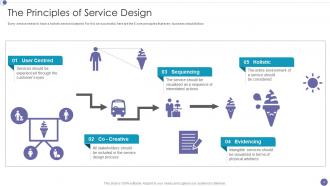
Slide 4: This slide showcases The Principles of Service Design.
Slide 5: This slide highlights Why Service Design is a Must for Every Business.
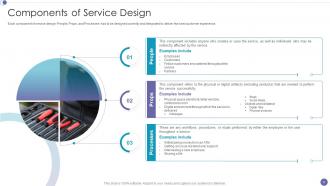
Slide 6: This slide illustrates Components of Service Design.
Slide 7: This slide shows 'Identify the Touchpoints'.
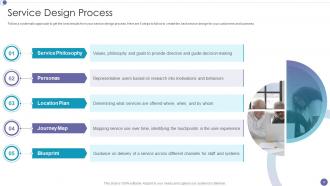
Slide 8: This slide displays Service Design Process.
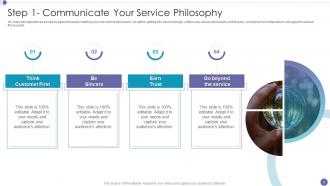
Slide 9: This slide presents Step 1- Communicate Your Service Philosophy.
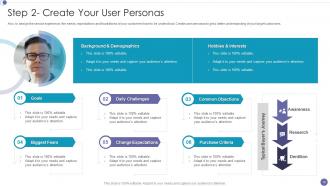
Slide 10: This slide exhibits Step 2- Create Your User Personas.
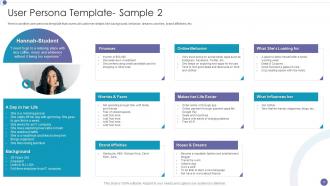
Slide 11: This slide shows User Persona Template- Sample 2.
Slide 12: This slide highlights Step 3- Create your Service Location Planner.
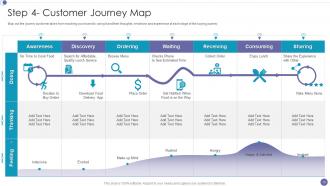
Slide 13: This slide illustrates Step 4- Customer Journey Map.
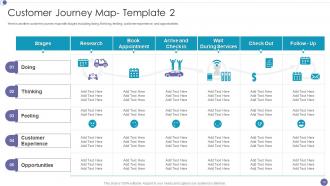
Slide 14: This slide displays Customer Journey Map- Template 2.
Slide 15: This slide presents Step 5- Service Blueprint.
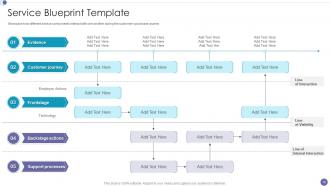
Slide 16: This slide exhibits Service Blueprint Template.
Slide 17: This slide shows service Blueprint Template - Sample Blueprint 1.
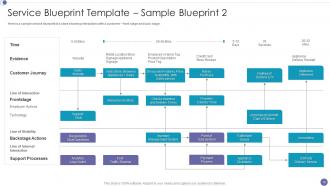
Slide 18: This slide depicts Service Blueprint Template – Sample Blueprint 2.
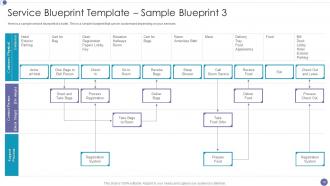
Slide 19: This slide highlights Service Blueprint Template – Sample Blueprint 3.
Slide 20: This slide illustrates Service Blueprint Template – Sample Blueprint 4.
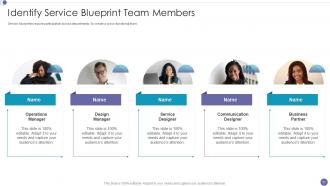
Slide 21: This slide displays Identify Service Blueprint Team Members.
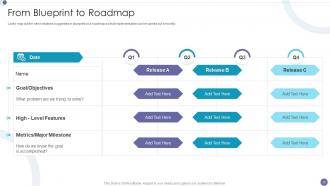
Slide 22: This slide presents 'From Blueprint to Roadmap'.
Slide 23: This is the icons slide.
Slide 24: This slide presents title for additional slides.
Slide 25: This slide shows about your company, target audience and its client's values.
Slide 26: This slide presents your company's vision, mission and goals.
Slide 27: This slide shows details of team members like name, designation, etc.
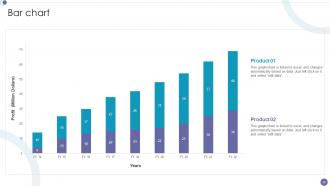
Slide 28: This slide exhibits yearly profits bar charts for different products. The charts are linked to Excel.
Slide 29: This slide shows puzzle for displaying elements of company.
Slide 30: This slide depicts 30-60-90 days plan for projects.
Slide 31: This slide exhibits targets of the company.
Slide 32: This slide depicts posts for past experiences of clients.
Slide 33: This slide exhibits yearly timeline of company.
Slide 34: This is thank you slide & contains contact details of company like office address, phone no., etc.
Service Design Methodology Powerpoint Presentation Slides with all 39 slides:
Use our Service Design Methodology Powerpoint Presentation Slides to effectively help you save your valuable time. They are readymade to fit into any presentation structure.



















FAQs for Service Design Methodology
Okay so there's basically five things you need to nail: Start with what users actually need, get stakeholders involved in the design process (this one's huge but everyone messes it up at first), think about the whole service - not just the pretty front-end stuff. Also prototype constantly and base decisions on real data, not gut feelings. The behind-the-scenes mapping is where teams usually fall apart though. You've got to interview actual users first - that's honestly where you'll find the good stuff. Don't skip that part.
So basically, traditional product design is about making actual stuff - buttons, screens, whatever. Service design? Totally different beast. You're mapping out entire customer experiences across tons of touchpoints. Way messier because you're dealing with people's emotions and behaviors. Plus all the behind-the-scenes stuff like staff training and backend processes that customers never see but totally affect their experience. Honestly, I'd start by just mapping out your current service journey first - you'll probably find a bunch of hidden complexity you didn't even know existed. It's wild how much is actually happening.
Honestly, start with customer journey maps - they're game changers for spotting pain points you totally missed. Service blueprints are clutch too because they show all the behind-the-scenes stuff customers don't see. Personas keep you grounded in actual user needs instead of just guessing (which let's be real, we all do sometimes). You'll also want stakeholder maps and user interviews to get the full picture. Journey mapping is probably your best entry point though - it's straightforward and you'll immediately see where things are breaking down. Trust me, once you map out those touchpoints, the opportunities become super obvious.
So basically, service design maps out every single touchpoint your customers hit and fixes them as one big system instead of random patches here and there. Works everywhere - banking, healthcare, you name it. The principles don't change much. Here's the thing though: most companies design around what's convenient for them, not what actually makes sense for users. Big mistake. You gotta flip that and really understand where people get frustrated. Honestly? Just follow your customers through one full cycle. You'll spot gaps you never knew existed. It's kinda crazy how blind we can be to obvious problems.
Think of customer journey mapping like following breadcrumbs - you're tracking every single step users take with your service. Map out all their touchpoints, feelings, and where things go wrong. It's detective work, honestly. I've watched so many teams skip this part then act shocked when their fixes don't work. The whole point? Finding where your service sucks and where you can blow people's minds. Oh, and don't try mapping everyone at once - that's a mess waiting to happen. Pick one user type first and walk through their entire experience step by step.
Definitely track both the hard numbers and the softer stuff. Customer satisfaction scores, NPS, completion rates - that's your foundation. But honestly? The real insights come from actually talking to people and watching them use your service. Don't forget about your internal team either - employee satisfaction tells you a lot. Oh, and this is crucial - set your baselines first before changing anything. Otherwise you're just guessing if things improved. I'd do regular check-ins with the team, maybe monthly? Numbers are great but they don't tell you why someone got frustrated halfway through your process.
Honestly, the hardest part is dealing with people who think service design is just buzzword nonsense. Getting stakeholders on board when they don't understand the methodology yet? Total nightmare. Cross-functional collaboration sounds great in theory, but departments hate sharing data and working together. Plus everyone wants results yesterday, which is frustrating because this stuff takes time to actually work. Oh, and good luck breaking down those data silos - teams guard their info like it's state secrets or something. Start with one small pilot project though. Prove it works first, then you can push for bigger things.
Don't try changing everything at once - that's a recipe for disaster. Pick a few people who actually get it and let them run with real projects first. Success stories do way more heavy lifting than any company-wide email ever will. The trickiest part? Getting everyone to stop thinking in their little bubbles. But once they map out a user journey and spot all those annoying bottlenecks, they're sold. Oh, and definitely celebrate the wins publicly - people love that stuff. Make your tools super easy to use and weave this thinking into what you're already doing. Start with one team next quarter as your test case.
Honestly, skip user research and you're basically guessing what people want - which usually goes terribly. I've watched so many teams build "amazing" solutions that totally bomb because they never talked to actual users first. Even just 5-6 quick interviews will blow your mind with stuff you didn't expect. Without it, you're designing based on assumptions that are probably way off. Research shows you the real pain points and behaviors before you waste time on blueprints. It's like... why would you build something without knowing if people actually need it? Start small - just have some conversations.
Honestly, digital tools completely changed how I approach service design. Miro and Figma are lifesavers for mapping user journeys - way better than sticky notes everywhere. Remote interviews through Zoom actually work pretty well too. You can build interactive prototypes without the headache of creating the real thing first. Analytics give you actual user data instead of wild guesses (thank god). AI helps spot patterns in feedback, though I still double-check everything. Automation's great for testing flows quickly. My advice? Pick one tool that fixes your biggest headache right now. Maybe a digital whiteboard if you're drowning in collaboration chaos, or a survey platform for research.
Oh, the Airbnb host onboarding case study is perfect for this - they cut drop-off rates by 300% just by mapping out the whole user journey. Mayo Clinic did something similar with their patient experience, redesigning everything from scheduling to those confusing hospital hallways. Honestly, their waiting room changes alone are worth reading about. The UK government also completely redid their online services (who knew tax filing could actually be tolerable?). All three show how understanding where people get frustrated really pays off. I'd start with Airbnb since their case study has the most detail and actual numbers.
So empathy maps are basically a way to visualize what users think, feel, see, and do when they use your service. You're literally putting yourself in their shoes. They show pain points, motivations, behaviors - all in one framework that's super easy to digest. Honestly, stakeholders love them because it's visual and makes sense immediately. No more guessing what users actually need. You'll build real understanding from research instead of assumptions. Oh, and here's the thing - once you have it, reference that map every time you're designing touchpoints. Keeps you focused on solving actual problems instead of made-up ones. Game changer for teams, seriously.
Honestly, Design Thinking and Agile are your go-to combo here. Design Thinking's whole empathy-research-prototype thing just clicks when you're solving actual user problems - way better than guessing what people want. Then Agile keeps you moving fast instead of overthinking everything to death (been there). Lean UX is solid too since it's all about learning as you go rather than trying to nail it perfectly upfront. I'd probably start with Design Thinking for the discovery stuff, then jump into Agile sprints once you're ready to actually build and test things.
Here's the thing about service design - it makes you step back and look at your whole customer experience instead of just fixing random problems. Most teams work in their own bubbles and miss the big picture stuff. When you map out someone's entire journey with your company, you'll find all these weird gaps and bottlenecks you never noticed before. The cool part is you can quickly test fixes with actual customers instead of just hoping they'll work. Honestly, just pick one customer journey and trace it from start to finish - I guarantee you'll find at least three things that need fixing.
Okay so privacy is huge - don't be shady about data collection. Design for everyone, not just people like you (I swear this trips up so many teams). Get proper consent for research and avoid those manipulative dark patterns that make users do stuff they don't want. Think about who you might accidentally screw over - like seriously, ask that question early and often. If there's physical stuff involved, consider the environmental impact too. Oh and actually listen to different perspectives throughout, not just at the end. It's wild how much you'll miss otherwise.
-
Kudos to SlideTeam for achieving the high success rate in delivering the top-notch slides.
-
What an exhaustive collection of templates you guys have there in slideteam. Impressive!!!