Scrum methodology and project management powerpoint presentation slides
Try Before you Buy Download Free Sample Product
Audience
Editable
of Time
Scrum is an agile project management method often used in software development. Check out our competently designed Scrum Methodology and Project Management template to increase organizational productivity. It entails a small team headed by a Scrum Master, whose primary responsibility is to eliminate any barriers in getting the work done. This presentation discusses managing the project with a scrum procedure that focuses on the product backlog, sprint planning, etc. It incorporates slides that provide a glimpse of the project management process and give an idea about the project procedure framework. It showcases how the team meets regularly to review current activities and any roadblocks that need to be cleared, and work is performed in fast cycles called sprints. Scrum is a project management approach that enables rapid development and testing, particularly within a small team. This can be easily depicted taking the assistance of this readily-available deck. This template focuses on different templates required for scrum management procedures based on life cycle, hybrid methodology, planning procedure, scrum planning, etc. Customize this 100 percent editable template now.
People who downloaded this PowerPoint presentation also viewed the following :
Content of this Powerpoint Presentation
Slide 1: This slide displays title i.e. 'Scrum Methodology and Project Management' and your Company Name.
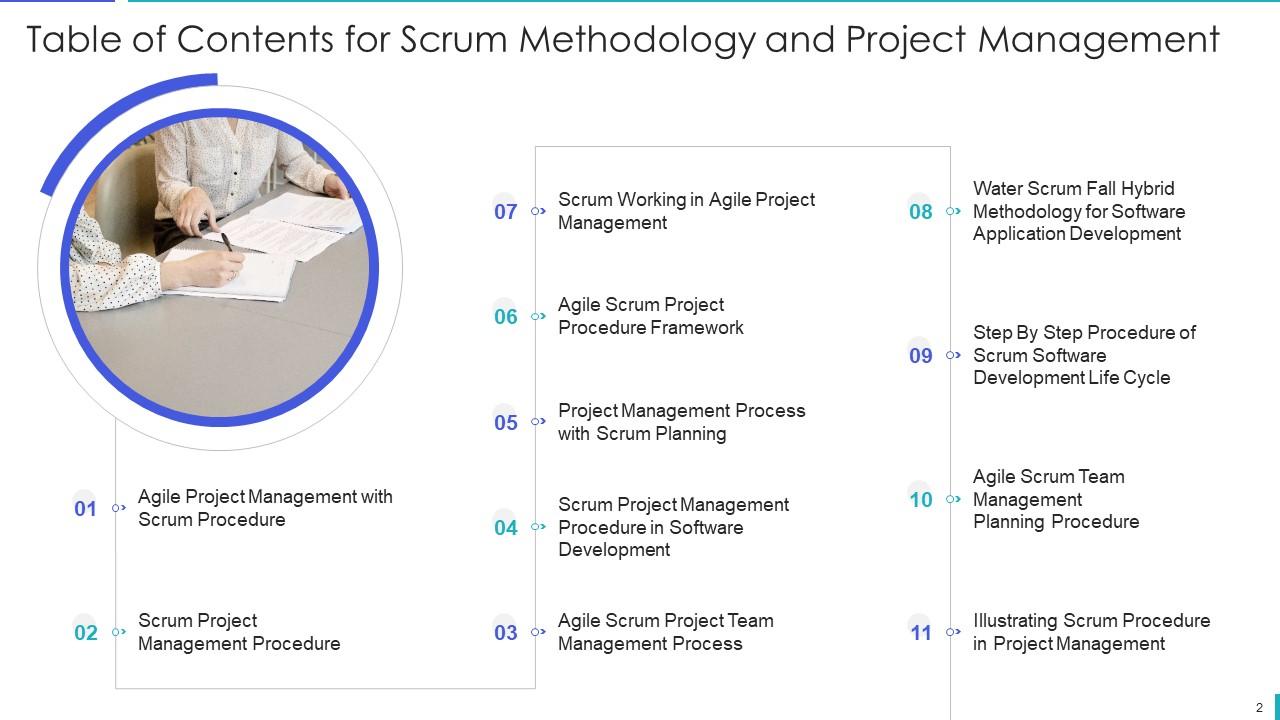
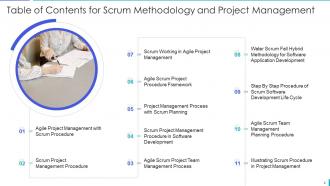
Slide 2: This slide presents table of contents.
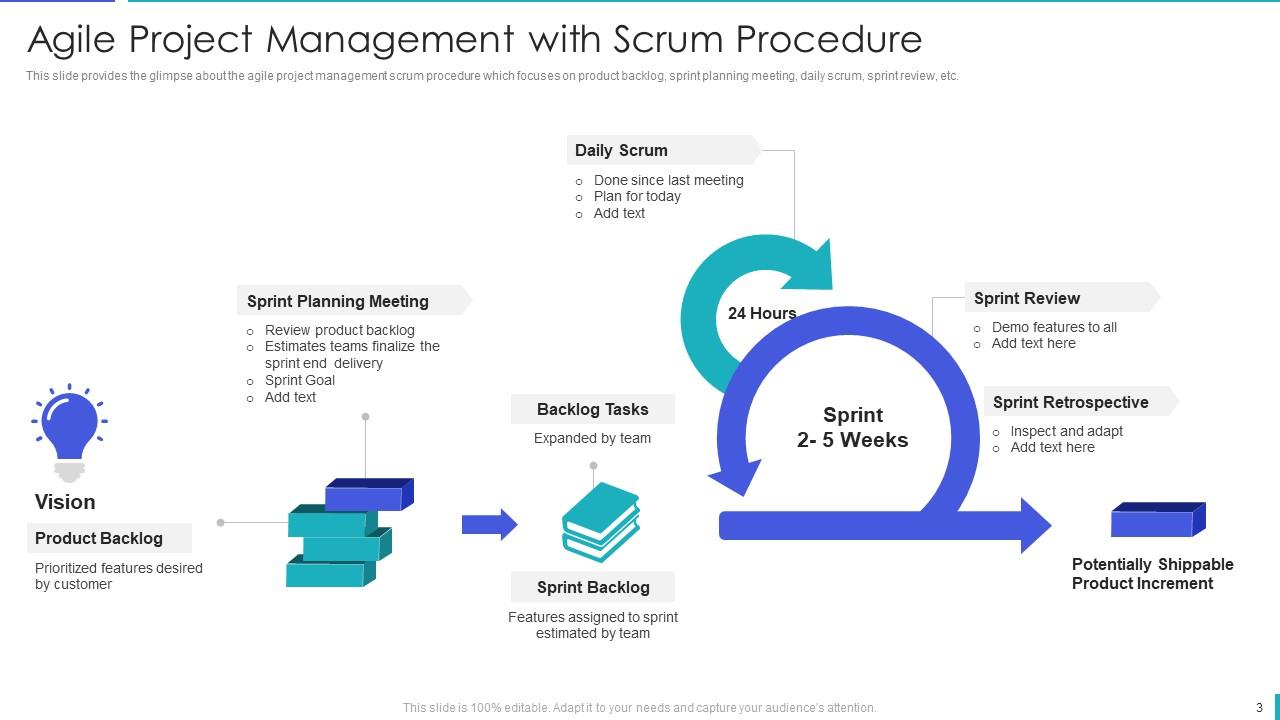
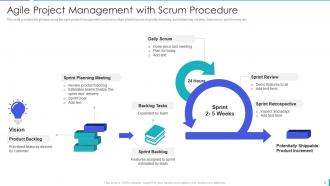
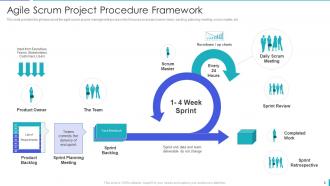
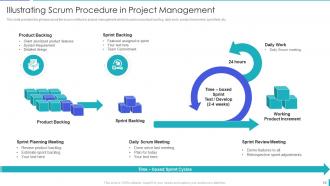
Slide 3: This slide provides the glimpse about the agile project management scrum procedure which focuses on product backlog, sprint planning meeting, etc.
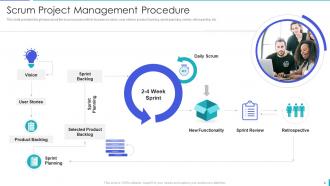
Slide 4: This slide provides the glimpse about the scrum process which focuses on vision, user stories, product backlog, sprint planning, review, retrospective, etc.
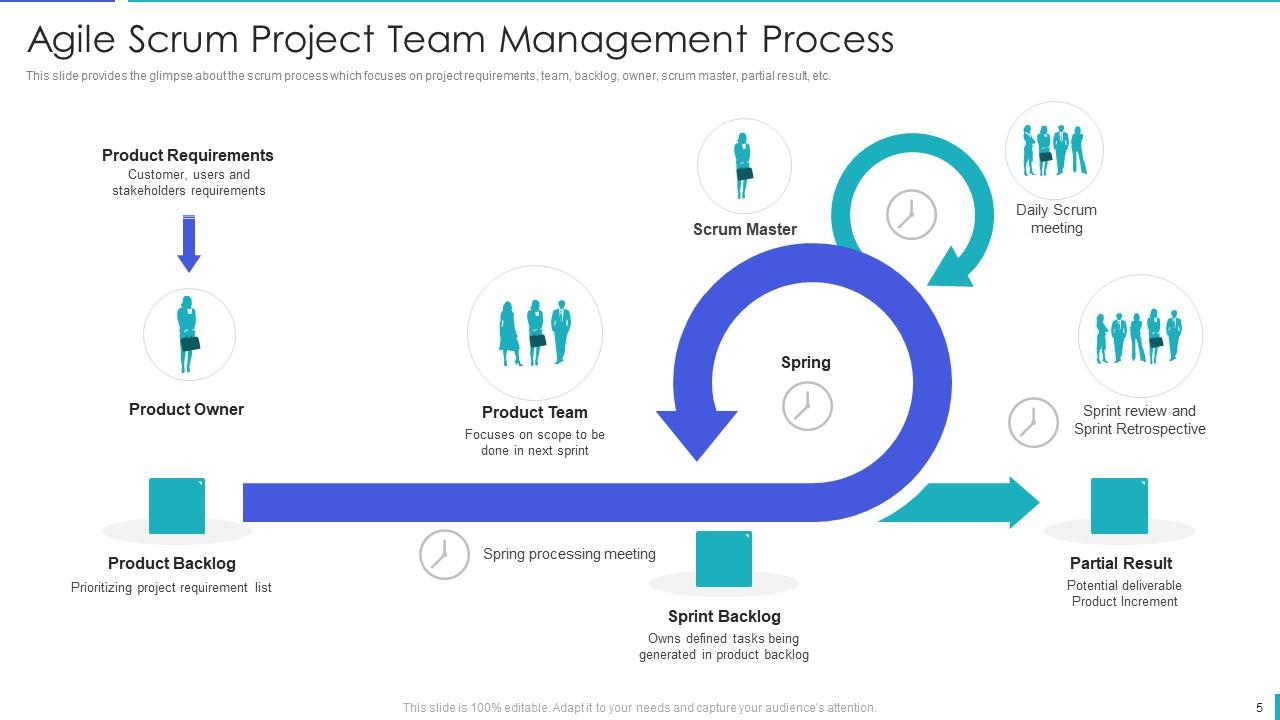
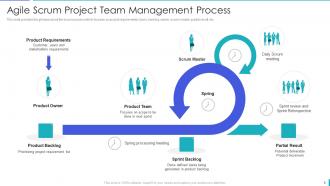
Slide 5: This slide provides the glimpse about the scrum process which focuses on project requirements, team, backlog, owner, scrum master, partial result, etc.
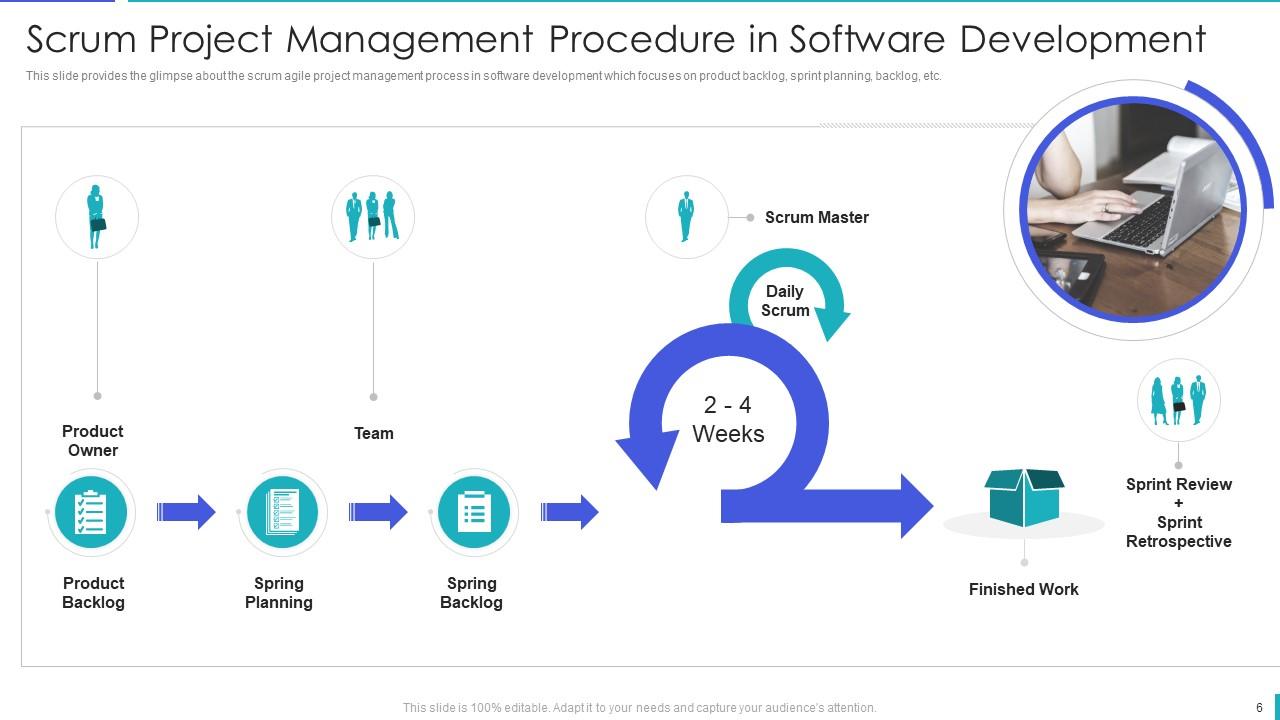
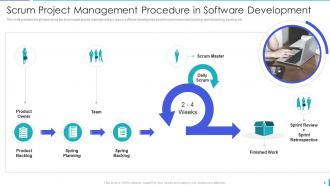
Slide 6: This slide provides the glimpse about the scrum agile project management process in software development which focuses on product backlog, etc.
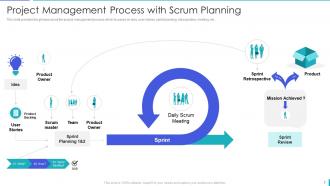
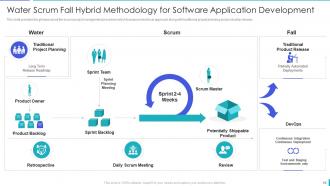
Slide 7: This slide provides the glimpse about the project management process which focusses on idea, user stories, sprint planning, retrospective, meeting, etc.
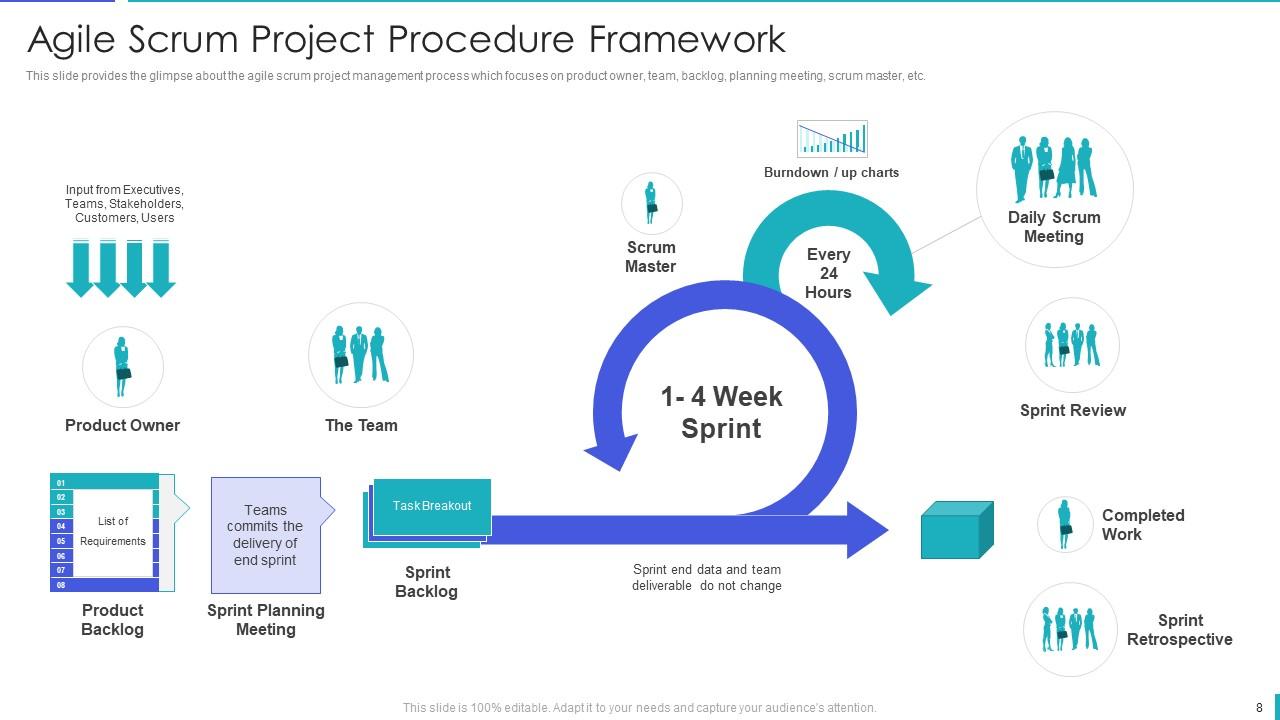
Slide 8: This slide provides the glimpse about the agile scrum project management process which focuses on product owner, team, backlog, planning meeting, etc.
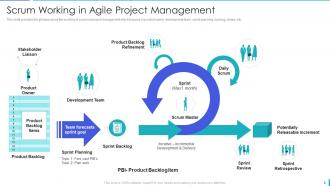
Slide 9: This slide provides the glimpse about the working of scrum in project management which focuses in product owner, development team, etc.
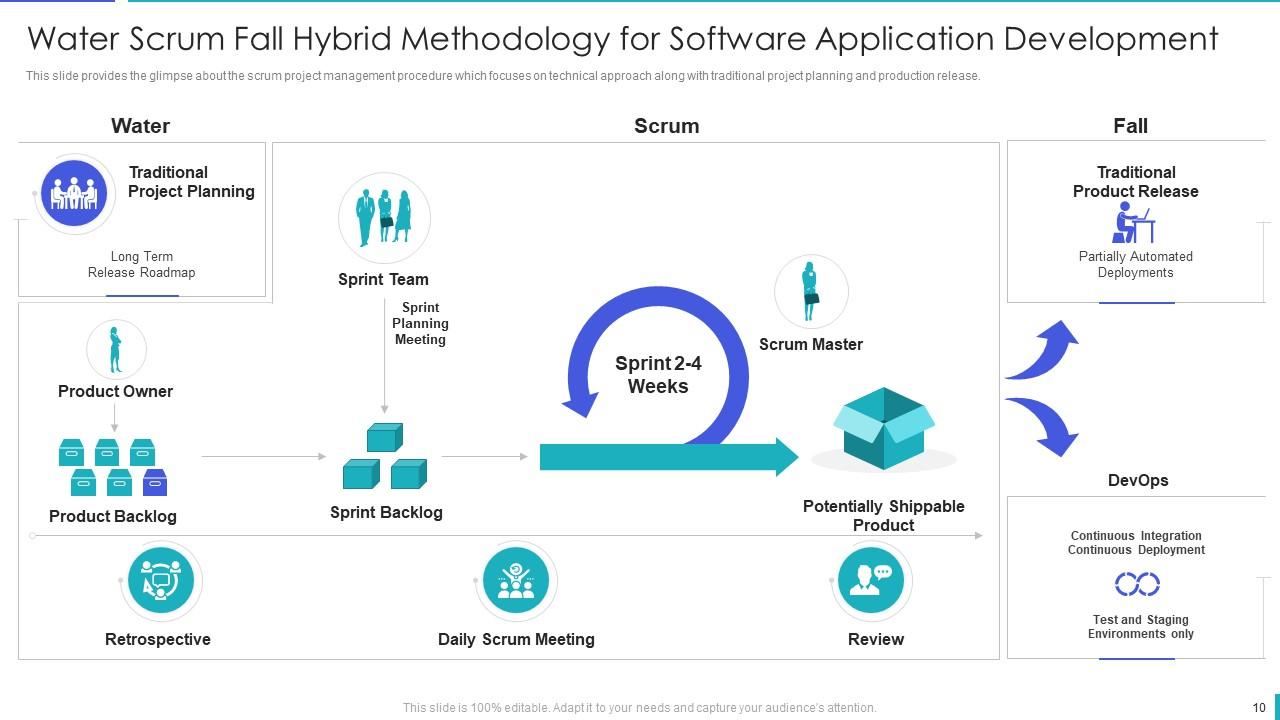
Slide 10: This slide provides the glimpse about the scrum project management procedure which focuses on technical approach.
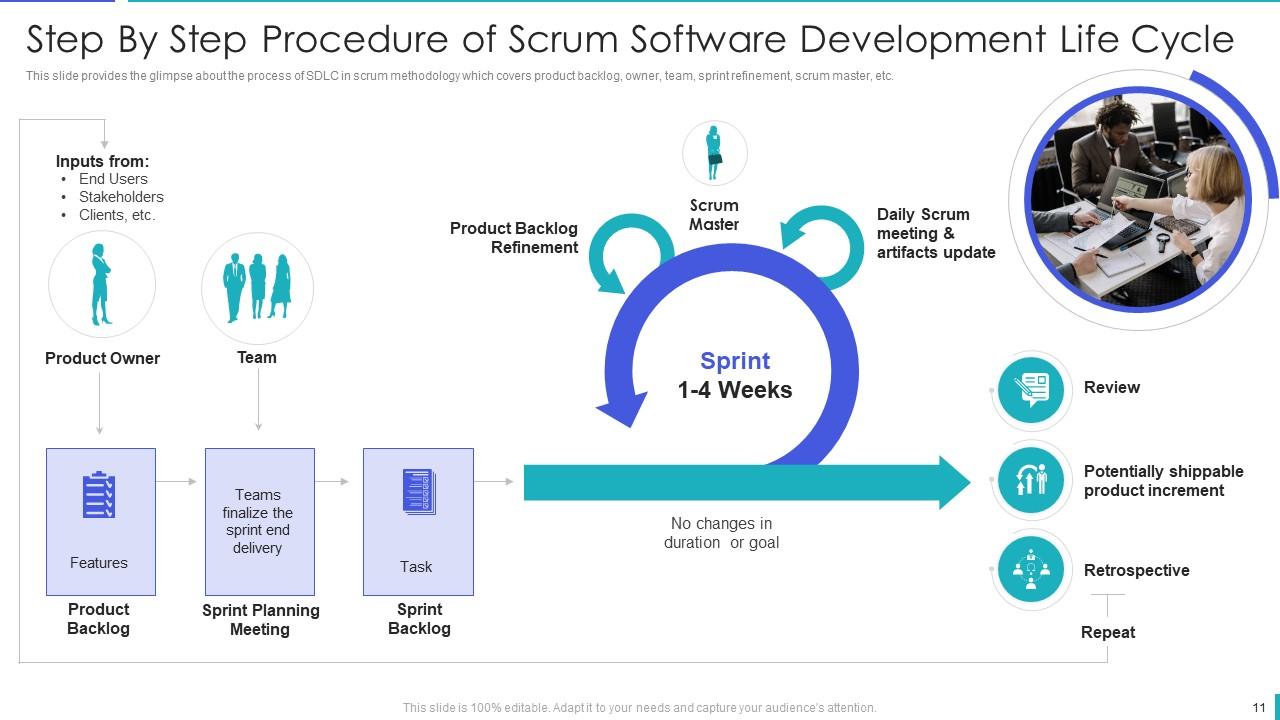
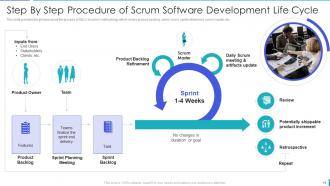
Slide 11: This slide provides the glimpse about the process of SDLC in scrum methodology which covers product backlog, owner, team, etc.
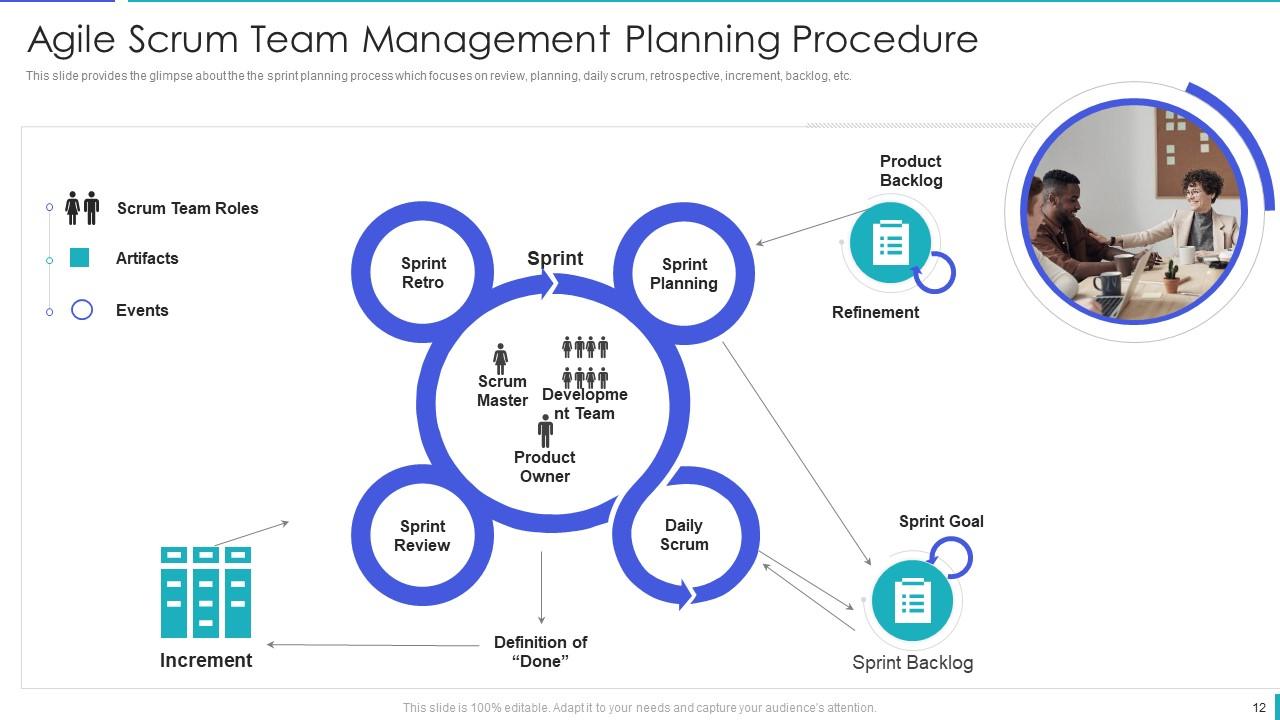
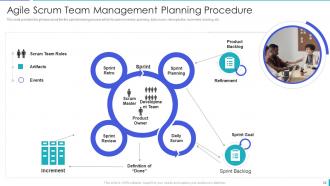
Slide 12: This slide provides the glimpse about the the sprint planning process which focuses on review, planning, daily scrum, retrospective, etc.
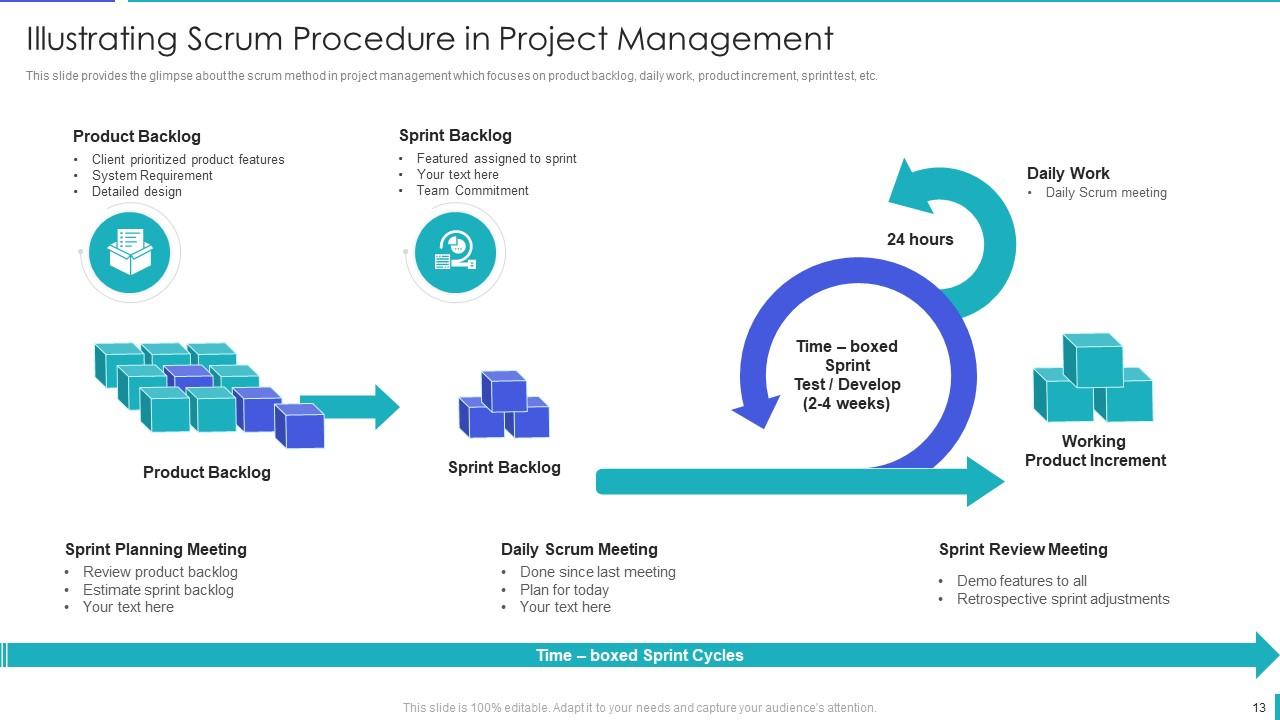
Slide 13: This slide provides the glimpse about the scrum method in project management which focuses on product backlog, daily work, etc.
Slide 14: This is the icons slide.
Slide 15: This slide presents title for additional slides.
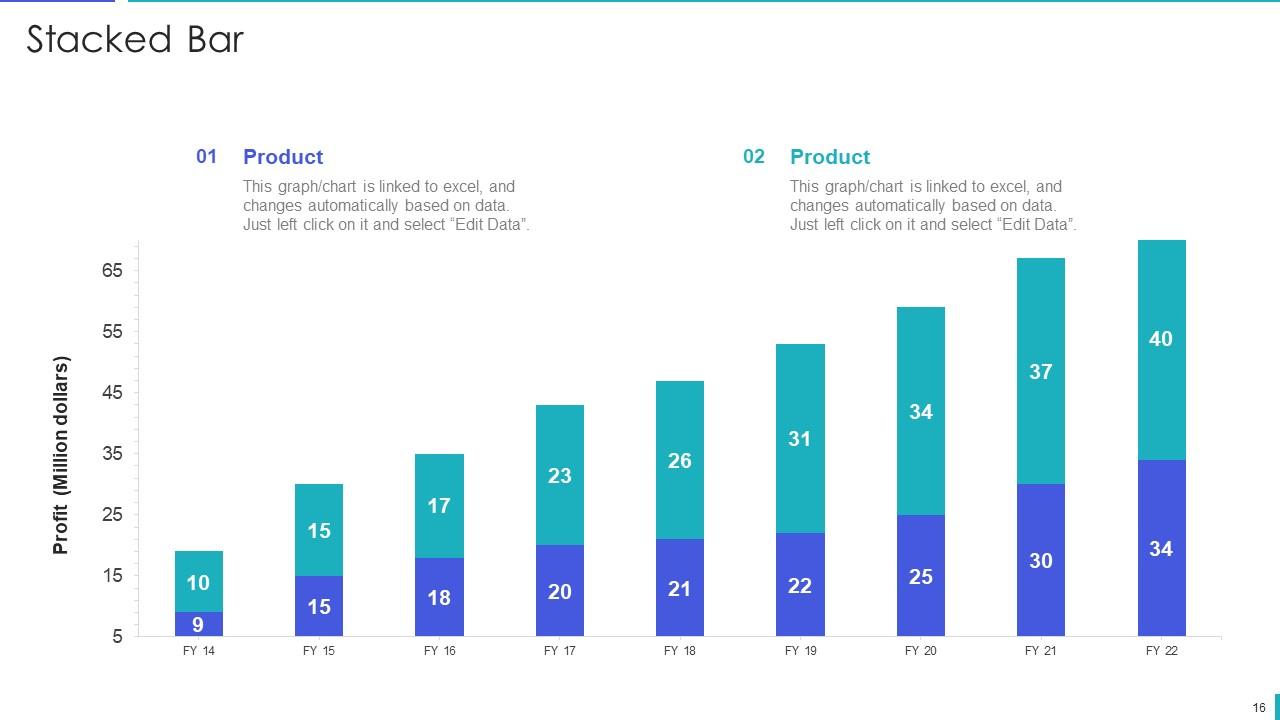
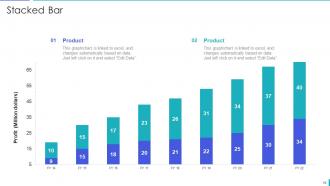
Slide 16: This slide exhibits yearly profits stacked bar charts for different products. The charts are linked to Excel.
Slide 17: This slide exhibits ideas generated.
Slide 18: This slide presents your company's vision, mission and goals.
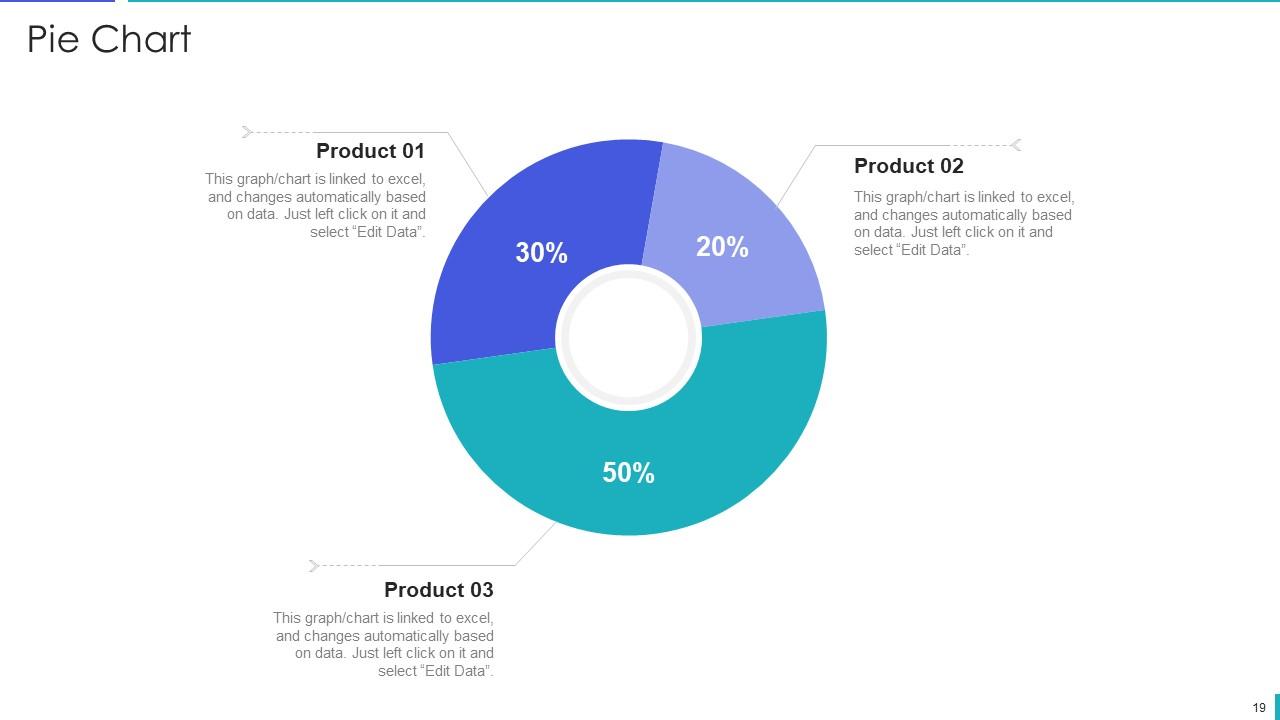
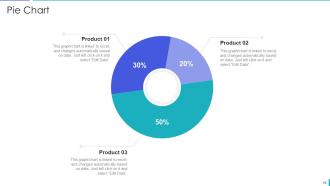
Slide 19: This slide exhibits pie charts for different products. The charts are linked to Excel.
Slide 20: This slide displays puzzle.
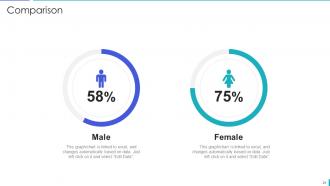
Slide 21: This slide highlights comparison of products based on selects.
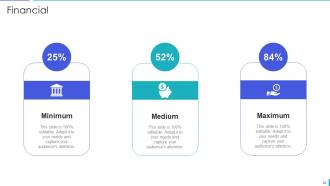
Slide 22: This slide showcases financials.
Slide 23: This slide depicts posts for past experiences of clients.
Slide 24: This slide depicts 30-60-90 days plan for projects.
Slide 25: This slide exhibits yearly timeline.
Slide 26: This is thank you slide & contains contact details of company like office address, phone no., etc.
Scrum methodology and project management powerpoint presentation slides with all 26 slides:
Use our Scrum Methodology And Project Management Powerpoint Presentation Slides to effectively help you save your valuable time. They are readymade to fit into any presentation structure.
FAQs for Scrum methodology and project management
So Scrum boils down to a few key things - transparency, inspection, and adaptation happening constantly. Teams work in short 2-4 week sprints instead of huge waterfall projects. You prioritize by value, collaborate like crazy, and let teams self-organize (which honestly works way better than micromanaging). Time-boxing keeps everything focused. The whole point is responding to change rather than sticking to some rigid plan that'll be outdated in a month anyway. Oh, and you deliver working pieces incrementally - don't wait for perfection. Get these basics down first before worrying about all the ceremonies and role definitions.
So Scrum basically breaks down into three roles. The Product Owner handles what gets built - they're juggling the backlog and figuring out which features matter most for the business. Your Scrum Master is more about the process side, running meetings and clearing roadblocks (honestly, they're like the team mom sometimes). Development Team actually codes everything. What's cool is none of these people are really "bosses" in the old-school sense. It's way more collaborative than you'd expect. Pay attention next sprint planning - you'll see how differently each person approaches the same conversation.
So there are three main artifacts you gotta know. Product Backlog is your master wishlist - all features ranked by what matters most. Then there's Sprint Backlog, which is just the stuff your team actually picks for that specific sprint. Way more focused. The Increment is whatever working product you ship at the end. Honestly, think of them as your roadmap system - they keep everyone on the same page about what you're building and why. Pro tip though: nail your Product Backlog prioritization first. That's where I've seen most teams completely face-plant, and it screws up everything downstream.
So basically you work in these 2-4 week chunks called sprints - way more manageable than trying to plan everything months ahead. Build something small but actually working each time. Those daily check-ins keep everyone on the same page, and honestly? Getting feedback every few weeks beats finding out you built the wrong thing way later. My old team learned this the hard way lol. Requirements always change anyway, so Scrum just rolls with it. You'll end each sprint with something you could actually ship. Start with shorter sprints though - gives your team time to figure out what works.
So basically you're like the team's bodyguard against all the BS that slows them down. Run the daily standups, retros, that whole ceremony thing. But here's the thing - you're not their boss, you're more like their coach. Remove blockers, keep distractions away, work with the Product Owner on backlog stuff. I always tell people it's about serving the team, not managing them. Focus on clearing whatever's stopping them from actually getting work done each sprint. Oh and protect them from random interruptions - trust me, there'll be plenty.
You don't mess with the sprint scope once it kicks off - that's basically Scrum 101. The team's already committed to what they're doing. New urgent stuff? Just throw it in the product backlog for next time instead of derailing everyone. I mean, the Product Owner *could* try swapping items with stakeholders if it's truly critical, but honestly that should almost never happen. Your sprint goal needs to stay put so the team can actually focus. Save all the scope drama for sprint planning when you can hash everything out properly.
Most teams go with Jira, Azure DevOps, or Trello. Jira's honestly kind of a beast - super powerful but maybe too much if you're just getting started. Trello's dead simple, perfect for smaller teams who don't want complexity. Azure DevOps works great if you're already using Microsoft stuff anyway. Linear and Monday.com are worth checking out too. Here's the thing though - whatever you pick, make sure your team will actually stick with it. I've seen so many good tools just collect digital dust because they felt like a chore. You need something that handles backlogs and sprint planning without becoming another headache.
Honestly, mix hard numbers with team vibes. Velocity trends and sprint completion rates give you the data side. Burndown charts are clutch - they'll show if you're actually hitting what you promised. But here's the thing: retrospectives matter way more than people think. Are your developers less stressed? That's huge. Customer satisfaction scores help too, plus how fast you're shipping stuff. Oh, and don't go overboard tracking everything - pick like 2-3 metrics that actually matter for your situation and stick with those. Way easier than drowning in spreadsheets.
Honestly, most teams hit the same three roadblocks when they start Scrum. Your team will probably keep wanting those detailed plans upfront - old habits are tough to break. The ceremonies feel super awkward initially too. Those first standups? Ugh, so cringe. But you'll get the hang of it after a few sprints. Stakeholders are the third pain point - they'll constantly try sneaking in "quick additions" mid-sprint because they don't get it yet. Oh, and don't tweak the process right away. Give it 3-4 sprints minimum before changing anything major.
Honestly, Scrum just makes your team actually talk to each other. Daily standups get everyone sharing what they're stuck on, and sprint planning forces you to figure out priorities together. The transparency is pretty cool too - everyone sees the same backlog and board. Since there's no real hierarchy and you're all chasing the same sprint goal, people stop hiding in their corners. Retrospectives are where the real magic happens though, that's where teams actually admit what's broken. Next time you're blocked on something, just say it out loud in standup. I swear people will help way more than you'd expect.
Here's the deal - Scrum has five main events you need to know. Sprint Planning kicks things off (your team picks what to tackle next). Daily Standups are those quick 15-minute check-ins everyone does. Sprint Review is demo time - honestly the best part if you ask me. Then there's Sprint Retrospective where you hash out what worked and what sucked. The actual Sprint is just your 1-4 week work chunk. Each one keeps your team on track, but don't try to perfect them all at once. Start with Daily Standups since they happen constantly. Once you get the rhythm down, it becomes second nature.
So velocity is just your team's average story points from recent sprints - like if you've been hitting 25 points consistently, don't suddenly plan for 40. Trust me, I've watched teams crash and burn doing exactly that! During sprint planning, use those numbers to figure out how much backlog stuff to grab. Obviously things change though - maybe someone's on vacation or you're tackling something super complex. But honestly? Your past performance beats wishful thinking every time. Way better than just guessing what sounds doable.
So there are a few frameworks that help with this - SAFe, LeSS, and Nexus are the main ones. They basically let multiple Scrum teams work together on bigger stuff while keeping the core practices. SAFe's probably the most common, though honestly some Scrum purists really can't stand it. The trick is keeping teams independent but aligned on what matters. You'll end up with extra roles like Release Train Engineers and more meetings for syncing across teams. But seriously, don't go crazy trying to change everything at once. Pick one product area first, get that working smoothly, then roll it out to other teams.
So retros happen after each sprint - that's where your team sits down and figures out what worked and what sucked. Pick one or two things to actually fix next time, don't go crazy with a huge list. Daily standups help too since people can flag problems early. Half the retros I've been in just turn into complaint sessions honestly, but when they're done right you'll see real improvements. The trick is following through on whatever you decide to change. Communication issues, tweaking your definition of done - whatever it is, just commit to trying it.
So stakeholders are basically everyone who cares about your product - customers, business folks, end users, you know the drill. They're not on your actual Scrum team, but they show up to Sprint Reviews to see what you've built and tell you if you're going in the right direction. Super important feedback, honestly. Your Product Owner handles most of the day-to-day communication with them. Don't invite them to standups or Sprint Planning though - that's just for the team. But seriously, make sure they actually come to those Sprint Reviews. Their input is what keeps you from building something nobody wants.
-
Unique design & color.
-
Qualitative and comprehensive slides.
-
Excellent work done on template design and graphics.