


Project Deliverables Powerpoint Presentation Slides





Try Before you Buy Download Free Sample Product
 Impress Your
 Audience
 100%
100% Editable
 Save Hours
 of Time


Slide Team presents you Project Deliverables PowerPoint Presentation Slides for managing and monitoring PM deliverables. This project output PowerPoint complete deck contains set of professional slides such as team structure, project timeline, project budget, work breakdown structure, activities, sequence, communication plan, task matrix, project work plan, project cost estimate, project management dashboard, etc. This exclusive deck with all sorts of editable charts, icons, and graphs will help you to strategize and plan project tasks. Project results PPT templates are designed by our team of experts after complete research and analysis of the subject. Utilize project gain PPT visuals for setting and managing expectation who is doing what from project initiation to closure. Planning is key to project success. You can deliver your project on expectations using project plan PowerPoint templates. Download project management presentation design for estimating work and monitoring progress.
People who downloaded this PowerPoint presentation also viewed the following :
Content of this Powerpoint Presentation
Slide 1: This slide introduces Project Deliverables. State Your Company Name and begin.
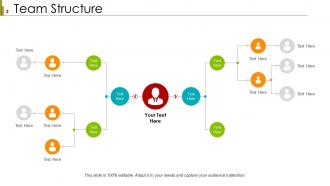
Slide 2: This slide describes Team Structure with related diagram.
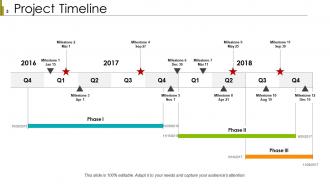
Slide 3: This slide shows Project Timeline. You can modify the data as per needs.
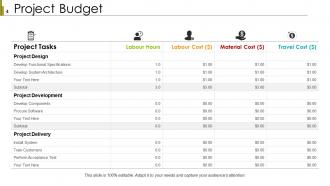
Slide 4: This slide presents Project Budget including project design, project development and project delivery.
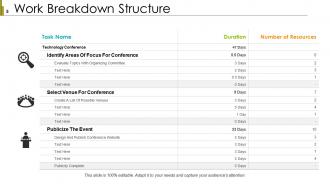
Slide 5: This slide displays Work Breakdown Structure with categories as- Identify areas of focus for conference, select venue for conference and publicize the event.
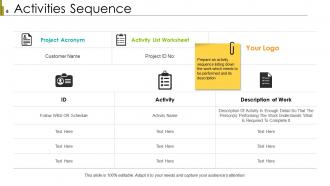
Slide 6: This slide represents Activities Sequence listing down the work which needs to be performed and its description.
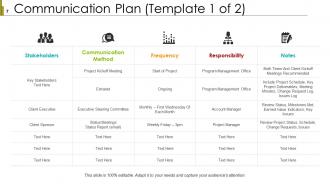
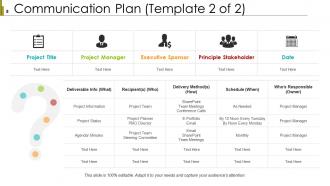
Slide 7: This slide showcases Communication Plan with categories as Stakeholders, communication method, frequency, responsibility and notes.
Slide 8: This is another slide showcasing Communication Plan.
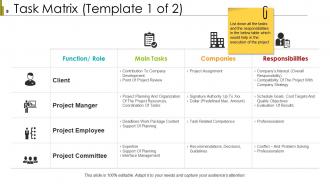
Slide 9: This slide shows Task Matrix listing down all the tasks and the responsibilities in the below table which would help in the execution of the project.
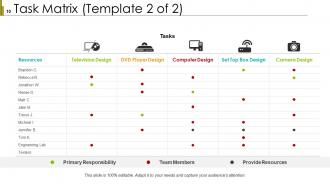
Slide 10: This is another slide presenting Task Matrix.
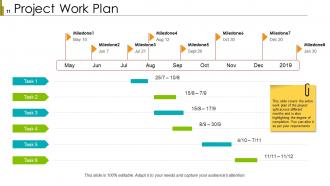
Slide 11: This slide displays Project Work Plan on monthly basis.
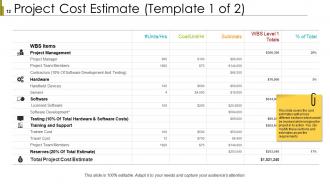
Slide 12: This slide represents Project Cost Estimate describing project management, hardware, software, testing, training & support, reserves.
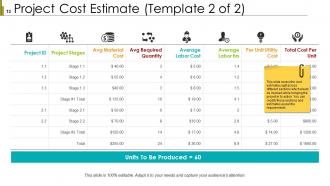
Slide 13: This is another slide for Project Cost Estimate.
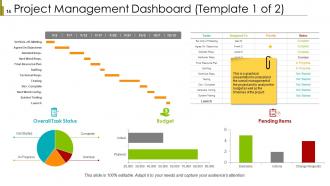
Slide 14: This slide showcases Project Management Dashboard describing data in graphical form.
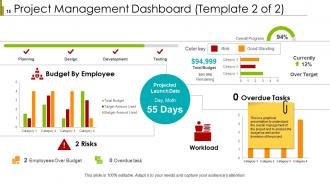
Slide 15: This slide shows Project Management Dashboard to understand the overall management of the project and to analyse the budget as well as the timelines of the project.
Slide 16: This slide displays Project Deliverables Icons.
Slide 17: This slide reminds a Coffee Break.
Slide 18: This slide is titled as Additional Slides for moving forward.
Slide 19: This is Our Mission slide with related imagery and text.
Slide 20: This is Our Team slide with names and designation.
Slide 21: This is About Us slide to show company specifications etc.
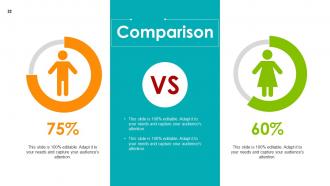
Slide 22: This is a comparison slide to state comparison between commodities, entities etc.
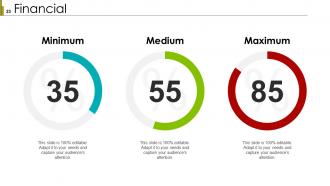
Slide 23: This is a Financial slide. Show your finance related stuff here.
Slide 24: This slide shows Mind Map for representing entities.
Slide 25: This is Our Goal slide. State your goals here.
Slide 26: This is a Creative Idea slide to state a new idea or highlight information, specifications etc.
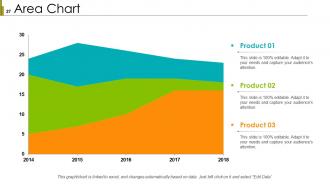
Slide 27: This slide shows Area Chart with three products comparison.
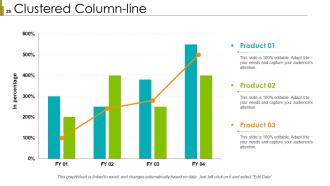
Slide 28: This slide displays Clustered Column-line chart with three products comparison.
Slide 29: This is a Thank You slide with address, contact numbers and email address.
Project Deliverables Powerpoint Presentation Slides with all 29 slides:
Use our Project Deliverables Powerpoint Presentation Slides to effectively help you save your valuable time. They are readymade to fit into any presentation structure.





FAQs for Project Deliverables
You need scope, acceptance criteria, timeline, and quality standards locked down first. What exactly are you building? When is it actually "done"? Realistic deadlines matter more than aggressive ones, trust me. Also figure out who's doing what upfront - seriously, this always becomes a mess later if you skip it. Quality standards are massive because your "good enough" probably isn't the same as your stakeholder's. Dependencies and assumptions can wreck everything too, so don't ignore those. Document this stuff early for each deliverable and you'll thank yourself later.
First thing - figure out what's blocking what. Map those dependencies because they're your real priorities. After that, I do this super basic 2x2 grid thing (urgency vs effort) that honestly works way better than it should. Also check if your team can actually handle what you're prioritizing - learned that one the hard way. Business value and stakeholder impact matter too, obviously. The tricky part? You'll need to revisit this weekly since projects change constantly. What felt urgent last month might be totally irrelevant now.
So stakeholders are basically the people who decide if your project actually worked or not - they set the requirements and tell you what success looks like. You'll need them to define acceptance criteria and prioritize features. Without their input, you're just building stuff and hoping it's right (learned that the hard way). Get them involved early in planning sessions. They're the ones who know what "done" means for the business. Make sure you get sign-off on deliverable definitions before jumping into execution. Trust me, it saves so much headache later.
Dude, scope creep will absolutely murder your timeline if you're not careful. I learned this the hard way on my last project - stakeholders kept adding "small tweaks" that weren't so small. Get super specific about what you're delivering upfront. Your team won't waste time in those awful clarification meetings, and you'll spot problems early when they're cheap to fix. Once you're halfway done? Changes cost like 3x more. Trust me, spending an extra hour defining everything clearly will save you literal weeks of chaos later. Worth it every time.
Don't wait until the end to check if things are working - that's just asking for a disaster. Build review points right into your schedule from the start. Get stakeholders involved early and often, write down what "done" actually means before you begin, and seriously, have someone else look at your work. I miss the dumbest stuff when I've been staring at something too long. Checklists help keep everything consistent. Document your standards so there's no confusion later about expectations. Making quality part of the whole process instead of a final step will save you so much stress.
Honestly, it depends totally on what field you're in. Tech companies usually deliver software updates, code repos, documentation - digital stuff that's easy to tweak later. Construction? Completely different ballgame. You're dealing with blueprints, permits, actual buildings, safety checks. Way harder to fix if you mess up! Manufacturing focuses more on prototypes and production guidelines. Consulting firms pump out reports and strategy recommendations. The real trick is figuring out what your stakeholders actually want to see as proof you're making progress. Each industry has its own weird expectations.
Ugh, the worst thing teams do is being super vague. Like they'll write "deliver marketing materials" when they should say "three social media graphics, one email template, and a landing page mockup." Also definitely call out what's NOT included - saves you from scope creep later. Oh, and don't set crazy tight deadlines without thinking about revision rounds. Honestly though, just pretend you're explaining it to someone who knows nothing about your project. If they can't picture exactly what you're making, you need to be way more specific.
Dude, try Asana or Trello - they're lifesavers for tracking deliverables. Set up deadlines, assign people to stuff, and boom - automatic reminders when things are due. Way better than digging through endless email chains (seriously, who has time for that?). Connect them to Google Drive or whatever you use. Your stakeholders can actually see what's happening instead of bugging you every five minutes. Monday's pretty solid too, though I think their interface is kinda busy. Start with just one tool first. Don't overwhelm your team with too many bells and whistles right away.
Oh man, you NEED measurable criteria - trust me on this one. They're literally your safety net for knowing when something's actually finished. Otherwise you'll get stuck in this nightmare loop where everyone has different opinions about what "good enough" means. Been there, done that, bought the t-shirt. Plus they help you track progress and shut down scope creep before it kills your timeline. The key is getting everyone to agree on them upfront - like, before you even touch the actual work. Your future self will thank you.
Honestly, good communication just cuts through all the BS about what you're supposed to deliver. Define your scope and expectations right from the start so everyone knows what "finished" actually means. Check in regularly too - I've wasted way too much time building stuff nobody wanted because we didn't sync up early enough. Be super specific about deadlines, quality standards, and who owns what piece. Your stakeholders need to picture exactly what they'll get and when. Document everything in writing, even the obvious stuff (trust me on this one). Makes your deliverables so much clearer.
Honestly, I'd start with sit-down meetings where you can walk through stuff together - way better for catching issues early. Email works too, especially if you need everything documented or people are scattered across time zones. For bigger groups, surveys are decent but don't expect everyone to actually fill them out (people are lazy). Quick Slack chats or calls work surprisingly well for smaller updates. Oh, and match whatever method your stakeholders actually prefer - some people hate meetings, others won't touch a survey. Really depends on how complex your deliverable is too.
Check your deliverables every 2-4 weeks, basically at each sprint or major milestone. Sounds excessive but it's not - catching scope creep early saves you so much headache later. Do quick pulse checks too when requirements shift or new risks pop up. Oh, and don't make these marathon 3-hour meetings that kill everyone's soul. Keep them light with a standard template. Consistency matters here so your team isn't constantly guessing what's coming next. Regular reviews also keep stakeholders happy since their expectations stay aligned with reality.
Okay so first thing - nail down exactly what you're delivering and when. I always start with purpose and scope because honestly, stakeholders will forget what they asked for halfway through. Make sure you've got clear deadlines, who owns what, and acceptance criteria spelled out. Get everyone to actually sign off before you dive in (this part is crucial). I can't tell you how many times I've been burned by the whole "oh wait, I thought Sarah was doing that" situation. Keep your templates the same across everything so people aren't hunting around for basic info. It'll save you from scope creep hell later.
Oh man, yeah cultural stuff can really screw up project requirements! Like, Germans want every tiny detail spelled out while other cultures are cool with broad strokes and figuring it out as they go. Also timing is weird - "ASAP" in one country might mean "eh, next week" somewhere else. Direct feedback works great in some places but totally bombs in others (learned that the hard way). My advice? Ask way more clarifying questions upfront than feels normal. Schedule extra check-ins too because people will nod along even when they're confused. Better to over-communicate and look slightly annoying than deal with that mess later.
Honestly, I'd focus on just 3-4 key things instead of drowning in data. Quality stuff matters most - like how many bugs you're getting and whether customers are actually happy. Timeline's obvious but super telling. Budget variance shows if you planned well or not. The big one though? Whether people actually USE what you built. I've seen so many "successful" projects that just collect digital dust. Scope creep's worth tracking too since it usually means someone didn't think things through upfront. Just pick metrics that match what you're trying to accomplish and set those targets early so everyone knows what winning looks like.
-
Amazing product with appealing content and design.
-
Very unique and reliable designs.