


Juice Shop Business Plan Powerpoint Presentation Slides





Try Before you Buy Download Free Sample Product
 Impress Your
 Audience
 100%
100% Editable
 Save Hours
 of Time


Explore our meticulously crafted Juice Shop Business Plan PPT, offering a comprehensive dive into the thriving Cold Pressed Juice and healthy beverage industry. This cold pressed juice deck is a vital resource for entrepreneurs and investors, covering key elements such as market research, industry trends, growth and revenue drivers, target market analysis, and competitive landscape assessment. Moreover, our Nutritional Drinks Business PowerPoint goes beyond the basics, incorporating Porters framework to elucidate its impact on the juice industry, market gaps, opportunities, and market sizing. Further, the Startup Plan template also provides a detailed insight into the financial landscape, featuring a financial summary section that outlines key aspects of the juice bar business plan. Lastly, the Investment plan presentation includes a comprehensive breakdown of the revenue model, profit and loss statement, cash flow statement, break even analysis, DCF valuation, balance sheet, and more. Download this 100 percentage editable presentation to access our thoroughly researched and expertly designed product.
People who downloaded this PowerPoint presentation also viewed the following :
Content of this Powerpoint Presentation
Slide 1: The slide introduces Juice Shop Business Plan.
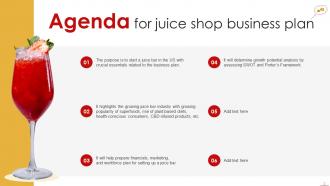
Slide 2: This is an Agenda slide. State your agendas here.
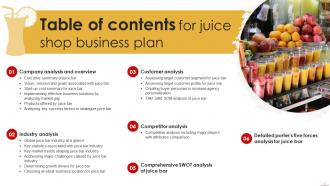
Slide 3: The slide displays Table of contents for presentation.
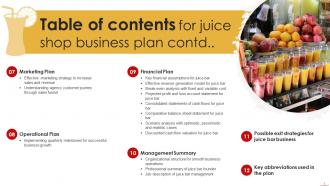
Slide 4: The slide continues Table of contents.
Slide 5: The slide again depicts Table of contents.
Slide 6: This slide provides a glimpse of key highlights of the juice bar business.
Slide 7: This slide covers the juice bar business vision, mission, and goals.
Slide 8: This slide provides information about start-up expenditures.
Slide 9: This slide covers the problem associated with the juice bar and how the company will implement an effective solution.
Slide 10: The purpose of this slide is to provide a glimpse of the products offered by the juice bar.
Slide 11: This slide covers the essential points to be considered while developing business strategy for juice bar.
Slide 12: The slide highlights Table of contents which is to be discussed further.
Slide 13: The purpose of this slide is to highlight the market size of the global juice bar industry.
Slide 14: The purpose of this slide is to highlight the market size of the US juice bar industry.
Slide 15: This slide highlights the thorough assessment of a market data within the juice bar industry.
Slide 16: This slide highlights the key market trends that have the potential to change the current market scenario.
Slide 17: This slide portrays details about various challenges catered by the juice bar industry.
Slide 18: This slide caters to details about various growth drivers resulting in juice bar industry progress.
Slide 19: This slide portrays an ideal business location for a juice bar that minimizes the risk of failure.
Slide 20: The slide exhibits Table of contents further.
Slide 21: This slide covers an assessment of how the company's products will be targeted to a particular market.
Slide 22: This slide covers an assessment of how the company's products will fit into a particular market.
Slide 23: This slide provides a glimpse of how to better understand the target audience.
Slide 24: The purpose of this slide is to depict the market potential of juice bar in terms of TAM, SAM, and SOM.
Slide 25: The slide displays another Table of contents.
Slide 26: The purpose of this slide is to provide a glimpse of major participants and key competitors of the industry.
Slide 27: The slide again conatins Table of contents.
Slide 28: The purpose of this slide is to identify the industry’s strengths, weaknesses, opportunities, and threats related to the juice bar.
Slide 29: The slide continues Table of contents.
Slide 30: The slide highlights porter’s five forces model and its implications in the US juice bar.
Slide 31: The slide again displays Table of contents.
Slide 32: The purpose of this slide is to implement an effective go-to-market strategy.
Slide 33: The slide continues to implement an effective go-to-market strategy.
Slide 34: This slide provides information regarding the juice bar customer journey mapping to track users' actions.
Slide 35: The table highlights another Table of contents.
Slide 36: The slide covers particular objectives or goals that the organization intends to attain as part of its business plan.
Slide 37: The slide renders Table of contents further.
Slide 38: This slide provides a glimpse of important financial assumptions that are to be made while setting juice bar.
Slide 39: The slide shows the effective revenue model of the juice bar.
Slide 40: The slide continues the effective revenue model of the juice bar.
Slide 41: The slide again shows the effective revenue model of the juice bar.
Slide 42: The slide shows the effective revenue model of the juice bar further.
Slide 43: The slide shows another effective revenue model of the juice bar.
Slide 44: The slide continues the effective revenue model of the juice bar.
Slide 45: The slide again shows the effective revenue model of the juice bar.
Slide 46: The slide shows another effective revenue model of the juice bar.
Slide 47: The slide shows the effective revenue model of the juice bar further.
Slide 48: The slides highlight the break-even analysis of the firm.
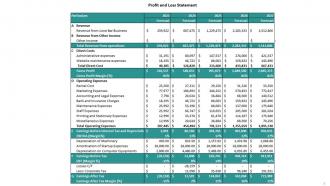
Slide 49: The slides provide a glimpse of the projected profit and loss statement to visualize the juice bar financial performance.
Slide 50: The slides continues a glimpse of the projected profit and loss statement to visualize the juice bar financial performance.
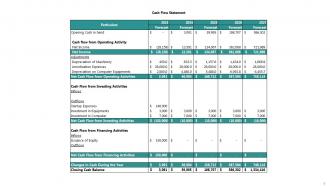
Slide 51: The slides highlight the company's cash flow statement to provide a detailed picture.
Slide 52: The slides highlight the company's cash flow statement to provide a detailed picture further.
Slide 53: The slides cover the snapshot of the company's financial position at a specific time.
Slide 54: The slides continues the snapshot of the company's financial position at a specific time.
Slide 55: The purpose of this slide is to examine the effects of potential future events on the company’s performance.
Slide 56: The purpose of this slide is to examine the effects of potential future events on the company’s performance.
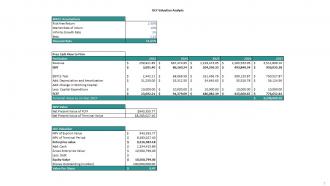
Slide 57: The purpose of this slide is to calculate the amount of money an investor would get from an investment.
Slide 58: The slide exhibits Table of contents.
Slide 59: The slide highlights the organizational hierarchy in the company.
Slide 60: This slide shows the founder’s biggest professional achievements and most valuable skills.
Slide 61: This slide renders the job roles and responsibilities of juice bar key management.
Slide 62: This slide continues the job roles and responsibilities of juice bar key management.
Slide 63: This slide again shows the job roles and responsibilities of juice bar key management.
Slide 64: This slide highlights the job roles and responsibilities of juice bar key management further.
Slide 65: The slide displays another Table of contents.
Slide 66: This slide represents exit strategies.
Slide 67: The slide again highlights Table of contents.
Slide 68: The purpose of this slide is to highlight the shorter version of existing words to save time and take up less space.
Slide 69: This slide shows all the icons included in the presentation.
Slide 70: This slide is titled as Additional Slides for moving forward.
Slide 71: This slide contains Puzzle with related icons and text.
Slide 72: This is Our Mission slide with related imagery and text.
Slide 73: This slide shows Post It Notes. Post your important notes here.
Slide 74: This slide depicts Venn diagram with text boxes.
Slide 75: This is Our Target slide. State your targets here.
Slide 76: This slide presents Roadmap with additional textboxes.
Slide 77: This is a Thank You slide with address, contact numbers and email address.
Juice Shop Business Plan Powerpoint Presentation Slides with all 85 slides:
Use our Juice Shop Business Plan Powerpoint Presentation Slides to effectively help you save your valuable time. They are readymade to fit into any presentation structure.















































































FAQs for Juice Shop Business Plan
Dude, first thing - figure out who's actually gonna buy your juice and scope out what other places are doing. Location is everything, seriously, I've seen great concepts fail because of bad foot traffic. Map out your menu but keep it simple at first - better to crush a few drinks than mess up twenty. You'll need solid numbers on startup costs and monthly burn rate, plus figure out where you're sourcing ingredients. Oh and all the boring stuff like permits and equipment - that health department paperwork is no joke. Honestly? Start small and nail the basics before you go crazy with exotic superfruit blends or whatever.
Dude, seriously - talk to people before you do anything else. Find out what they actually want to drink and how much they'll spend. Like, don't be that person opening a fancy $15 juice spot in a neighborhood where everyone shops at Dollar General, you know? Check out your competition too. See what's crushing it and what totally sucks. This stuff shapes everything - your menu, prices, where you set up shop. Honestly, I'd hit up potential customers with surveys first. Maybe grab a smoothie at competing places and just observe. Then write your business plan around what you learned.
Go after health-conscious millennials and Gen Z first - they'll actually pay those premium prices for organic stuff. Busy professionals are clutch too, especially the ones grabbing breakfast or post-workout drinks. Oh, and parents wanting healthier options for their kids, though they're way more picky about what's in everything. Fitness people are honestly your best bet for loyalty since juice becomes part of their whole identity, not just a random purchase. Set up near gyms and offices where these groups actually spend time. Your social media should target the same spots - trendy neighborhoods work great too.
Honestly? Visit your top 5 competitors first and see what they're actually missing. Most juice places are pretty generic these days. Find your one thing - maybe it's adaptogens or cold-pressed vs fresh, targeting busy parents, whatever. Could be sourcing from local farms or killer customer service. I'd probably look into subscription boxes too since that seems to work well. The fitness crowd is always looking for post-workout blends if you're into that angle. Just pick something you can genuinely do better than everyone else and own it completely.
Look, you definitely need the basics - revenue projections, startup costs, and monthly expenses. Break down your daily sales by product, factor in seasonal stuff (summer's gonna be way busier), and track customer growth. Equipment, rent, utilities, ingredients, labor costs - all that fun stuff. Cash flow is huge since you're making money daily but paying bills monthly. Throw in a break-even analysis so you know when you'll actually turn a profit. Oh, and seriously pad those expense estimates because everything costs more than you think it will. Two years minimum for projections.
Your suppliers will literally make or break your juice shop. Fresh produce is everything since juice goes bad so fast - I've watched places crash just because their main apple supplier bailed during busy season. Get tight with reliable fruit and veggie vendors who actually show up when they say they will. Better relationships usually mean better prices too, plus they'll hook you up first when stuff gets scarce. Oh, and flexibility when you need to switch up orders last minute. Start networking now and always keep backup suppliers for your must-have ingredients. Trust me on this one.
Look for spots with tons of foot traffic - shopping centers, near gyms, office buildings, college areas. Your rent's gonna hurt but don't cheap out and end up somewhere nobody can find you. Make sure people can actually see your shop and park without wanting to scream. Check zoning stuff first (boring but necessary) and scope out the competition. Three juice places on one block? Recipe for disaster. Oh and definitely visit potential spots at different times - morning rush vs afternoon lull tells you everything. Traffic patterns don't lie.
Instagram and TikTok are money for showing off those colorful smoothies and behind-the-scenes prep stuff. People eat that visual content up. For building a local following though, Facebook's still really solid - post your daily specials there. Honestly, don't stress about making everything look perfect. Authentic beats polished every time. Pick one platform to start, post maybe 3-4 times a week, and actually talk back to people who comment. When customers tag you, definitely reshare their posts - makes them feel like VIPs. Oh, and if someone tags your shop, that's basically free advertising right there.
Start with cold-pressed greens and veggie blends - that's your main crowd right there. Smoothie bowls are huge, especially with acai and superfoods. The fitness people will demolish your protein smoothies after workouts. Cleanse packages make serious money. Those little shots? Ginger, turmeric, wheatgrass - insane margins on those tiny bottles. Oh, and celery juice is weirdly popular right now (tastes like lawn clippings but whatever). Don't go crazy at first though. Pick 8-10 solid options, see what actually moves, then add more. You'll figure out your area's vibe pretty quick once you're open.
Honestly, start with the easy stuff - local organic produce when you can swing it. Tastes way better and you're not shipping apples from halfway across the world. Those compostable cups and paper straws make a huge difference too. Here's the thing though - all that leftover pulp is actually gold. Either compost it yourself or find a local farm that'll take it (they usually love free organic matter). Oh, and throw in a small discount for people who bring their own cups. Don't try to do everything at once or you'll go broke. Pick one or two changes first.
Okay so first figure out if you're going for premium cold-pressed or like the everyday spot people hit up regularly. That changes everything! Go with bright, natural colors - greens and oranges work great. Your logo should feel clean and modern, maybe a simple fruit icon or nice typography. Focus your messaging on stuff people actually want: energy, clean ingredients, local sourcing. Instagram aesthetic is honestly huge for juice places (I'm totally guilty of choosing spots based on how they look lol). Keep everything consistent - your storefront, packaging, social media, all of it. Pick 2-3 main things you want to be known for and just stick with them everywhere.
You're gonna need a business license and food service permit for sure. Health department approval too - they'll inspect everything since fresh produce can be sketchy if not handled right. Food handler certs are required in most states, both for you and any staff. Oh, and if you're buying ingredients wholesale you'll probably need a reseller's permit. Workers' comp insurance if you hire people. Honestly I'd just call your local health department first because every county seems to have their own weird rules. Then you can figure out the rest from there.
Honestly, just put feedback boxes everywhere - comment cards, online reviews, social media polls. Even chat with people during rush hours. I'm totally guilty of filling those little forms out myself lol. Look for patterns in what they're saying about flavors, prices, timing. Then actually DO something with it - that's where most places mess up. Check the feedback weekly and try to implement at least one suggestion each month. Maybe adjust your hours, tweak the menu, or rearrange stuff. Your customers basically become your free product development team if you actually listen to them consistently.
Honestly, tech can totally save your butt with a juice bar. Start with a decent POS system - it'll show you what sells and when, so you're not guessing about inventory. Mobile ordering is clutch too because people hate waiting in line for a smoothie. I'd probably prioritize those two first since they'll make the biggest difference day-to-day. Automated juicing equipment helps during busy periods, and inventory software keeps you from buying too much spinach that just wilts. Oh, and social media schedulers are lifesavers - you won't be constantly posting stories while trying to serve customers. Those basics will change how you run everything.
Gyms and yoga studios are perfect - their members already care about health stuff. Corporate offices work surprisingly well too since people want fresh juice delivered to work. I'd hit up health food stores and organic markets obviously. The farm partnership thing is huge right now - customers eat up that whole farm-to-glass story. Nutritionists and chiropractors can refer clients to you, which is basically free marketing. Honestly, just make a list of places where health-conscious people hang out in your area and start reaching out. Keep the partnership pitch simple though - nobody wants to read a novel.
-
Visually stunning presentation, love the content.
-
I can say with full confidence that all your business, academic, or professional work requirements will be sufficed with SlideTeam. Their gallery is as rich as 2Million+!!