


Kaizen Activity 5S Number Game Training Ppt




Try Before you Buy Download Free Sample Product
 Impress Your
 Audience
 100%
100% Editable
 Save Hours
 of Time


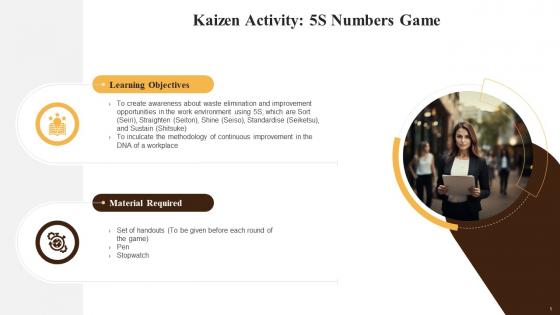
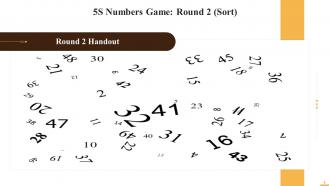
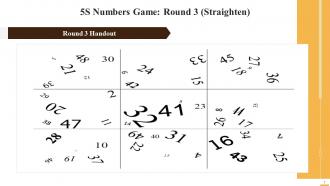
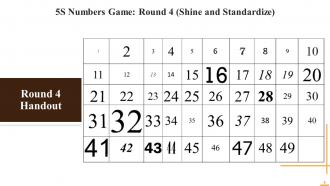
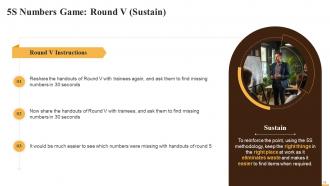
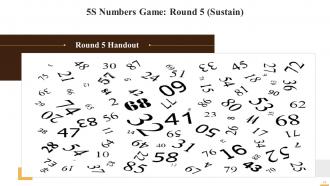
These slides provide information regarding the instructions and learning outcomes of 5S Number Game, an activity for the Kaizen Training Session.
People who downloaded this PowerPoint presentation also viewed the following :
Kaizen Activity 5S Number Game Training Ppt with all 30 slides:
Use our Kaizen Activity 5S Number Game Training Ppt to effectively help you save your valuable time. They are readymade to fit into any presentation structure.
















FAQs for Kaizen Activity 5S Number
So 5S is basically Sort, Set in Order, Shine, Standardize, and Sustain. Think Marie Kondo meets your workspace. First you toss what you don't need, then organize what's left. Keep it clean, make some basic rules, and actually stick to them long-term. Honestly, the last part's where most people fail. Try starting with just your desk - I swear your brain works better when your space isn't chaotic. Each step builds on the last one, cuts down waste, and makes everything run smoother. Pretty simple concept but it actually works.
Basically 5S makes everything have its own spot, so you're not wasting time looking for stuff. Trust me, watching people hunt around for tools makes my eye twitch. Once you sort out what you actually need and ditch the junk, problems become super obvious - like when you're running low on supplies or something's broken. Your team moves quicker because everyone knows the process. Issues pop out faster too since everything's clean and organized. Just pick one area to start with. Do the sorting and organizing first - you'll notice the difference in like a week, no joke.
So basically 5S gets people hooked on making tiny improvements every day. You're sorting and organizing your workspace, right? But then you naturally start spotting better ways to do stuff. The visual part is clutch - problems jump out at you instead of getting buried under mess. Everyone's doing the same process, so ideas start bouncing around and building on each other. Honestly, I'd just pick one S to start with your team. Don't try to do everything at once or you'll burn people out. Once they get into it, they'll start throwing out suggestions left and right.
Honestly, the biggest pain points are gonna be people pushing back and management losing steam after a few months. Workers see it as just more crap piled on their already full plates. Get ahead of this by explaining why you're doing it - not just the what. Pilot it in one small area first so everyone can actually witness the results. Quick wins are everything here. Your leaders have to show up for audits themselves, because if they're clearly not invested, why should anyone else be? Oh, and don't treat it like some special project - weave it into what people already do daily.
Honestly, digital tools can make 5S way easier for remote teams. SharePoint or Google Drive work great for the sorting/organizing part - just nail down your naming rules and folder structure. Dashboards help track everything, and those cloud checklist apps keep people honest about maintenance stuff. My old team used Slack bots for daily 5S reminders which felt dorky at first but totally worked. The trick is not overcomplicating things - stick with tools you're already using. Set up some automated file cleanup alerts and do regular digital audits. Way better than trying to wing it without any system.
Honestly, if your leaders aren't on board, you might as well pack it up now. They can't just send out some memo and expect magic to happen. Leaders need to actually show up - do the audits themselves, organize their own desks first, walk around and help teams figure things out. I've seen this crash and burn so many times when executives preach 5S but their offices look like disaster zones. People notice that stuff immediately. You'll also need them to free up time for training and give teams the resources they actually need. Bottom line: if leadership won't walk the walk, nobody else will either.
Just map 5S straight onto what you're already doing with your QMS - it'll actually make everything stronger. Sort ties into your document control. Set in Order works with process mapping. Shine backs up maintenance stuff you probably already have. Most quality managers I've talked to say they wish they'd started this way earlier because audits become way less painful. Don't think of it as another system to juggle. It's more like building a solid foundation under your ISO stuff. Pick one area first, document what improves, then show the bosses how it cuts down non-conformances.
Honestly, the worst thing companies do is treat 5S like some one-off cleaning event. They'll have this big "organization day" then act surprised when chaos returns in 3 months - drives me nuts. You can't just force it on people either. Your team has to get why they're doing it, not just follow orders. Oh, and don't try cramming all five S's in at once. That's asking for failure. My advice? Start tiny. Make sure your boss actually supports it (crucial). Then build it into what you're already doing daily instead of making it this separate "project."
Oh totally! Digital 5S is actually perfect for remote work. Start with Sort - just ruthlessly delete files you don't need from your desktop (mine was embarrassing). For Set in Order, create clear folder names and maybe carve out a decent workspace at home. Shine means regular computer maintenance plus keeping your area clean - even if you're working from your couch sometimes lol. Standardize your daily routines and file systems. Then Sustain is just sticking with it long-term. Honestly, doing a massive desktop purge this weekend will make you feel so much better about everything.
Track the stuff that actually matters - time to find tools, setup time, safety incidents, defect rates. Those show real impact. Employee buy-in is critical though, because honestly people will just let things slide back to chaos if they're not invested. Audit scores help too. One thing I've noticed is measuring how fast new hires get up to speed in organized vs. messy areas - pretty telling difference. Start with maybe 3-4 metrics that fit your operation and check them monthly. Don't overdo the data collection or you'll waste time measuring instead of fixing things.
Yeah, totally! 5S isn't just for factories - I've seen offices use it, hospitals, even restaurants. Works pretty well actually. You just gotta tweak it for your space. Like "Sort" becomes cleaning out those random desktop files we all hoard. "Set in Order" might be standardizing how your team organizes email folders or whatever. The "Shine" part gets weird when you're not dealing with actual machines, but think of it as keeping workspaces tidy and systems updated. Start with just your desk area first - don't go crazy trying to reorganize the whole department right away. That never works out.
Visual management in 5S basically makes your workspace do the talking for you. Color-coding and clear labels mean people instantly know what's normal vs. what's off without asking a bunch of questions. Honestly, it cuts down on so much back-and-forth confusion because everyone sees the same thing. You won't hear as many "where's this thing?" conversations during shift changes. The whole setup just flows better when everything has its obvious spot. Try labeling one section really well first - you'll be surprised how much smoother handoffs get. It's like having a conversation without actually talking.
Honestly, skip the long PowerPoint presentations - people learn 5S way better by actually doing it. Give them like 15 minutes on the basics, then head straight to the work area. Walking around the actual space while you're explaining sorting and organizing? That's where it clicks. Take some before photos, have them practice with shadow boards and floor tape - the visual stuff really helps. I'd focus on just one S at a time though, because all five at once is just too much. Oh, and get your experienced people to buddy up with newcomers afterward. Works way better than hoping they'll remember everything from a classroom session.
So 5S basically makes everything way safer by getting rid of clutter and making workspaces predictable. Your team can spot problems instantly when everything has a proper place. Honestly, the difference is huge once you clear out all the junk and make procedures visual. Auditors eat this stuff up too - they love seeing documented, standardized processes that are actually transparent. Oh, and don't try to do everything at once. Focus on Sort and Shine in your riskiest areas first, then build your visual system around real safety needs instead of some cookie-cutter template.
Toyota basically created 5S and crushed their waste/defect problems with it. Boeing's probably the craziest example though - they cut 737 assembly time in half using these methods. Virginia Mason Medical Center applied it to healthcare and saw way fewer patient delays plus less medical errors. Nike even does this stuff in their design studios, which honestly makes total sense when you think about creative workflows. Oh, and definitely grab the actual numbers from these cases before you pitch this to your bosses - they'll want specifics.
-
They helped us design the pamphlets for our church’s food drive! The people loved the design, and I’m happy to say it was successful. Thank you, SlideTeam!
-
Their designing team is so expert in making tailored templates. They craft the exact thing I have in my mind…..really happy.