Kaizen Activity The Gemba Walk Training Ppt

Rating:
100%
Kaizen Activity The Gemba Walk Training Ppt
Slide 1 of 23
Favourites Favourites

Try Before you Buy Download Free Sample Product

Audience Impress Your
Audience
Editable 100%
Editable
Time Save Hours
of Time
The Biggest Sale is ending soon in
0
0
:
0
0
:
0
0
Rating:
100%
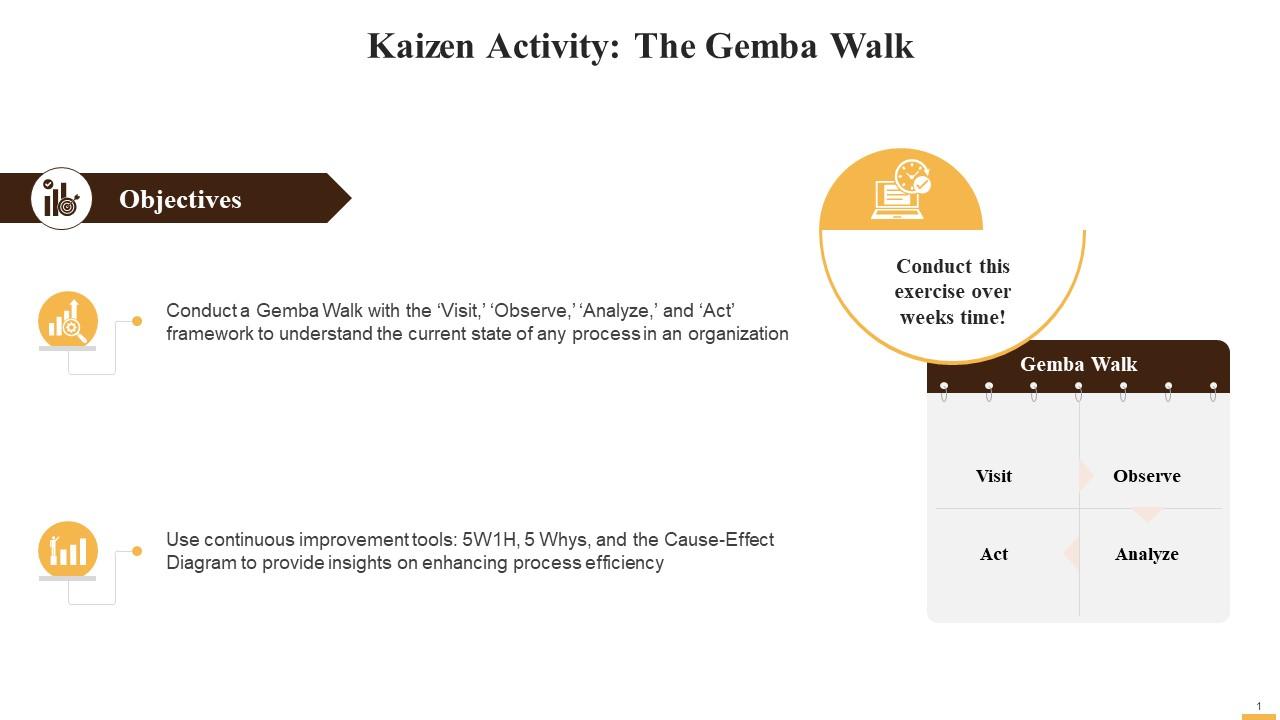
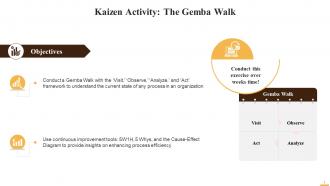
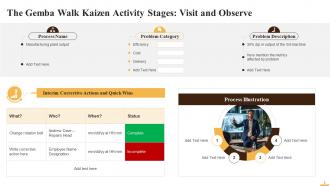
Presenting Kaizen Activity The Gemba Walk. This PPT presentation is thoroughly researched by the experts, and every slide consists of appropriate content. It is well crafted and designed by our PowerPoint specialists. Suitable for use by managers, employees, and organizations. You can edit the color, text, icon, and font size to suit your requirements. The PPT also supports Google Slides. Even Premium Customer Support is also available. Download now and present with confidence.

People who downloaded this PowerPoint presentation also viewed the following :

FAQs for Kaizen Activity The Gemba

So Kaizen blew up after WWII when Americans helped Japan rebuild their factories using continuous improvement stuff. Toyota grabbed onto it in the '50s and honestly just crushed it - made it their whole thing. Then in the '80s and '90s it spread everywhere as Japanese companies started dominating. Now you see it in hospitals, tech companies, basically anywhere people work. Not just manufacturing anymore. The idea's still simple though: tons of small tweaks work better than big dramatic changes. Oh, and software teams love this approach too. Try finding one tiny thing in your work routine you could improve tomorrow.

Honestly, just get everyone to pitch one tiny improvement each week - doesn't matter how small. Look for waste in your daily stuff first. Too much paperwork? Dumb meetings that could be emails? Start there. The trick isn't making it some big corporate thing, just build the habit. We do these quick 15-minute huddles where people can say what's bugging them or what's actually working. Pick your most annoying process first and fix it as a team. Once you get that first win, people get excited and the momentum just builds itself.

Honestly, start by picking the right people - folks who actually do this work every day, not just managers. Map out what's currently happening first (warning: this always drags on way longer than planned). After that, dig into root causes and brainstorm fixes during the actual event. Set up your success metrics at the beginning so you're not scrambling later. The whole thing works because you're cramming everything into 3-5 intense days - keeps the energy up. But here's the thing that really matters: nail down your follow-up plan before everyone goes back to their desks. Without it, you'll be back to square one in like three weeks tops.

So instead of bosses making all the changes from their corner offices, Kaizen lets your actual workers figure out what's broken. Makes total sense - they're the ones dealing with annoying processes every day. Big corporate overhauls are expensive and chaotic. This approach does tiny improvements that build up over time. Honestly, I think most companies miss this completely. You're getting ideas from people who actually know how stuff works. Just ask your team what small thing drives them crazy in their daily routine. That's your starting point right there.

Kaizen basically turns you into the problem-solver instead of just following orders. You get to spot what's broken in your area and actually suggest fixes - which honestly feels pretty good when your boss listens for once! It flips the usual hierarchy since you probably know the daily issues way better than some executive. The best part? Your ideas get rolled out fast through small tweaks rather than waiting forever for corporate to do something massive. Oh, and it doesn't have to be complicated - just look for one tiny thing you could improve tomorrow. That's literally how it starts.

Honestly, you can't do Kaizen by yourself - it's all about getting everyone on board. The people actually doing the work know what's messed up better than anyone else. When teams work together to spot problems and come up with fixes, people actually want to implement the changes instead of fighting them. Nobody wants solutions shoved down their throats from management, you know? Different perspectives make everything stronger too. My advice? Start with regular team meetings where people can throw out ideas without getting shot down. Creates a much better vibe.

Track the hard numbers first - cycle time, defect rates, cost savings, productivity gains. Those show clear results. But honestly? The soft metrics matter just as much. Employee engagement scores, how many suggestions people submit, implementation speed. I've watched companies obsess over financials while missing that their teams are way more motivated now. Get your baseline before starting anything, then check progress monthly or quarterly. Oh, and pick like 3-5 metrics that actually align with your goals. Don't go crazy tracking everything - you'll drown in data.

So I'd start with the 5 Whys - just keep asking "why" until you hit the real problem. PDCA cycles are solid too (Plan-Do-Check-Act). Honestly, Gemba walks changed everything for me - you literally go where the work happens instead of guessing from your office. Value stream mapping shows you the whole workflow so you can spot waste easier. Kaizen events are like improvement sprints, usually 3-5 days with the whole team. Fishbone diagrams work great for documentation, and before/after photos are surprisingly helpful. Don't overthink it though - pick one tool that fits your current mess and go from there.

Honestly, kaizen is pretty cool for product development - basically you're making tiny tweaks constantly instead of waiting for some massive redesign. Your team starts hunting for little inefficiencies everywhere. Maybe it's speeding up design reviews or cutting down those annoying handoff delays. Testing gets smoother too. The whole "how can we make this 1% better?" mindset becomes weirdly addictive once everyone's doing it. I know it sounds super basic, but just grab one small bottleneck you're dealing with right now and fix it this week. You'll see what I mean.

Honestly, the hardest part is just getting people on board. Everyone hates change, even when it'll actually help them - makes zero sense but whatever. Teams get stuck in this weird cycle where they're too swamped putting out fires to actually fix what's causing the fires in the first place. Your leadership will probably want results yesterday, but Kaizen is more about tiny improvements adding up over months. Oh, and don't expect people to stay excited forever - that initial energy always fades. My advice? Pick one small team or process first. Prove it works there before trying to change everything at once.

Oh totally! Pick one tiny thing that bugs you each week and fix it. Could be your morning setup, messy desktop folders, whatever. Remote work's actually perfect for this since nobody's watching you reorganize your desk for the third time lol. Short daily improvements beat massive changes every time. Share what works in your team check-ins - people love swapping productivity hacks. I'd start super small though. Like, dedicate 5 minutes this week to streamlining one annoying process. You'll be surprised how these little tweaks add up over time.

Kaizen completely flips how your company works - instead of bosses making all the decisions, everyone gets to solve problems together. Leaders turn into coaches who help people improve rather than just barking orders. It's honestly amazing when you see it happen. People feel way more invested because they're finding and fixing issues themselves, not just following some manual. Oh, and managers have to actually listen since the best ideas might come from anyone on the floor. Try this: ask your team for one tiny improvement this week and actually do it. You'll notice the vibe change pretty fast.

Don't treat follow-up like something you'll deal with later - bake it right into your plan from the start. Schedule regular check-ins with your team to see how the improvements are holding up. Trust me, I've watched so many solid Kaizen events just... die because everyone got swamped and moved on to other stuff. Make your new processes crystal clear so people actually know what they're supposed to be doing. Celebrate those small wins! Keep everything visible with dashboards or quick updates. Here's the trick though - book that first follow-up meeting before you're even done with the initial event.

Yeah, totally works outside factories! I've seen it in hospitals, banks, even customer service teams. Same idea though - get everyone hunting for small improvements instead of waiting for some magic fix that'll never come. Map out whatever process annoys you most (there's always one), then ask your team where the obvious bottlenecks are. Could be patient wait times, loan paperwork, support tickets - doesn't matter. The trick is making tiny changes constantly rather than planning some huge transformation. Start small and just see what happens.
Oh totally! Toyota's the classic case - they used Kaizen to cut defects and waste, which basically changed how everyone makes cars. Amazon does it nonstop in warehouses to speed up deliveries. Virginia Mason Medical Center (random hospital example, I know) cut patient wait times in half just through tiny daily tweaks. That's the wild part - it's not big dramatic changes. Employees just suggest small fixes that pile up over time. Honestly, you could start tomorrow by asking your team what's the most annoying thing about how you guys do stuff right now.

Ratings and Reviews

100% of 100
Write a review
Most Relevant Reviews
  1. 100%

    by Connor Lopez

    Understandable and informative presentation.
  2. 100%
    by Danilo Woods

    Definitely recommend SlideTeam to all who need help with PowerPoint presentations. Their design team can create anything you need.

2 Item(s)

per page: