


5 Why Analysis For Kaizen Training Ppt





Try Before you Buy Download Free Sample Product
 Impress Your
 Audience
 100%
100% Editable
 Save Hours
 of Time


This set of PPT slides in detail covers the utility of the 5 Whys techniques to identify the root cause of the problem in Kaizen.
People who downloaded this PowerPoint presentation also viewed the following :
Content of this Powerpoint Presentation
Slide 2
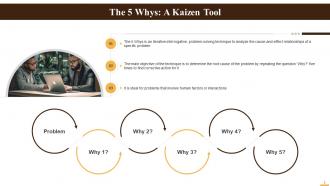
This slide provides information about the 5 Whys, i.e., an iterative interrogative, problem-solving technique to analyze the cause-and-effect relationships of a specific problem.
Slide 3
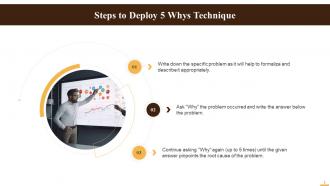
This slide highlights the process to deploy 5 Whys techniques to identify the root cause of the problem in Kaizen.
Slide 4
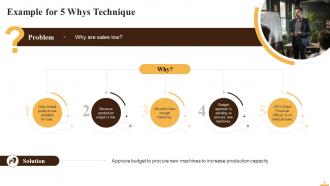
This slide highlights an example to showcase five whys technique for finding out the root cause of the problem.
Slide 5
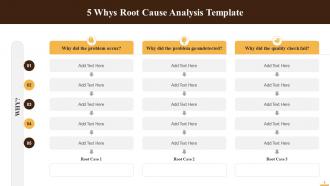
This slide presents a template for 5 Whys technique to conduct root cause analysis of the business problem.
5 Why Analysis For Kaizen Training Ppt with all 24 slides:
Use our 5 Why Analysis For Kaizen Training Ppt to effectively help you save your valuable time. They are readymade to fit into any presentation structure.
-

Why Analysis for Kaizen Training
-
The 5 Whys A Kaizen Tool
-
Steps to Deploy 5 Whys Technique
-
Example for 5 Whys Technique
-
5 Whys Root Cause Analysis Template
-

Thank You
-

Comprehensive Training Curriculum on Kaizen Icons Slide
-

Additional Slides
-
About Us
-

Vision Mission Goal
-

Our Team
-
Idea Generation
-

30 60 90 Days Plan
-
Timeline
-
Roadmap
-

Training Completion Certificate
-

-

-

-

-

-

-

-

FAQs for 5 Why Analysis For
You basically keep asking "why" until you hit the real problem - not just what broke, but why it broke. Most people stop at the obvious stuff. Don't do that. Dig deeper, maybe 5 times or whatever feels right. Last week I thought our system crashed because of a memory leak, but after going through this process? Turns out someone deployed code without running tests first. The memory thing was just a symptom. It's weirdly satisfying once you get into it. You'll catch yourself using it for everything, even figuring out why your coffee tastes awful in the morning.
Just make it part of your regular incident response - whenever something goes wrong, get the team together and keep asking "why" before you start fixing stuff. Seriously, the real problem is usually buried like 3-4 layers down from what you first see. Document each step so you can spot patterns later (this part's kinda boring but super helpful). Train everyone on it so they stop just treating symptoms. I was skeptical at first, but it really does lead to fixes that actually stick. Try it on your next quality issue and you'll get what I mean.
Manufacturing, healthcare, and tech use it most - places where screwing up actually costs money or lives. Toyota basically invented it, so manufacturing teams swear by it for defects and safety stuff. Healthcare does it for patient incidents, software teams for when everything crashes. But honestly? Finance uses it for compliance mess-ups, marketing for failed campaigns. Pretty much works anywhere if you pick real problems that matter. Don't just do it because it sounds cool though - I've seen teams waste hours analyzing why the office printer jammed.
Don't give up after just 3 whys - that's the biggest mistake. You'll think you found the answer but there's usually more layers underneath. Keep your team focused on fixing processes, not blaming people (that just makes everyone defensive). Honestly, the hardest part is catching yourself when you ask leading questions that basically confirm what you already suspected. Stay curious instead of jumping straight to solutions. Oh, and make sure each "why" actually digs deeper rather than just restating the same problem differently. The real systemic issues are buried pretty deep most of the time.
Dude, 5 Whys is super straightforward - you just keep asking "why" until you find the real problem. Most other methods like fishbone diagrams map out tons of possible causes, but this one follows a single trail. Anyone can learn it in minutes, which is honestly pretty great. The downside? You might miss how different causes connect to each other. Heavier analysis tools catch that stuff better. I'd say start with 5 Whys when you need answers fast, then move to the more complex methods if you're still stuck. Works for me most of the time.
Yeah, totally! It actually works better with a team than by yourself. Get the right people who know the problem, then have someone run it while everyone else jumps in with ideas. Just don't let it become a finger-pointing fest - that's where things go sideways fast. Build each "why" off the last answer, and having different perspectives stops you from getting stuck in one mindset. I'd throw it into your next team retrospective. Oh, and keep everyone focused on the actual process instead of who screwed up.
Start by getting your team on the same page about what actually went wrong. Ask "why did this happen?" and write down the answer. Then keep asking why about that answer - usually takes around 5 rounds, though sometimes less if you hit gold early. Here's the thing: focus on the process that broke down, not who screwed up. People get defensive and clam up otherwise. Don't let anyone jump straight to fixes yet (they always want to). Once you've drilled down to the real root cause, work backwards to double-check it actually explains your original problem. Then brainstorm solutions.
Honestly, going digital makes the whole 5 Why thing way less painful. Miro or Lucidchart are solid for mapping everything out visually - especially if your team's scattered around. Templates are a lifesaver too, trust me on this one. You can also use database tools to track patterns when you're doing multiple analyses. Helps you catch those root causes that keep popping up. There's even specialized RCA software that walks you through the questions, though I haven't tried those much. Start simple with a digital whiteboard first. Makes everything cleaner and your team can actually jump in without the usual chaos.
Dude, you absolutely need solid data before diving into 5 Whys - otherwise you're just making stuff up as you go. Grab your metrics, error logs, timestamps, whatever proof you can find. Each "why" step needs real evidence backing it up, not just what people think happened. I've watched teams go completely sideways because they skipped this part and started guessing. The data keeps everyone grounded and stops it from becoming a finger-pointing mess. Your whole analysis is only gonna be as solid as the facts you're working with, you know?
Just throw together a simple template - Word doc works fine, honestly. Track each "why" question, the answer, and whatever evidence you dug up. Date it and note who was involved. The real trick is writing down your corrective actions and who's doing what about them. Store it somewhere everyone can find it later because (and this happens way more than you'd think) similar problems will come back to bite you. I've learned this the hard way - having that reference makes you look like a genius when issues repeat themselves.
So Toyota's whole thing with asking "why" five times actually worked pretty well for them - they figured out their machines kept breaking because workers weren't properly trained on maintenance. Amazon does this too when packages get delayed. Half the time it's not even the drivers' fault but weird warehouse layouts slowing everything down. There was this hospital where patients were waiting forever, and after digging deeper, turns out their appointment system was just terrible - not a staffing problem at all. Honestly, you could try this with whatever keeps going wrong on your team. Just keep asking why until you find the real issue instead of band-aid fixes.
People won't dig into real problems if they're scared of getting blamed. Walk through the 5 whys with your team when stuff breaks - don't hunt for scapegoats. Here's the thing: lots of managers say they want root cause analysis but then get antsy when uncomfortable truths come up. Actually celebrate when someone finds a systemic issue, even if it stings. Your managers need decent facilitation skills too, or these sessions turn into disasters. But honestly? The biggest thing is following through on what you discover. Nothing kills this faster than doing all the analysis then ignoring the fixes.
Track recurrence rate first - that's your golden metric. If the same issue keeps popping up, you didn't actually fix the root cause. Simple as that. Also measure how long similar problems take to resolve now vs before, plus any customer satisfaction changes if people are affected. Implementation costs matter too, obviously. Honestly though? Sometimes the best indicator is just whether the damn thing stops breaking. Pick maybe 2-3 metrics total and compare before/after numbers. Don't overcomplicate it - you'll know pretty quickly if your fix worked.
So here's the deal - 5 Why Analysis is basically just one method inside the bigger world of root cause analysis. You keep asking "why" five times in a row to dig past the obvious stuff and find what's actually going wrong. Honestly, it's almost too simple but it works really well. Root cause analysis has all these other fancy tools like fishbone diagrams and whatever, but 5 Why is where I'd start since it's so easy. Next time something breaks or goes wrong, just keep asking why until you hit that fifth question. You'll probably find causes you totally missed before.
Dude, 5 Why Analysis is perfect for this stuff. You keep asking "why" until you hit the actual problem instead of whatever's sitting on top. Most people just slap fixes on symptoms and call it a day - super annoying. But when you dig deeper, you'll find the real organizational mess or broken processes that'll come back to haunt you. Then you can actually prevent issues rather than constantly putting out fires. Honestly, I started using it last month and found vulnerabilities I had no clue existed. Worth trying on your next assessment for sure.
-
Design layout is very impressive.
-
Great combination of visuals and information. Glad I purchased your subscription.