


Kano model powerpoint presentation slide template




Try Before you Buy Download Free Sample Product
 Impress Your
 Audience
 100%
100% Editable
 Save Hours
 of Time


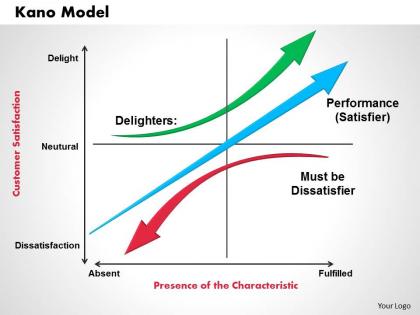
Why should you waste your time on something we have already done for you? Here, we bring you the Kano Model PowerPoint presentation slide template for educating your colleagues with the essence of customer satisfaction and product development. The Kano PowerPoint slide communicates the mechanism to understand and classify all prospective customer requirements or features into five categories. It has a very impressive x-y graphical presentation visual to lure the audience with your insightful way of classifying customer preferences. This PPT slide information satisfies the, main purpose of supporting product specification and development, independent of industry size or type. Our Kano model PPT example details out all the customer satisfaction essentials that a product, service or process needs to comply with. Similar to this content, we understand the necessity to satisfy your need for assimilating the five universal categories of consumer satisfaction. So just download our PPT design template and modify it to your knowledge and knowhow. Let your brilliance emanate from our Kano Model powerpoint presentation slide template. Your excellence will be emitted clearly.
People who downloaded this PowerPoint presentation also viewed the following :
Kano model powerpoint presentation slide template with all 5 slides:
Our Kano Model powerpoint presentation slide template encourage forethought. Anticipate eventualities well in advance.

FAQs for Kano model powerpoint
Oh the Kano Model! So it basically sorts product features into three buckets. You've got basic needs - stuff customers just expect to work. Then performance needs where more is always better. And delighters are those surprise features that make people go "whoa, cool!" What's crazy is delighters don't stay special forever - they turn into basic expectations. Like remember when having a camera on your phone was mind-blowing? Now it's just... expected. For product dev, you survey users to figure out which bucket your features land in. Helps you not waste time building stuff nobody actually wants. Start with basics, then add performance improvements.
So basically you need to ask customers two questions for each feature: "How would you feel if we had this?" and "How would you feel if we didn't?" The answers help you figure out what's a must-have versus what's just nice to have. I'd also dig through support tickets - they're goldmines for this stuff. Customer interviews work too if you have time. What you're looking for is three buckets: basic needs, performance features, and those surprise "wow" elements. Honestly, most companies waste tons of effort on boring basics when they should be hunting for those delighter features that actually make people excited.
So the Kano Model breaks down features into five buckets. Must-haves are table stakes - customers expect them but won't praise you for having them. One-dimensional stuff follows a simple "more is better" rule. Attractive features are the fun surprises that make people love your product, though you won't die without them. Then there's indifferent features that nobody really cares about (we probably argue about these way too much in meetings tbh). Reverse features actually annoy users when you add them. Start with must-haves, then go for the delighters.
So the Kano Model breaks features into three buckets based on how customers react. You've got your basic stuff - like working brakes on a car. People expect it and lose their minds when it's broken, but don't celebrate when it works. Performance features are straightforward - make them better, customers get happier. Pretty linear relationship there. Then there's excitement features, which are honestly my favorite. These are surprises that delight people even though they never asked for them. Here's what's wild though - those exciting features? They become basic expectations over time. Kinda brutal but that's how it goes. Before you build your roadmap, just categorize everything first. Makes prioritizing way easier.
Yeah totally! The Kano Model is perfect for this. Basically you sort features into three buckets - must-haves, performance stuff, and delighters. Must-haves come first obviously since people will lose their minds if those are missing. Performance features are next because they directly boost satisfaction. Delighters are the fun ones that surprise users, though honestly I'd nail down your basics before getting fancy. Just map your backlog to these categories and boom - you've got a roadmap that actually makes sense instead of throwing darts at a board.
Honestly, customer feedback is what keeps your Kano model from becoming totally useless. People's expectations change constantly - like, remember when having a camera on your phone was mind-blowing? Now it's just expected. You've got to survey customers regularly because different groups will see the same feature completely differently. What excites millennials might bore Gen X, you know? I'd say collect feedback every quarter and actually use it to update your classifications. Otherwise you're just building stuff based on outdated assumptions. It's kind of tedious but way better than launching features nobody cares about anymore.
Survey your customers with two questions: how they'd feel if a feature exists vs if it's missing. This helps you figure out what's actually essential versus what creates those "wow" moments. The tricky part? What delights people today becomes basic expectation tomorrow - honestly, customers can be pretty demanding that way. So you'll need to revisit these categories regularly, maybe every quarter. Focus on getting the fundamentals rock-solid first. Then invest smartly in delighters that match your brand vibe.
Honestly, the worst thing people do is think customer needs stay the same - they don't! Today's cool feature becomes tomorrow's bare minimum. Most folks survey the wrong people or ask questions that just confirm what they already believe. I see teams obsessing over flashy features while their basic stuff is broken. Like, your AI chatbot means nothing if the site won't even load properly. Oh, and different customer groups want totally different things - seems obvious but everyone forgets this. My advice? Pick one feature, test it small, and use actual user behavior data instead of just surveys.
Here's the thing about the Kano Model - it's like a moving target. What makes customers go "wow!" today? Give it six months and they'll expect it as standard. Smartphone cameras are perfect proof - remember when having any camera on your phone was mind-blowing? Now anything less than professional-quality shots feels cheap. You can't just coast on yesterday's cool features. Competitors copy everything eventually, so those delighters become basic requirements pretty fast. The trick is constantly checking which category your features actually fall into now (not where they used to be) and always having something new in the pipeline to surprise people with.
For Kano analysis, go with dual-response surveys - they're honestly the best approach. You ask two questions per feature: how'd you feel if it existed, and how'd you feel without it. Response options go from "I like it" to "I dislike it" with neutral stuff in between. Do it online so you can randomize the question order (order bias screws everything up). Cap it at 20 features though - people bail when surveys drag on forever. Survey your actual users, not just coworkers. Yeah, the dual questions feel repetitive, but that's what shows you if features are must-haves, nice-to-haves, or total game-changers.
Dude, the Kano Model is clutch for Agile teams. Basically you sort features into three buckets: must-haves (basic stuff), performance features (more = better satisfaction), and delighters (the surprise features that make users go "whoa!"). Sprint planning becomes way easier when you know what actually matters to customers vs what your stakeholders *think* matters. Start with the basics, add performance stuff next, then sprinkle in delighters if you have time. Though honestly, sometimes the delighters end up being more work than expected - learned that the hard way last quarter. Point is, you're building what users actually want instead of just... everything.
Yeah totally! The Kano Model works well for services too. You just categorize stuff into basics (like clean hotel rooms - people expect that), performance things (faster check-in makes people happier), and delighters (surprise upgrades, free snacks, whatever). Services are trickier though since they're way more subjective than actual products. I'd start by asking customers about specific touchpoints - both "how'd you feel if we had this" and "how'd you feel if we didn't." Honestly the survey part is kind of a pain but it's worth it. Then you can map responses and figure out what to fix first.
Oh totally, it's got some pretty big gaps. The biggest thing is it's just a moment in time - what delights customers today becomes baseline tomorrow (look at how fast we went from "wow, a touchscreen!" to expecting it). Survey design is honestly harder than it looks, and people suck at predicting what they'll actually want. Also doesn't tell you anything about costs or if you can even build the stuff. I'd say use it but don't rely on it completely. And definitely redo the analysis every so often because things change fast.
Tech makes the Kano Model way trickier to use these days. Customer expectations change so fast now - smartphone cameras are the perfect example. They went from being this cool bonus feature to something people just expect overnight. Features basically sprint through the Kano categories instead of walking like they used to. Your product lifecycle gets squeezed too, which is honestly pretty stressful for product managers. Instead of checking in once a year, you'll probably need quarterly surveys or even monthly ones. Otherwise you're always playing catch-up with what customers actually want versus what you think they want.
The Prius is like the classic example here - Toyota figured out eco-friendly features were gonna be huge while everyone else thought they'd hurt performance. Same with Apple's iPhone touchscreen, which seemed gimmicky at first but completely changed the game. Most companies won't admit they use this stuff, but it's everywhere. Netflix recommendations, Tesla's wireless updates, Amazon's one-click buying - they all started as "wow, cool" features before becoming things we can't live without. Honestly, the whole point is spotting what customers don't even realize they want yet. That's where the magic happens.
-
The content is very helpful from business point of view.
-
Presentation Design is very nice, good work with the content as well.