


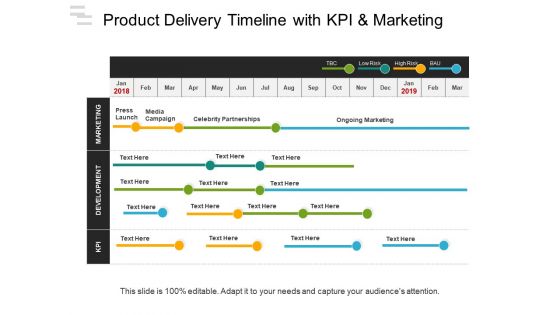
Product delivery timeline with kpi and marketing





Try Before you Buy Download Free Sample Product
 Impress Your
 Audience
 100%
100% Editable
 Save Hours
 of Time


You have improved upon your ability to communicate. Demonstrate your skills with our Product Delivery Timeline With Kpi And Marketing.
People who downloaded this PowerPoint presentation also viewed the following :
Product delivery timeline with kpi and marketing with all 5 slides:
Be the guiding force in your chosen field with our Product Delivery Timeline With Kpi And Marketing. Establish yourself as an icon.



FAQs for Product delivery timeline with
Honestly, I'd start with cycle time - that's how long stuff takes from kickoff to actually shipping. Throughput matters too (features per sprint), plus lead time which tracks idea-to-customer. Deployment frequency is huge, and mean time to recovery shows if your pipeline's actually working or just looks pretty. Quality stuff like defect rates and customer happiness scores are non-negotiable because fast but broken is worse than slow but solid. Don't go crazy though - pick maybe 3 that align with what your team's trying to fix right now. You can always add more once you're not drowning in data.
So agile basically chops everything into these short sprints - like 2 weeks max. Makes it way easier to pivot when stuff changes or goes sideways. Daily standups keep everyone in the loop, and those retrospective meetings? Game changer. You'll catch problems before they turn into disasters. Cross-functional teams are clutch too since there's less waiting around for other departments to do their thing. Honestly, the feedback cycle alone will save you from building something nobody wants (been there, it sucks). Just start with dailies and bi-weekly sprints - you'll notice things moving faster within a month.
Tech is pretty much everything for delivery these days. AI figures out the best routes considering traffic and weather - GPS lets you watch your drivers in real-time. When stuff goes wrong, automated systems can instantly reschedule deliveries. Customer apps are huge too since people can track packages and pick delivery times, which cuts down on missed deliveries. Honestly, doing this without tech is like... I dunno, trying to navigate with a paper map when everyone has smartphones? Start with whatever's your biggest headache right now and find tech that actually fixes that specific problem.
Honestly, the key is getting everyone talking regularly - not just engineering in their little bubble. Daily standups should include product, design, QA, the whole crew. I've watched too many teams where marketing literally discovers new features on launch day (nightmare fuel). Set up dashboards everyone can actually see so there's no "wait, what's blocked again?" moments. People need to feel safe calling out problems across teams too. Oh, and here's what works - pick ONE messy workflow that touches multiple departments and fix it together first. Don't try to boil the ocean.
Honestly, demand forecasting is probably the worst part - nobody can predict what people actually want. Inventory's a nightmare too, you're always stuck with too much random stuff or completely sold out of basics. Last-mile delivery costs will kill your budget, especially when everyone expects Amazon-level speed now. Oh, and good luck tracking anything properly through your supply chain. Different systems never want to talk to each other either, which is super fun. My take? Clean up your data first and grab one decent forecasting tool. Don't try fixing everything at once or you'll go crazy.
Look, customer feedback is basically your reality check - it shows what's actually happening with your deliveries, not what you think is happening. People will tell you about timing issues, busted packages, or when your communication sucks. Yeah, some of it hurts to hear, but that's the stuff you need most. I'd dig through surveys and support tickets to find patterns. Maybe everyone hates your weekend delivery window? Fix the biggest problems first. Oh, and don't forget to circle back after making changes - otherwise you're just guessing if it worked.
JIT delivery saves you a ton on storage since inventory only shows up when needed. Warehouse space opens up, less stuff expires, and your cash flow improves because money isn't stuck in products just sitting there. Once you nail the timing, it's pretty incredible how much smoother things run. Your supply chain actually responds to real demand instead of whatever forecast someone made up three months ago. Finding suppliers who can hit those tight windows is crucial though - honestly I'd test it with just one product line first before going all in.
Your supply chain is literally what makes or breaks delivery speed. Map out your whole process first - you'll probably find some ridiculous bottlenecks you didn't even know existed. I've watched companies lose months because one supplier screwed up, and it just ripples through everything. Focus on your supplier relationships and keeping inventory balanced. The real game-changer though? Getting visibility into what's happening at every step so you can catch problems before customers feel them. honestly, most delays could be avoided if people just knew where their stuff actually was. Start there and work backwards.
So for tracking delivery stuff, I'd start with ShipStation or FreightPOP - both give you real-time updates and play nice with most carriers. Google Analytics works too, or Shipwell if you want more detailed metrics. Excel's honestly still fine if you're not dealing with crazy amounts of data yet. Pick whatever connects easiest with what you're already using instead of making your life harder. My buddy started with basic tracking and just upgraded as his business grew - way less headache that way. Start simple, then scale up when you actually need it.
Look, most teams get this totally wrong - they think it's speed OR quality when it really doesn't have to be. Start with your delivery pipeline and automate everything you can. Get continuous integration running, set up automated QA checks, do staged rollouts. That way you're not breaking stuff while moving fast. Figure out which quality metrics you absolutely can't compromise on first. Then optimize around those. Customers will bail if you ship crap, but honestly? They'll also bounce if you're too slow getting features out. Oh and definitely set up monitoring dashboards - catching issues early saves you so much headache later.
Map out your whole process first - you'll spot bottlenecks fast. Run stuff in parallel instead of one thing after another, like doing quality checks while production's finishing up. Automate the boring repetitive tasks. Here's what really made a difference for us though: getting tight with your key suppliers. Seriously, those relationships matter way more than people think. They'll bump you up the priority list when things get crazy. Oh, and maybe keep some buffer stock of critical parts? I know just-in-time sounds great on paper, but a small safety net beats scrambling when something goes wrong.
So predictive analytics is basically like having a crystal ball for your deliveries. It picks up on patterns you'd never catch manually - weather delays, traffic jams, even random stuff like concerts that mess up your routes. Feed it good data consistently and it'll start predicting bottlenecks before they happen. Way better than just guessing based on last month's numbers, honestly. You can tweak staffing and routes ahead of time instead of scrambling when things go sideways. Track your current accuracy first though - you'll want to see how much it actually improves things.
Dude, good stakeholder communication is honestly what makes or breaks projects. You'll catch problems way earlier when everyone's actually talking to each other. Plus you avoid those nightmare scenarios where you're done building something and they're like "wait, this isn't what we meant at all." Bad communication? That's how you get scope creep and missed deadlines. Regular check-ins are your friend here - but don't just fire off updates and hope for the best. Actually make sure people are responding and signing off on stuff. Trust me, getting buy-in at each step saves so much headache later. Way better than dealing with a angry stakeholder at launch.
Start with demand forecasting and ABC analysis - basically rank your stuff by value and how fast it moves. That way you know what actually matters. Real-time tracking is huge, trust me on this one. Set up automated reorder points for your fast movers but keep safety stock for anything critical. Work with suppliers to cut down lead times too. The whole thing's about finding that balance between tying up cash and running out of stock. Nobody wants angry customers. Oh, and definitely audit what you've got first - figure out where you're bleeding money or constantly scrambling.
Honestly, start with packaging - ditch the plastic for recyclable stuff. Your delivery routes are probably a mess too, so optimize those to cut fuel costs. Group shipments when you can and maybe look into electric vehicles if you've got the budget (though that's obviously pricey upfront). Customers actually care about this green stuff now, so partner with carbon-neutral shippers if possible. Oh, and set up local hubs to cut down those crazy last-mile trips. Give people discounts for slower shipping - most don't need everything overnight anyway. Just pick one thing first and see how it goes before you go overboard.
-
Informative design.
-
Awesome presentation, really professional and easy to edit.