

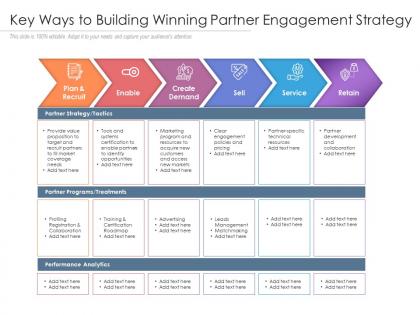
Key ways to building winning partner engagement strategy




Try Before you Buy Download Free Sample Product
 Impress Your
 Audience
 100%
100% Editable
 Save Hours
 of Time


Our Key Ways To Building Winning Partner Engagement Strategy are topically designed to provide an attractive backdrop to any subject. Use them to look like a presentation pro.
People who downloaded this PowerPoint presentation also viewed the following :
Key ways to building winning partner engagement strategy with all 2 slides:
Use our Key Ways To Building Winning Partner Engagement Strategy to effectively help you save your valuable time. They are readymade to fit into any presentation structure.
FAQs for Key ways to building winning
Honestly, it's all about building real relationships at different levels. You need solid communication channels and regular check-ins - plus shared goals that actually benefit everyone. Joint business planning is massive because it syncs up your roadmaps and keeps both sides accountable. The unsexy stuff matters too though - proper onboarding, training resources, performance metrics to see what's working. I've watched so many partnerships just die because there's zero structure. Maybe start by mapping your current partner touchpoints? Then figure out where communication or support is falling through the cracks.
Track your hard numbers first - revenue from partnerships, deal speed, partner-driven leads. But that's only half the picture, honestly. Engagement frequency matters too, plus partner satisfaction scores and whether they're actually pushing your stuff. Monthly performance reviews work well, then do deeper partner health checks quarterly. The magic happens when your numbers match up with solid feedback from partners. Oh, and don't go crazy with metrics - stick to 3-5 key ones you'll actually look at instead of drowning in spreadsheets you'll ignore.
Oh man, communication is literally everything with partnerships. I found this out the hard way when one of my biggest partnerships totally imploded because we weren't talking enough - such a mess. You've gotta do regular check-ins, but honestly? Quality beats quantity every time. Don't just go through the motions. Create space for real feedback, even the uncomfortable stuff. Monthly partnership reviews are a game changer if you're not doing them yet. Also be super transparent about wins AND failures. Partners can smell BS from a mile away, and once trust breaks down, you're basically screwed.
Dude, get a partner portal set up first - it's a game changer for keeping everything in one place. Your CRM will track all the back-and-forth conversations, and analytics tools show you exactly which partners are struggling (trust me, some always are). The automation stuff saves me like 3-4 hours every week, no joke. Integration platforms sync your data so you're not stuck updating those endless spreadsheets anymore. Just don't go crazy buying every tool out there - pick something that fixes your actual problems first, then build from there.
Honestly, most partnership fails come down to three things: people expect different stuff, communication sucks, or partners feel ignored. Weekly check-ins are a game changer - I can't stress this enough. Set mutual goals from day one and actually stick to regular touchpoints. Don't just ask for favors either; bring real value to the table. Treat them like they're part of your team, not some outside vendor you barely talk to. Oh, and create feedback loops so problems don't fester. Start by looking at where your current partner conversations usually fall apart.
Oh man, you really gotta research their business culture first or you'll crash and burn. Germans want straight facts and data dumps, but Japanese partners need way more time to build trust and get everyone on board. I learned this the hard way when a deal almost died because we rushed their decision timeline. Your whole approach changes - how often you check in, meeting styles, even how you negotiate contracts. What kills me is how many people skip this step and wonder why things go sideways. Honestly, just spending a few hours understanding their communication norms upfront saves months of headaches later.
Give them a clear 30-60-90 day roadmap upfront - no guessing games about what success looks like. They need dedicated support contacts because honestly, there's nothing more frustrating than being stuck with nobody to call. Regular check-ins those first few months are clutch for catching problems early. Day one access to tools, docs, and training is non-negotiable. Oh, and pair them with an experienced partner buddy who actually knows the ropes and company quirks. That mentor relationship makes a huge difference. Build the plan, then actually follow through on it - seems obvious but you'd be surprised how many companies skip that last part.
Honestly, most companies are terrible at this - they ask for feedback then do absolutely nothing with it. Here's what actually works: pick one simple way to collect partner input first, like monthly calls or a quick quarterly survey. The magic happens when you circle back and show them exactly what changed because of their suggestions. Document everything you adjusted based on their feedback and tell them about it. Partners get way more invested when they see their input matters. Start small with just one feedback method, nail that process, then add more. Trust me, the follow-through is what separates good partnerships from mediocre ones.
Track the obvious stuff first - participation rates, leads, revenue from partners. But that's honestly just scratching the surface. Partner satisfaction scores matter way more than people think. Also look at how fast new partners get up to speed and whether they're actually using your training materials (spoiler: half probably aren't). Communication frequency tells you a lot too - are you having regular check-ins or just ghost-texting each other? The numbers are cool but the relationship health stuff? That's where you really see what's working.
Honestly, get everyone on the same page day one with a shared doc that spells out specific goals for both sides. I'd do monthly check-ins to catch any drift early - can't tell you how many partnerships I've watched blow up because people just assumed they were aligned. Document everything clearly, not just those vague "let's work together!" conversations that feel good but mean nothing. Being brutally honest about expectations upfront beats discovering you're totally mismatched six months later when it's way harder to fix.
Dude, virtual tools are a game changer for working with partners. No more trying to get everyone in the same room - that's always a nightmare with scheduling. Real-time document sharing keeps everyone on the same page, and people actually participate more when they can hop on calls that fit their schedule. Plus you're not burning money on travel every time you need a meeting. I'd honestly just pick one platform that does video, file sharing, and project tracking together rather than juggling multiple apps. Way less headache.
Dude, skip the boring data dumps - nobody remembers spreadsheets anyway. Share actual stories instead. Like that time you helped a client through a major challenge, or how a partnership totally transformed over the years. Make your partner look like the rockstar, not your company (this is huge). Stories stick way better than numbers ever will. You can drop them into presentations, casual calls, whatever. I'd start grabbing 2-3 solid partnership stories this week. Trust me, you'll use them more than you think when relationships need that extra boost.
Honestly, most partnerships tank because of bad communication training - your partners literally don't know how to explain your strategy to their own teams or customers. Give them access to your actual planning docs and roadmaps too, not just the glossy marketing stuff. They're probably working off info that's like 6 months old. Also set up clear processes for who they should contact when shit hits the fan. I'd start by just asking what resources they actually need versus what you think they need - there's usually a huge gap there. Simple relationship management tools help too.
Make it genuinely profitable for them first - clear revenue opportunities and exclusive pricing tiers work. Don't just dump marketing materials on partners like most brands do, that's useless. Set up streamlined onboarding and give them a dedicated contact who actually responds fast. Co-marketing opportunities are gold too. Regular training helps, plus make resources super easy to find. Honestly, most companies treat partners like just another sales channel instead of real investments. Survey your current partners about what they're missing - you'll probably be surprised by their answers.
Honestly, incentives are what keep your partners actually caring about your stuff instead of your competitors'. You're basically saying "hey, thanks for picking us" while nudging them toward the goals you want hit. Cash isn't always king though - sometimes partners want training or co-marketing help more than money (weird but true). Ask your best partners what would actually get them excited. You might get some surprising answers. Just don't go crazy with rewards or they'll expect them for everything. Start small and see what moves the needle.
-
Unique research projects to present in meeting.