

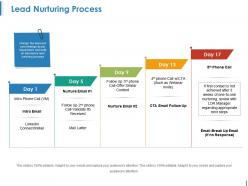
Lead nurturing process ppt ideas





Try Before you Buy Download Free Sample Product
 Impress Your
 Audience
 100%
100% Editable
 Save Hours
 of Time


Avoid fraud with our Lead Nurturing Process Ppt Ideas. They will be on their guard.
People who downloaded this PowerPoint presentation also viewed the following :
Lead nurturing process ppt ideas with all 5 slides:
Expose hidden agendas with our Lead Nurturing Process Ppt Ideas. Acquaint folks with dubious inclinations.

FAQs for Lead nurturing
Okay so there's basically four stages: awareness, consideration, decision, and retention. First you attract people with good content, then nurture them with targeted emails based on what they're actually interested in. Here's where most people screw up though - they jump straight to selling instead of building trust first. During consideration, give them deeper stuff like case studies or demos. Decision stage is where you offer trials or consultations to close it. Oh and don't forget about existing customers! They're goldmines for upsells and referrals. I'd map out where your leads are currently dropping off.
Dude, personalized content is a game changer because people can actually tell you're not just blasting the same email to everyone. Like, why would a small business owner care about enterprise features? Makes no sense. You want to dig into your CRM data and figure out who your leads actually are - their industry, company size, where they're at in buying something. Then write stuff that hits their real problems. I'd start with maybe 3 buyer personas and create different email sequences for each. It's way more work upfront but your response rates will thank you later.
Honestly, most people overcomplicate this stuff. Start with engagement rates and email opens/clicks - super basic but tells you everything. Pipeline acceleration is what I'd focus on though - are your nurtured leads actually converting faster than the cold ones? That's the whole point, right? Track how quickly leads move through scoring levels too. Most teams ignore this but it shows if your content actually hits. Oh, and conversion velocity matters way more than people think. Don't forget unsubscribe rates either - nobody wants to admit their nurturing sucks. Which content pieces get the most engagement? That'll guide your whole strategy moving forward.
Every 7-14 days is pretty standard for nurturing leads. But honestly? It really depends on where they're at. Fresh leads can handle weekly emails or content drops. Hot prospects though - hit them up every 3-5 days. I back off if someone's going radio silent on me. That's usually a sign they need space. Response rates will tell you everything - way more than some cookie-cutter schedule will. Early funnel vs late funnel makes a huge difference too. Just don't be that person who emails daily and kills the vibe.
Dude, marketing automation is a total game changer for lead nurturing. Basically saves you from sending a million emails manually. You set up these workflows that kick in when someone does something - downloads stuff, checks your pricing, whatever. Honestly, I wish I'd started using it sooner when I was drowning in follow-ups. The cool part is it scores your leads and sends them the right content automatically. Don't go crazy though - just pick one simple workflow to start with. Trust me, you'll want to automate everything once you see how well it works, but baby steps first.
Honestly, segmentation is a game changer because you're not just shotgunning the same boring email to everyone. Think about it - a CFO cares about ROI while an IT person wants to know about integrations and stuff. When you actually match your content to what matters to them, people will actually open your emails instead of deleting them. I'd start simple with maybe 2-3 groups based on job role or company size. Test different messages for each segment. You'll be shocked how much better your click rates get when people feel like you actually get their problems.
Match your content to where people are in the buying process. Educational stuff works great for new leads - blog posts, guides, webinars that actually help without being pushy. Case studies and product demos are perfect for the middle stage. When they're ready to buy? That's when you hit them with testimonials and pricing. Timing is everything though - nobody wants to see your prices when they just heard about you five minutes ago. I'd start by looking at what content you already have, then figure out which stage each piece fits. Also, don't forget to check your lead scoring so you're not sending the wrong message to the wrong person.
Set up lead scoring rules first - that's your foundation. Then connect your email platform to Salesforce so when leads hit certain scores or take actions, it automatically fires off email sequences and updates their records. Your sales team will actually know which emails people opened and what they downloaded instead of just guessing. Honestly, the real-time visibility into where prospects are in their buying journey is a game changer. I'd start with just one simple workflow to test it out before going crazy with complicated stuff. Much easier to troubleshoot that way!
Ugh, don't be that person who sends the same generic email to everyone - instant turnoff. Bombarding people daily is another surefire way to get blocked. I learned this the hard way lol. You've gotta segment your leads properly, otherwise you're sending baby formula ads to teenagers or whatever. Most people set up their sequences once and never touch them again for like 6 months. Bad move. Track your open rates and actually adjust when something's not hitting. Oh, and stop being so sales-y right out the gate - build some rapport first before you start pitching.
Automate the boring stuff—welcome emails, nurture sequences, lead scoring. But here's the thing: you've gotta jump in personally when it counts. I set up notifications for when people do things like download multiple resources or check out pricing pages. That's your cue to ditch the automation and actually reach out. Don't automate the relationship moments though, that's where people mess up. Have clear handoff rules for your team, and honestly? Make sure your automated stuff doesn't sound robotic so the transition feels smooth.
Dude, stop beating dead horses with email - that's probably why they went cold anyway. Switch it up. Hit LinkedIn, send actual mail, whatever feels different. Acknowledge the radio silence upfront like "hey, I know it's been forever." Way less awkward than acting like nothing happened. Then offer something actually useful - free audit, good content, maybe a webinar invite. Space out your attempts though. Reference what's happening in their industry or tie it to seasons if that makes sense. One solid touchpoint beats five crappy ones. See what sticks first.
A/B testing is basically how you figure out what actually works with your leads. Test subject lines, send times, content style, CTAs - whatever. We tried "casual Friday" emails once just for fun and they crushed our fancy corporate ones by 40%. Made no sense but the numbers don't lie. Only change one thing at a time though, otherwise you won't know what caused the difference. Oh and start with your biggest email sends first - you'll get real results way faster since there's more data to work with. Pretty wild how wrong your gut can be sometimes.
Think of lead scoring like a cheat sheet for figuring out who's actually ready to buy. You can segment people based on their scores and send them stuff that actually makes sense - like sales content for hot prospects and educational material for folks who are just browsing around. Way better than sending everyone the same boring emails (nobody wants that). Set up different score thresholds that automatically put leads into the right nurturing tracks. Makes everything feel more personal, and honestly? Your conversion rates will probably jump because you're not wasting time on people who aren't ready yet.
So LinkedIn's honestly your best bet for B2B stuff - comment on their posts, share industry articles, send those personalized connection requests. Facebook and Twitter work great for posting your blog content and case studies too. Just don't be that person who's constantly pitching, you know? Keep it educational and helpful. Oh, and here's something that works really well - create a content calendar that matches up with your email campaigns. That way you're hitting them with the same message across different platforms. It's all about staying visible between those email touchpoints without being annoying about it.
Honestly, B2B is a whole different beast - you're basically playing the long game with people who need to justify every dollar to their boss (and their boss's boss). So you'll want thought leadership stuff, solid case studies, content that makes them look smart internally. Takes months usually. B2C? Way more impulse-driven. Product demos work great, customer reviews, those "limited time" offers that actually get people moving. Much faster turnaround. Here's how I think about it: B2B buyers don't want to look stupid in a meeting six months from now. B2C buyers just want to feel good about hitting "buy." Map out how long your sales usually take - that'll tell you how often to follow up and what timeline you're working with.
-
Perfect template with attractive color combination.
-
Great designs, really helpful.