


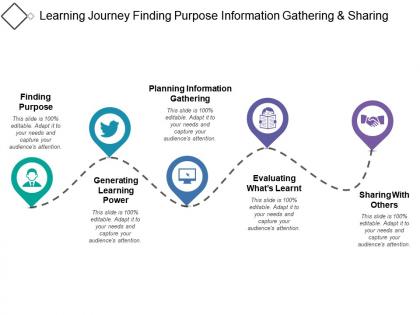
Learning journey finding purpose information gathering and sharing




Try Before you Buy Download Free Sample Product
 Impress Your
 Audience
 100%
100% Editable
 Save Hours
 of Time


Folks follow the correct course with our Learning Journey Finding Purpose Information Gathering And Sharing. Keep everyone's eyes on the chart.
People who downloaded this PowerPoint presentation also viewed the following :
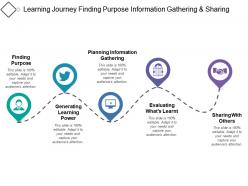
Learning journey finding purpose information gathering and sharing with all 5 slides:
Inject a joyous feeling into the event with our Learning Journey Finding Purpose Information Gathering And Sharing. Introduce an air of jubilation.


FAQs for Learning journey finding purpose information
So basically you want your students to actually *get* why they're learning stuff - like how it connects to their lives or what they want to do later. Give them some say in picking topics or how they tackle things. Active engagement beats just lecturing at them any day. Build on what they already know, then throw in some reflection time. Oh, and real-world connections are huge - I swear it makes everything click better. Students need clear goals too. It's honestly night and day compared to the old "sit there and listen" approach most of us grew up with!
Look for kids who can actually explain why they're studying something beyond "because it's assigned." The good stuff happens when they start connecting lessons to their own goals or interests. I always watch for students asking real questions instead of just "is this on the test?" - ugh, that one drives me nuts too. Short answer: they should be transferring what they learn to new situations. When students begin driving their own curiosity rather than just checking boxes, you've hit the sweet spot. Mid-semester surveys work great for gauging what actually feels meaningful to them.
Dude, motivation is literally everything when it comes to getting kids to actually learn with purpose. I mean, think about it - when students genuinely care about what they're doing, they start connecting the dots between classroom stuff and their own lives. That's where the magic happens. I've watched entire lessons flip from boring to engaging just because the kids finally saw the point. They ask way better questions, don't give up as easily, and actually see how this connects to real life. The trick is figuring out what they personally want to achieve - then show them how your lesson helps them get there, not just checks your curriculum box.
Pick tech that actually connects to problems your kids care about - like letting them research local community issues or use digital simulations for real scenarios. Collaborative platforms work great too if they're tackling authentic projects. Here's the thing though: tablets and fancy gadgets mean nothing if students are just mindlessly scrolling. I've seen that disaster way too many times. Start with what learning outcome you want first, then find the tool that'll help them get there. Don't go crazy with multiple new apps at once - try one thing so you can actually tell if it's worth the hassle.
Connect everything to real-world stuff they actually care about - show them WHY they need this. Let kids choose how they show what they know. Projects, presentations, whatever works for them. Engagement goes crazy when they pick their path! Collaborative problem-solving beats worksheets any day, honestly. Ask your students what matters to them first, then sneak those interests into lessons. Making it relevant to their lives is huge. Oh, and group challenges work way better than solo work - they feed off each other's energy.
Honestly, purposeful learning is just lifelong learning with direction. Instead of randomly picking up skills, you're constantly asking "will this actually help me?" Most people get overwhelmed by lifelong learning because they try to absorb everything. But here's the thing - you don't need to learn everything, just what serves your goals right now. I mean, collecting certificates feels productive but it's usually just busywork. The real game-changer? Regularly checking if what you're studying connects to where you want to go. Makes the whole process way less scattered.
Honestly, getting kids to work together is like hitting the learning jackpot. When they have to explain stuff to each other, they can't just fake understanding - they actually have to know it. Peers talk in ways that make sense to other kids, you know? Way better than us adults sometimes. Real life requires teamwork anyway, so why not practice? The cool part is watching them build off each other's thoughts and spot mistakes together. I'd set up partnerships where they switch between teacher and student roles. It beats sitting there passively absorbing information any day.
So here's what actually works - start by having kids connect the material to stuff they genuinely care about. Career goals, problems in their community, whatever. Breakout rooms are clutch for real problem-solving (not those boring textbook scenarios). Honestly, once students pick their own case studies the whole dynamic changes, even on Zoom. Give them choices in how they apply what they're learning while you steer the objectives. Oh, and try having them present to actual people in the field virtually - adds real stakes to their work instead of just turning in another assignment.
Honestly, you need both the hard numbers and the softer stuff to really know what's working. Pre/post tests show if they actually retained anything, plus check if they're applying skills in real situations - that's where you see the good stuff. Completion rates matter, but I'd focus more on meaningful engagement time rather than just how long someone sat there. Learner feedback is huge too. Don't forget behavioral shifts like better collaboration or confidence. Oh, and start small - pick 2-3 metrics that actually match your goals instead of drowning in data. You can always add more later.
Oh man, this is such a good question! So basically, your cultural background totally changes how you learn best. Like, if you're from a more individualistic place, you probably gravitate toward setting your own goals and figuring things out independently. But collectivist cultures? They're all about learning as a group and hitting shared targets together. Then there's the whole practical vs. theoretical thing - some cultures are super focused on hands-on skills you can actually use at work, while others really value deep intellectual stuff for the long haul. I've noticed this working with international teams, honestly. There's no wrong approach, just different ways of thinking about it. The trick is adapting when you're working with people from different backgrounds.
Honestly, the time crunch is brutal - your curriculum's already stuffed and now you're trying to squeeze in real meaning? Students will definitely resist at first since they're so used to just memorizing for tests. Administration might not get it either because this whole shift from "teaching to the test" feels risky to them. I went through this too and it's genuinely overwhelming. Kids push back when you suddenly ask them to actually think about why algebra matters in their lives. But here's what worked for me - pick just one lesson this week and throw in a simple "so why should we care about this?" Don't overthink it. Build slowly from there.
Honestly, student feedback is like your reality check - you need it to know if you're actually teaching well or just talking to yourself. Quick pulse checks throughout the semester work great. I made the mistake once of sticking with this whole strategy that students thought was pointless for their goals. Whoops. Their honest input helps you tweak activities and learning objectives so everything actually makes sense. Don't wait until the end to ask what's working. Real-time feedback lets you pivot when something's confusing instead of plowing ahead blindly.
Honestly, real-world stuff is what makes students stop asking "when will I ever use this?" Connect what you're teaching to actual problems they might solve or jobs they want. Like, instead of just memorizing formulas, show them how engineers use those same equations to build bridges. Makes a huge difference. I always tell teachers to have students find one problem in their own community that relates to the lesson - their engagement goes through the roof. It's wild how fast they switch from thinking like test-takers to thinking like actual professionals who could tackle real issues.
Schools really need to focus on ongoing training - not just those one-day workshops that nobody remembers. Teachers are already drowning in work, so you've got to give them actual time to collaborate and try new things. Coaching support is clutch, plus practical stuff like templates they can actually use. Leadership has to walk the walk too, honestly. Find your teachers who are already excited about this approach and let them spread it to others. Oh, and create a culture where failing isn't career suicide - experimentation should be celebrated, not feared.
Oh definitely check out High Tech High in San Diego - they're like the gold standard for this stuff. Students work on real community problems instead of just textbook exercises. New Tech Network schools do something similar, mixing regular academics with actual projects that matter. Finland's got this cool thing called phenomenon-based learning where kids explore big questions instead of compartmentalized subjects. Honestly, it sounds kind of gimmicky but it actually works really well. If you want something smaller to start with, Quest to Learn in NYC has tons of case studies on their game-based approach - super helpful for seeing how it plays out day-to-day.
-
The content is very helpful from business point of view.
-
Enough space for editing and adding your own content.