

Plan de negocios de licorería Diapositivas de presentación en PowerPoint




Try Before you Buy Download Free Sample Product
 Impress Your
 Audience
 100%
100% Editable
 Save Hours
 of Time


Iniciar y operar una licorería puede parecer simple, pero la verdad es que si desea evitar el estrés, debe hacer los preparativos necesarios para asegurarse de que resistirá la prueba del tiempo. Por lo tanto, nuestro equipo ha elaborado este plan de negocios de licorería, que incluye el tamaño del mercado, las tendencias del mercado, los impulsores de crecimiento, los principales desafíos, los aspectos más destacados financieros, el análisis FODA, la segmentación objetivo, los principales actores con comparación de atributos y el PPT de pronóstico para brindar información detallada sobre el sector alcohólico. industria de las bebidas. Además, la presentación del Plan de inicio incluye el marco de Porters y su impacto en la industria de las bebidas alcohólicas, las brechas y oportunidades del mercado y el tamaño del mercado. Además, en la plantilla del plan emprendedor se tratan los detalles de la entidad, el resumen ejecutivo, los productos y servicios, la misión y visión, la estrategia de salida, etc. Además, la presentación del plan financiero brinda a los usuarios una idea del aspecto financiero, que ejecuta un análisis detallado de 5 años considerando los escenarios del mercado. Por último, el plan operativo cubre el modelo de ingresos, el estado de pérdidas y ganancias, el estado de flujo de efectivo, el análisis del punto de equilibrio, la valoración DCF, el balance general, etc. Descargue esta presentación 100 por ciento editable y obtenga acceso a nuestro producto altamente investigado y hábilmente diseñado.
People who downloaded this PowerPoint presentation also viewed the following :
Contenido de esta presentación de Powerpoint
Diapositiva 1 : esta diapositiva presenta el plan de negocios de la licorería.
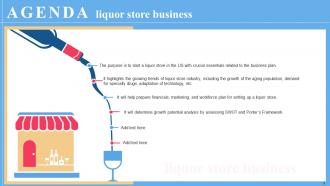
Diapositiva 2 : Esta es una diapositiva de la Agenda. Indique sus agendas aquí.
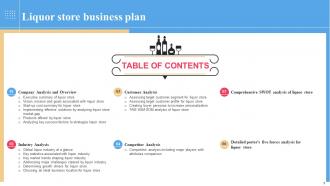
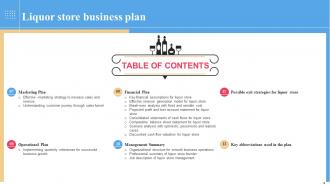
Diapositiva 3 : La diapositiva muestra la tabla de contenidos.
Diapositiva 4 : La diapositiva continúa con el índice.
Diapositiva 5 : La diapositiva muestra otra tabla de contenidos.
Diapositiva 6 : esta diapositiva ofrece una visión de los aspectos más destacados de la licorería.
Diapositiva 7 : esta diapositiva cubre la visión, la misión y los objetivos de la licorería.
Diapositiva 8 : esta diapositiva proporciona información sobre los gastos iniciales.
Diapositiva 9 : esta diapositiva cubre el problema asociado con la licorería.
Diapositiva 10 : El propósito de esta diapositiva es brindar una idea de los productos que ofrece la licorería.
Diapositiva 11 : esta diapositiva cubre los puntos esenciales que se deben considerar al desarrollar una estrategia comercial para una licorería.
Diapositiva 12 : La diapositiva muestra más el título del contenido.
Diapositiva 13 : El propósito de esta diapositiva es resaltar el tamaño del mercado de la industria mundial de bebidas alcohólicas.
Diapositiva 14 : La diapositiva muestra el tamaño del mercado de la industria de bebidas alcohólicas de EE. UU.
Diapositiva 15 : esta diapositiva representa una evaluación exhaustiva de los datos del mercado dentro de la industria de las bebidas alcohólicas.
Diapositiva 16 : esta diapositiva muestra las tendencias clave del mercado que tienen el potencial de cambiar el escenario actual del mercado.
Diapositiva 17 : esta diapositiva muestra detalles sobre diversos desafíos atendidos por la industria de las licorerías.
Diapositiva 18 : esta diapositiva proporciona detalles sobre varios impulsores de crecimiento que resultan en el progreso de la industria de las bebidas alcohólicas.
Diapositiva 19 : esta diapositiva continúa sobre varios impulsores de crecimiento que resultan en el progreso de la industria de las bebidas alcohólicas.
Diapositiva 20 : esta diapositiva muestra una ubicación comercial ideal para una licorería que minimiza el riesgo de fracaso.
Diapositiva 21 : La diapositiva muestra otro título de contenidos.
Diapositiva 22 : esta diapositiva cubre una evaluación de cómo se dirigirán los productos de la empresa a un mercado en particular.
Diapositiva 23 : esta diapositiva continúa con una evaluación de cómo encajarán los productos de la empresa en un mercado en particular.
Diapositiva 24 : esta diapositiva ofrece una idea de cómo comprender mejor al público objetivo.
Diapositiva 25 : El propósito de esta diapositiva es representar el potencial de mercado de las licorerías en términos de TAM, SAM y SOM.
Diapositiva 26 : La diapositiva resalta el título del contenido que se discutirá más a fondo.
Diapositiva 27 : El propósito de esta diapositiva es brindar una visión de los principales participantes y competidores clave de la industria.
Diapositiva 28 : La diapositiva contiene más títulos de contenidos.
Diapositiva 29 : El propósito de esta diapositiva es identificar las fortalezas, debilidades, oportunidades y amenazas de la industria.
Diapositiva 30 : La diapositiva también muestra el título del contenido.
Diapositiva 31 : La diapositiva destaca el modelo de cinco fuerzas de Porter y sus implicaciones en la licorería de EE. UU.
Diapositiva 32 : La diapositiva representa aún más el título del contenido.
Diapositiva 33 : El propósito de esta diapositiva es implementar una estrategia eficaz de comercialización.
Diapositiva 34 : El propósito de esta diapositiva es implementar una estrategia eficaz de comercialización.
Diapositiva 35 : La diapositiva continúa implementando una estrategia eficaz de comercialización.
Diapositiva 36 : esta diapositiva proporciona información sobre el mapeo del recorrido del cliente de la licorería para realizar un seguimiento de las acciones de los usuarios.
Diapositiva 37 : La diapositiva contiene otro título de contenidos.
Diapositiva 38 : La diapositiva cubre objetivos o metas particulares que la organización pretende alcanzar como parte de su plan de negocios.
Diapositiva 39 : La diapositiva representa aún más el título del contenido.
Diapositiva 40 : Esta diapositiva ofrece una visión de los supuestos financieros importantes que se deben realizar.
Diapositiva 41 : La diapositiva muestra el modelo de ingresos efectivo de la licorería.
Diapositiva 42 : La diapositiva continúa con el modelo de ingresos efectivo de la licorería.
Diapositiva 43 : La diapositiva muestra otro modelo de ingresos efectivo de la licorería.
Diapositiva 44 : Las diapositivas destacan el análisis del punto de equilibrio de la empresa.
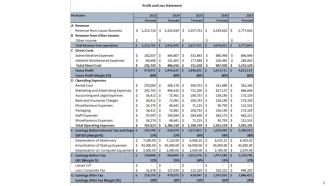
Diapositiva 45 : Las diapositivas brindan una idea del estado de pérdidas y ganancias proyectado para visualizar el desempeño financiero de la licorería.
Diapositiva 46 : Las diapositivas continúan con el estado de pérdidas y ganancias proyectado para visualizar el desempeño financiero de la licorería. .
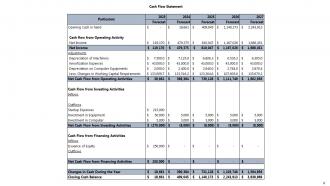
Diapositiva 47 : Las diapositivas destacan el estado de flujo de efectivo de la empresa para proporcionar una imagen detallada de lo que sucedió con el efectivo de una empresa.
Diapositiva 48 : Las diapositivas continúan con el estado de flujo de efectivo de la empresa para proporcionar una imagen detallada de lo que sucedió con el efectivo de una empresa.
Diapositiva 49 : Las diapositivas cubren una instantánea de la situación financiera de la empresa en un momento específico.
Diapositiva 50 : Las diapositivas contienen una instantánea de la situación financiera de la empresa en un momento específico.
Diapositiva 51 : El propósito de esta diapositiva es examinar los efectos de posibles eventos futuros en el desempeño de la empresa.
Diapositiva 52 : La diapositiva continúa examinando los efectos de posibles eventos futuros en el desempeño de la empresa.
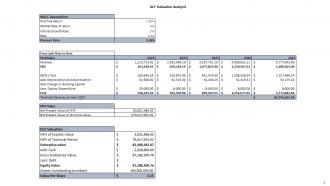
Diapositiva 53 : El propósito de esta diapositiva es calcular la cantidad de dinero que un inversionista obtendría de una inversión.
Diapositiva 54 : La diapositiva muestra otro título de contenidos.
Diapositiva 55 : La diapositiva destaca la jerarquía organizativa de la empresa.
Diapositiva 56 : esta diapositiva ilustra los mayores logros profesionales y las habilidades más valiosas del fundador.
Diapositiva 57 : esta diapositiva presenta las funciones y responsabilidades laborales del personal clave de gestión de las licorerías.
Diapositiva 58 : esta diapositiva continúa con las funciones y responsabilidades laborales del personal clave de gestión de las licorerías.
Diapositiva 59 : La diapositiva contiene otro título de contenidos.
Diapositiva 60 : Esta diapositiva representa las estrategias de salida.
Diapositiva 61 : La diapositiva muestra aún más el título del contenido.
Diapositiva 62 : El propósito de esta diapositiva es resaltar la versión más corta de las palabras existentes para ahorrar tiempo y ocupar menos espacio.
Diapositiva 63 : esta diapositiva muestra todos los íconos incluidos en la presentación.
Diapositiva 64 : esta diapositiva se titula Diapositivas adicionales para seguir adelante.
Diapositiva 65 : Esta es una diapositiva de línea de tiempo. Muestra datos relacionados con intervalos de tiempo aquí.
Diapositiva 66 : Esta es una diapositiva de Generación de ideas para exponer una nueva idea o resaltar información, especificaciones, etc.
Diapositiva 67 : esta diapositiva contiene rompecabezas con íconos y texto relacionados.
Diapositiva 68 : esta diapositiva muestra las notas Post-It. Publique sus notas importantes aquí.
Diapositiva 69 : esta diapositiva presenta la hoja de ruta con cuadros de texto adicionales.
Diapositiva 70 : esta diapositiva muestra un gráfico de columnas con una comparación de dos productos.
Diapositiva 71 : Esta es una diapositiva de agradecimiento con dirección, números de contacto y dirección de correo electrónico.
Diapositivas de presentación de PowerPoint del plan de negocios de licorería con las 76 diapositivas:
Utilice nuestras diapositivas de presentación de PowerPoint del plan de negocios de una licorería para ayudarlo a ahorrar su valioso tiempo de manera efectiva. Están listos para encajar en cualquier estructura de presentación.





































































FAQs for Liquor Store Business Plan
Dude, start with the basics - market analysis, financials, operations. Licensing is where things get tricky though, every state has different rules and they can totally screw your timeline if you're not careful. Location matters more than anything else in this business, honestly. You need foot traffic and the right demographics or you're dead in the water. Don't skip the boring stuff either - inventory systems, supplier deals, security plans. Compliance sections are mandatory since liquor laws are crazy strict. My cousin opened one last year and said talking to other store owners first was the best move he made.
Market trends totally control what you can charge. Craft spirits are huge right now, so mark those up hard - people expect premium prices anyway. Seasonal stuff works the same way. Pumpkin beers, holiday champagne, you know the drill. Watch your competitors obviously, but here's what sucks - health trends might force you to stock more low-alcohol options even though margins are garbage. I'd check what's actually selling every few months and adjust your pricing tiers. Local preferences change faster than you think, so don't get stuck with overpriced inventory that just sits there.
Honestly, start with getting your pricing right on the popular stuff - that's what'll get people through the door first. Make your windows look amazing so people actually stop and come in. Instagram's perfect for showing off new arrivals and deals (people are obsessed with finding good wine bargains). Host tastings if you can swing it, and definitely get tight with local restaurants - those partnerships are gold. Your staff needs to actually know their shit about wine though, makes or breaks the whole experience. Oh, and don't sleep on word of mouth marketing. Pick maybe two of these things to focus on initially instead of going crazy trying everything.
Dude, your customer demographics are everything when it comes to what you stock. College town? Load up on cheap beer, flavored vodka, handles - basically anything for parties. Wealthier older folks will drop serious cash on good wine and single malts. I've noticed Hispanic neighborhoods usually want more tequila and mezcal options. Young professionals are all about craft beer and whatever trendy cocktail stuff is popular that month. Seriously though, not paying attention to who's shopping is just leaving money on the table. Quick customer survey or even checking census data online can show you what's missing.
So licensing is gonna be your biggest headache - each state's totally different and some take forever. Check with your state's ABC board first, they'll tell you exactly what you need. Zoning's another pain since they don't want liquor stores near schools and churches. Oh and if you're thinking about imports, there's federal TTB stuff too which is... fun. You'll definitely need solid age verification systems and employee training down pat. My buddy opened one last year and said the paperwork was honestly worse than finding a good location. Start early on all this regulatory stuff - it's a real maze.
Dude, location is everything for liquor stores. High foot traffic spots near grocery stores or gas stations are gold - people grab booze while doing other errands all the time. You'll want visibility from the street too. Yeah, rent's gonna be pricier in good areas, but the sales boost usually covers it. Don't just go for the cheapest spot though, that's a mistake I've seen people make. Check out your competition first and make sure local laws don't limit how many stores can be in one area. Convenience beats everything else.
Dude, you're gonna need cash flow projections for like 3 years - break it down monthly by beer, wine, spirits, plus any snacks or whatever. Startup costs are brutal with licensing and inventory, so definitely map that out first. Here's the thing though - people drink way more during holidays but January? Total dead zone when everyone's doing their health kick thing. Factor in your regular stuff like rent, utilities, insurance. Oh and staffing costs too. Banks really want to see your break-even point and when you'll actually make money. Honestly, throw in some conservative worst-case numbers because they eat that up.
Dude, branding matters SO much for liquor stores. You're selling the exact same stuff as the place across town, right? What sets you apart is the vibe - are you the fancy wine place, the craft beer guru, or just the chill spot with solid prices? Honestly, I think most store owners totally miss this. Your customers pick you over the competition when you both have that same bottle of bourbon because of how your place *feels*. Figure out what makes you different first - maybe you know everything about local breweries or whatever. Then make sure your signs, how your staff talks to people, the whole experience backs that up.
Honestly, it's all about watching your numbers like a hawk. What sells fast vs what just sits there collecting dust? I'd order smaller amounts more often instead of going crazy with bulk orders - unless the discount is seriously worth it. Put your best profit makers at eye level and do that first-in-first-out thing so nothing expires on you. Track seasonal stuff too, that matters way more than people think. Oh and definitely buddy up with local bars and restaurants - they'll usually buy your slow movers at a small discount. Just gotta find that sweet spot between having enough variety and not drowning in inventory costs.
Dude, start by grabbing coffee with their sales reps - that's honestly where the magic happens. You can work out exclusive deals for limited releases, which customers go crazy for. Tasting events are huge moneymakers too. Cross-promote each other on social, maybe even arrange brewery tours as customer perks. If you're willing to commit to decent volume, some places will do custom brews just for your store (though that's obviously a bigger commitment). Oh, and co-branded merch sells itself. Just focus on building real relationships first instead of jumping straight into business stuff.
Dude, you really should consider getting online. People want to order booze from their couch now - convenience is king, plus some folks just like the privacy aspect. The pandemic basically forced everyone to try it, and honestly most never went back to only shopping in-store. Starting simple works fine. Local delivery through a basic website can bump your sales 15-30%, which isn't nothing. Just don't mess around with the age verification stuff - that's where you can get in real trouble. Oh, and definitely check what your local laws say about delivery first. Some areas are weird about it.
Definitely do hands-on tastings during training - have them actually try the spirits, wines, beers so they can give real recommendations. I made that mistake once recommending a whiskey I'd never even tasted lol. Mock customer scenarios help tons too, especially practicing tricky situations like ID checks. Quick reference sheets are clutch for popular items and food pairings. But honestly? The best approach is teaching them to ask customers what they actually like instead of just pushing expensive bottles. Role-playing weird customer interactions really works.
Honestly, start with a decent POS system that tracks inventory - saves you from running out of the good stuff. Digital loyalty programs work great too, customers eat up those personalized wine suggestions. Self-checkout helps during rush hours (though some people still need help scanning lol). Online ordering with curbside pickup isn't going anywhere - COVID made everyone expect it. Digital shelf labels are a game changer for price updates instead of doing everything by hand. Oh, and mobile apps for promotions actually get results. Get your POS sorted first, then add the customer stuff later.
Licensing is gonna be your biggest headache - liquor laws are insane and every state's different. Theft's a huge problem too, customers and employees both. Plus you're dealing with tons of cash which makes you a target. Competition's rough with Costco and online sellers undercutting everyone. Location matters more than you'd think - too close to a school and you're screwed before you start. Honestly, alcohol sales can swing pretty wildly when the economy tanks. My cousin learned that the hard way in 2020. Get a lawyer who actually knows this stuff inside and out.
Dude, community stuff is seriously key for liquor stores. People can be weird about alcohol businesses, so when you sponsor local events or do wine tastings with restaurants, it shows you actually care about the area. Word-of-mouth is literally everything - I know stores that crush it just because everyone loves the owner. Your reputation decides if people pick you over whatever's at the grocery store. Sports team sponsorship works great, or maybe a charity thing? Oh, and those partnerships with local restaurants for tastings - that's gold because you're hitting their customer base too.
-
I really liked their customized design services. I got my desired template made by their expert team. Thank You!
-
Mesmerized with the fantastic collection! Super sleek, relevant infographics.