


Pharmacy Business Plan Powerpoint Presentation Slides





Try Before you Buy Download Free Sample Product
 Impress Your
 Audience
 100%
100% Editable
 Save Hours
 of Time


A Pharmacy Retail Store is a comprehensive establishment that offers various services and products related to medication and health. This Pharmacy Business Plan PowerPoint Presentation serves as a guide to understanding the market dynamics, growth potential, and challenges in the pharmacy retail industry. It covers essential aspects such as an executive summary, mission, vision, goals, startup cost summary, market analysis, and an overview of the services offered by our startup pharmacy business. Moreover, this Pharmacy services plan PPT includes insightful statistics on the US pharmacy industry, target market identification, buyer persona analysis, TAM, SAM, and SOM. Additionally, our marketing plan section outlines strategies for sales, distribution, and promotions to establish the credibility of our pharmacy store. Lastly, this presentation concludes with a management summary, exit strategies, and critical abbreviations relevant to the pharmacy retail industry. Download this 100 percent editable presentation and get access to our highly researched and skilfully designed product.
People who downloaded this PowerPoint presentation also viewed the following :
Content of this Powerpoint Presentation
Slide 1: This slide introduces Pharmacy Business Plan. State your company name and begin.
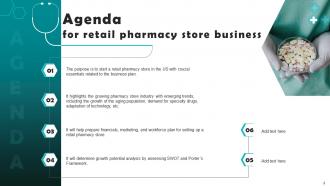
Slide 2: This is an Agenda slide. State your agendas here.
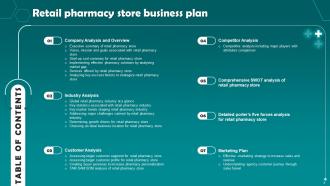
Slide 3: This slide shows Table of Content for the presentation.
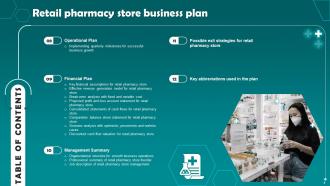
Slide 4: This slide also shows Table of Content for the presentation.
Slide 5: This slide shows title for topics that are to be covered next in the template.
Slide 6: This slide provides key highlights of the retail pharmacy store.
Slide 7: This slide covers the retail pharmacy store vision, mission, and goals.
Slide 8: This slide provides information about start-up expenditures that incur during the process of establishing a retail pharmacy store.
Slide 9: This slide covers the problem associated with the retail pharmacy store and how the company will implement an effective solution to overcome the existing gap.
Slide 10: This slide provides key product and services offered by the retail pharmacy store to a wide range of clients.
Slide 11: This slide covers the essential points to be considered while developing business strategy for retail pharmacy store.
Slide 12: This slide shows title for topics that are to be covered next in the template.
Slide 13: This slide highlights the market size of the global retail pharmacy industry.
Slide 14: This slide presents a thorough assessment of market data within the retail pharmacy industry.
Slide 15: This slide highlights the thorough assessment of market data within the retail pharmacy industry.
Slide 16: This slide presents the key market trends that have the potential to change the current market scenario.
Slide 17: This slide portrays details about various challenges catered by the retail pharmacy store industry.
Slide 18: This slide presents details about various growth drivers resulting in retail pharmacy industry progress.
Slide 19: This slide portrays an ideal business location for a retail pharmacy store that minimizes the risk of failure.
Slide 20: This slide shows title for topics that are to be covered next in the template.
Slide 21: This slide covers an assessment of how the company's products will be targeted to a particular market based on customer segmentation.
Slide 22: This slide covers an assessment of how the company's products will fit into a particular market and where they will acquire the most traction with customers.
Slide 23: This slide provides a glimpse of how to better understand the target audience, to fine-tune marketing campaigns, and increase personalization.
Slide 24: This slide is to depict the market potential of retail pharmacy store in terms of TAM, SAM, and SOM.
Slide 25: This slide shows title for topics that are to be covered next in the template.
Slide 26: This slide is to provide a glimpse of major participants and key competitors of the industry to gain insight into their products, revenue, and global presence.
Slide 27: This slide shows title for topics that are to be covered next in the template.
Slide 28: This slide identify the industry’s strengths, weaknesses, opportunities, and threats related to the retail pharmacy store.
Slide 29: This slide shows title for topics that are to be covered next in the template.
Slide 30: This slide highlights porter’s five forces model and its implications in the US retail pharmacy store.
Slide 31: This slide shows title for topics that are to be covered next in the template.
Slide 32: This slide presents an effective go-to-market strategy for bringing the company's products or services to an end customer.
Slide 33: This slide also presents an effective go-to-market strategy for bringing the company's products or services to an end customer.
Slide 34: This slide provides information regarding the retail pharmacy store customer journey mapping to track users actions and key touch points.
Slide 35: This slide shows title for topics that are to be covered next in the template.
Slide 36: This slide covers particular objectives or goals that the organization intends to attain as part of its business plan.
Slide 37: This slide shows title for topics that are to be covered next in the template.
Slide 38: This slide provides important financial assumptions that are to be made while setting retail pharmacy store.
Slide 39: This slide presents an effective revenue model of the retail pharmacy store, which displays the cost incurred and the various sources of income.
Slide 40: This slide also presents an effective revenue model of the retail pharmacy store, which displays the cost incurred and the various sources of income.
Slide 41: The slide shows the effective revenue model of the retail pharmacy store.
Slide 42: This slide highlights the break-even analysis of the firm.
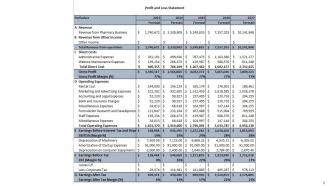
Slide 43: This slide provides the projected profit and loss statement to visualize the retail pharmacy store financial performance for the next five years.
Slide 44: This slide presents a glimpse of the projected profit and loss statement to visualize the retail pharmacy store financial performance for the next five years.
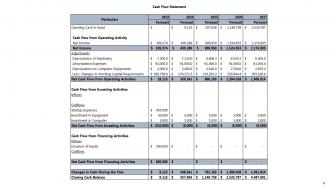
Slide 45: This slide highlights the company's cash flow statement to provide a detailed picture.
Slide 46: This slide also highlights the company's cash flow statement to provide a detailed picture.
Slide 47: This slide displays the snapshot of the company's financial position at a specific time by showing the details of the assets.
Slide 48: This slide also displays the snapshot of the company's financial position at a specific time by showing the details of the assets.
Slide 49: This slide examines the effects of potential future events on the company’s performance by considering different outcomes.
Slide 50: This slide also examines the effects of potential future events on the company’s performance by considering different outcomes.
Slide 51: This slide calculates the amount of money an investor would get from an investment after adjusting for the time value of money.
Slide 52: This slide shows title for topics that are to be covered next in the template.
Slide 53: This slide highlights the organizational hierarchy in the company.
Slide 54: This slide displays the founder’s biggest professional achievements and most valuable skills.
Slide 55: This slide highlights the job roles and responsibilities of retail pharmacy store key management.
Slide 56: This slide also highlights the job roles and responsibilities of retail pharmacy store key management.
Slide 57: This slide countinues highlighting the job roles and responsibilities of retail pharmacy store key management.
Slide 58: This slide shows title for topics that are to be covered next in the template.
Slide 59: This slide represents exit strategies that enable the entrepreneur to liquidate their position in a financial asset.
Slide 60: This slide shows title for topics that are to be covered next in the template.
Slide 61: This slide displays the shorter version of existing words to save time and take up less space.
Slide 62: This slide shows all the icons included in the presentation.
Slide 63: This slide is titled as Additional Slides for moving forward.
Slide 64: This is Our Vision, Mission & Goal slide.
Slide 65: This slide provides 30 60 90 Days Plan with text boxes.
Slide 66: This slide shows Post It Notes for reminders and deadlines. Post your important notes here.
Slide 67: This is a Quotes slide to convey message, beliefs etc.
Slide 68: This slide presents Roadmap with additional textboxes.
Slide 69: This is an Idea Generation slide to state a new idea or highlight information, specifications etc.
Slide 70: This slide depicts Venn diagram with text boxes.
Slide 71: This slide displays Column chart with two products comparison.
Slide 72: This is a Thank You slide with address, contact numbers and email address.
Pharmacy Business Plan Powerpoint Presentation Slides with all 77 slides:
Use our Pharmacy Business Plan Powerpoint Presentation Slides to effectively help you save your valuable time. They are readymade to fit into any presentation structure.































FAQs for Pharmacy Business Plan
So for your pharmacy business plan, start with market research on your area - who's your competition, what's the demand like? Financial projections are huge since that's what investors actually care about. Include startup costs, cash flow, the whole nine yards. Cover your services too - prescriptions, over-the-counter stuff, maybe clinical services if you're going that route. The regulatory section is honestly boring as hell but you can't skip it. Don't forget staffing plans and how you'll market yourself. Operational workflows matter too. Write a killer executive summary first - that's what hooks people before they dive into the detailed sections.
Look, you basically need to know what's going on around you before making any big moves. Check out who lives in your area, what other pharmacies are charging, what health issues people actually deal with. Then you can spot the stuff nobody else is doing. Like if there's tons of elderly folks but zero med sync programs? Easy win. I learned this the hard way - don't just assume what people want. Some services are totally overdone while others are sitting there waiting for someone to notice. Use that info to figure out who you're actually serving and what'll make you different from the CVS down the street.
You'll definitely need P&L projections for 3-5 years, plus cash flow statements and break-even analysis. Startup costs are huge - inventory, equipment, licensing, and that initial drug stock (seriously, it's always way more than you budget for). Monthly projections for year one are crucial since cash gets tight fast. Oh, and throw in some sensitivity analysis showing best/worst case scenarios. Prescription volume forecasts and average transaction values matter too. Just make sure your numbers actually match what's happening in your local market - investors can smell BS projections from a mile away.
Dude, regulatory changes will mess with your pharmacy's money flow big time. Budget for compliance stuff upfront - trust me on this. The rules shift constantly (I swear they just make things up sometimes). Don't put all your eggs in the dispensing basket either. Branch out into other services. Oh, and get tight with some regulatory consultants - they'll tip you off before new rules drop. Smart pharmacies actually use these changes to get ahead instead of just surviving them. It's all about staying flexible from the start.
Honestly, you gotta find 2-3 things you can actually do way better than the big chains. Medication therapy management is huge right now - or maybe immunizations, compounding, that kind of stuff. Customer experience matters too though. Faster service, real consultations, delivery if you can swing it. I'd definitely survey your current customers first about what they're missing healthcare-wise. Some pharmacies I know crushed it by partnering with local docs or going all-in on seniors/diabetics. Don't try competing on everything - you'll just spread yourself thin. Pick your battles and actually excel at them.
Look at your sales history first - figure out what flies off the shelves vs what sits there forever. Generic meds are usually your moneymakers, so set up automatic reordering for those common scripts and OTC stuff. Don't put all your eggs in one basket though - multiple suppliers will save your butt when shortages hit. For those crazy expensive specialty drugs? Order them as needed so they don't eat up all your cash. A decent pharmacy system makes this way easier, honestly. Track how fast you're turning inventory each month - shooting for 10-12 times yearly keeps things healthy.
Dude, you literally can't run a pharmacy without solid tech anymore. Budget big for pharmacy management software, automated dispensing stuff, and some kind of patient app. Electronic prescriptions, inventory tracking, insurance claims - it all needs to talk to each other or you're screwed. The whole handwritten scripts thing? Dead. Gone. Your software implementation will take forever too, so start shopping around now. I know the upfront costs suck, but there's no way around it if you want to stay compliant and actually make money. Oh, and don't forget patient communication platforms - people expect that now.
Start with your POS data - see what age groups and medication types you're already getting. Then figure out who's missing. For younger folks, social media ads work great. Seniors? Don't laugh, but direct mail still kills it with that crowd. I'd also hit up nearby doctor offices and senior centers for partnerships. Oh, and gyms if you're trying to reach the health-conscious crowd. The trick isn't being everywhere - it's showing up where your actual customers hang out, not where you assume they do.
Honestly, you've got a lot to figure out but start with inventory and staffing - that's what'll make or break you on opening day. Pick your distributors, set up stock tracking, and nail down your ordering process. Staff-wise, map out pharmacist schedules and tech duties. The tedious stuff like prescription workflows and insurance processing has to be bulletproof too. Oh, and your POS system - that's massive for customer management. Actually, inventory might be even more critical than I thought since you can't sell what you don't have. Quality control protocols round it all out.
Definitely put healthcare partnerships front and center in your plan. Most pharmacies barely tap into this - it's honestly leaving money on the table. Team up with local clinics for med management, vaccines, chronic care stuff. The revenue potential is massive. Oh, and collaborative agreements are huge too - help doctors manage diabetic patients, blood pressure monitoring, that kind of thing. I'd say pick three nearby practices and pitch them something simple this month. Even basic flu shot clinics can lead to way bigger opportunities down the road. Start small but think big.
Dude, the two biggest killers are being way too optimistic about revenue and totally underestimating startup costs. Inventory alone will crush you if you're not careful. Most people do this super generic market research that tells them nothing about their actual neighborhood - waste of time honestly. Insurance reimbursements are slow as hell, so factor that into your cash flow or you'll be screwed. Oh and regulatory compliance costs? People just... forget about them completely. Wild. You need at least 6 months of operating expenses saved up, maybe more since insurance payments are basically random.
You definitely want a whole section on community health stuff in your business plan. Health screenings, vaccination clinics, medication adherence programs, wellness workshops - these programs aren't optional anymore if you want to compete. Partner with local healthcare providers or community centers to get more people involved. Honestly, the pharmacies killing it right now are the ones acting like health hubs instead of just places to grab your prescriptions. Oh, and don't forget to map out costs, revenue potential, and how you'll actually measure if these programs work.
So there are a bunch of ways to fund this thing. Bank loans are pretty standard - just need a solid business plan and probably collateral. SBA loans are actually better terms if you can swing it, lower down payments too. Some investors or even pharmacy chains might throw money at you for equity, but then you're giving up control (could be worth it though if they know what they're doing). Oh, and equipment financing is huge for all your dispensing systems and registers. Some wholesalers will finance you too. Honestly, nail down that business plan first - everything else gets easier after that.
Don't just slap marketing into one section of your business plan - weave it through everything. Your financial projections need to show real numbers, like how much you're dropping on local ads vs. how many new prescriptions you expect. Community outreach is honestly where most pharmacies miss the boat. Partner with local doctors, do health screenings, build your digital presence. All that stuff should be in your target market analysis. Oh, and make sure your marketing budget actually makes sense with realistic patient acquisition costs. You need clear ROI timelines that actually add up.
For your pharmacy, definitely track prescription volume growth and gross margin per script first. Revenue per square foot matters tons since space is tight. Customer retention rates are clutch too - honestly, people get pretty loyal to their pharmacist once they find someone good. Monitor inventory turnover and average transaction values monthly. New customer acquisition costs will tell you if your marketing's working. Oh, and patient satisfaction scores - pharmacy's still relationship-heavy despite all the chain competition. I'd compare year-over-year trends instead of stressing about daily numbers.
-
“Thank you to the SlideTeam. Your presentations look really skillful and have made my life so much easier.”
-
Best way of representation of the topic.