


Pharmacy Dispensing Process For Medicine Supply




Try Before you Buy Download Free Sample Product
 Impress Your
 Audience
 100%
100% Editable
 Save Hours
 of Time


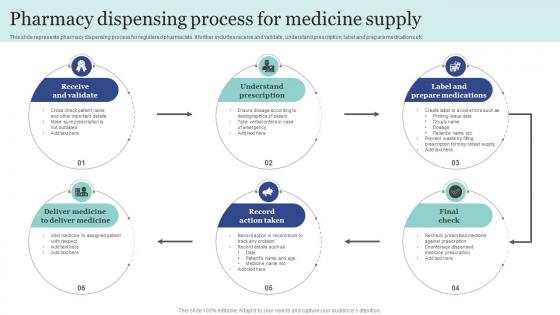
This slide represents pharmacy dispensing process for registered pharmacists. It further includes receive and validate, understand prescription, label and prepare medications etc.
People who downloaded this PowerPoint presentation also viewed the following :
Pharmacy Dispensing Process For Medicine Supply with all 6 slides:
Use our Pharmacy Dispensing Process For Medicine Supply to effectively help you save your valuable time. They are readymade to fit into any presentation structure.





FAQs for Pharmacy Dispensing Process
So first you'll get the prescription and verify it's legit, then pull up their profile and check insurance stuff. Do your clinical review - drug interactions, dosing, all that. Then prep the meds (counting pills is honestly kind of zen sometimes), stick the label on properly. Here's the thing though - that second pharmacist verification is clutch. Can't tell you how many times that's caught something. After that, counsel the patient on how to take it and document everything. Seriously, document every step because if something comes up later, that paperwork is what saves your butt.
Honestly, the tech is what saves your butt in pharmacy. Barcode scanning catches when you grab the wrong med, and those automated dispensing machines cut down on human screwups big time. Electronic prescriptions are a godsend - no more squinting at doctors' chicken scratch handwriting (seriously, why is it always so bad?). Clinical decision support jumps in with warnings about drug interactions or weird dosing before you mess up. Everything works together as this safety net. Just don't get lazy and override alerts when you're swamped - that defeats the whole point.
So we basically have multiple checkpoints to catch mistakes. First thing - we review every prescription for drug interactions and allergies, plus dosing problems. During prep, there's this "five rights" thing we do - right patient, drug, dose, route, time. Barcode scanning honestly saves our butts daily, catches tons of mix-ups. Before anything goes out, we visually inspect the actual pills against the label. High-risk meds? Yeah, another pharmacist has to double-check those too. The trick is not rushing these steps even when it's crazy busy (which is like... always).
So pharmacists do a bunch of checks before filling anything. They'll verify the doctor's DEA number and make sure the prescription format looks legit for your state. Cross-reference your patient history too. Red flags are things like weird dosages, sketchy handwriting changes, or someone trying to fill way too early. Honestly some of the fake ones are laughably bad once you know what to watch for. If something seems off about a prescription, just call the doctor's office directly. Better safe than sorry, you know?
Dude, you HAVE to run those interaction checks every single time - no shortcuts. I get that alert fatigue is brutal, but actually read them instead of auto-clicking through. Watch out especially for warfarin combos, CNS depressants, and anything with MAOIs - those'll mess you up fast. When something serious pops up, pick up the phone and call the prescriber right away. Don't just make a note and move on. Oh, and here's something people forget - ask about herbal stuff and OTC meds too. Half the time they're not even in your system but can still cause nasty interactions.
Look, compliance can't be something you slap on at the end - weave it into everything from day one. Train your staff properly on regulations and document every single prescription. Double-checking controlled substances is non-negotiable. Do regular audits because honestly, finding problems yourself beats having inspectors find them for you. State and federal rules change all the time (ugh), so stay on top of those updates. Set up automated alerts for expired licenses and recalls - your system should handle that stuff automatically. The goal is making it feel normal for your team, not like extra work they hate doing.
Oh man, patient education makes such a difference - I've seen compliance jump like 30-40% when you actually explain things properly. People need to know WHY they're taking something, not just how many pills to swallow. If they don't get it, they'll quit the second they feel weird or forget a dose. Honestly, half the time we just rush through the instructions without checking if it makes sense to them. Ask questions like "Any confusion about taking this?" before they leave. When patients understand what to expect, they stick with it way better.
Honestly, compounding and specialty meds are such a pain - they mess up your whole day because everything takes forever. You've got to block out way more time for prep and double-check you have all the right ingredients ready. The documentation alone is brutal. Plus specialty meds are their own nightmare with prior auths and weird storage rules. Patient education takes ages too. My advice? Build in buffer time and prep everything ahead of time. Never try cramming these into your regular slots or you'll be playing catch-up all day. Learned that the hard way!
Look, inventory management is what keeps your whole dispensing operation running. Track your stock levels and expiration dates religiously - trust me on this one. When it works, nobody notices. When it fails? Total chaos. You'll need real-time tracking so you don't accidentally dispense expired meds or run out halfway through filling someone's prescription. Speed depends on having everything organized and accessible too. Oh, and set up automated reorder points - saves you from constantly babysitting stock levels. Do regular cycle counts and you won't hate your life later.
Just call the prescriber's office directly - have the original script right there with you. Start with something like "I have a quick question about Mrs. Smith's prescription" before diving into the actual problem. Way better than just blurting out the issue immediately. Be specific about what you're confused on - dosage, drug interactions, messy handwriting, whatever. Document who you talked to and what got clarified in your system. If it's urgent and nobody's picking up, try their secure messaging through the EMR. Most doctors actually check those now. Keep it short but thorough - they're swamped but you still need answers for patient safety.
Honestly, high-volume pharmacy is like playing Tetris while someone's yelling at you. Time pressure is insane - you've got prescription backlogs that never end and patients getting annoyed about wait times. The phone rings constantly too, which doesn't help. Maintaining accuracy when you're checking hundreds of scripts is mentally draining. Plus staffing shortages make everything worse, and don't get me started on insurance issues slowing things down. I swear some days are just brutal. Best thing you can do is create solid workflow systems and be upfront with patients about realistic wait times from the start.
So every controlled substance gets tracked through these perpetual inventory systems - the DEA doesn't mess around with this stuff. You'll log everything in real-time: who dispensed what, quantities, dates, patient info, all of it. Most places have switched to electronic systems (seriously saved my sanity compared to those old paper logs). The system automatically updates counts and catches discrepancies. Regular physical counts happen to match up with electronic records. Oh, and the DEA can show up for audits whenever they want. Double-count everything and keep those records perfect - trust me on this one.
Honestly, the tech upgrades in pharmacy packaging have been pretty game-changing lately. Smart blister packs now have RFID chips that actually verify you're grabbing the right med. Color-coded bottles help patients tell their meds apart - seems obvious but it works. Barcode scanning got way more sophisticated too. Those automated dispensing systems with unit-dose packaging? Total safety win. Labels are finally readable with bigger fonts and pictograms, plus QR codes for patient info. Oh, and tamper-evident packaging is everywhere now. I'd start by just looking at your current labeling - probably lots of room for clearer visual cues there.
Honestly, barcode scanning is a game changer - way faster and catches mistakes you'd miss manually. Get electronic prescriptions going if you haven't already, that's probably your biggest win. No more calling doctors about illegible handwriting! Robot dispensers work great for your high-volume stuff, and pre-packaging common meds saves tons of time. Your pharmacists can focus on the actual clinical work instead of counting pills all day. I'd start with e-prescribing first though - it's like night and day for both speed and accuracy. The upfront tech investment pays off pretty quick.
Keep your PharmD and license current - that's the obvious part. But you'll also need 15-30 CE hours annually depending on your state. Most require specific training for MTM, immunizations, and controlled substances. The opioid education requirements are getting really strict everywhere now too. Stay updated on new drug launches and FDA alerts. Don't forget about changes to your dispensing systems either - that stuff trips people up. Honestly, the worst part is tracking everything properly. I've seen pharmacists scramble last-minute trying to find missing CE credits before renewal. Total nightmare you don't want to deal with.
-
I discovered some really original and instructive business slides here. I found that they suited me well.
-
One-stop solution for all presentation needs. Great products with easy customization.