


Pharmaceutical Quality Control And Assurance Process




Try Before you Buy Download Free Sample Product
 Impress Your
 Audience
 100%
100% Editable
 Save Hours
 of Time


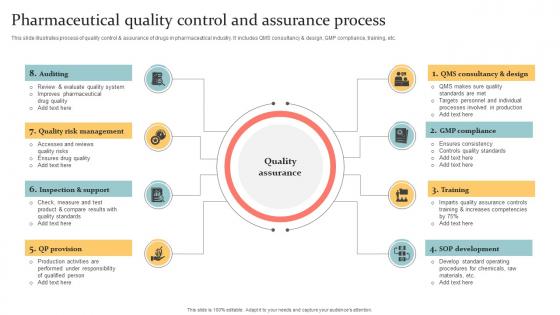
This slide illustrates process of quality control and assurance of drugs in pharmaceutical industry. It includes QMS consultancy and design, GMP compliance, training, etc.
People who downloaded this PowerPoint presentation also viewed the following :
Pharmaceutical Quality Control And Assurance Process with all 6 slides:
Use our Pharmaceutical Quality Control And Assurance Process to effectively help you save your valuable time. They are readymade to fit into any presentation structure.





FAQs for Pharmaceutical Quality Control
Look, GMP comes down to five main things: quality systems, personnel training, proper facilities/equipment, solid documentation, and production controls. Train your people well - can't stress this enough. Get your equipment validated properly and write detailed SOPs for literally everything (trust me, auditors love that stuff). Keep meticulous records too. The whole point is building quality right into each step instead of scrambling to fix problems later. Yeah, it's a pain upfront, but way better than having batches fail when you're dealing with people's health.
Okay so basically QA is like the big picture stuff - you're setting up all the processes and SOPs to build quality in from day one. QC is more hands-on where you're actually testing batches and running assays on the final product. I always think of QA as being the architect (yeah it sounds cheesy but whatever) and QC as the inspector catching stuff before it ships out. QA prevents problems. QC catches what slips through. Honestly both are super important but they're just different approaches to the same goal.
Risk management is the backbone of pharma QA - you're identifying and controlling hazards that could mess with product quality or patient safety. Instead of just checking boxes, you prioritize based on actual risk levels. ICH Q9 is your guide here, though honestly the documentation gets pretty tedious. Map out your critical process steps first. Ask yourself "what goes wrong at this point?" then focus your controls on the highest-risk spots. Being proactive beats scrambling to fix problems later. Oh, and don't try to tackle everything at once - that's a recipe for burnout.
Okay so first thing - get your quality systems rock solid with cGMP standards. The documentation and validation stuff is honestly a pain but you gotta do it. Train your team regularly on FDA rules, and keep crazy detailed batch records for everything. Internal audits are your friend here. Oh and definitely run mock inspections with outside consultants before the real deal - trust me, finding problems early beats getting blindsided later. The whole process feels like drowning in paperwork at first, but it'll save your butt when inspectors show up.
Honestly, the worst part is dealing with people who've done things the same way forever - they'll fight you on everything. Money's always tight too, which sucks when you need proper training. Oh, and the paperwork is insane, especially if you're juggling different compliance standards. Keeping up with new regulations while actually running the business? That's a whole other headache. Here's what worked for me: pick one small area to test things out first. Don't go big right away. Get someone in each department who's actually excited about quality stuff - they'll help sell it to everyone else. And seriously, spend the money on training upfront or you'll regret it later.
Look, audits are basically your safety net - they make sure you're actually doing what your procedures say you're doing. Internal ones help you catch problems before the FDA shows up at your door (which is way better than the alternative). External inspections from regulators keep you honest and meeting standards. I know it sounds boring, but think of it like this - they're quality control for your quality control, which is weirdly recursive when you think about it. Bottom line: don't just treat audit findings as checkbox exercises. They're actually great chances to improve your whole system.
So the big game-changers right now are AI/ML for catching problems early - honestly that predictive stuff is pretty impressive. IoT sensors give you real-time monitoring throughout manufacturing, which is huge. Digital twins are wild too, you can basically simulate everything virtually now. Blockchain's helping with supply chain transparency (though still feels overhyped to me). Plus automated inspection systems and better analytics platforms. But here's the thing - it's really about combining these, not just picking one. I'd look at your biggest headaches first and see what tech actually makes sense for those specific problems.
Honestly, you gotta make quality everyone's job, not just QA's headache. Get leadership to actually show they care about doing things right over quick wins - trust me, people can smell BS from a mile away. Train folks so they get WHY the rules exist, not just mindless box-checking. Build a culture where calling out problems early gets you high-fives, not dirty looks. Oh, and definitely tie quality stuff into everyone's reviews across departments. Short cuts shouldn't pay off, ever. Also set up ways for people to speak up without getting thrown under the bus.
Track your batch rejection rates and how often you're seeing deviations - those are your bread and butter metrics. Customer complaints matter way more than people think, plus any regulatory findings obviously. CAPA closure times tell you if you're actually fixing stuff or just shuffling paperwork around. I'd set up monthly dashboards covering both the predictive stuff (like training rates, supplier performance) and the "oh shit" indicators (recalls, OOS investigations). Honestly, the trick is catching patterns before they blow up in your face. You want that balanced mix so you're not just reacting to fires all the time.
So the lifecycle approach is basically about building quality in from day one instead of scrambling to fix stuff later. You're catching problems early when they're cheap to solve - honestly makes so much sense when you think about it. Way better risk management too, plus regulators love seeing consistent processes. My old manager used to say waiting until final testing is like checking if your foundation is solid after you've built the house. Start by looking at your current workflow and figure out where you can add quality checkpoints throughout instead of just at the end.
Document control is basically version management plus who gets access to what. Get a centralized system where only certain people can update SOPs - trust me, you don't want "final_final_v3" chaos everywhere. Every document needs approval workflows and revision tracking. Map out who accesses what and when changes get reviewed. Honestly, the audit trail part is huge for inspections. Don't forget regular reviews either because outdated procedures will totally screw you over during audits. I'd start by looking at your current document flow first and finding the worst gaps.
Look into ALCOA+ principles first - that's your foundation for keeping data Attributable, Legible, Contemporaneous, Original, and Accurate (plus Complete, Consistent, Enduring, Available). Set up solid electronic systems with access controls and audit trails. The documentation side honestly gets pretty tedious, but you can't skip it. Train your people on proper practices and do regular reviews. Clear SOPs are non-negotiable - once you write them, actually follow them. Oh, and definitely audit what you're doing now to spot any weak points. Good backup procedures will save your sanity later.
Dude, training is literally what keeps QA from imploding. Regulations change constantly - seriously, it's wild how fast things shift in pharma. Your team needs regular sessions to stay on top of new SOPs and tech updates. Plus it helps people catch problems early instead of dealing with disasters later. One thing I've noticed? Consistency across the team gets way better with ongoing education. Don't forget to document everything though - auditors will ask for those training records before they even sit down. Oh, and track completion rates because someone always tries to skip the boring sessions.
Oh man, dealing with global regs is such a pain. You're basically juggling multiple QA strategies at once, and the coordination is brutal. FDA wants one thing, EMA wants something totally different - and don't even get me started on the paperwork nightmare since every agency has their own special formatting requirements. What works in the US might completely bomb in Europe because their acceptance criteria are different. Honestly? Build flexibility into your main QA setup right from the start, then layer on the regional stuff. Way easier than trying to fix everything later when you're drowning in compliance issues.
Honestly, QA testing is getting pretty wild right now. Real-time release testing (RTRT) is taking off - basically you can ship products based on process data instead of waiting around for final testing. PAT tech gives you continuous monitoring while you're manufacturing, which is super handy. The AI stuff is where it gets interesting though - machine learning can actually predict quality problems before they blow up. Digital tools are making data management less of a nightmare too (thank god). Oh, and compliance isn't nearly as painful anymore. I'd pick one that matches what you're already doing and maybe try a small test run first.
-
Informative and engaging! I really like the design and quality of the slides.
-
They guys always go the extra mile to meet the expectations of their customers. Almost a year has been associated with them.