

Supply Chain Process Of Pharmaceutical Company




Try Before you Buy Download Free Sample Product
 Impress Your
 Audience
 100%
100% Editable
 Save Hours
 of Time


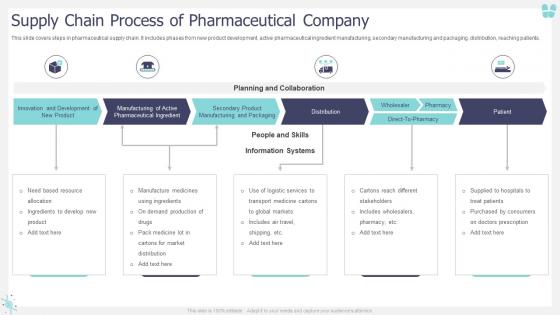
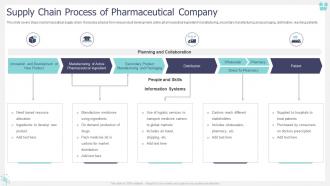
This slide covers steps in pharmaceutical supply chain. It includes phases from new product development, active pharmaceutical ingredient manufacturing, secondary manufacturing and packaging, distribution, reaching patients.
People who downloaded this PowerPoint presentation also viewed the following :
Supply Chain Process Of Pharmaceutical Company with all 6 slides:
Use our Supply Chain Process Of Pharmaceutical Company to effectively help you save your valuable time. They are readymade to fit into any presentation structure.





FAQs for Supply Chain Process
So basically you've got API production first, then they formulate it into the actual drug. Manufacturing and quality control are huge - honestly the testing never stops, it's insane how regulated this stuff is. Then packaging, distribution (cold chain is critical for biologics), and finally dispensing. Every single step needs documentation for the regulators. Oh and traceability throughout the whole thing. Really depends what type of drug you're talking about though - generics are way different from controlled substances or specialty meds. I'd map out your specific product's path since the requirements vary like crazy.
Look, compliance and quality checks definitely slow things down, but they keep you from getting sued or shut down by the FDA. I've watched competitors get their facilities closed over violations - total nightmare. You'll need to document everything, validate your processes, run temperature controls during shipping. Quality checks happen at multiple points so your lead times get longer, but honestly? Better than sending contaminated stuff to patients. Oh and pro tip - build this timeline stuff in from the start. Don't treat it like some afterthought that'll mess up your schedule later.
Honestly, you need real-time visibility across everything. IoT sensors can track temps during shipping, GPS shows exact locations (bye bye "it's in transit somewhere" nonsense), and RFID tags trace individual products from factory to patient. Blockchain creates records nobody can mess with. AI analytics? They'll catch problems before they blow up. Here's the thing though - don't go crazy with separate systems. You'll end up staring at way too many screens. Pick your biggest headaches first, then build from there. Integration is everything.
So you're looking at data analytics for demand forecasting? Game changer honestly. It pulls in your historical sales plus seasonal stuff, even weird external factors like disease outbreaks or new regulations. The patterns these algorithms catch - I'm still amazed sometimes at what they find that we'd never spot manually. Real-time data from hospitals and pharmacies gets factored in too, plus social media health trends (wild, right?). Way more accurate than old-school methods. Fewer stockouts, better inventory planning. Quick win? Start by combining your current sales data with external datasets first.
Honestly, temperature control is your biggest headache - stuff goes wrong during loading, trucks break down, weather screws with you. Documentation is brutal too since you need constant monitoring for compliance. Equipment failures are the worst though. Picture this: freezer unit dies at 2am and suddenly you're scrambling to save thousands in product. Been there, not fun. You'll want backup monitoring systems and emergency logistics contacts ready to go. Don't cheap out on redundancy because when things fail, they fail hard and fast.
Fake drugs are scary as hell - they sneak in through sketchy distributors and mess up your whole tracking system. The packaging looks real but inside you've got wrong doses, bad ingredients, or literally nothing that works. Patients think they're getting real medicine but they're not. Your traceability goes out the window, and when stuff hits the fan, even legit products get caught up in recalls. I'd focus on serialization first, then vet your suppliers hard. Train your people to catch weird packaging or paperwork too. It's wild how sophisticated some of these fakes are getting.
Global sourcing is tricky - you get access to way more suppliers and can spread risk around different regions, which is great when disasters hit. But it also makes everything stupidly complicated. Trade wars mess things up, shipping gets delayed constantly, and don't even get me started on dealing with regulations in like five different countries. You don't want to depend too heavily on one place, but spreading too thin makes it impossible to manage. I'd start by figuring out which suppliers are actually critical, then see if you've got decent backup options in other regions.
So basically blockchain keeps a permanent record of where every drug batch goes - from the factory all the way to patients. Nobody can mess with the data once it's logged, which makes it super hard for fake meds to sneak in. You'll see exactly who touched what and when, plus recalls happen way faster if something goes wrong. Honestly, the whole traceability thing is pretty slick. My advice? Start small with just one expensive drug type first - maybe oncology meds or something. That way you can actually see if it works before going all-in on the whole system.
Honestly, don't put everything with one supplier - we all saw how that played out during COVID. Get some backup inventory for the stuff you absolutely can't run without. Real-time tracking tools are worth the investment so you're not flying blind when things go sideways. Your best suppliers will have your back during crises, but only if you've treated them well before disasters hit. Moving some production closer to home isn't a bad idea either, though that's obviously a bigger project. I'd start by figuring out where you're most screwed if something breaks, then fix those spots first.
Look, working with a good 3PL can totally transform your supply chain game. They've already got the temp-controlled warehouses, compliance stuff figured out, and relationships with all the carriers - basically everything you'd have to build from scratch. Plus you can scale without dropping tons of cash on warehouses you might not need later. The tricky part is finding one that actually gets pharma. I mean, some of these logistics companies think they can handle anything but pharma's different, you know? Definitely dig into their track record with similar products before you sign anything.
Honestly, start with your forecasting - look at historical data and market trends to predict demand better. Cold chain management is non-negotiable for temp-sensitive stuff. You literally can't mess around with stockouts when people need life-saving meds, so real-time inventory tracking becomes your best friend. Set up automated reorder points based on lead times and safety stock. The expiry date thing is brutal since expired products are just dead money. Oh, and don't forget proper documentation for regulatory compliance - that's a nightmare if you get it wrong. I'd audit your current forecasting accuracy first, then work backwards to see where the gaps are.
Ugh, geopolitical stuff is such a headache for pharma supply chains. Tariffs jack up your API costs out of nowhere. Export restrictions can block critical ingredients you need. Sanctions? You're suddenly hunting for new suppliers at 2am. The China-US trade war was brutal - companies got blindsided left and right. Plus you've got regulatory compliance across different countries, which honestly feels like whack-a-mole when rules keep shifting. Best bet is building backup suppliers into your network and actually paying attention to policy news so you're not scrambling later.
Yeah, tons of companies are switching to renewable energy in their facilities and cutting water waste. Packaging's probably the biggest thing right now - everyone's ditching single-use plastics for recyclable stuff. Cold chain logistics got way smarter too, with better route planning and more efficient refrigeration. Oh, and some pharma companies actually take back expired meds now instead of letting them end up in landfills, which is pretty cool. When you're vetting vendors, definitely grill them about their carbon targets and what certifications they've got. Trust me, the good ones love talking about this stuff.
Honestly, good communication stops those awful surprises that mess up everything. Regular check-ins with suppliers, distributors, and your own teams help you spot problems early - like material shortages or regulatory stuff - before they blow up. I know it sounds basic, but I've watched companies save crazy money just doing weekly calls with key suppliers. Sales teams sharing market intel with operations instead of keeping it to themselves? Game changer for forecasting. The best part is when people feel okay about flagging issues right away rather than crossing their fingers. Oh, and start with your most critical suppliers this week.
So patient-centered design is basically flipping everything to focus on what patients actually need instead of what's convenient for companies. Think packaging that grandma can open without a struggle, delivery times that don't require you to stay home all day, proper cold storage for medications that'll die in a hot delivery truck. Map out where patients hit the biggest roadblocks first - that's your starting point. Honestly took the industry way too long to figure this out. Rather than forcing people to deal with broken systems, you build around their real lives and limitations.
-
This PowerPoint layout is very helpful from a business point of view, and it's visually stunning too! I'm so happy with this product because it has helped me understand and deliver great presentations.
-
“Excellent service from the customer support team when I wanted a slide that was a bit different from those on their standard menu. Super helpful.”