


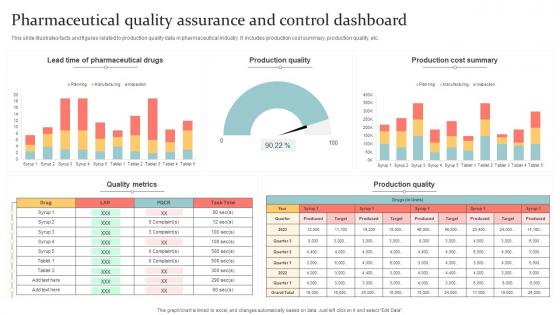
Pharmaceutical Quality Assurance And Control Dashboard




Try Before you Buy Download Free Sample Product
 Impress Your
 Audience
 100%
100% Editable
 Save Hours
 of Time


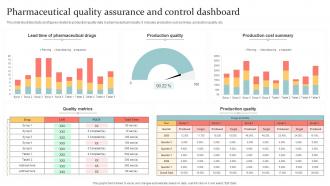
This slide illustrates facts and figures related to production quality data in pharmaceutical industry. It includes production cost summary, production quality, etc.
People who downloaded this PowerPoint presentation also viewed the following :
Pharmaceutical Quality Assurance And Control Dashboard with all 7 slides:
Use our Pharmaceutical Quality Assurance And Control Dashboard to effectively help you save your valuable time. They are readymade to fit into any presentation structure.





FAQs for Pharmaceutical Quality Assurance
So documentation control and risk management are your big ones. CAPA and supplier qualification too. Change control processes matter a lot - honestly, I've seen companies get wrecked during audits because their change control was messy. Training management is another one that'll bite you if you're not careful tracking it. Don't build your QMS as this separate thing floating around. It needs to actually work with your manufacturing ops. Map what you're doing now first, then figure out where you're missing stuff against ICH Q10. That's probably the smartest way to tackle it. Oh, and you'll want solid metrics to track how well it's all working.
Look, FDA and EMA basically run the show in pharma quality - their cGMP and ICH guidelines aren't suggestions, they're requirements. Your entire operation has to match their standards or you can't sell anything. The documentation alone will make your head spin! But honestly, once you're compliant with them, other markets usually fall into place since they drive global harmonization. I'd start by comparing what you're doing now against their guidance docs to spot any gaps. Worth the headache though.
Look, risk management is basically what keeps pharma quality from falling apart. You're spotting potential problems before they blow up in your face - raw materials, processing, all the way to release. ICH Q9 is your guide (warning: the paperwork will make your eyes bleed at first). Map out where things could go sideways in your critical steps. What could break? What's likely vs catastrophic? Then build controls around those risks. It's way better catching issues early than scrambling to fix disasters later. Trust me on this one.
Look, GMP isn't something you can just slap on later - build it into everything from day one. Documentation will drown you initially (seriously, it's insane), but you'll get used to it. Train your staff constantly and nail down those environmental controls. Do internal audits religiously because regulators WILL catch what you miss. Your quality team needs real power to shut things down when necessary. Oh, and create a culture where nobody takes shortcuts - recalls and shutdowns aren't worth the risk. The paperwork becomes muscle memory eventually, trust me.
Start with risk-based planning - hit the high-impact stuff more often than the boring low-risk processes. Your auditors need proper training and can't audit their own departments. I've watched way too many audits where people basically gave their friends a pass! Document everything with solid evidence backing your findings. Spread audits throughout the year instead of cramming them into some nightmare month (usually December, right?). Most critical part - actually follow up on corrective actions. Otherwise you're just wasting everyone's time checking boxes for compliance instead of making real improvements.
Honestly, data integrity is make-or-break in pharma quality. Bad data = bad decisions about releases and compliance. Regulators will absolutely tear you apart during inspections if your data's messy - I've seen companies get shut down over this. You'll face recalls, regulatory nightmares, the whole disaster. Systems need to keep everything accurate and tamper-proof through the product's entire life. My advice? Audit what you're doing now first. Find the weak spots in your documentation before they find you. It sounds boring but it's literally what keeps the lights on.
Honestly, AI and machine learning are total game-changers for this stuff. They're catching batch failures before they even happen and making quality control way more accurate. Digital twins are pretty wild too - you basically simulate your whole manufacturing process virtually. Cloud systems are finally replacing those ancient legacy platforms, so you get real-time visibility everywhere. Blockchain's starting to pop up for supply chain tracking, though that's still early days. My take? Just start with one small AI pilot in your quality lab. Once you see the ROI, you'll have the ammo to push for bigger changes across the company.
So QbD is basically about baking quality into your product from day one rather than just checking it at the end. First thing - figure out what "quality" actually means for your specific product, that's your starting point. Then you map out which process variables mess with your critical attributes and set up controls to catch problems before they happen. Way better than the old "make it then test it" method if you ask me. The cool part is once you understand your design space and the science behind everything, you can actually predict variability instead of just reacting to it. Saves so much headache down the road.
Honestly, it's mostly about money and red tape. Limited budgets make it impossible to hire good quality people or get decent tech, but you still gotta meet the same FDA rules as massive pharma companies. Super frustrating. Finding experienced QMS folks who actually know your therapeutic area? Good luck with that. Documentation will drown your small team fast - I've seen it happen. My take? Don't try to build everything at once. Pick the stuff that'll hurt most if it goes wrong and nail that first. You can always expand later when you're not running on fumes.
Honestly, DMAIC works great for pharma quality stuff. Pick something that's been bugging you - maybe those OOS investigations that drag on forever or supplier headaches. The FDA actually loves the data-driven approach since you're already documenting everything anyway. Form a small cross-functional team and tackle the root cause systematically. I'd start with one annoying process first rather than going big. Your deviation investigations or CAPA effectiveness are perfect candidates. Just make sure whatever Six Sigma project you choose ties back to your actual quality objectives. Trust me, starting small saves you so much grief later.
You'll want both leading and lagging indicators to see the whole picture. Start with CAPA effectiveness rates, deviation trends, and audit findings. Customer complaints matter too, obviously. Right-first-time manufacturing is huge - plus training completion and supplier scores since those can prevent disasters upstream. Batch release times and regulatory inspection outcomes hit your wallet directly, so definitely track those. Oh, and set up dashboards for real-time visibility so you're not always playing catch-up. Honestly I'd begin with maybe 5-7 core metrics. You can always add more once you've got the system running smoothly.
Here's the thing - stakeholder engagement totally makes or breaks quality initiatives. Get your operators, QA people, suppliers involved early and they'll actually care about making it work instead of fighting you on everything. These folks catch stuff you'd never think of sitting in meetings all day. Their real-world input helps you build procedures that actually make sense. One time I skipped this step and wow, did that backfire fast. Start by figuring out who all your key players are, then check in with them regularly throughout the whole process. Don't wait until the end to get their thoughts - that's way too late.
Oh man, start with continuous GMP training and quality risk management workshops - that's your foundation. Cross-training between departments is actually game-changing because people finally get how their stuff affects everyone else. Skip the endless PowerPoint dumps though, nobody learns that way. Hands-on simulations and real case studies stick way better. Leadership development matters too since quality culture trickles down. Build a competency matrix for each role first - sounds boring but it'll show you exactly where your gaps are. Then you can focus your training budget where it'll actually make a difference.
So basically, your supply chain can make or break product quality. Vendor audits are huge - you gotta qualify every supplier properly. Cold chain stuff is tricky too, especially temperature control during shipping. I've literally watched entire batches get ruined because someone's truck AC failed. Your procurement folks should be tight with QA to set up good specs and monitoring. Oh, and documentation - chain of custody paperwork saves your ass later. Build in backup suppliers where you can and get real-time tracking systems. Map out who your critical suppliers are first, then figure out where you're most vulnerable.
So post-market surveillance is like your backup plan for catching stuff that got missed during initial testing. You're tracking adverse events, complaints, real-world performance - looking for patterns that might signal manufacturing screwups or products going bad. Honestly, people sleep on this part of quality management way too much. It helps you spot batch problems, supplier drama, or packaging that fails under different storage conditions. The trick is building solid systems to collect and actually analyze the feedback properly. That way you can fix things before they blow up into massive recalls - which nobody wants to deal with.
-
If you have visited their site and failed to find the products, try reaching the customer service because it will be the case that you didn't use the search bar well.
-
The templates are the best in class. Very clear and innovative graphics! I am excited to explore and download more presentations.