

Photography Business Plan Powerpoint Presentation Slides





Try Before you Buy Download Free Sample Product
 Impress Your
Audience
 100%
Editable
 Save Hours
of Time


A photography business often involves creating and selling images for various purposes like advertising editorial content or personal memories. Grab our Photography Business Plan. It is insightfully designed and aims to identify the market size trends growth opportunities success factors and significant challenges the global photography industry faces. Our Photojournalism Business Plan covers the executive summary mission vision goals startup cost summary market gap analysis and services the startup photography business offers. In addition it captures statistics associated with the US photography industry target market buyer persona and TAM SAM SOM analysis. Our Photo Capturing Business Plan also shows an attribute based comparison of major photography industry players SWOT analysis Porters five forces model etc. Moreover it exhibits a marketing plan which includes promotional strategies to establish business credibility such as using a personal network creating a mailing list etc. Further our Picture Taking Business Plan captures pricing strategy and customer journey. Lastly it includes a revenue generation model break even analysis profit and loss account cash flow statement balance sheet and discounted cash flow with a management summary exit strategies and critical abbreviations. Get instant access.
People who downloaded this PowerPoint presentation also viewed the following :
Content of this Powerpoint Presentation
Slide 1: This slide introduces Photography Business Plan. Commence by stating Your Company Name.
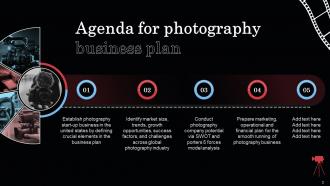
Slide 2: This slide depicts the Agenda of the presentation.
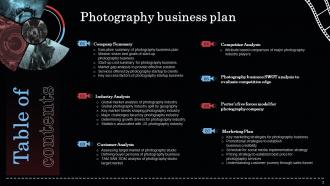
Slide 3: This slide incorporates the Table of contents.
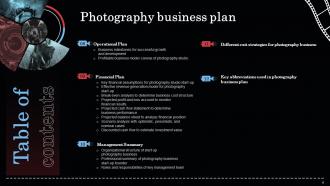
Slide 4: This is yet another slide continuing the Table of contents.
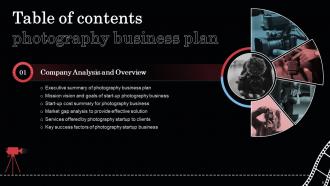
Slide 5: This slide highlights the Title for the Topics to be covered further.
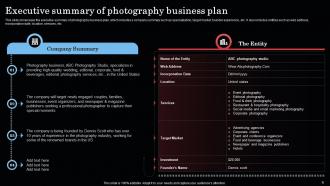
Slide 6: This slide showcases the executive summary of photography business plan.
Slide 7: This slide represents the mission and vision of the start-up photography business.
Slide 8: This slide reveals the start-up summary of photography business.
Slide 9: This slide covers the market gap analysis to provide effective solution.
Slide 10: This slide focuses on services offered by photography start up to clients.
Slide 11: This slide shows key success factors of photography business.
Slide 12: This slide shows the Heading for the Contents to be discussed next.
Slide 13: This slide portrays the global market analysis of the photography industry, including projected market size from 2021 to 2026.
Slide 14: This slide outlines the global photography industry split by geography which includes regions.
Slide 15: This slide covers the key market trends shaping global photography industry.
Slide 16: This slide exhibits the Major challenges faced by photography industry.
Slide 17: This slide deals with Determining growth drivers for photography industry.
Slide 18: This slide focuses on photography market growth across United States.
Slide 19: This slide mentions the Title for the Ideas to be discussed in the upcoming template.
Slide 20: This slide represents the target market of photography studio.
Slide 21: This slide showcases the buyer persona of photography busines.
Slide 22: This slide reveals the TAM, SAM and SOM analysis of photography studio target market.
Slide 23: This slide includes the Heading for the Ideas to be covered further.
Slide 24: This slide covers the comparison of major photography industry players on the basis of different attributes.
Slide 25: This slide indicates the Title for the Contents to be discussed in the next template.
Slide 26: This slide showcases the strengths, weakness, opportunities and threats to evaluate competitive position of photography.
Slide 27: This slide highlights the Heading for the Topics to be covered in the following template.
Slide 28: This slide exhibits Porter’s five forces model for photography company.
Slide 29: This slide depicts the Title for the Topics to be discussed in the next template.
Slide 30: This slide represents the key marketing strategies for a photography business.
Slide 31: This slide showcases the promotional strategies to establish business credibility.
Slide 32: This slide continues the Promotional strategies to establish business credibility.
Slide 33: This slide illustrates the Schedule for social media implementation strategy.
Slide 34: This slide displays the pricing strategy to establish best price for photography services
Slide 35: This slide shows the customer journey through sales funnel.
Slide 36: This slide includes the Heading for the Contents to be covered further.
Slide 37: This slide portrays the business milestones for five years of operations.
Slide 38: This slide highlights the business model canvas of photography studio.
Slide 39: This slide mentions the Title for the Ideas to be discussed further.
Slide 40: This slide represents the key financial assumptions for photography start up.
Slide 41: This slide covers the revenue generation model for photography start-up.
Slide 42: This slide shows the break even analysis of company to determine cost structure.
Slide 43: This slide displays the projected profit and loss statement prepared by company to monitor financial results.
Slide 44: This slide continues the Projected profit and loss account to monitor financial results.
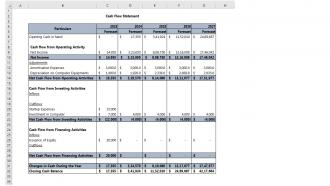
Slide 45: This slide covers the projected cash flow statement to determine business performance.
Slide 46: This slide portrays the graphical representation of projected cash flow statement to determine business performance.
Slide 47: This slide represents the projected balance sheet to analyze the financial position of the company.
Slide 48: This slide continues the Projected balance sheet to analyze financial position.
Slide 49: The purpose of this slide is to examine the effects of potential future events on the photography studio performance.
Slide 50: This slide continues the effects of potential future events on the photography studio performance.
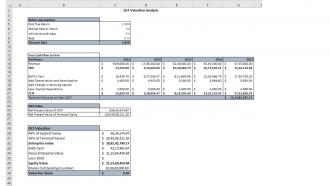
Slide 51: This slide showcases the discounted cash flow for the valuation of investment.
Slide 52: This slide contains the Heading for the Ideas to be covered next.
Slide 53: This slide represents the organizational structure of photography start up company.
Slide 54: This slide shows the professional summary of photography business start-up founder.
Slide 55: This slide mentions the roles and responsibilities of photography management team.
Slide 56: This slide continues the roles and responsibilities of photography management team.
Slide 57: This slide reveals the Title for the Contents to be discussed further.
Slide 58: This slide showcases the exit strategies for photography business.
Slide 59: This slide indicates the Title for the Contents to be discussed further.
Slide 60: This slide states the key abbreviations used in photography business plan.
Slide 61: This is the Icons slide containing all the Icons used in the plan.
Slide 62: This slide is used for depicting some Additional information.
Slide 63: This is Our team slide. State your team-related information here.
Slide 64: This is the Venn diagram slide.
Slide 65: This is the About us slide. State your organization-related information here.
Slide 66: This slide elucidates the Mind map of the firm.
Slide 67: This slide contains the Post it notes for reminders and deadlines.
Slide 68: This is the Idea generation slide for encouraging fresh ideas.
Slide 69: This slide incorporates the company's Vision, Mission, and Goal.
Slide 70: This slide represents the Roadmap.
Slide 71: This is the Thank You slide for acknowledgement.
Photography Business Plan Powerpoint Presentation Slides with all 76 slides:
Use our Photography Business Plan Powerpoint Presentation Slides to effectively help you save your valuable time. They are readymade to fit into any presentation structure.

































































FAQs for Photography Business Plan
So you need five main things for your photography business plan. Market analysis first - figure out who you're competing with and who your ideal clients are. Then nail down your services and pricing (this part's honestly harder than it sounds). Marketing strategy comes next, plus financial projections - though let's be real, those numbers are mostly educated guesses when you're starting out. Don't forget operational stuff like equipment and studio space. Oh, and figure out what makes your work different from every other photographer out there. I'd start simple with just one page and build from there as you go.
Honestly, market research just helps you stop guessing at everything. Figure out what people actually want and what they'll pay for it - way better than crossing your fingers and hoping. Look at your competition too. Maybe everyone's doing weddings but ignoring corporate stuff? That's your opening right there. You can find those pricing sweet spots and discover how to actually reach the right clients. I'd start simple - just survey your current clients about what they might want next. Sounds boring but it's kind of genius when you think about it.
Break down your revenue by service type - weddings, portraits, commercial stuff. Map out monthly cash flow for the first year at least. Wedding season's gonna be your money maker, but January? Yeah, that'll probably suck. Include all your startup costs too - equipment, marketing, the works. Be realistic about how many shoots you actually need each month to make your numbers work. Honestly, banks would rather see conservative projections than some fantasy where you're booked solid from day one. Also nail down your pricing strategy early.
Honestly, you gotta get way more specific about your ideal client. Like, forget "people who need photos" - that's everyone with a phone, right? Think demographics and actual lifestyle stuff. New parents? Business owners needing LinkedIn shots? Wedding couples? Look at your favorite past clients and find the patterns there. Those are usually your goldmine. Then figure out where they actually spend time online and what they'll realistically pay. I'd make 2-3 fake customer profiles with names and ages - sounds weird but it works. Way better than just throwing marketing at the wall hoping something sticks.
Honestly, start with Instagram - it's where everyone looks for photographers now. Get a decent website up with your best work. Word-of-mouth is still king though, so make your clients obsessed with you and they'll do half your marketing. Google My Business is literally free advertising, so definitely set that up. Email your past clients occasionally - not spam, just friendly check-ins. They book again or send friends your way. I'd also hit up local business groups if you can stomach the networking thing. Wedding venues are goldmines for partnerships if you shoot events. Save paid ads for later once you've got these basics down.
Look, there are a million photographers out there doing the same "capturing precious memories" thing. Figure out what makes YOU different - could be your editing style, how you handle clients, or maybe you're amazing at destination stuff. I swear, most people play it way too safe with their messaging. Get specific! Are you the one who makes awkward couples actually laugh? Do you nail those moody film vibes? Whatever it is, own it and show your personality on social. Oh and don't take on clients who aren't your vibe - trust me on that one. Write down three things only you do.
Honestly, skip hourly rates - they're a nightmare. Package deals are where it's at. Set up like 3-4 options (basic, standard, premium) that bundle everything together - your shooting time, editing, all the final photos. Way less confusing for clients and they actually prefer knowing the total cost upfront. For specialized stuff, you can do value-based pricing instead. That's where you charge based on what those photos are actually worth to them, not just how long you spent. But I'd probably start with packages first since they're just... simpler? Plus you won't get stuck in those awful price wars that happen with hourly billing.
Look, for your operational plan, map out the whole client journey first - booking to final delivery. That's where you'll catch problems before they bite you. Cover your service process, equipment needs, workspace setup, plus all the tedious legal stuff like insurance and contracts. Honestly, the file storage system part is so boring but you'll thank me later when you're not scrambling to find someone's wedding photos. Don't forget pricing structure and how you'll handle slow seasons - winter's rough for outdoor photographers. Also think about whether you'll need help eventually.
Okay so legally you've got a few things to figure out. Business structure first - LLC versus sole proprietorship, that whole thing affects taxes and if someone can sue you personally. Get liability insurance because camera gear costs a fortune and people are clumsy. Copyright stuff matters too, plus you'll need model releases when shooting people. Some locations require permits which is honestly annoying but whatever. Oh and contracts! Super important for client work so everyone knows what they're getting. I'd talk to a business lawyer sooner rather than later - way cheaper than fixing problems after they happen.
Pick 2-3 platforms max where your clients actually are - don't try to be everywhere at once. Instagram and Facebook work great for most photographers. Pinterest too if you're doing weddings or lifestyle shoots. Here's the thing though: share behind-the-scenes stuff, not just your perfect final images. People eat that process content up. Post regularly (like 3x a week is fine) and actually reply to comments instead of just dumping content. Oh, and use social to funnel people to your website where they can book you - that's where the magic happens, not just endless scrolling.
Honestly, just pick your 15-20 absolute best shots that actually match what you're trying to sell. Like, don't include random artsy street photos if you're pitching wedding work – it'll just confuse people. Group everything by service type and maybe add some quick context about the shoot or camera specs. You'll want both digital files and physical prints ready because some investors still prefer flipping through actual photos. Lead with your strongest image, then end on something that really shows off your style. Oh, and that blurry experimental phase? Yeah, save those for Instagram instead.
First thing - figure out where you're at right now. Track your revenue, bookings, hours worked monthly. Then set actual specific goals, not just "grow my business" (been there, done that disaster lol). Like "book 8 weddings by December." Watch your conversion rate too - how many inquiries turn into paying clients? Average session price? I'd stick to maybe 3-5 metrics tops because tracking everything gets messy fast. Check in monthly, but don't panic and change course every week. Oh and quarterly reviews help you see bigger patterns.
So branding is basically how people will recognize and remember your work - your logo, colors, photo style, the whole vibe. Start with your brand story first, then build everything else around that. If you're going after luxury weddings, your brand better look expensive, not like a Groupon deal lol. Don't forget to budget for this stuff early on because good logos and website design aren't cheap. Honestly, I think too many photographers skip this step and wonder why they're not booking clients. Your visual identity needs to match who you're trying to attract and what you want to charge.
Honestly, tech can save you so much time once you get it set up right. I'd start with whatever's driving you crazy first - maybe booking clients or editing? Scheduling software handles appointments automatically, and those client portals are lifesavers for contracts and payments. Cloud storage means instant photo sharing too. For editing, presets and batch processing are game-changers (I used to spend entire weekends on stuff that takes me like an hour now). Oh, and social media schedulers keep your posts consistent without you having to remember every day. CRM systems track your leads automatically. Just pick one thing that's eating your time and go from there.
Look, your camera gear breaking is probably your biggest worry - that stuff's expensive and you're screwed without it. Have backups ready. Clients will definitely cancel last minute (weddings especially, ugh), so always get deposits upfront. Weather kills outdoor shoots, you might hurt yourself, or the economy tanks and people stop booking portraits. Honestly, the seasonal thing is rough too - some months you'll be slammed, others totally dead. Keep 3-6 months of expenses saved up and get insurance for your gear and liability stuff.
-
The PPTs are extremely simple to modify. Thank you for providing the slides that are ready to be used. They assist me in saving a lot of time.
-
You guys are life-saver when it comes to presentations. Honestly I cannot do much without your services. Thank you!!!