


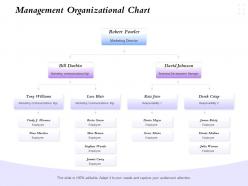
Management organizational chart business development manager ppt presentation show





Try Before you Buy Download Free Sample Product
 Impress Your
 Audience
 100%
100% Editable
 Save Hours
 of Time


Our Management Organizational Chart Business Development Manager Ppt Presentation Show are topically designed to provide an attractive backdrop to any subject. Use them to look like a presentation pro.
People who downloaded this PowerPoint presentation also viewed the following :
Management organizational chart business development manager ppt presentation show with all 2 slides:
Use our Management Organizational Chart Business Development Manager Ppt Presentation Show to effectively help you save your valuable time. They are readymade to fit into any presentation structure.
FAQs for Management organizational chart business development manager
So basically you'd be hunting for new business opportunities and partnerships to grow the company. It's a lot of relationship building - finding potential clients, schmoozing with key people, negotiating deals. You'll do market research too, which is actually kinda fun because you're like a detective figuring out where the money's hiding. Working with sales and marketing teams happens constantly, plus you'll present pipeline updates to the big bosses. Oh, and competitive analysis is huge - gotta know what everyone else is doing. If you're into networking and directly impacting growth, it's pretty solid.
Track both your activity stuff and actual results - that's the only way to see what's working. Pipeline value, new prospects contacted, meetings booked are your forward-looking metrics. Revenue, close rates, customer acquisition cost show you the real deal. Here's the thing though - I've watched way too many BDMs get obsessed with how many calls they made while their revenue stays flat. Pick like 4-5 metrics max for a weekly check-in. Monthly deep dives help spot patterns. Find that balance between measuring your hustle and measuring what actually pays the bills.
Honestly, it's all about balancing people skills with strategic thinking. Communication is probably the biggest thing - you're always pitching deals, negotiating terms, building relationships. Market research matters too since you've got to spot opportunities and know what competitors are doing. Being naturally social definitely gives you an edge here, which sounds obvious but I've seen really smart people struggle because they hate networking. Oh, and project management skills are clutch for keeping deals on track and actually hitting your numbers. I'd start by working on whatever feels like your weakest area right now.
So BDMs basically hunt for new opportunities through research mixed with schmoozing. Industry trends and competitor analysis are your bread and butter. But honestly? Half the gold comes from random chats at conferences or even LinkedIn DMs - networking is everything. Don't forget to bug your current customers about what's missing from their toolkit. Data tools help confirm your hunches, but sometimes you just gotta trust your gut. Stay nosy and keep asking "what if we tried this market?" The best opportunities hide in places you wouldn't expect.
Dude, networking is honestly everything in biz dev. Those random conference chats or LinkedIn messages? Half my best deals started exactly like that. You're constantly hunting for new opportunities and building relationships with potential clients - or people who know potential clients. Here's the thing though - don't be that guy who's always pitching. Nobody likes that. Focus on actually helping people first. Give value, share connections, whatever. The business stuff comes naturally after that. Maybe start with one real conversation per week with someone new? Works better than you'd think.
You're basically the translator between sales and marketing - they speak different languages half the time. Share your pipeline data with marketing so their campaigns actually hit the mark. Give sales leads that come with real context about what's bugging prospects. Weekly 15-minute check-ins with both team leads work wonders, but honestly? Those random Slack messages and coffee conversations do more heavy lifting. Oh, and make sure everyone agrees on what "qualified lead" actually means - can't tell you how many times I've seen that mess things up. Start small with regular touchpoints.
Do your homework first - research the local market, competitors, and any regulations you'll hit. Don't go all-in right away though. Test things out with a small pilot program (trust me on this one, I've seen too many people blow their budgets). Find local partners who already know the scene - distributors or companies with connections. They'll get you credibility way faster than trying to break in solo. Your pitch needs tweaking for local tastes too. And honestly? Plan for everything to take longer than back home. Sales cycles are usually slower when you're the new guy.
You're basically their go-to person for everything - the one they call when stuff goes sideways or when they want to expand. I spend most of my time doing regular check-ins, figuring out what they actually need (not what they say they need, lol). Quarterly reviews are huge. Don't just show up empty-handed though - bring industry insights or solutions to problems they didn't even know they had yet. The whole thing is about staying ahead of issues before they blow up. Oh, and you'll be playing translator between your internal teams and clients constantly. It's honestly like being a professional middleman who actually has to deliver results.
Honestly, start with a CRM - HubSpot's free tier is pretty decent, or go with Salesforce if you're feeling fancy. LinkedIn Sales Navigator is a must for finding prospects (though it's pricey). Calendly will save your sanity on scheduling. I actually love Notion for keeping everything organized, but most people prefer Asana. For email stuff, Mailchimp handles the automation so you're not manually following up forever. Oh, and Slack keeps the team chatter organized. Don't dump everything on yourself at once though - pick your CRM first, get comfortable, then add tools gradually.
Honestly? The rejection hits hard some days - like, seriously brutal. Long sales cycles will drain you, especially when targets feel impossible. Building real relationships takes forever before you see any payoff, but you're still juggling tons of prospects. Finding decent leads gets tougher with everyone fighting for the same market. Internal politics are annoying too - good luck getting resources when you need them. Executives want instant results while you're trying to show ROI on stuff that takes months to develop. Start building your pipeline early though, that's key. Document everything so you've got something to show during slow patches.
Start with the basics - score your leads on deal size, close probability, and timeline. High-value stuff that'll close in 90 days gets priority because quotas are real lol. Don't totally ignore those big strategic accounts though, even if they take forever. I'd make a simple spreadsheet ranking everything by revenue potential and how likely they are to actually buy. Check it weekly, update based on what you're hearing. The real trick? Be brutal about cutting loose the tire-kickers. That frees you up to focus on prospects who'll actually sign.
Market research is your business GPS, honestly. Don't skip it or you'll be shooting in the dark. It shows you where the real opportunities are hiding and what gaps your competitors haven't filled yet. Plus you'll actually understand if customer needs are changing before you're left behind. One thing people mess up though - they think it's a one-and-done thing. Wrong move. You need to check back quarterly to see what's shifted. Otherwise you might chase markets that are way too small or burn through budget on assumptions that turned out to be totally off. Makes a huge difference in avoiding expensive mistakes.
Dude, you gotta watch everything - market shifts, what customers are saying, competitor moves. The whole deal changes fast. When stuff hits the fan, pivot hard. Maybe that means new value props or going after different segments entirely. I swear the best BDMs are basically shapeshifters, always ready to adapt. Build flexibility into your process right from the start - don't wait until you're scrambling. Oh, and keep solid relationships across industries because you never know where opportunities will pop up. Set up weekly team check-ins to catch changes before they bite you.
Look, data analytics is like having a cheat code for BD decisions. No more throwing darts blindfolded at potential clients. You'll actually see which market segments convert and catch opportunities your competitors miss. Track your sales pipeline patterns, forecast revenue that's not total BS, and show leadership real ROI numbers when you're begging for budget. Honestly, gut instinct still counts for something, but why guess when you can know? Just pick one metric that actually moves the needle for your goals and obsess over it. Everything else can wait.
Skip the features - talk about actual results instead. Like "I boost company revenue 25% through strategic partnerships" rather than listing what you do. Stories work way better than boring benefit lists, so have a few good examples ready. CEOs care about different stuff than operations managers, so switch up your pitch depending who you're talking to. Honestly, most people mess this up because they make it too complicated. Practice your 30-second version until it doesn't sound rehearsed. Whether someone gives you half a minute or half an hour, you should nail the value piece every time.
-
awesome presentation
-
Great experience, I would definitely use your services further.
-
Very well designed and informative templates.
-
Best way of representation of the topic.
-
Awesomely designed templates, Easy to understand.
-
Presentation Design is very nice, good work with the content as well.